

Easy Rosemary Salt Recipe + 10 Ways to Use It
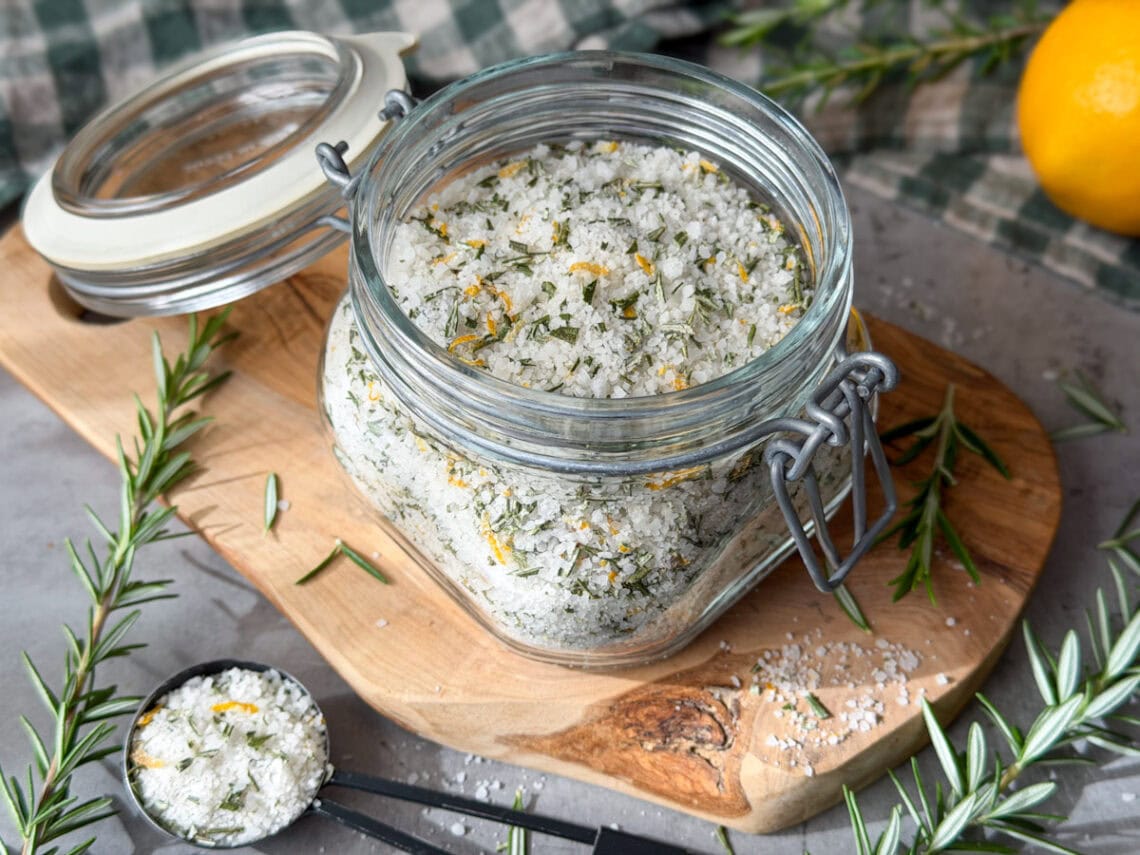
Come learn how to make homemade rosemary salt. It may sound fancy, but couldn’t be any easier to make! This herbal seasoning salt will help elevate the flavor of your favorite meat, fish, or vegetable dishes. It’s especially delicious with roasted potatoes or chicken. See more ways to use it at the end of this post.
I love making rosemary salt as a way to use and preserve fresh rosemary from my garden, and to share with friends, family and neighbors as a sweet little handmade gift!
Want to save this?
Supplies Needed
- Food processor, or you can simply chop the rosemary by hand*
- A baking sheet (I line mine with parchment paper)
- Jars or storage containers with an air-tight lid
*When I made rosemary salt for the first time many years ago, my food old processor was AWFUL and too dull to chop the rosemary. So I had to pick it all back out of the salt (lol) and finely dice it by hand – which worked just fine!
Ingredients
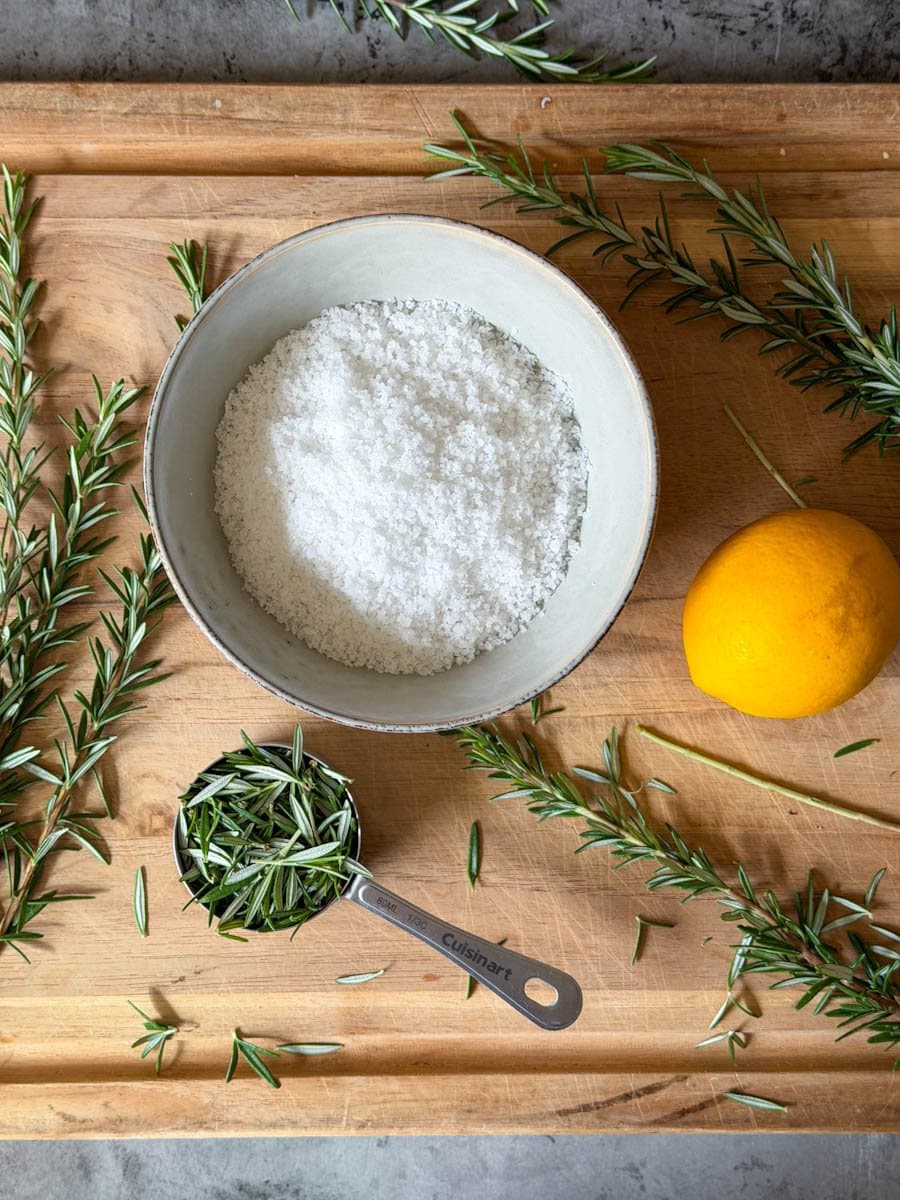
- 1/2 cup fresh rosemary leaves (packed). I prefer to harvest the fresh, tender tips from my rosemary plant instead of using the older woody leaves.
- 1 cup salt. It’s best to make rosemary salt with kosher salt, sea salt (I usually use a mix of both) or other semi-coarse to coarse salt. I don’t recommend using regular table salt since it’s too fine.
- Optional: lemon zest from one lemon. Be sure to use organic since we’re eating the peel! I like to use our extra-sweet homegrown Meyer lemons.
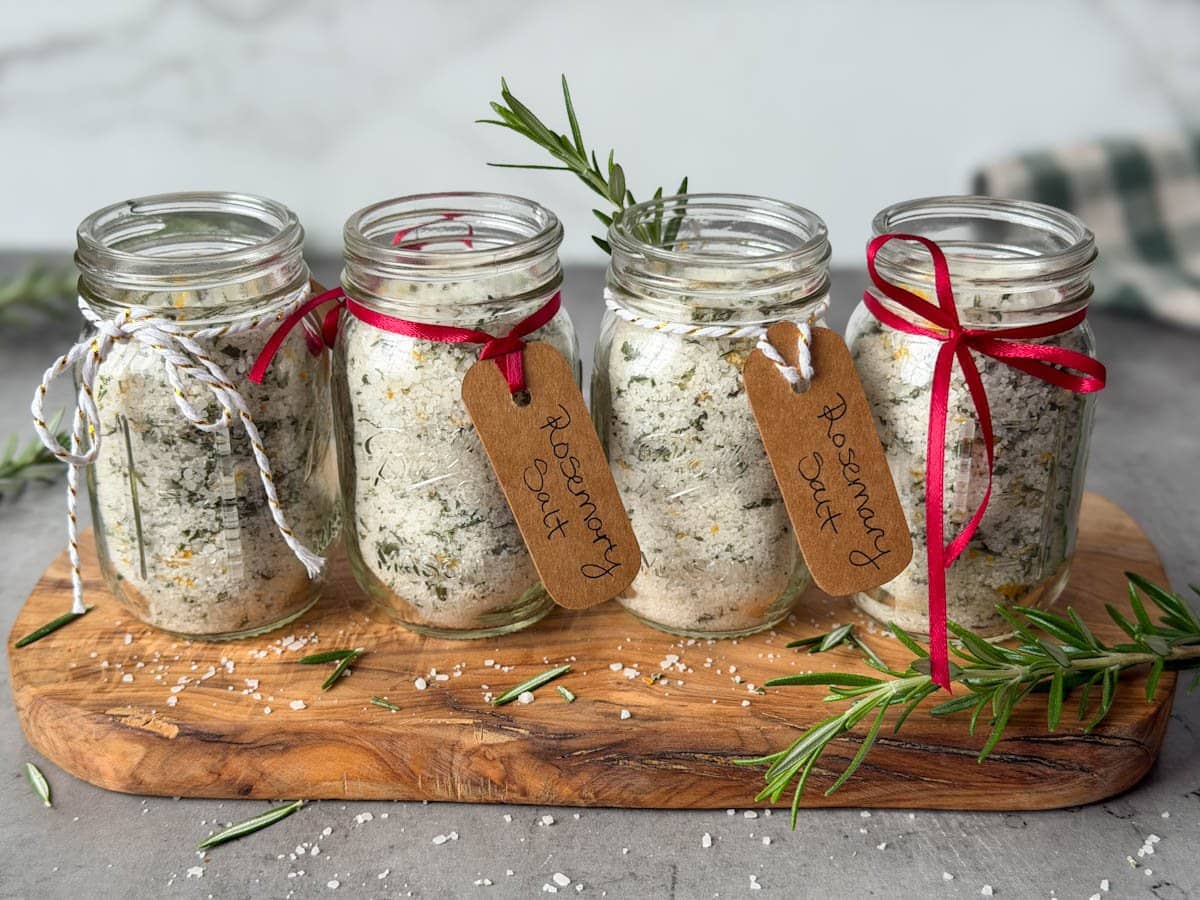
YIELD: This recipe makes about 10 to 12 ounces of finished rosemary salt (or just over a cup). Feel free to scale up or down as needed. The photos in this post show a double batch – I was making extra to give away as gifts!
Instructions
1) Prep
- Rinse the rosemary under cool water to wash it, but then dry it well. Shake it out first and then gently pat it dry with paper towels (or a clean lint-free cloth towel) to remove as much moisture as possible. If time allows, I like to let it air dry for a few minutes before proceeding.
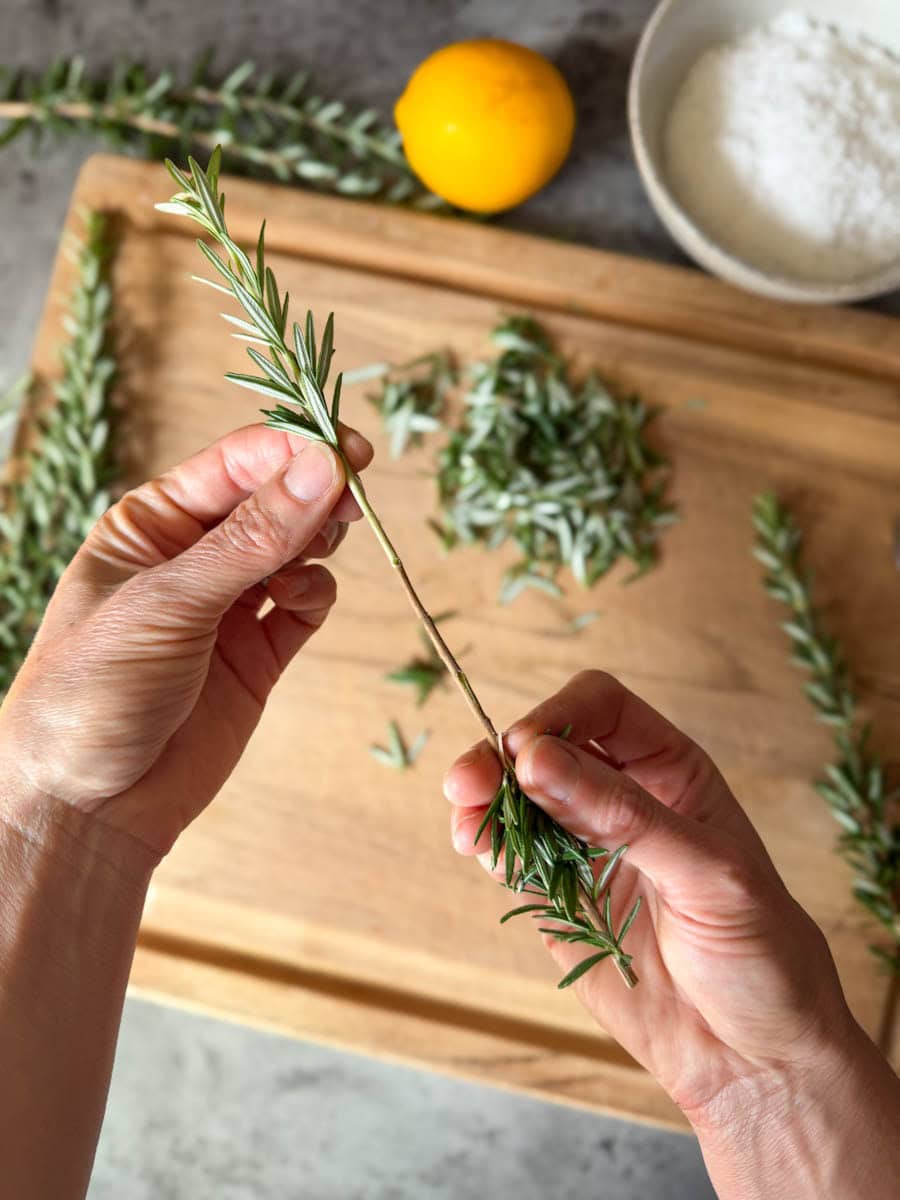
- Next, remove the rosemary leaves from the center stem – we don’t want to include the tough woody stem in this recipe! I’ve found it’s easiest to hold the top of the stem in one hand, and then use my other hand to pinch and strip the leaves downward and off the stem.
2) Chop and Mix
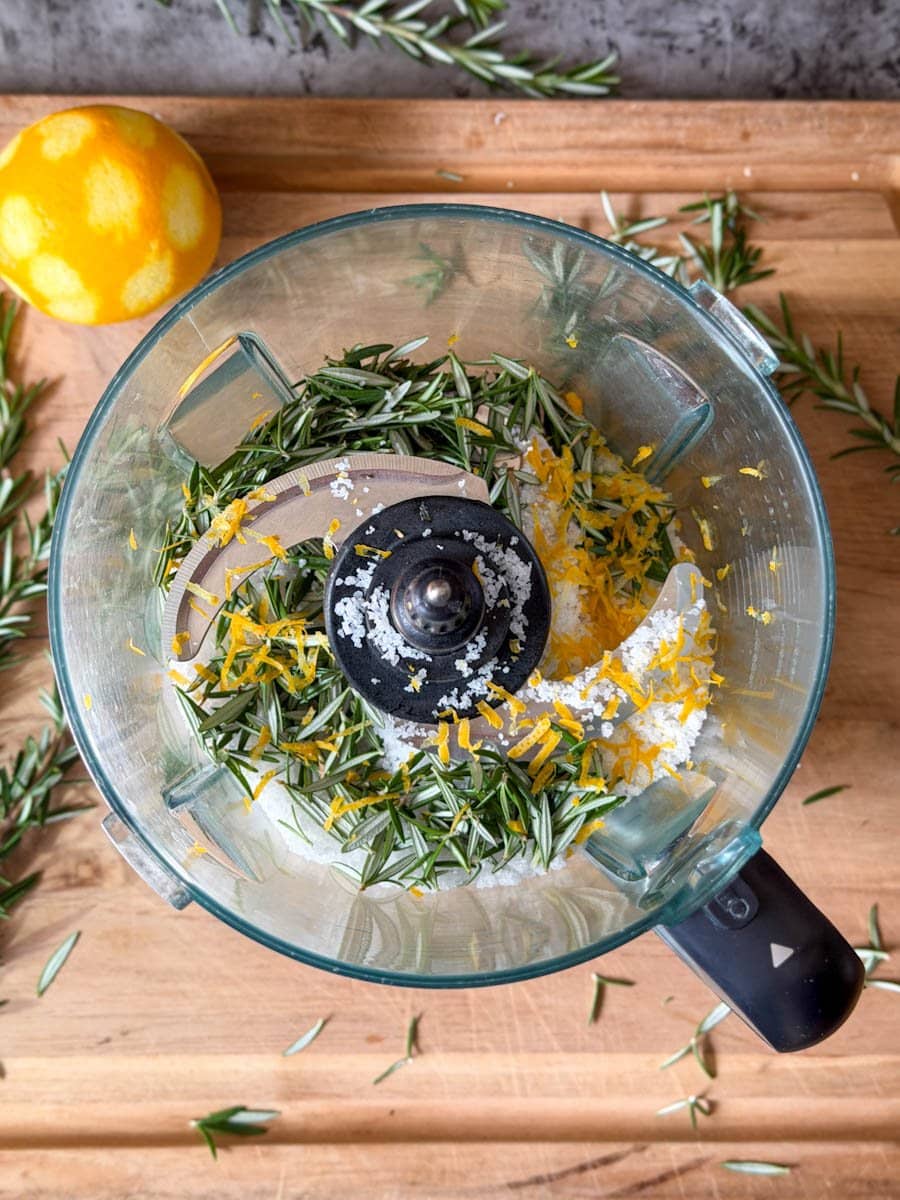
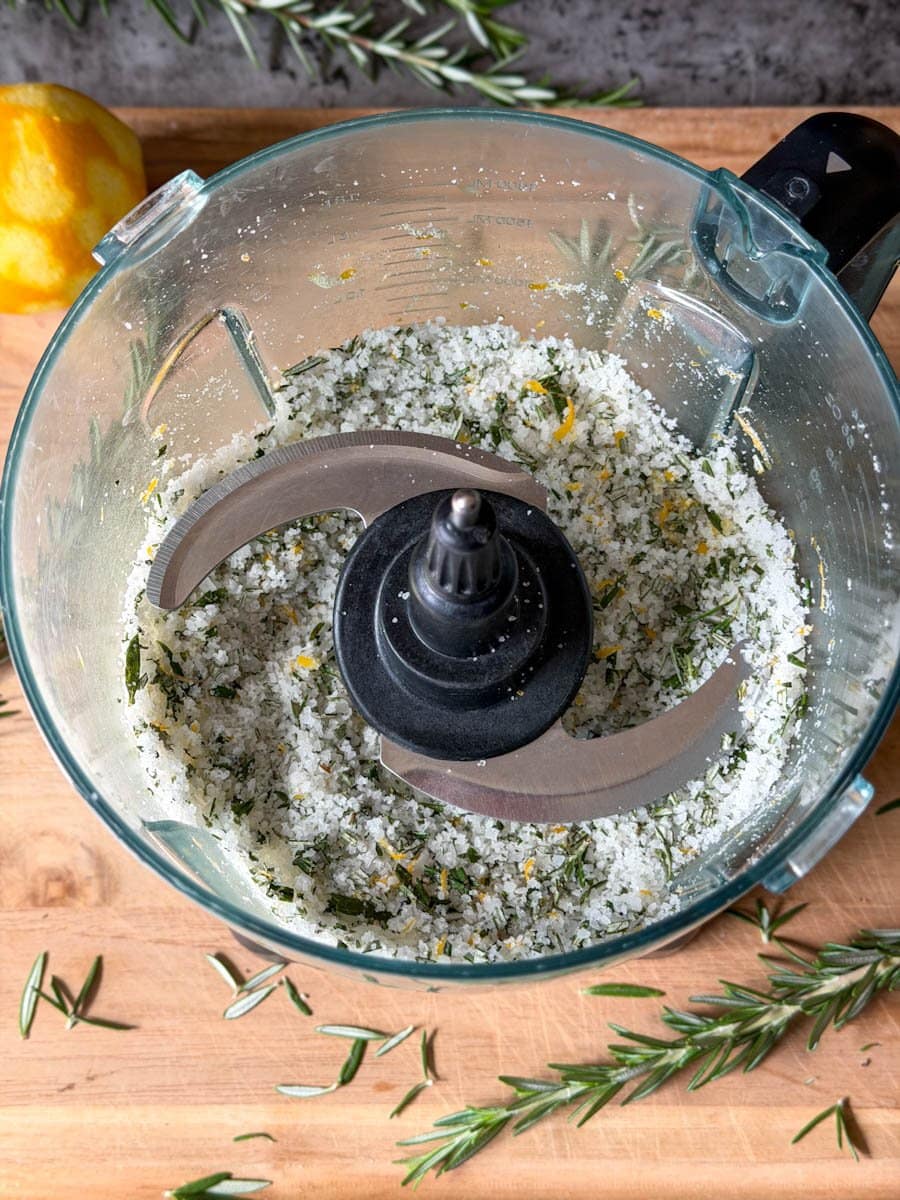
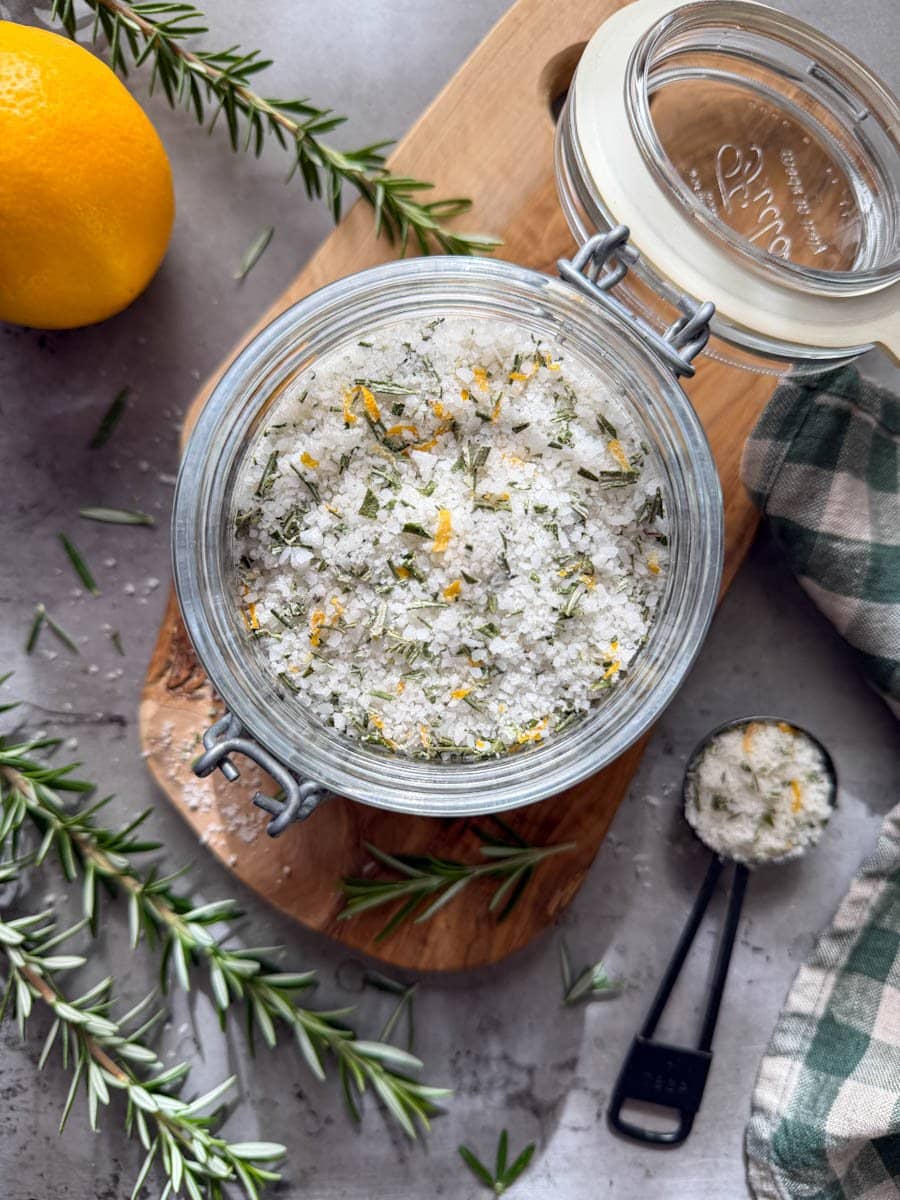
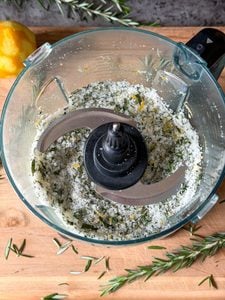
- Next, combine the salt, rosemary, and optional lemon zest in a food processor and pulse/blend until the rosemary is finely chopped and combined with the salt, resembling wet sand.
- OR, you can simply chop the rosemary by hand then mix it with the salt in a bowl.
PRO TIP: To double or triple this recipe (or more), I recommend working in smaller batches and blending only 1 to 2 cups of salt and rosemary at a time, depending on the size of your food processor.
3) Air Dry or Bake
It’s important that the rosemary salt is 100% dry to prevent clumping in long-term storage. Allowing it to air dry will best preserve the rosemary’s bright color and fresh flavor, though gentle baking is a good way to dry it more quickly and thoroughly if needed (e.g. if you’re in a hurry or live in a humid climate).
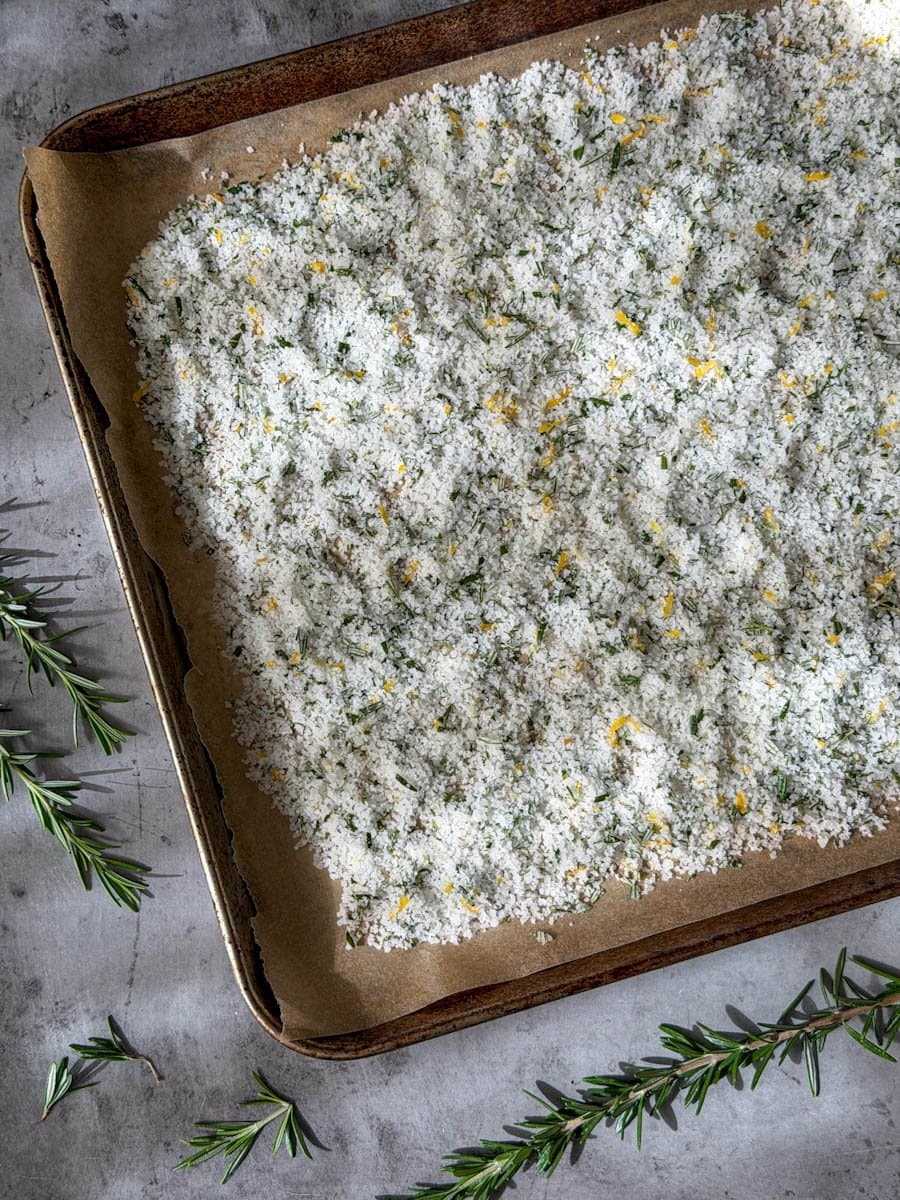
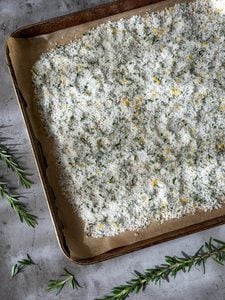
- Spread the rosemary salt out in a thin layer on a baking sheet. I usually line the tray with parchment paper for easy transfer and clean up.
- Air Dry: Let the tray of rosemary salt sit out at room temperature for 24 hours, or up to a few days – until the salt and rosemary feels completely flaky and dry to the touch. During this time, the salt helps to naturally desiccate (dry out) and preserve the rosemary. Drying time can vary depending on the conditions in your home and how damp your salt is.
- Oven Dry: Set your oven to a low temperature (around 175-200F) and bake the rosemary salt for 20 to 40 minutes, stirring once or twice in between. But be careful! Avoid higher temperatures as rosemary can easily scorch and become bitter. The goal is to to dry it, not cook it.
4) Package and Enjoy
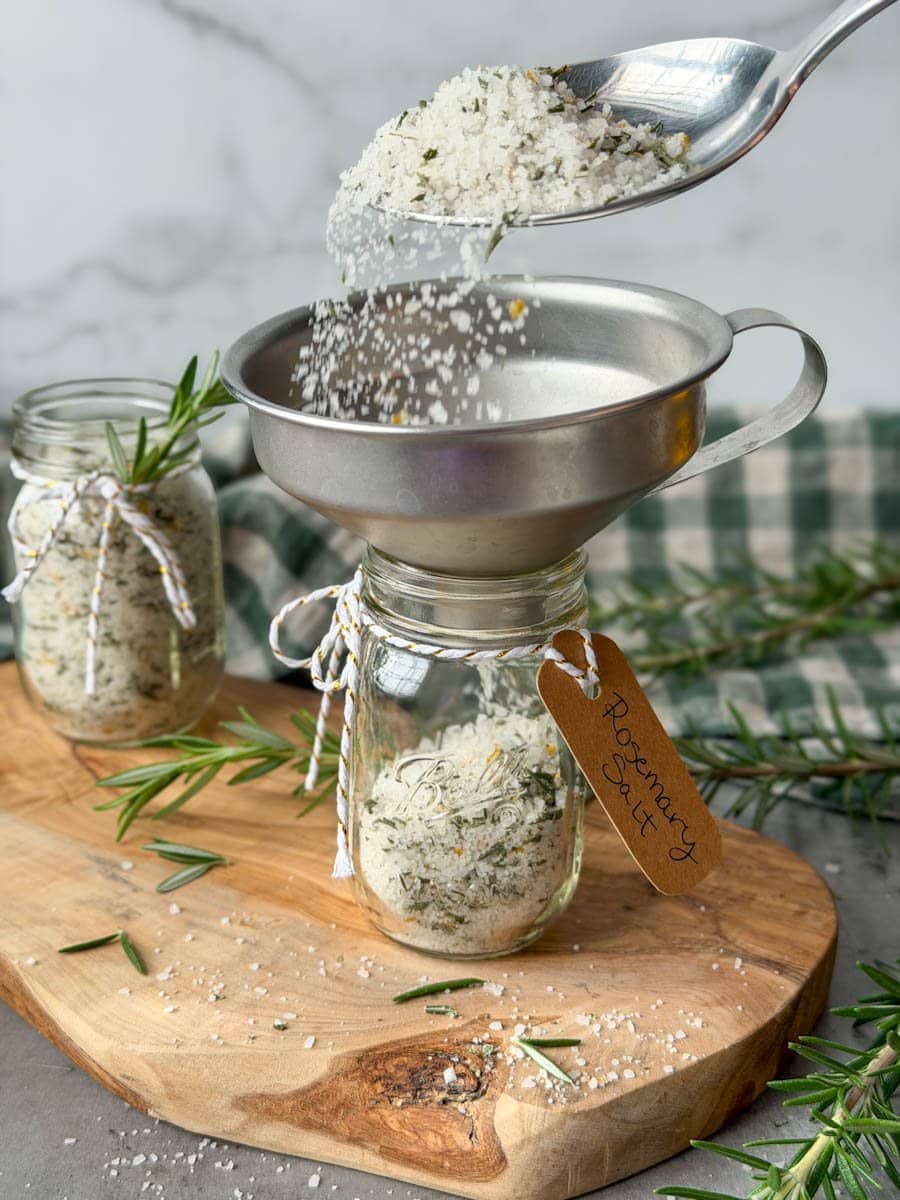
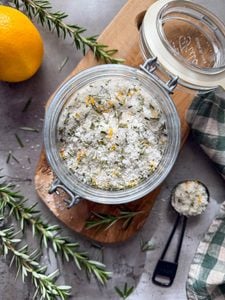
- Once dry, transfer your finished rosemary salt into final storage container(s) with an air tight lid – such as glass mason jars or a flip-top jar. You can also reuse old spice jars!
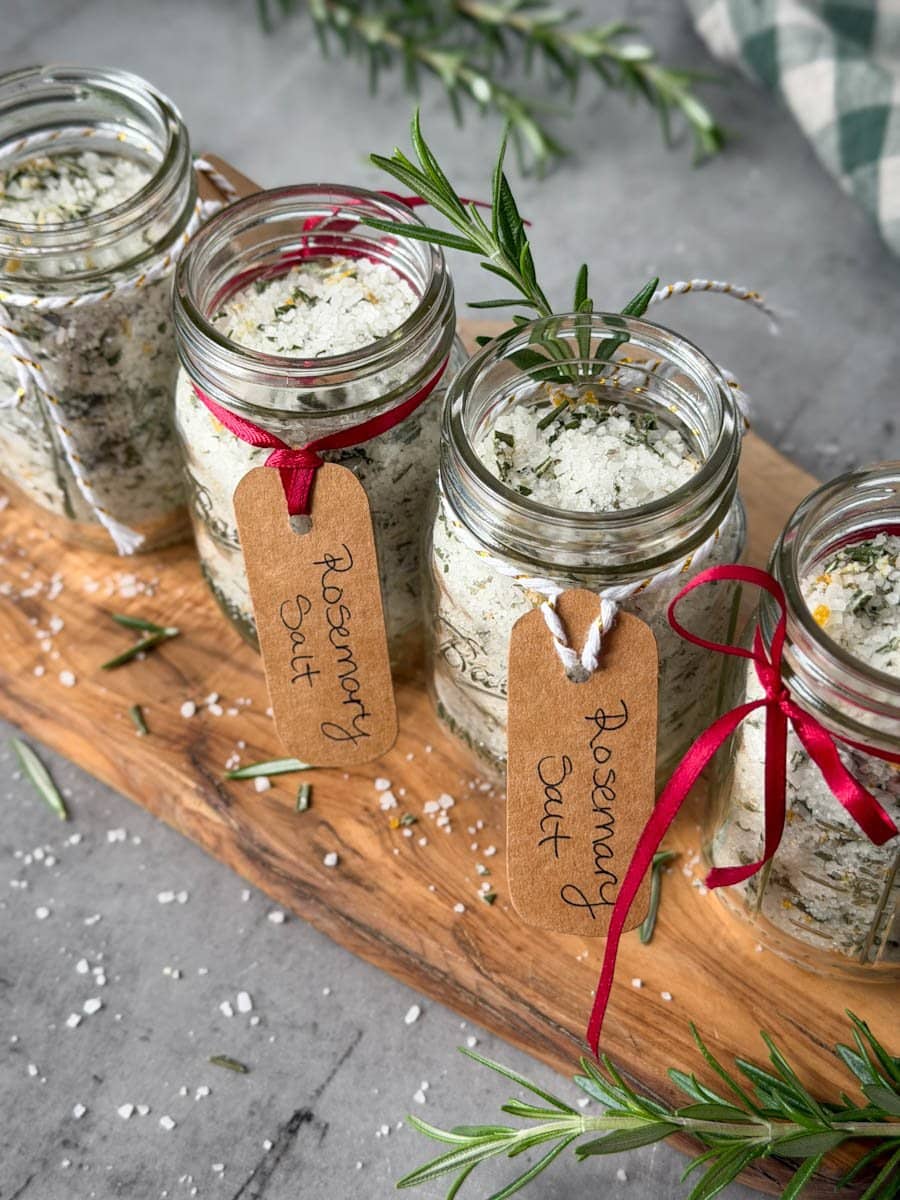
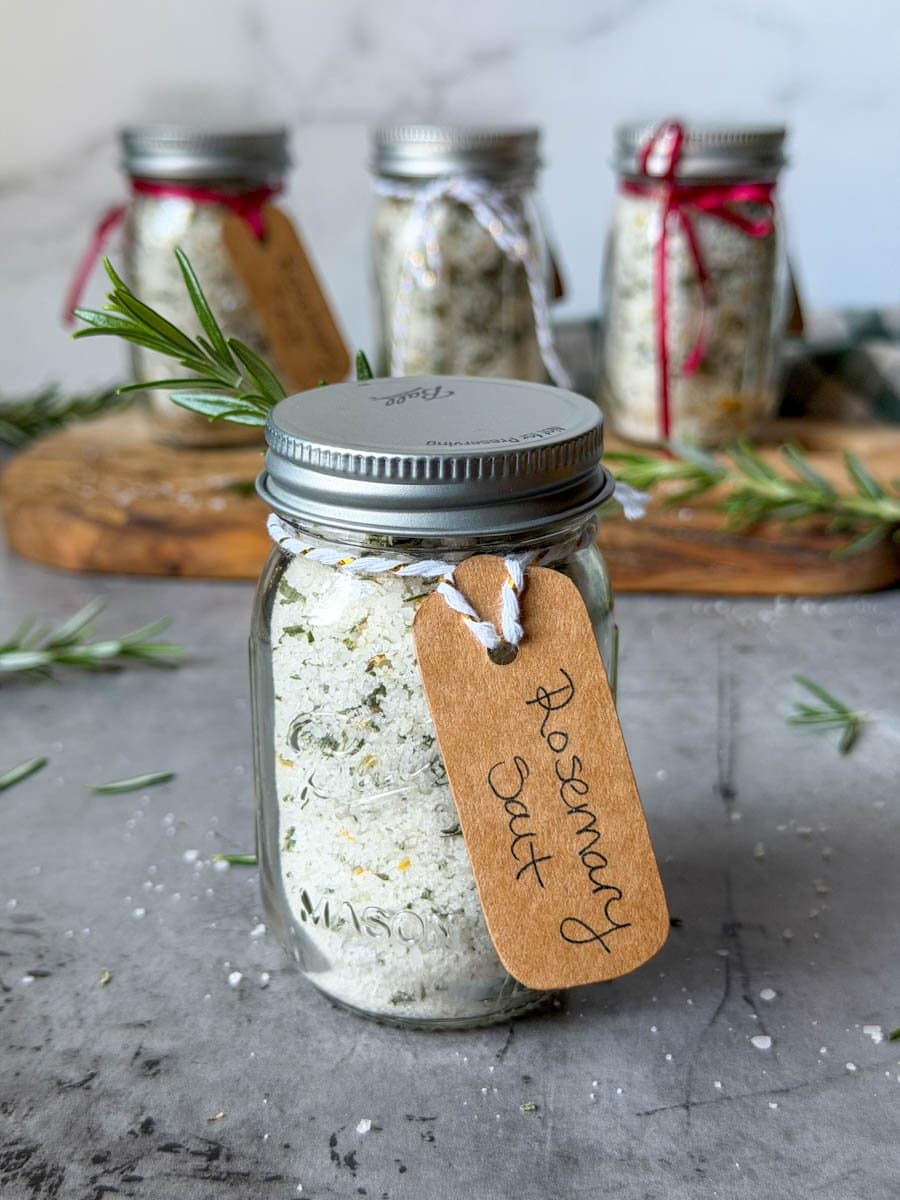
- To share as gifts, I like to package the rosemary salt into small jars (like these 4 oz quilted jelly jars or these taller 5 oz mini mason jars) and then adorn them with ribbon or twine along with a label and sprig of rosemary.
- See storage/shelf life information and a list of ways to use rosemary salt below!
Storage and Shelf Life
Store rosemary salt in a dry, cool, dark location such as your pantry or spice cupboard. You can also store it in the refrigerator to keep it extra dry and extend the shelf life.
Homemade rosemary salt should stay good for a year or longer, though it will have the best flavor if used within 3 to 6 months. Properly dried herbs and salt don’t typically “go bad” but will lose flavor, aroma, and color over time. If the rosemary salt happens to get clumpy, it’s still good to use (as long as it doesn’t develop mold).
Ways to Use Rosemary Salt
Rosemary salt can add a delicious herbaceous pop of flavor to a wide variety of meals – a little goes a long way! Here are some of my best ideas:
- Rosemary is the perfect companion for potatoes – and so is salt! I love to add a sprinkle over roasted potatoes and sweet potatoes.
- Use it to season egg dishes, including scrambled or fried eggs, quiche, frittata, omelets and more.
- Add a pinch to avocado toast, on sliced tomatoes, or veggie sandwiches.
- This herbal salt is delicious with roasted vegetables, especially those with an earthy sweetness like beets, carrots, and winter squash (butternut, kabocha or delicata).
- Sprinkle it on top of sourdough focaccia or use it instead of regular salt in recipes for regular sourdough bread, sourdough cornbread, sourdough pizza crust, muffins, or other baked goods.
- Add it to salads where a sprinkle of salt is welcome, such as potato salad, pasta salad, rice salad, or bean salads.
- Use it in homemade salad dressings, marinades, dips and spreads.
- Season roasted meats including chicken, turkey, fish, pork roast, lamb chops, roast beef or steak.
- Make a bread dip: mix some rosemary salt with extra virgin olive oil and balsamic vinegar to dip fresh bread in.
- You could also sprinkle it over popcorn, homemade kale chips, or sourdough crackers.
- Use it in your favorite soup recipes.
- Last but not least, package it up in small jars to share as gifts!
FAQ: Can I make this recipe with other herbs?
Yes, you can use this rosemary salt recipe to make just about any type of herbal salt! However, there may be a couple modifications depending on the type of herb you’d like to use.
For instance, herbs that are naturally more dry and woody (like thyme, oregano, sage, or marjoram) are an simple, straightforward swap and will easily air dry similar to rosemary.
However, more succulent, tender herbs (such as fresh basil, cilantro, dill, chives, mint or parsley) may not air dry as well so they should be gently baked on low heat with the salt – and possibly for longer than I called for in this recipe.
Or, you can simply mix already-dried herbs with coarse salt and skip the drying step altogether! In that case, use 2 to 4 tbsp dried herbs of choice for every ½ cup of salt used (sliding scale based on how strong you want the flavor).
Enjoy!
All in all, I hope you enjoy this easy rosemary salt recipe (and sharing with friends and family) as much as we do! Please leave a review once you give it a try, and share your ideas for other ways to use it.
You may also like:
- 30 Best DIY Gift Ideas: Mason Jar Gifts, Food, Self Care & More
- Growing Herbs 101: How to Start a Kitchen Herb Garden, Indoors or Out
- DIY Container Herb Garden Planter + The Best Herbs to Grow
- Roasted Two-Bite Garlic & Herb Smashed Potatoes
- DIY Bath Salt Recipe (How to Make Soothing Bath Salts)
Easy Rosemary Salt
Want to save this?
Equipment
- food processor – or simply chop the rosemary by hand
- baking sheet (I line mine with parchment paper)
- storage containers with an airtight lid, such as mason jars
Ingredients
- 1/2 cup fresh rosemary leaves (de-stemmed and packed)
- 1 cup kosher salt, sea salt, or other coarse to semi-coarse salt (table salt not recommended)
- optional: zest from one lemon (organic recommended)
Instructions
Prep
- Rinse the rosemary under cool water to wash it.
- Dry the rosemary well by shaking it out, then gently pat it dry with paper towels (or a clean lint-free cloth towel) to remove as much moisture as possible. If time allows, I like to let it air dry for a few minutes too.
- Next, strip and remove the rosemary leaves from the tough center stem (which we don't want to include)


Chop and Mix
- Combine the salt, rosemary, and optional lemon zest in a food processor and pulse/blend until the rosemary is finely chopped and combined with the salt, resembling wet sand.
- OR, you can finely chop the rosemary by hand then mix it with the salt in a bowl
Air Dry or Bake
- Spread the rosemary salt out in a thin layer on a baking sheet.
- Air Drying (best for optimal flavor/color): Let the tray of rosemary salt sit out at room temperature for 24 hours, or up to a few days – until it the salt and rosemary feels completely flaky and dry to the touch.
- Oven Drying (good for humid climates or if you're in a rush): Set your oven to a low temperature (around 175-200F) and gently bake the rosemary salt for 20 to 40 minutes, stirring once or twice in between. Be careful not to scorch it – rosemary easily gets bitter!
Storage and Shelf Life
- Once completely dry, transfer into final storage container(s) with an air tight lid.
- Store in a dry, cool, dark location such as your pantry or spice cupboard (or in the refrigerator to keep it extra dry and extend the shelf life)
- Homemade rosemary salt should stay good for a year or longer, though it will have the best flavor if used within 3 to 6 months.
- See a complete list of ways to use rosemary salt in the body of this post (above)


You May Also Like

How to Make Homemade Calendula Salve for Healthy Skin

How to Make Chive Blossom Vinegar + 8 Ways to Use it
