

Easy Beet Pickled Eggs Recipe (with Fresh Beets)

If you’ve never tried beet pickled eggs before, you’re in for a special treat. And if you’re skeptical, don’t knock ‘em until you try them! I have high hopes you’ll love this easy homemade beet pickled eggs recipe.
Beautiful and bursting with flavor, beet pickled eggs are tangy, savory, just a tad sweet, and can be customized to be as mild or as spicy as you prefer. This is one of my favorite ways to showcase and preserve fresh eggs from our backyard chickens. I love to make deviled eggs with them too.

Want to save this?
Disclosure: Homestead and Chill is reader-supported. When you purchase through links on our site, we may earn an affiliate commission.
In addition to being tasty, beet pickled eggs are downright gorgeous. Naturally dyed with fresh beets, these bright pink and yellow eggs bring a spectacular pop of color to your plate. They make wickedly delicious deviled eggs.
Kids are always excited to try this unique and healthy snack too! Pink pickled eggs are especially fun to make around Easter time – I’ve been including them on spring charcuterie boards for years.
RELATED: I love that I can use homegrown beets from my garden for this recipe too! Come learn how to grow beets from seed or seedling in our easy step-by-step guide.

Ingredients
This recipe makes one quart jar. Scale up or down as needed.
- 9 to 11 large eggs. Though you may be able to squeeze up to a dozen in a quart jar, I typically use about 10 eggs to make our beet pickled eggs. That leaves enough room for the beets, brine, and other goodies too.
- 1 small to medium fresh beet. Using red beets will result in beautiful deep pink color. I’ve also tried and loved using golden beets, which make bright yellow pickled eggs! Chioggia beets (white and pink) will result in a more muted light pink color. Some homemade pickled beet egg recipes call for canned beets, but I prefer using fresh.
- 2/3 cup distilled white vinegar
- 2/3 cup apple cider vinegar (organic and raw/unpasteurized preferred). I often use homemade apple cider vinegar.
- 1/4 cup filtered water
- 1 teaspoon sea salt, kosher salt, or pickling salt (not iodized table salt)
- 1/2 tablespoon white cane sugar
- 4 to 6 cloves of garlic, peeled and lightly crushed
- A dash of black pepper
- Optional: fresh hot chili peppers, red chili flakes, celery seed, dijon mustard, and fresh red, white or yellow onion slices (described more below!)
As you can see, our recipe doesn’t call for an excessive amount of sugar like many other beet pickled egg recipes do. I think the beets and apple cider vinegar add plenty of natural sweetness, IMHO!

Instructions
1) Prepare the Eggs and Beets
- Wash, hard boil, and peel about a dozen eggs.
- Pack the peeled eggs into a clean quart-size mason jar or similar container. I highly recommend using a glass container, as plastic may become stained and stinky, and most metal is not compatible with vinegar.
- Wash and grate the fresh raw beet. I use a box cheese grater, though you can also finely slice (julienne) the beets instead. Whether you choose to peel the beet first is up to you. I often skip peeling since our fresh homegrown beets usually have thin tender skin (but I recommend removing tough thick skin.)

2) Vinegar Brine and Seasonings
- In a pot on the stovetop, combine all the other called-for ingredients: both types of vinegar, water, grated beet, salt, sugar, garlic, and black pepper.
- Add other optional ingredients. I usually add a fresh hot chili pepper from the garden, cut in half and tucked into the jar with the eggs. The other optional ingredients are best mixed into the stovetop brine, such as 1 to 2 teaspoons of dijon mustard (highly recommended!), a dash or celery seed and/or red chili flakes, or a small handful of thinly-sliced fresh onion.
- Heat and lightly simmer the brine ingredients over medium heat for a few minutes (until the salt and sugar fully dissolve and everything seems well-combined). It should turn bright pink from the beets right away!
- Allow the brine to cool slightly, and then pour it into the jar over the eggs. A warm brine is okay, though I avoid adding it when it is still piping hot. Make sure to get most of the beets in there! If the jar is getting full but there are still goodies in the pot, I give priority to adding as much grated beet as possible before topping off with liquid brine. Also, I like to keep a little pile of beets on top of the uppermost eggs, helping to keep the eggs submerged below the brine.
TIP: If you happen to run out of brine, simply add another splash of your vinegar of choice to top the jar off.


3) Steep and Wait
- Next, add a tight-fitting lid, and move the jar to the refrigerator right away. We like these stainless steel lids that have a silicone gasket to prevent leaks. Cooked eggs should not be left out at room temperature for more than 2 hours as a food safety best practice.
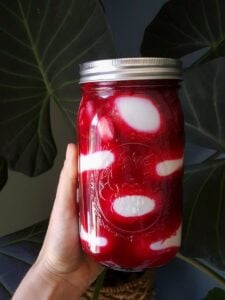
- Finally, let the beet pickled eggs sit and infuse for a few days (at minimum) in the fridge. The longer they steep, the deeper the beet color will get – and the more tangy the eggs will become! After a few days, the outermost layer of egg white will become pink. Given a week or more, the pink can penetrate all the way down to the yolk! I like to let our homemade pickled beet eggs to infuse for at least 5 to 10 days before digging in! Very large eggs can take up to two weeks to become fully seasoned.
- If some eggs are pressed up against the sides of the jar (leaving un-dyed white spots), or if any are floating up above the brine level, gently tip and shake the jar every couple of days to move things around. That is one added benefit of not over-packing the jar.


Ways to Use Beet Pickled Eggs
After infusing for several days in the refrigerator, it is time to enjoy your beautiful pickled eggs!
We love to slice them on top of crusty homemade sourdough bread with hummus, avocado, cucumber, and/or cheese as a colorful open-face egg sandwich. Hint: I’ve found that they turn even brighter pink when broiled on toast! Pickled beet eggs also make some wickedly awesome deviled eggs.
I’ve found one of the easiest ways to enjoy them is simply cut in half, sprinkled with a dash of salt and pepper, and snacked on plain! They bring a spunky pop of color to an hors d’oeuvres plate or cheese board.
Read below for storage and shelf-life information, safety, and other frequently asked questions.

Storage, Shelf Life, and FAQ
Store beet pickled eggs stored in the refrigerator for up to 4 months, submerged in the pickling brine at all times.
Following a recipe that uses a vinegar brine (like ours) and stored in the refrigerator, homemade beet pickled eggs should stay good and safe to consume for several months. According to the National Center for Home Food Preservation, use refrigerated pickled eggs “within 3 to 4 months for best quality”.
No. Homemade pickled eggs must be kept refrigerated at all times. This recipe isn’t for shelf-stable “canned” pickled eggs. While they are somewhat preserved in vinegar, it is not safe to keep cooked eggs out at room temperature for more than 2 hours (such as while serving and enjoying).
Using fresh eggs (straight from your backyard chickens) may result in a superior quality pickled egg. However, super fresh eggs are more difficult to peel after hard-boiling or steaming than those that are a few days old. Therefore, I usually use eggs that are about 5 to 10 days old to make beet pickled eggs (or any hard boiled egg recipe).

I hope you enjoy this beet pickled eggs recipe as much as we do!
What do you say? Are you feeling adventurous enough to try making your own pickled beet eggs for the first time? Or, do you already make your own – and were simply stopping by for some new ideas? I’d love to hear any fun variations you can offer! In all, I hope you love this recipe as much as we do. Please leave a review once you give them a try!
Are you a pickle fan? Then don’t miss these awesome related recipes:
- Crunchy Refrigerator Pickles: Quick & Easy Homemade Dill Pickles
- Quick & Easy Refrigerator Pickled Peppers
- Simple Fermented “Pickled” Beets Recipe
- Quick Pickled Dilly Green Beans (Refrigerator or Canning)

Easy Beet Pickled Eggs Recipe (with Fresh Beets)
Want to save this?
Equipment
- 1 glass quart jar with a lid
- 1 small saucepan
Ingredients
- 9-11 large eggs, hard-boiled and peeled
- 1 small to medium fresh red beet, raw and grated
- 2/3 cup distilled white vinegar
- 2/3 cup apple cider vinegar (raw, unpasteurized suggested)
- 1/4 cup filtered water
- 1 tsp sea salt, kosher salt, or pickling salt (not iodized table salt)
- 1/2 Tbsp white cane sugar
- 4-6 cloves of garlic, peeled and lightly crushed
- 1 dash black pepper
- Optional: fresh hot chili peppers, a sprinkle of red chili flakes or celery seed, 1-2 teaspoons of dijon mustard, and/or a handful of thinly-sliced fresh red, white or yellow onion slices
Instructions
Prep
- Wash, hard boil, and peel about a dozen eggs.
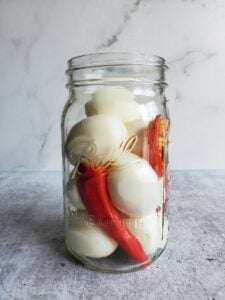
- Pack the peeled eggs into a clean quart-size mason jar or similar glass container. (We add a fresh chili pepper in the jar with the eggs at this time)

- Wash and grate the fresh raw beet (or finely slice/julienne) but do not add to the jar.
Create Brine
- In a small saucepan on the stovetop, combine all the other called-for ingredients: both types of vinegar, water, grated beet, salt, sugar, garlic, and black pepper. Add other optional ingredients as desired.
- Heat and lightly simmer the brine ingredients over medium heat for a few minutes (until the salt and sugar fully dissolve and everything seems well-combined).
Steep and Wait
- Allow the brine to cool slightly, and then pour it into the jar over the eggs. A warm brine is okay, though I avoid adding it when it is still piping hot. Make sure to get most of the beets in there! If you happen to run out of brine, simply add another splash of your vinegar of choice to top the jar off.

- Next, add a tight-fitting lid, and move the jar to the refrigerator right away.
- Finally, let the beet pickled eggs sit and infuse for a few days (at minimum). The longer they steep, the deeper the beet color will get – and the more tangy pickled-flavor the eggs will become! Very large eggs can take up to two weeks to become fully seasoned. We usually let them sit in for 5-10 days before digging in.
- If some eggs are pressed up against the sides of the jar (leaving un-dyed white spots), or if any are floating up above the brine level, gently tip and shake the jar every couple of days to move things around.

Enjoy and Store
- Enjoy your beet pickled eggs any way you'd like – turned into deviled eggs, on a sandwich or toast, or simply snacked on plain!

- Maintain refrigerated at all times. Do not store at room temperature.
- Use refrigerated pickled eggs within 3 to 4 months for best quality. Keep the eggs submerged in the pickling brine at all times.





26 Comments
Beth Martel
They’re so beautiful! I don’t really like eggs and can only eat them if they’re adequately disguised. This recipe does the trick and then some! I wish I could post photos. I followed the recipe exactly (except used a 1/2gal mason jar). I couldn’t wait for breakfast today. And it was so worth it! Thank you!
Aaron (Mr. DeannaCat)
So great to hear Beth and thank you for sharing!
Gwyn
When I’ve made pickled eggs in the past, I’ve found that they become rubbery if left in the brine more than 2 days. I gather you have not experienced that with this recipe, is that right?
Thanks!
Aaron (Mr. DeannaCat)
Hi Gwyn, the texture definitely becomes a bit more firm (especially the egg white) compared to a regular hard boiled egg when they are pickled.
Sue
PA Dutch in PA calls them red beet eggs.
Nona Schulz
I will try these but I can tell you that I have successfully pickled eggs using the brine from beets which have been pickled and also the brine from pickled cucumbers.
Stacy M
Love and appreciate this idea – though, I’m curious if you could also use these for a deviled recipe too…thoughts?
Aaron (Mr. DeannaCat)
Hi Stacy, yes you can use them for deviled eggs as well, the egg white portion does become a bit more firm when pickled compared to just hard boiled eggs. Also, the pickled eggs do have some tanginess to them so you may not need to add as much mustard or vinegar if you ever add those to your deviled eggs. Hope that helps and enjoy!