

6 Ways to Protect Garden Plants in a Heat Wave

Extreme heat and temperature swings can cause a lot of stress and damage to plants, but thankfully there are many proactive and preventative measures you can take to help! Come learn six ways to protect your garden during a heat wave or hot weather.
This post will explore steps to take right before temperatures climb (like hanging shade cloth), watering best practices, along with tips to help make your plants more tolerant to heat and drought in general.
What temperature is “too hot” for plants?
Various types of plants have different thresholds of heat tolerance.
Cool-season crops like leafy greens, root veggies or the cabbage family generally prefer temperatures in the 50s and 60s (F). They may temporarily wilt or begin to bolt in temperatures over 75°F, and over 90°F will likely fry them for good.
Meanwhile, summer garden crops like tomatoes, peppers, and beans will thrive in that 75 to 90°F range! That’s their jam. Yet even heat-loving crops may become cranky, less productive, or damaged in excessively hot temperatures.
For example, tomatoes may experience issues with flower drop or fruit development when daytime temperatures are regularly over 95°F, especially combined with high humidity and sustained warm temperatures overnight. Similarly, zucchini and squash slow production when it’s over 85°F for an extended period of time.
Young plants are more prone to heat stress and damage than mature ones. Their tender nature and small, shallow root systems makes them far less heat-hardy. So, avoid transplanting new seedlings outdoors right before or during a heat wave, and move those in containers into the shade or indoors.

Want to save this?
Disclosure: Homestead and Chill is reader-supported. When you purchase through links on our site, we may earn an affiliate commission.
Quick fixes versus long-term adaptations to heat
Thankfully, the issues with pollination, production, or wilting that some plants experience during short-lived heat waves usually results in only a temporary setback. The plants should bounce back once the weather cools off and returns to normal.
On the other hand, hot-climate gardeners need to implement longer-term solutions to combat the typical prolonged heat. For instance, folks living in Arizona, the deep South, Las Vegas, or Hawaii may adjust their garden seasons and avoid growing tomatoes or squash during the hottest summer months altogether, and grow them during the spring and fall seasons instead.
Other long-term adaptations include careful selection of plant varieties, planting certain crops in partial shade, using in-ground beds rather than containers (which more easily dry out and succumb to temperature swings) or erecting shade structures that will stay up for several months.

6 Ways to Protect Plants During a Heat Wave
Wondering when to act? A good rule of thumb is that if it’s suddenly going to be 10 to 15+ degrees warmer than it has been and usually is, or if the weather station issues an “excessive heat warning” for your area. It may not be reasonable or necessary to apply every single protective measure listed, so pick and choose as you see fit!
1) Provide Shade
Shade helps soil stay cooler, retain moisture better, and protects plants from heat stress. Even more, shade can prevent sun scalding or sunburning of fruit (which leads to rotting) – commonly seen as whitish yellow patches on tomatoes or peppers. Blocking the hottest late afternoon sun is particularly important.
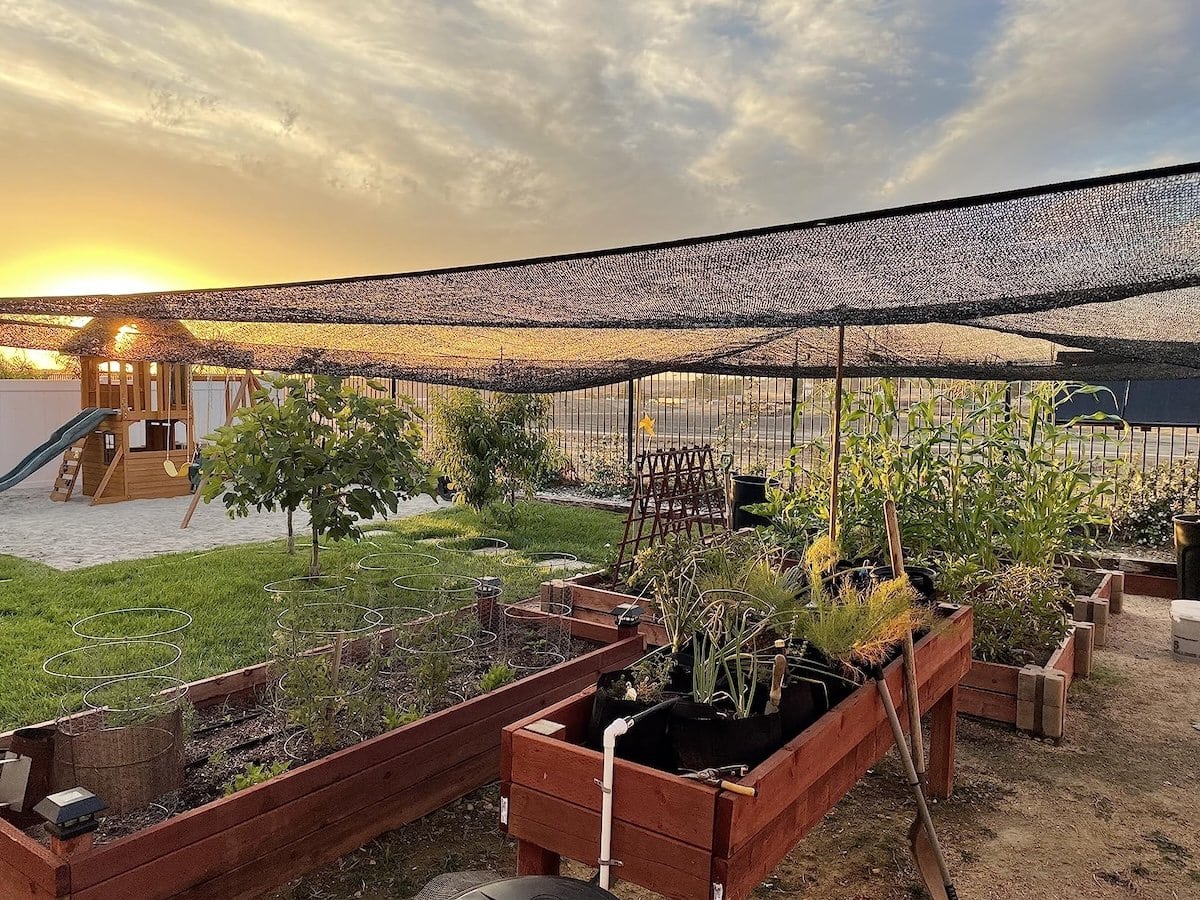
In very hot climates, consider planting in a location that receive natural partial shade (e.g. from a nearby tree or structure), especially for sensitive plants. Or, you can erect shade covers as needed over individual beds or over a larger garden space.
I recommend using specialized garden shade cloth since it reduces the temperature and intensity of the sun, but still allows good airflow and some UV rays through – vital for plant growth. In my garden, I drape and secure the shade cloth over wire hoops though you can also use stakes, trellises, poles, or other supports.
In a pinch, you can also shelter plants with large beach or patio umbrellas, bed sheets, or other overhead canopies. However, it’s best to only leave them up for a day or two if they completely block the sun. Also consider moving potted plants into shadier locations when necessary.
s
PRO TIP: Garden shade cloth comes in various sizes and ratings. For most vegetable gardens, 40% to 50% shade cloth is ideal, which adequately protects the plants but still allows enough sunlight through for essential photosynthesis.

2) Water Deeply (all season long)
Start now! Regularly watering deeply sets your plants up for success all season long.
Plants thrive with a consistent watering schedule, and prefer deep but infrequent water (vs watering a little bit every day.) The exact time and duration will vary depending on your climate, but the goal is to water slowly and deep, down into their root zone and beyond, and then back off for a few days to let them breathe (but not dry out completely).
If you only water shallowly, plant roots stay shallow too – making them very vulnerable to heat and dry spells. Yet watering deeply encourages deeper roots, larger plants, and increased resistance to stress like drought, wind, and temperature swings. Deeply damp soil maintains more steady temperatures and is less likely to dry out during a heat wave.
I love drip irrigation because it saves me a ton of time, and provides my garden the type of water it loves. Before we had automatic drip, I used these drinking water grade soaker hoses in our beds so I could offer similar long, deep water without having to stand there with a hose.

3) Water Before Heat (but resist the urge to overwater)
Give your garden a good deep drink of water either the evening or morning before a heat wave is due to hit. Providing water well before the peak heat of the day will give them ample time to soak up the water, and also keep you out of the sun too!
However, resist the urge to excessively water all day long. Plants may wilt under high heat and strong sun, but that doesn’t necessarily mean they need more water (nor is more water always better). For instance, my zucchini plants can look sad and limp in the middle of a warm afternoon – but always perk back up that night! If they still look droopy in the morning, then they may be thirsty.
When in doubt, check your soil moisture with a moisture meter (or by probing an inch or two below the soil surface with your finger) before watering more. If it feels moist or if you just watered in the last day or two, it probably doesn’t need more water yet.

4) Don’t Skip the Mulch!
Mulching is always a fantastic idea (a must, if you ask me!) but is especially important to protect plants in heat waves. Did you know that plants are more sensitive to temperature swings in their root zone and soil than they are by ambient air temperatures?
Mulch provides a protective layer for the soil and roots – buffering against temperature extremes and promoting more steady soil temperatures overall. It also reduces water evaporation and runoff, protects the soil microbiome, prevents soil from drying out, and reduces your need for water.
Apply about 2 inches of organic mulch material (even more for light mulch like straw) on the soil surface around the base of plants or over the whole garden bed. Examples of organic mulch include: straw, small bark or wood chips, shredded leaves, pine needles, and aged compost (my favorite). Some gardeners use a layer of newspaper, cardboard, or plastic sheeting.
RELATED: See this article to read more about the pros and cons of 8 different types of garden mulch, or this guide on mulching best practices.

5) Avoid Wetting Plant Leaves
Avoid overhead watering and wetting your plant leaves during hot sunny conditions. You know how humans can still get a decent sunburn (if not worse) in foggy conditions? Moisture amplifies the sun like a magnifying glass! Similarly, lingering water droplets on plant leaves in direct sunlight can magnify the intensity and heat of the sun, and increase the chance of sunburn or scorching the leaves.
As a best practice, I always try to water the soil around the base of the plant rather than the plant itself, but especially so during heat waves.

6) Promote Overall Plant Health
The final way to help your garden survive a heat wave is to grow the healthiest plants possible! This is something you can work on all season long.
Stressed or compromised plants are more sensitive to the heat, just as older folks or those with health issues may be. (No judgement – I get sick in the heat too!) Also just like humans, plants have immune systems that help them respond and rebound to various environmental stressors including pests, disease, drought, frost, heat, toxicity, and more.
In my garden, I encourage the most robust and hardy plants possible with organic inputs such as worm castings, mycorrhizae, well-aged compost and/or homemade compost tea. All of these goodies feed the living soil food web, enable plants to better utilize nutrients, and improves their resilience to pest pressure, heat, and more.

And that is how to protect plants during a heat wave.
Alright friends, I hope this leaves you with plenty of ideas and methods to help your garden survive the next heat wave that rolls in! As you can see, there are several things you can do now and always in preparation – and a few tools or materials you may want to keep on hand too. Please let me know if you have any questions in the comments below. Or, if there are any great ideas that I forgot to mention. Stay cool and comfortable out there!
Don’t miss these related articles:
- Using Hoops and Row Covers: Pest Control, Frost Protection & Shade
- 7 Ways to Protect Plants from Frost Damage
- Garden Mulch 101: When, Why and How to Mulch Your Garden
- What is Bolting? How to Prevent Plants from Bolting or Going to Seed
- The Benefits of Using Mycorrhizae in the Garden



8 Comments
Kimberly Schreiner
I have learned SO much from you over the last few years.
Thank you for your well written, concise instructions!
Aaron (Mr. DeannaCat)
Thank you so much Kimberly and we are so appreciative of your support!
Cara
Hi Guys,
Quick question, please: What kinds of hoops do you use with shade cloth for 4′ wide beds?
Many Thanks and Stay Cool!
Cara in Pasadena
Aaron (Mr. DeannaCat)
Hi Cara, these super hoops plus base extenders work great for us in 4 foot wide beds, if you want to be able to cover taller plants like full grown tomatoes, squash, eggplant etc., you may need the hi rise hoops. We typically use 3 hoops per 8 foot long bed so it doesn’t sag in the middle. Hope that helps and reach out if you have any other questions.
Eden
Great article. Thank you for sharing very helpful tips on how to protect the garden from heatwaves.
JoyceGoodge
I put my vegetables in pots and the get morning sun and afternoon shade up against my trailer. I water every evening. So far so good. They really don’t like the intense heat wave.
Aaron (Mr. DeannaCat)
Good luck Joyce and have fun gardening!
Jason
We have always use small tree branches for temporary quick shade during heat waves here 🙂