

How to Get Rid of Aphids: 9 Natural Options
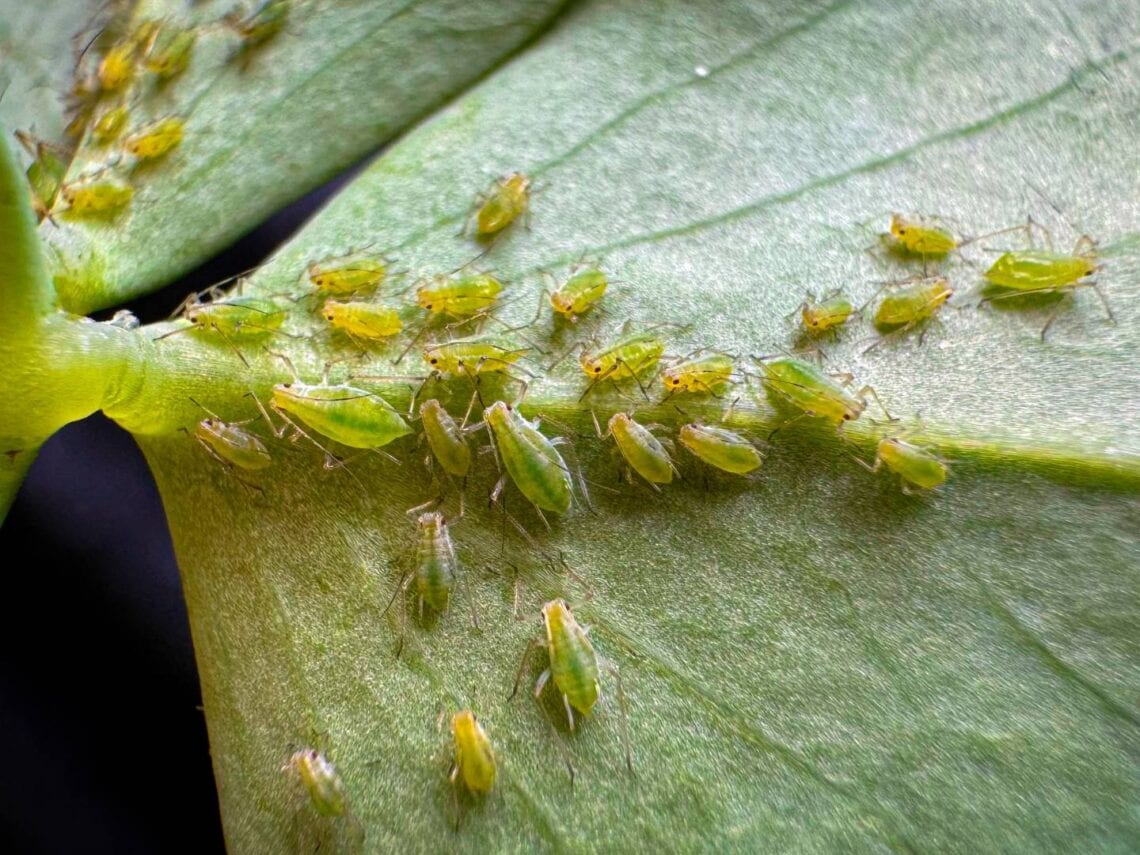
Got aphids? Yeah, me too. Aphids are one of the most common garden pests around the world. They’re attracted to a wide variety of plants, and can do a lot of damage if large populations are left unchecked! But thankfully, there are many easy ways to control them – and without nasty pesticides.
In this post, I’ll share 9 organic ways I get rid of aphids in my garden including tips for prevention, treatment, DIY sprays, and natural remedies like companion planting. Many of these tips can apply to houseplants too.
Jump straight to control methods here

Want to save this?
NOTE: This post was originally published in June 2020 but has been significantly updated since. Homestead and Chill is reader-supported. When you purchase through links on our site, we may earn an affiliate commission.
Identifying Aphids
Aphids are small, soft-bodied insects. There are thousands of aphid species around the world. They come in many different colors including grey, green, white, yellow, black, or red. Some are even furry-looking, called wooly aphids. I’ve seen all of the above in my garden!
Young nymph aphids will appear as tiny dots on your plants. As the adult aphids mature, their legs are more visible as they become increasingly mobile. While they spend most of their lives crawling about, adult aphids in crowded conditions can grow wings to travel to new food sources and colonize new plants.

What plants are aphids most attracted to?
Aphids will feed on a wide variety of plants including ornamental shrubs, roses, fruit trees, and vegetable crops. They’re especially drawn to tender new leaves and buds.
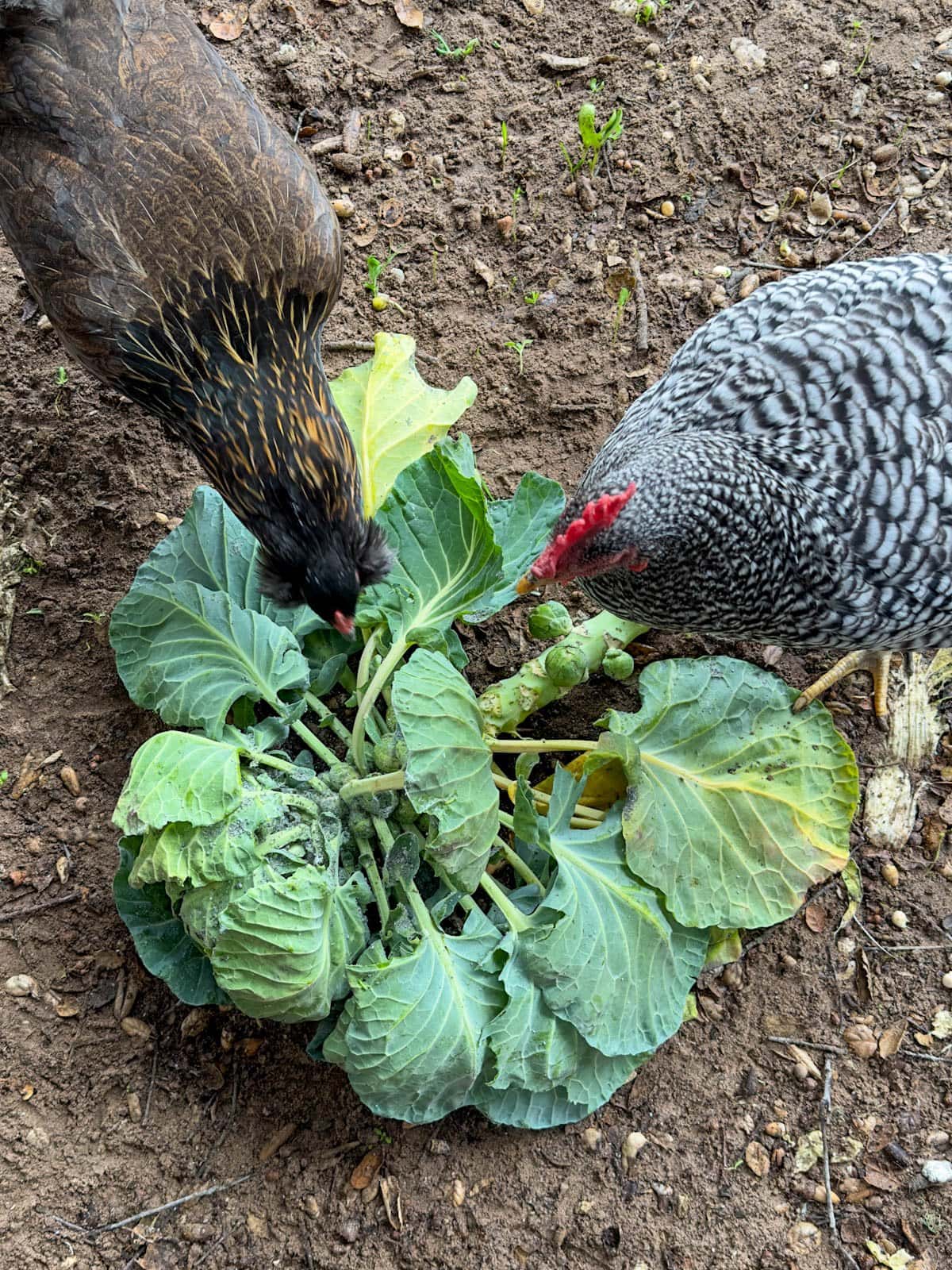
In my garden, I’ve found aphids are most attracted to brassicas (like kale, broccoli, and cabbage), artichokes, milkweed, Swiss chard, carrot greens, citrus leaves, and sometimes leafy greens like spinach or lettuce.
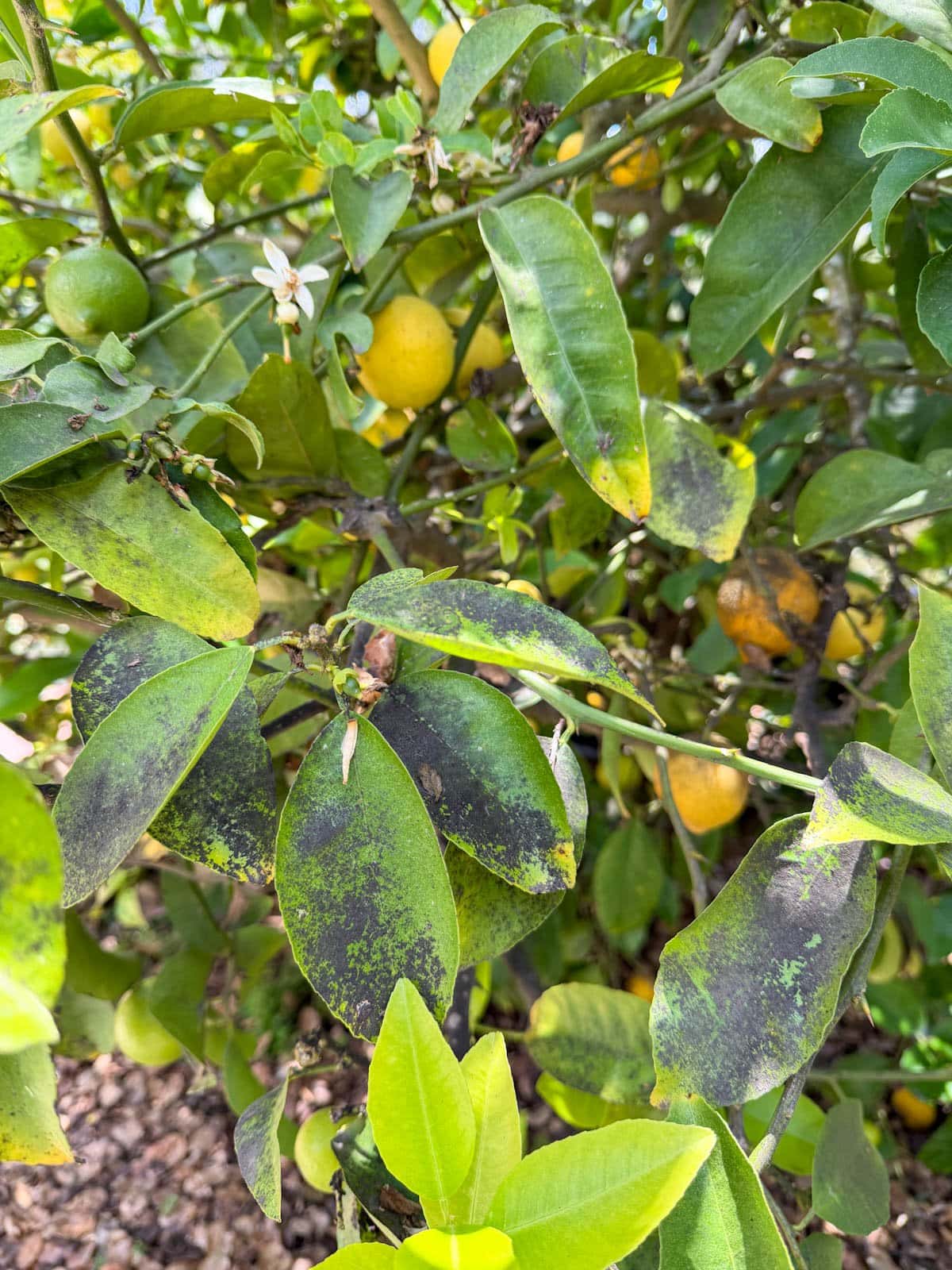
Different species of aphids flock to different plants! For instance, I usually see yellow aphids on my milkweed, grey aphids on brassicas, black aphids on Swiss chard and nasturtium, green aphids on my citrus and lettuce, and wooly aphids on my apple trees.
They colonize on their chosen host plant, forming clusters and reproducing rapidly.

How Aphids Damage Plants
Aphids are “sap-suckers”, using their mouthparts to pierce leaves and stems to suck nutrients and moisture from plants. The initial damage is mostly aesthetic and localized, causing yellowing and/or curling leaves.
However, a heavy population of feeding aphids can cause stress, nutrient deficiency, stunted growth, and in extreme cases, death to the infected plant. The younger the plant, the more susceptible to lasting damage it is. Some aphid species inject a toxin into the plant that causes further leaf curl, discoloration, and growth issues. Others can be vectors of plant diseases, particularly viruses.
Aphids also emit a sticky, gooey secretion called honeydew. As honeydew coats the surface of plant leaves, it can lead to the development of sooty mold (a general term for several types of fungus that grows on honeydew). The mold doesn’t technically “infect” the plants but can inhibit photosynthesis in heavily coated leaves. Sooty mold is undesirable and unsightly on prized ornamentals such as rose bushes.
Aphids and Ants
Ants love the sticky, sweet honeydew that aphids leave on plants – so much so that ants actually “farm” aphids to encourage more! Ants will gather around, protect the aphid colony and the host plant, and even physically caress the aphids to increase honeydew production, effectively “milking” the aphids.
So while ants aren’t usually all that attracted or harmful to garden plants themselves, heavy ant activity could indicate that an aphid infestation may be underway!

Image courtesy of TreeHugger (via Shutterstock)
9 Natural Ways to Get Rid of Aphids
Now that you’re more familiar with aphids, here are 9 different organic ways to prevent, manage, or get rid of them.
When I see aphids in my garden, I typically start with the most simple treatment methods (e.g. hand squishing or blasting them off with water) for minor infestations, and use DIY soap spray for more persistent problems.
Remember that an organic garden isn’t supposed to be “perfect”. While we want to limit aphid populations so they don’t take over, aphids are also food for beneficial insects and wildlife! It’s all about balance.
1) Inspect Plants Regularly
Become a pest detective! One of the best ways to organically control aphids is to catch them early on. Then, every other method I suggest below is exponentially easier and more effective. Your plants will also be more likely to rebound with little-to-no ill effects thereafter.
Make it part of your garden routine to regularly inspect your plants (e.g. weekly), which is something I suggest to manage all sorts of garden pests – not just aphids! Be sure to check the underside of leaves, and also in the centermost tender parts where new growth is. For example, I most often find aphids in the very middle of a kale plant, in a just-budding broccoli head, or other tight and protected places.
PRO TIP: Train your eye to recognize signs of aphid damage, before you even see the aphids themselves. Check out the photo below; I spotted the unusually crumpled section of that broccoli leaf from 10 feet away! Lo and behold, aphids were clustered and feeding on the underside there, out of plain sight. I smushed them right away.

2) Squish, Prune, or Remove
When I come across a small cluster of aphids, I simply squish them by hand. (Gently pinch, smush, and wipe the aphids off the leaf or stem.) This method may not be ideal for the squeamish but it’s quick, easy, and effective! Because their residue is quite sticky, I usually like to spray it off with water afterwards.
Another easy way to quickly get rid of aphids is to cut out the infected area of the plant (when possible*) such as just a few leaves, a small branch, or other non-essential section of the plant. In more advanced cases, I often remove severely infested plants (e.g. a whole kale plant) to prevent aphids from spreading to neighboring plants.
*NOTE: For some plants like kale or tomatoes, avoid cutting off the “terminal bud” or the primary growth tip that’s usually in the very center or top of the plant. If you cut that part, the plant will essentially stop growing.
3) Spray Off with Water
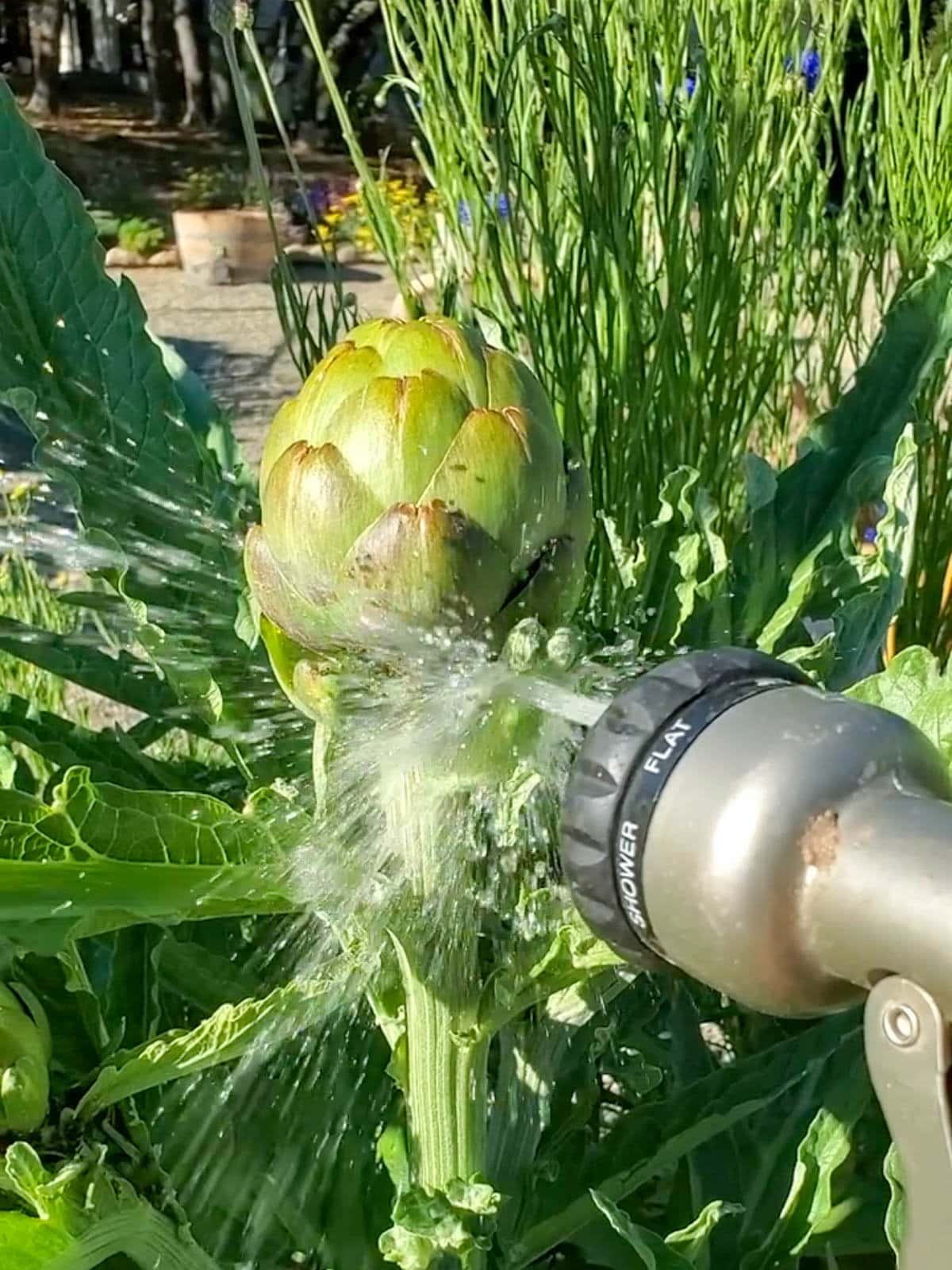
One quick and easy way to get rid of aphids is to simply blast them off with a firm stream of water from your garden hose! (Don’t spray so hard that it damages the plant of course.) This is one of my go-to options, often used in conjunction with the squish method.
This method helps to a) physically remove the aphids from your plants, b) remove the undesirable honeydew, and c) the water pressure may even be enough to kill them on impact.
PRO TIP: I usually support the plant or leaves with one hand while spraying with the other, gently separating or flipping the leaves over (and smushing aphids if needed) to make sure I get every nook and cranny.
4) DIY Soap Spray (Insecticidal Soap)
One of the only “sprays” I use in my organic garden is a simple homemade soap spray. It’s gentle on your plants (when used correctly) and won’t harm beneficial insects!
You can make a basic soap spray by mixing 1 Tbsp pure castile soap in 1 quart of warm water. See my full DIY insect soap spray recipe here along with application instructions. You can also buy pre-made organic insecticidal soap but it’s not nearly as natural as homemade.
Soap spray is only effective against small soft-bodied insects like aphids, mealybugs, white flies, and spider mites (not caterpillars or beetles). It works by coating and penetrating their natural protective barrier (cell membrane), causing them to desiccate or dry out. That said, insect soap spray has little-to-no residual effect. It only kills on direct contact, so be sure to spray it right on the target pests. Turn over or peel open curled-up leaves as needed to reach the aphids.
NOTE: After it sits for about 10 minutes, I like to spray the soap residue off with water. I also personally don’t like to use soap spray (or neem oil) directly on tender edibles that I’m about to harvest where flavors may linger, like on lettuce or almost-mature broccoli heads.

5) Encourage Predatory Insects
Use bugs to fight bugs! Beneficial insects like ladybugs, green lacewings, and praying mantis are terrific natural predators of aphids and other small soft-bodied pest insects.
Ladybugs in particular are ferocious predators of aphids. According to the Planet Natural Research Center, a ladybug can eat up to 50 aphids a day. That means that during its lifetime, a single ladybug is capable of consuming up to 5,000 aphids!
During the early stages of their life, ladybug larvae are the most effective at controlling aphid populations. Yet ladybug larvae look significantly different than their adult form (see the photos below). Therefore, make sure you know how to recognize these good guys in the garden and don’t mistake them for pests!

Green lacewings also readily consume aphids, though not at quite the same incredible rate that ladybugs do. An average green lacewing larvae may consume around 200 aphids (or other prey) per week.
To boost their populations, many gardeners buy and release beneficial insects. We used to release ladybugs in our garden each year, but now have a sufficient natural population that we no longer need to. Ensure you only buy native American ladybugs and not invasive Asian lady beetles!
One of the best ways to encourage beneficial insects is to maintain your garden in an organic manner (never use broad spectrum pesticides), use companion planting and polyculture – explained more below.

6) Companion Planting and Polyculture
Growing a wide variety of plants creates biodiversity in your garden, which helps to attract more beneficial insects and keep pest populations in balance, naturally! Plus, variety and polyculture – the term for mixing many types of plants in one small space – reduces the chances of widespread devastation by pests that are all attracted to the same crop.
I highly suggest interplanting companion plants with your pest-prone crops. For example, tuck in aromatic plants like onions, garlic, leeks, catmint, marigolds, dill, fennel, and/or cilantro around your other garden veggies – all known to deter aphids. I’ve successfully kept swiss chard plants naturally aphid-free (usually aphid-magnets) by planting onions around and between the chard.
On the other hand, some companion plants can serve as a “trap crop” and attract aphids – while luring them away from your veggies! Nasturtiums are a prime example. Aphids absolutely love nasturtiums. However, be sure to periodically remove infested trap crop plants to prevent the pests from spreading even more.
Learn more and get my free garden companion planting chart here!

7) Neem Oil Spray
Neem oil is a natural, plant-based oil that’s particularly effective against small soft-bodied insects like aphids, thrips, spider mites, mealybugs, scale, and white flies. The oil coats their bodies and smothers them (or otherwise interferes with reproduction and feeding). Like soap spray, neem oil works best when directly applied to aphids.
Additionally, the active ingredient in neem oil (Azadirachtin) is a general insect repellent that can reduce or prevent aphid infestations in the first place when routinely applied to plants.
Neem oil should not negatively impact beneficial insects like bees, ladybugs, earthworms, parasitic wasps, spiders, or adult butterflies when applied correctly (e.g. avoid directly spraying beneficial insects or on flowers).
Recently some pre-mixed, “ready to use” neem oil sprays have been found to be contaminated with other pesticides like malathion, chlorpyrifos, and permethrin. Therefore, I recommend using a concentrated 100% pure neem oil and diluting/mixing it yourself, which is most cost-effective and safe.
Learn how to properly mix and apply neem oil before using it in your garden.

8) Plant Purple and Red Varieties
Did you know that pests are less attracted to red and purple vegetables? They sure are! Year after year, the purple cauliflower, purple cabbage, and red kale in my garden is significantly less damaged by aphids and cabbage worms than their green counterparts.
One reasonable theory is that pests can’t blend in and hide as easily on brightly-colored purple vegetables as they can on green ones. That would make them an easy target for birds or other predators.
Furthermore, studies show that anthocyanin (the antioxidant-rich flavonoid that makes red, purple and blue-pigmented veggies so good for us!) is actually mildly toxic to some insects. It may even deter larger pests like squirrels! Therefore, try selecting and planting red and purple veggies as one organic way to control aphids.

9) Hoops and Row Covers
One final organic way to stop aphids is to physically block their access to plants. Individual plants, raised beds, or sections thereof can be protected with fine mesh insect netting or similar row covers.
I included this as the last option on the list intentionally… Since aphids are so dang tiny, hoops and row covers aren’t always 100% effective at keeping those little suckers out (especially if any are already present on the plants or soil). Yet if you cover young plants early on, and use the right type of fine row covers tucked in tightly around the edges, they can certainly help.
Read all about using hoops and row covers in the garden here, including details on various hoop and cover material options.

And that’s how to get rid of aphids, organically!
In closing, I hope this article gave you plenty of new ideas of how you can get rid of aphids in your own garden. As you can see, there are tons of effective options – and most of them are very quick and simple! Not sure where to start? Experiment with a few methods, and then come back to let me know how it goes. Thanks for tuning in, and best of luck!
Don’t miss these related articles:
- 8 Organic Ways to Get Rid of Cabbage Worms & Moths
- Homemade Aphid Soap Spray Recipe
- 9 Organic Ways to Get Rid of Snails or Slugs in the Garden
- How to Get Rid of Powdery Mildew: Organic Treatment and Prevention
- Companion Planting 101 + Free Companion Planting Chart
- How to Kill Grubs w/ Beneficial Nematodes


32 Comments
Tarney Navarro
Last year I was too late and my chives were covered in black aphids. Luckily, the chive roots were well-established and they’ve come back again this year. Going to be more vigilant this year and try some of the methods you describe. Thank you!
Aaron (Mr. DeannaCat)
So great to hear Tarney, aphids do seem to be attracted to chives so something to watch out for sure, have fun growing!
Adrian Fox
Rather amused by the comment that red or purple plants are less affected! I am growing green and purple/red kales in the greenhouse and the worst affected are the purple kales especially around the flowering shoots. My aphids haven’t probably read the book or the notes. 🙂
Is standard washing up liquid toxic for us I wonder? Lots of remedies suggesting using it a spray to help break down the oily layer over the plant or aphids and I am wondering about doing that before using a hose to knock off what is left the next day.
I have some neem oil but although I use this for scale insect on my citrus, I am not keen on using it on edible plants like cabbage and kale. It is actually banned for insectidal use in my area and I’m not sure why that is.
The aphids seem to love best the flowering shoots on the brassica plants, the best bits for us to eat of course. But I find it almost impossible to just brush them off or squeeze them without ruining the shoots.
Aaron (Mr. DeannaCat)
Hi Adrian, kale can be a tough plant in general with aphids (whether red, purple, or green) as they seem to be an aphid magnet no matter what. We have found the most stark results when it comes to purple and green cabbage in particular. When we make an aphid soap spray, we typically use Dr. Bronner’s castile soap which we feel fairly safe about using compared to some other soaps out there, however, we always follow up a soap spray with a fresh water spray to knock off all of the soap along with the aphids.
Neem oil may be banned in your area as it is considered moderately toxic to bees and parasitic wasps, however, the impact on bees and wasps can be limited by only applying neem oil in the evening once the sun goes down. Granted, there is still a chance that you could spray a bee or parasitic wasp if they happen to be spending the night on your plants. Aphids do seem to love the flowering shoots on brassicas and the best method for removal could be a light spray with a hose. You could possible harvest the shoots with the aphids on them and soak the shoots in a dilute vinegar water solution which may pry the aphids away from the shoots, some light massaging may be necessary as well. Hope that helps and have fun growing!
Pash
Does spraying the aphids off the plants with water actually killed the aphids? I wondered if they wouldn’t just fall on the ground and move on to other places? Thanks. So appreciate your experience and advice!
Aaron (Mr. DeannaCat)
Hi Pash, it may kill some of them with a hard enough spray but we find that spraying them with water is a pretty good preventative measure if the number of aphids hasn’t gotten too large when you start. You may have to do it multiple times as they come back but we find that it greatly reduces their numbers in general. You can always do a soap spray which will kill aphids on contact but we typically only do this if there is a more heavy infestation. Hope that helps and good luck!
dan
An amazing article, thank you so mucho-much.
My question: Is there a plant that can get ladybugs to stay/ congregate?
The reason is a commentor said their ladybugs just flew away once released.
I realize there may have been other factors involved; but if there’s a plant that can help, there’s a way.
Take good care.
Aaron (Mr. DeannaCat)
Hi Dan, I think just having a wide range of herbs and flowers growing in your yard/garden can give ladybugs and other beneficial insects options as far as food and shelter. It is said that cilantro, dill, and fennel are especially attractive to ladybugs along with yarrow, cosmos, marigold, calendula and variety of other flowers. We have found that releasing them right at dusk, increases the success rate of a few of them staying around. Thanks for reading and have fun growing!
Ondine Constable
I’ve tried repeated hose blasting, neem spray and handsquishing (several times a day!) but I have not been able to get rid of the aphid infestation on my whirling butterfly (gaura) plants. I’ve seen a few ladybugs but not enought to make a difference. So frustrating. I’ll try your soap spray and if that doesn’t work I might need to pull out the lovely gaura plants.
Aaron (Mr. DeannaCat)
Good luck Ondine, soap spray will kill them on contact but you will likely need to do multiple applications to fully get rid of them. If your gaura plants are more prone to attracting aphids, it may be time to move on from them, we typically don’t like to keep plants around that need too much attention and can’t stand on their own after us doing a few treatment methods to help mitigate any pest or disease issues that may pop up.
Arthur Dawson
Thanks for lots of good information. Obviously it is based on your own experiance, rather than copied and pasted of other websites. I wonder if you can comment on something I’ve noticed. I watch my cabbage and cauliflower closely for rolled leaves, an early sign of attack by the cabbage aphid, Brevicoryne brassicae. When I identify a colony, I squash the larger individuals at the center. Within a day the whole colony has died and there is no evidence of spread to the rest of the plant. Do they produce an alarm pheromone that deters further colonization? I’ve found no explanatrion on the internet and ‘experts’ look at me as though I’m hallucinating. I’ve observed the same thing repeatedly during 50 years of gardening and don’t think it’s my imagination.
Aaron (Mr. DeannaCat)
Hi Arthur, glad to hear you enjoyed the article. We haven’t looked too much into aphid pheromones but here is and interesting article on Aphid Alarm Pheromones, and here is another interesting article from the Cornell Chronicle. Hope that helps and happy gardening!
Arthur
Thanks for sharing great tips and a great deal of information!
Erin
I’ve heard that aphids show up when there is too much nitrogen in the soil, what are your thoughts about that? Thanks guys…love your blog!
Aaron (Mr. DeannaCat)
Hi Erin, you are in fact correct. Nitrogen leads to explosive plant growth which attracts aphids to the new growth plant tissue. Aphids are a fairly common garden pest so it is not uncommon to see them in any garden whether the soil is low or high in nitrogen. Parasitic wasps, lady bugs, and green lacewings will help keep the aphids in check. We released some lacewings on our property some years ago and have consistently seen them ever since, whereas I don’t recall seeing them before that point. Let us know if you had any other questions but thanks for reading and for your support!
Geoffrey Rod
Gollum…gollum…excellent.
Peg
Just today I came inside and told my partner how I daily pick all the funky looking leaves off our collards and kale first to feed to the juvenile chicks for whom I can’t quite let out to safely free range yet. Then I pick another bunch of good ones. Some of the leaves look like they do from aphids –which are really only restricted to one smaller plant that was probably weak and sickly from the beginning. The rest of the plants in the garden are robust and healthy. They rush to devour the aphids off the leaves first before eating the leaves themselves with relish. Then I looked at email and saw this article from you! LOL!