

How to Grow Pineapple Guava (Feijoa): Cold-Hardy Tropical Fruit

Come learn how to grow pineapple guava, also known as feijoa (fay-oh-uh). The plants are low-maintenance, pest-resistant, and easy to train either as a shrub or tree. In addition to enjoying the delicious tropical-tasting fruit, these beautiful evergreen shrubs are excellent for ornamental landscaping or living privacy screens as well.
In this guide, I’ll share my top tips to successfully plant and grow pineapple guava including hardiness zones, cross pollination, ongoing care, harvest time and more.
I’ve been growing pineapple guava for over 10 year; they’re my favorite edible shrub in our garden! If you live in zone 7 or higher, you can grow them too.
Quick Facts About Pineapple Guava (Feijoa)
- Pineapple guava (Acca sellowiana) is native to South America. Now grown all over the world, it’s especially popular in New Zealand and Australia where they call it “feijoa”.
- Despite the name and tropical flavor, pineapple guava isn’t a true guava at all. Part of the Myrtle plant family, feijoa is a mere distant cousin of tropical guava and prefers subtropical conditions to thrive.
- Pineapple guava (feijoa) thrives in temperate subtropical areas or warm, dry Mediterranean climates. It grows exceedingly well in California, the Pacific Northwest, Florida, Texas, and more. However, they’re quite adaptable and can deal with both extreme heat and cold in the right conditions. These cold-hardy plants can survive temperatures down to 15°F!
- With excellent pest and disease-resistance, the plants are easy to care for.

Would you like to save this?
What does pineapple guava taste like?
Feijoa has a unique flavor that is both exceedingly sweet and slightly tart. It is reminiscent of pineapple, banana, kiwi, and guava all at once – with a hint of piney mango, mint, and even bubblegum! Even better, pineapple guava fruits are rich in vitamin C, fiber, antioxidants, and B-vitamins.
Growing Zones
Most resources say that pineapple guava grows best in USDA hardiness zones 8 – 11. However, I know someone with thriving feijoa plants in Tennessee’s zone 7!
Different varieties of pineapple guava are more or less tolerant to high heat or freezing conditions. See a full list of varieties near the end of this article. (Update: I’ve also heard from a gardener friend who grows the Nazemetz variety in Kentucky, zone 6b. Read more about how she pulls it off in the ‘winter protection’ section below).
Pineapple guava is also an excellent choice for coastal zones because it tolerates salt, including salty air spray and mildly saline soils.

The orange, peach, and yellow area of the map represent USDA hardiness zones 8-11, where pineapple guava grows best.
Size and Growth Habits
Pineapple guava are large shrubs that can eventually reach 12 to 15 feet tall and wide, though they can easily be pruned to keep much smaller too. When pruned up into a tree-like structure, feijoa can reach 20 feet or taller over time.
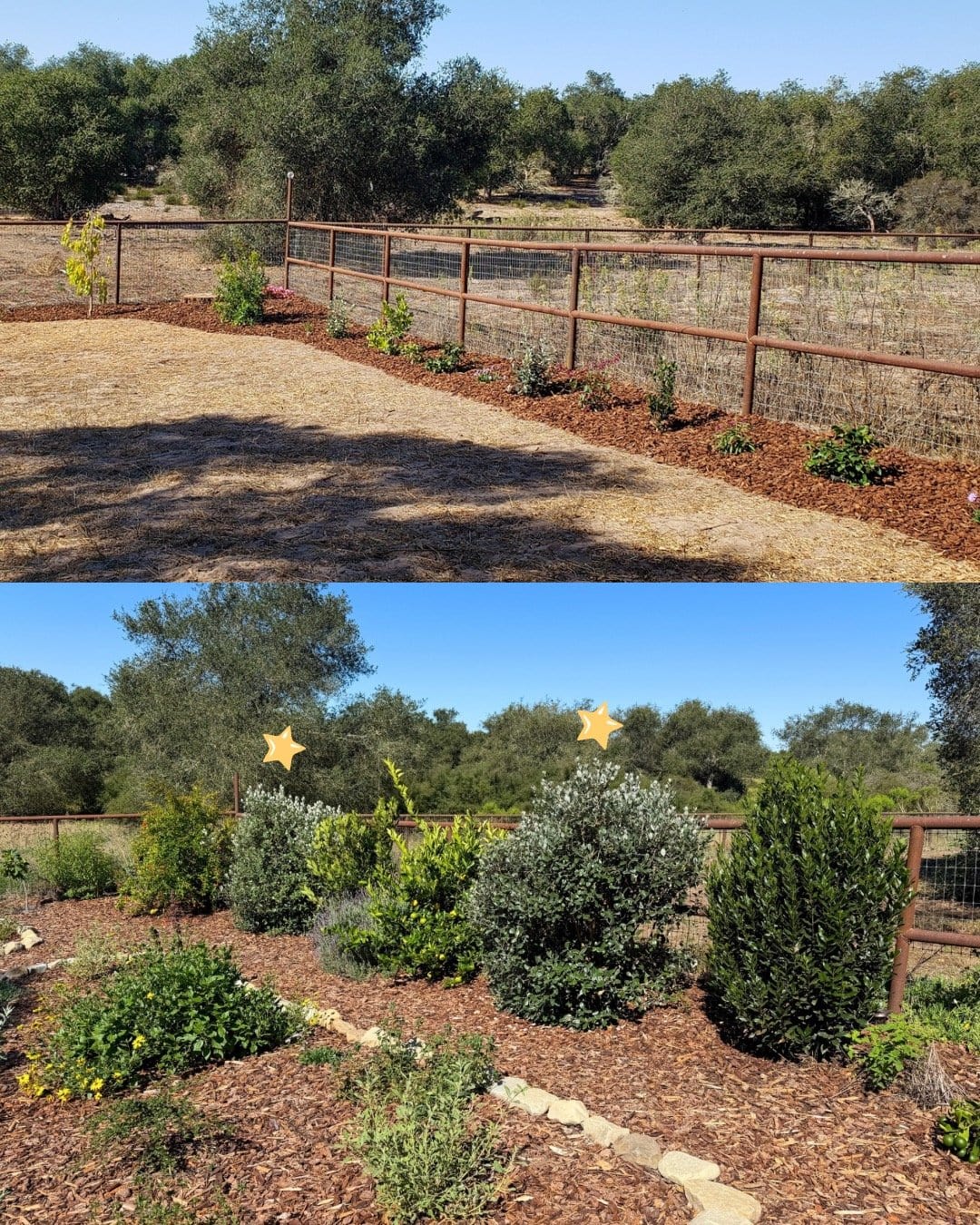
Pineapple guava shrubs are evergreen, with silvery gray-green, oval, thick leaves. Combined with their handsome structure, appearance, and easygoing nature, they’re a popular plant for ornamental landscaping and privacy – fruit aside!
Be patient with your feijoa! The plants are fairly slow-growing, which makes it even easier to keep them pruned to your desired size and shape. Youn plants can also take several years to bear fruit, though timing can vary depending on the climate, cultivar, and type (e.g. started from seed, grafted shrub, etc).


Can you grow pineapple guava in a container?
Yes! Their slow-growing nature and leniency for pruning also makes pineapple guava very container-friendly. As with all potted plants, the size of the container will dictate the size and vigor of the plant. Choose a large container with ample drainage holes and high-quality potting soil to promote healthy growth. I’ve successfully grown pineapple guava in half wine barrel planters.

Flowers and Fruit
Pineapple guava plants flower prolifically in the spring, dotting the green shrubs with spectacular sweet-smelling flowers. The flowers are white and pink with red firework-like centers, and the white petals of the flower are edible and delicious! They melt in your mouth much like cotton candy and marshmallows combined.
Birds and bees are highly attracted to the flowers, and help to pollinate as they visit. The wild birds in my yard love to eat the edible flower petals too.
Following the spring bloom, pineapple guava fruit develop over the summer and ripen in the fall to winter. On average, feijoa fruit are about the size of a medium to large egg (3-4 inches, oblong shape).


Pineapple Guava and Cross-Pollination
The majority of pineapple guava varieties are considered self-fruitful or self-fertile (e.g. Coolidge, Pineapple Gem, and Apollo) and should bear fruit without a partner plant. Yet for the most guaranteed and prolific fruit production, I recommend planting at least two pineapple guava shrubs in your yard. Cross-pollination from a partner plant will greatly increase fruit development!
Birds and bees naturally pollinate feijoa, but but it’s easy to hand-pollinate the flowers to help guarantee a good harvest too. (I’ve personally never needed to manually pollinate our plants to get fruit.) Simply use a small brush (e.g. paintbrush or makeup brush) to collect pollen from the flowers on one plant, and then go brush it onto the flowers of the other plant. Continue this back and forth between the two plants (or more).
Starting from Seed, Nursery Plants, or Cuttings
You can grow pineapple guava from seed, a cutting, a small shrub from a nursery, or buy plants online. Starting from seed will clearly take the longest to mature. I’ve also heard some seed may not bear fruit ‘true to seed’.
The most surefire way to grow pineapple guava is to buy a young grafted nursery plant. That’s what I always do! I suggest giving your local nursery a call to see if they carry them. If not, ask if they’re able to special one (or two) for you. They may also be able to provide insight on what varieties do best in you area.
You can also propagate pineapple guava by taking a cutting from an established plant. Ideally, choose a cutting that is about 12 inches long, no thicker than 1/4-inch in diameter. Cut a young softwood branches near the bottom of the shrub. It should be fairly pliable, have at least 3 nodes, and a few leaves at the top of the stem. Dip the freshly cut end in rooting hormone solution, and then plant it in a light fluffy soil mixture – such as seed starting mix, or peat moss mixed with sand and sawdust and keep moist until roots grow in.
Planting Location and Sun
In most places, you plant pineapple guava in location that receives a full sun – yet they aren’t fans of prolonged intense heat. In my temperate climate, I’ve successfully grown healthy, productive pineapple guava plants in partial shade too. A minimum of 6 hours of daylight is suggested for the best fruit development.
In hotter climates where summer temperatures are regularly over 90°F, choose a location with dappled sunlight (preferably afternoon shade in the summer) or use shade cloth to protect them from excessive heat.
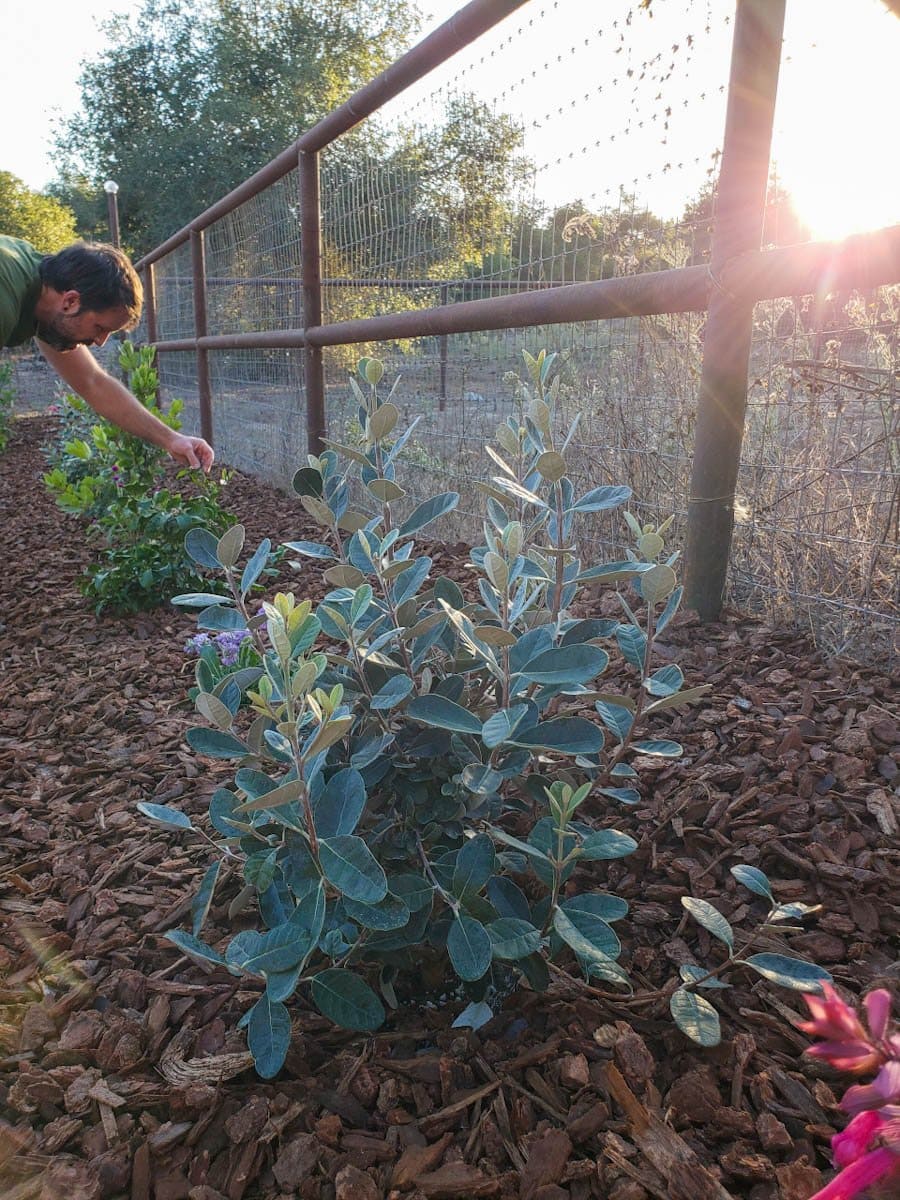
Pineapple guava are not big fans of high winds, so also keep that in mind when selecting their spot. Planting a feijoa shrub near a wall or fence can help provide protection from the wind, along with reflected heat and added frost protection in areas with harsh cold winters.

Winter Protection
Pineapple guava plants are frost-tolerant but prolonged periods below 15°F can kill them. Frosts can also damage flower blossoms or ripening fruit. In zones 8 or lower, try to choose a semi-protected planting location (e.g. along a fence or house) that isn’t as exposed to the elements. During a cold snap, you can also protect your pineapple guava shrub with a bed sheet or frost cloth.
For example, my friend that is successfully growing pineapple guava in Kentucky zone 6b (Nazemetz variety) says she created a sheltered microclimate for it, by planting it near a south-facing wall and mulching generously. When it snows heavily, she wraps it in burlap and/or plastic to keep the snow off.
Soil and Mulch
Pineapple guava grows easily in average garden soil. For the best results, plant your feijoa in moderately rich, well-drained soil with a pH between 5.5 and 7.0. The one thing they will not tolerate is constantly soggy soil, so be sure to plant them in a location where drainage is not an issue.
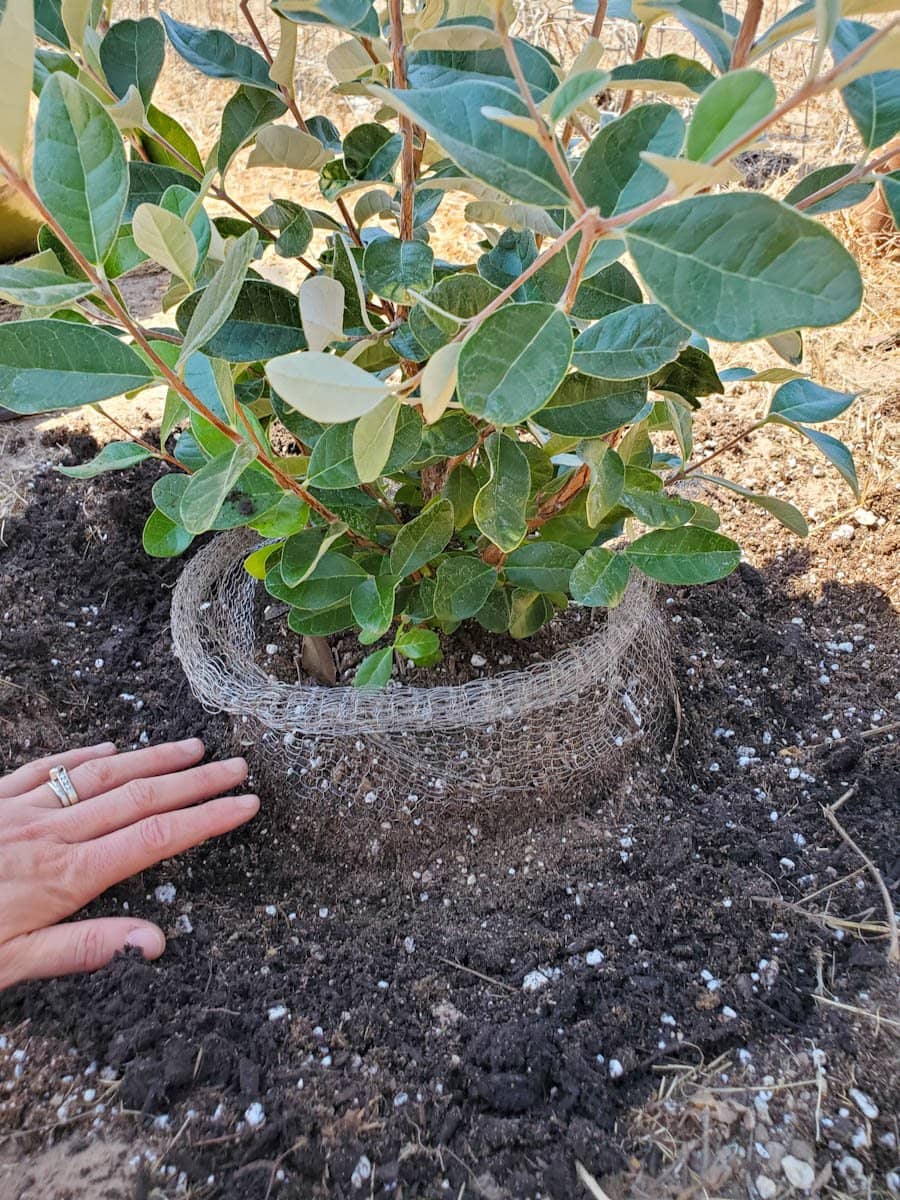
Poorly-draining soil should be amended with horticultural sand, small volcanic rock, pumice, or other aeration additives to promote drainage. I also recommend adding some aged compost, worm castings, and/or quality bagged potting soil to improve the texture and nutrient content of the soil.
Finally, provide an inch or two of mulch around the base of the shrub to protect its shallow roots.
Water Needs
Pineapple guava grow best when moderate water is provided. Aim for consistently damp, moist soil – but not soggy! Avoid overwatering (especially in winter months) as overly wet soil can lead to root rot or other related diseases.
Feijoa are actually quite drought-tolerant once established! However, a lack of adequate water can lead to poor fruit production. Under-watered pineapple guava fruit may be small, less juicy, or may drop from the plant before they fully develop.
Routine Fertilizer
True to their slow-growing, easy-going nature, pineapple guavas grow willingly without heavy fertilizing. I usually apply a well-balanced, slow-release organic fertilizer around the base of the shrub once or twice per year. (Twice per year is best for pineapple guava growing in pots, such as during the spring and fall).
I like to use this organic all-purpose fertilizer, and replenish with a fresh layer of compost mulch as well. Routine feeding will encourage better flower and fruit production.
Pest Issues
Pineapple guava are remarkably disease and pest-resistant, with little-to-no known issues. Despite dealing with my fair share of powdery mildew, aphids, cabbage worms, and other pesky critters in our garden, the feijoa goes unscathed. It is even deer-resistant!
I’ve personally never experienced rodents, raccoons, or opossums trying to eat the fruit. Wild birds do like to eat the flower petals, but that is more of a perk than a problem since they’re helping to pollinate.
In California, feijoa may occasionally have issues with black scale but can be treated with neem oil.

Harvesting Pineapple Guava
Pineapple guava self-harvests when the fruit is ripe! Meaning, the fruits naturally fall from the shrub when it’s ready. (Thankfully they’re still a tad firm when they do this, so they shouldn’t get too bruised up.) Then I simply scout around the ground under the shrubs and collect the fruit. You could also set up a net, drop cloth, or tarp below the plant to catch falling fruit, and then give it a shake to help the process along.
How to Tell if Pineapple Guava is Ripe
Pineapple guava do not change color (stay green) when they are ripe. Once they fall from the shrub on their own, the fruit may still need a few days to fully ripen. Simply leave them out at room temperature until they reach your desired consistency and flavor.
Ripe pineapple guava will smell sweet through the thin skin. They can be enjoyed semi-firm, when they feel just a tad soft when lightly squeezed (like a perfectly ripe avocado). Or, some folks like them super soft – almost overripe. I prefer them somewhere in between. Try a few at different stages to see what you like best!

Storing Ripe Fruit
You can leave ripe (or almost ripe) fruit out at room temperature if you plan to consume it within a few days. Otherwise, very ripe fruit can be refrigerated to prolong its shelf life, though quality will decline within a couple of weeks. Pineapple guava are prone to bruising and ‘going downhill’ quickly, which is part of the reason they’re not commonly sold in grocery stores.
How to Eat Pineapple Guava
To eat fresh pineapple guava, simply cut it in half and then scoop out the soft fleshy pulp from the skin with a spoon, as you would a passion fruit, kiwi or avocado. Some people eat the whole thing like an apple, skin and all! Though it is technically edible, I personally do not enjoy eating the thick skin.
Pineapple guava (feijoa) can also be added to salads, yogurt and granola, baked goods, smoothies, in homemade fruit shrubs, or even blended cocktails.


Preserving Pineapple Guava
If you have more fruit than you can consume fresh, there are a number of ways to preserve pineapple guava. Making guava jam is one especially popular method!
I love to blend the ripe fruit with coconut milk to create tropical guava popsicles using homemade popsicle molds. Or, you can simply freeze the fruit whole to process or enjoy later (though the texture won’t be as wonderful to eat plain once they thaw back out).
Another idea is to blend the ripe pulp into a smooth thick cream, spread it out very thin on solid dehydrator trays or liners, and dry the pulp to create feijoa fruit leather! If you do not have a food dehydrator, you could try this on a parchment paper-lined baking sheet and the lowest heat setting in your oven (though I personally have not tried that).
Pineapple Guava (Feijoa) Varieties
As I was doing my homework for this article, I came across far more varieties of pineapple guava than I knew existed! Cultivars developed in South America, Australia, New Zealand, France, the United States, and more… Here is a list of the most common or popular ones, but know there are even more out there!
- Pineapple Guava (straight) – Not all pineapple guava have fancy or unique names like the varieties listed below. Those are all “improved”, specially cultivated, or grafted varieties. I’ve mostly grown straight pineapple guava, which are self-fruitful but can bear more prolifically with another partner around.
- Coolidge – Self-fertile. Originally from Australia, but is now one of the most common varieties grown in California. This variety reliably bears prolific semi-wrinkled fruit. May bear fruit earlier than other varieties. Grows well in cooler coastal climates, and is also one of the best-suited guavas for the Pacific Northwest (including ‘Edenvale Improved Coolidge‘)
- Apollo – Self-fertile, and will pollinate other varieties. Provides a deep pineapple-flavored fruit that ripens mid to late season. These fruit are highly productive, but can be more prone to bruising. The pulp is described as well-developed but slightly gritty in texture.
- Mammoth – Produces the largest guava of them all – up to half a pound or larger each! The fruit are said to be incredibly tasty, have a hint of strawberry, slightly gritty pulp, and ripen early to mid-season. It is technically ‘self-fruitful’, but will bear more when planted with another variety (or use a flowering seedling) to provide cross-pollination.
- Pineapple Gem – Small, round fruit of good to very good quality. Mid to late season ripening. Tree self-fruitful but bears heavier crops if pollinated by a second plant of another variety. This variety is best for warmer climates, and it does poorly under cool, coastal conditions.
- Nikita – Great for smaller spaces or tidy landscapes, with a more compact growth habit. Produces large tasty fruit, ripening earlier in the season than others. Like Mammoth, Nikita is partially self-fruitful but will bear fruit more prolifically with another variety nearby.
- Nazemetz – Originated in San Diego, meaning it takes well to hot weather! Produces large, pear-shaped guava with excellent flavor and quality late in the season, October to December. Only partially self-fruitful. Plant with another variety for best crop.
- Trask – A spin-off from Coolidge. Like Nazemetz, this is another variety that produces well in warmer climates. Those two together make a great pollinating pair for increased fruit production. Bears medium to large quality fruit early in the season, with thicker skin and more grainy textured pulp than Coolidge.
See a more extensive list of pineapple guava varieties here.

And that’s how to grow pineapple guava!
Now can you see why this fruit is one of our absolute favorites? Beautiful, delicious, and fuss-free… I hope this article got you excited to go grow your own feijoa too! Please feel free to ask questions in the comments below. Thank you for tuning in!
You may also enjoy:
- How to Grow Purple Passion Fruit (or more cold-tolerant Maypops)
- DIY Berry Trellis: How to Build a Wire Raspberry or Blackberry Trellis (Video)
- How to Grow Avocados: Tree Varieties, Climate, Planting & Care
- 18 Fantastic Fig Tree Varieties to Grow at Home
- How to Make a DIY Gopher Basket for Fruit Trees


36 Comments
Julia
Thanks for this article! My feijoa finally bloomed tons of flowers this year (i’m in the bay area)… but I’m not seeing any fruit setting. I only have one plant, but I do have a beehive in my backyard. I wonder if I will ever get to taste this wonderful sounding fruit!
Aaron (Mr. DeannaCat)
Hi Julia, so great to hear your feijoa is finally in full bloom! If your plant is young, they will not likely produce much fruit if at all, ours are roughly 5-6 years old (we bought them in 5 gallon containers) and this is the first year where they heavily bloomed and look like a good amount of fruit is setting. Time will tell if having one guava will be enough as even if you have bees, they do better if cross pollination with another feijoa occurs (maybe there is another one in the neighborhood?). Once the flower petals fall off, there will be the small inner center of the flower remaining attached to the plant, these will eventually turn into fruit, so inspect your feijoa closely and see if these remain after the flower petals drop. Hope that helps and good luck!
Jacque Smith
Thank you SO much for this. I can live off Pineapple Guava. The pear-like texture, the aroma, and the candy-like petals are remarkable. I also love the gray leaves and the structure of this tree(-like shrub) Thank you for the info on how to care for it. I planted a small one three years ago and it’s growing…slowly. A few flowers here and there but no fruit yet. I’ll check on the water and may cover it in the height of our San Diego Summer since it’s south-west facing. I’ve never fertilized it either, and I wonder if I should since it’s on year 3.
Aaron (Mr. DeannaCat)
Hi Jacque, so glad to hear you enjoy pineapple guavas and have one planted in your yard! We fertilize our fruit trees at least once a year (typically spring time) with a well balanced fertilizer or a fruit tree specific fertilizer, we also add a bit of compost at the base of the trees as well so I would recommend you do the same with your feijoa as well. It’s great to hear it is flowering some and some of the fruit may have set for this season, most of our flowers have fallen off leaving behind a very small fruit that doesn’t look like much right now. Ours have really put on a lot of flowers and potential fruit from last year to this year so your feijoa will likely do the same thing within the next year or two. Hope that helps and have fun growing!
Holly
I am one of those who eat the whole thing, skin and all! Same with kiwi fruit.
I have found Feijoa when cooked down to a simple low sugar compote for freezing then tastes like stewed pear! Quite amazing to have such a tropical tasting fruit when fresh and a whole different fruit cooked. That is using the whole fruit again, the perfumed skin cooks out. Very easy way to process them and have during winter.
Aaron (Mr. DeannaCat)
Thank you so much for sharing Holly and we definitely have to try the feijoas in a compote!
Kay
Who eats kiwi with a spoon??? Lol. I slice it, cut a slice into the fur on each piece, and peel it. Tada! Lol. Interesting article!
Aaron (Mr. DeannaCat)
Hi Kay, using a spoon to eat kiwi and feijoa is quite effective as their skin holds up decently enough to the side of the spoon as you scoop out flesh. Peel it, scoop it, do whatever you like best!
MARTIN
Excellent article. I’m in East Tennessee and have several feijoas and love them. One mail ordered, one purchased and brought in bare-root in luggage from Southern Calif, and three seedlings from a store-bought fruit, likely imported from overseas. The “polar vortex” at 3 – 4° F killed them to the ground, but they sprouted back vigorously. Unfortunately the next winter had some equally cold weather so the following year just had some tiny weak little sprouts from each one. Since then nothing catastrophic.
It is not good that the varieties people write about are generally unavailable. My purchased ones were likely landscaping varieties, and have slightly different growth forms. The seedlings give slightly better fruit, with a more elongated shape. I did find an article saying that the New Zealand orchards were being plagued by diseases, and most crucially, that the “newer varieties” were most susceptable.
FYI, They make absolutely delicious marmalade. Steam them after you have cut them up. I also tried drying, with somewhat dissapointing results. Hard, tough and blackish, they are good as a prepper novelty, but I wouldn’t really recommend them.