

How to Fill Raised Garden Beds with Organic Soil
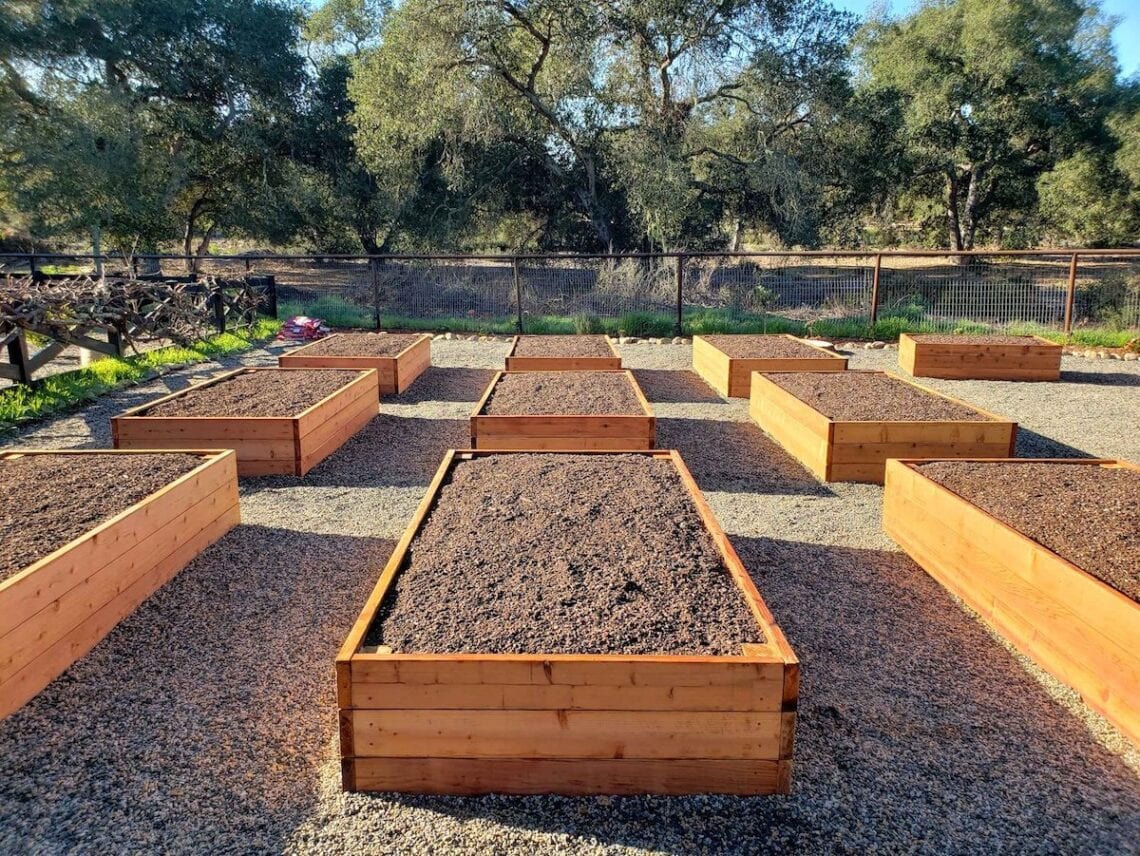
Do you have new planter boxes that need filling? Read along and learn how to fill raised garden beds with quality organic soil that is well-balanced, nutrient-rich, and microbially-active to help your plants thrive. After all, soil health is KEY to the overall health and productivity of your garden! It’s something you want to “get right” from the start.
In this article I will share our raised bed soil recipe – with options for using bagged or bulk soil, compost, and our favorite organic fertilizers or other amendments. Learn how to calculate bed volume and soil needs, the importance of mulch, and explore the hugelkultur method to fill raised garden beds. Last but not least, I’ve included tips on how to improve existing soil if your garden beds are already full but underperforming.
Would you like to save this?
Disclosure: Homestead and Chill is reader-supported. When you purchase through links on our site, we may earn an affiliate commission.
Getting Started with Raised Beds
Don’t miss our guide on how to build a durable DIY raised garden bed! The tutorial includes a step-by-step video and explores wood choices, bed sizing, location and layout best practices, tips for gopher-proofing beds, non-toxic sealer, and other ways to make wood raised beds last longer.
Don’t want to build your own? Check out the high-quality, long-lasting, galvanized metal Birdies raised beds from Epic Gardening – code “deannacat3” will save 5%! We love our Birdies too.
Once you have your beds in place, it’s time to fill ’em up.
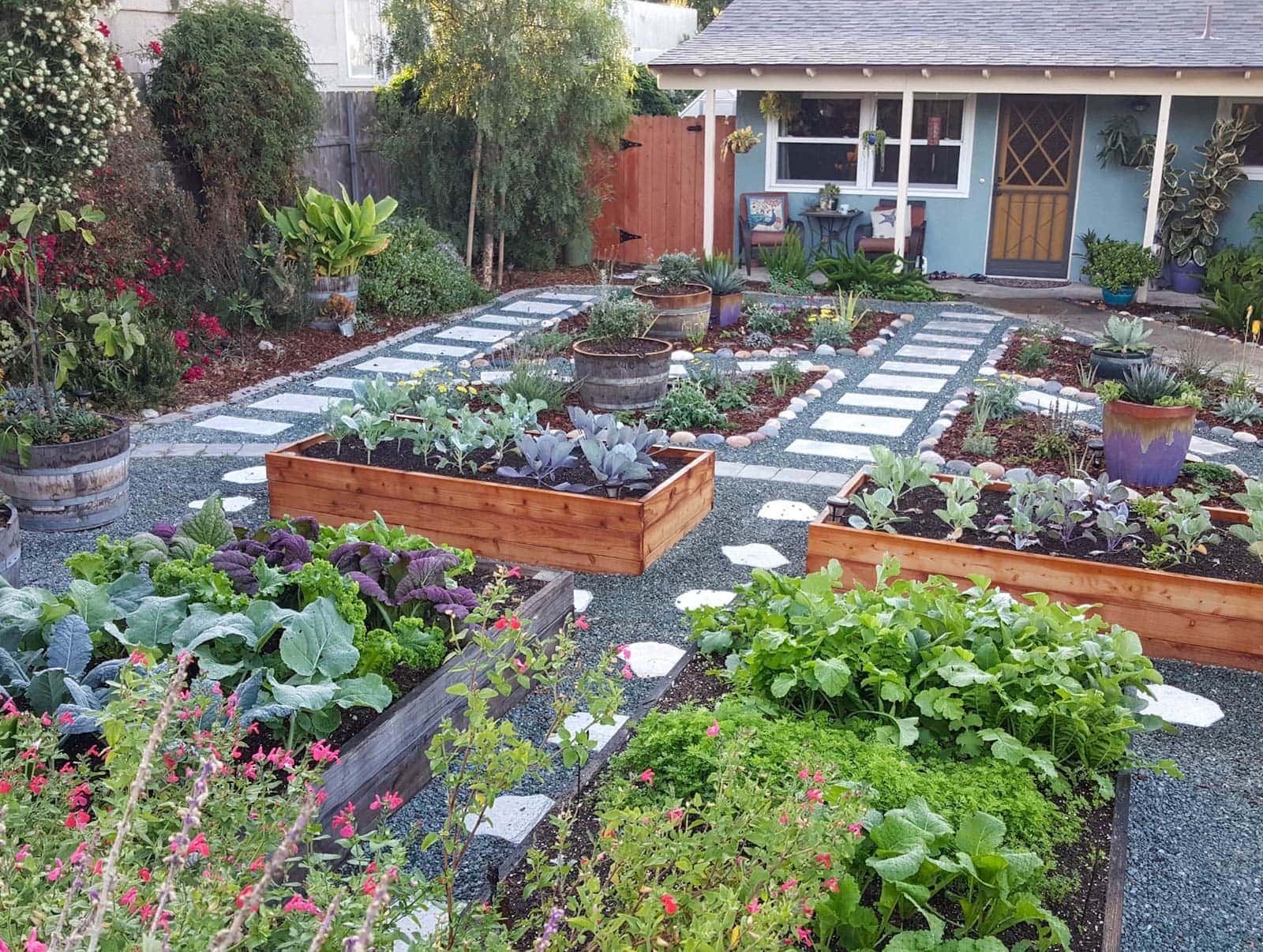
Investing in quality raised bed soil
Let’s set the record straight: “Dirt” is not soil! Soil is rich, full of nutrients, critters, microorganisms, and is biologically active! In contrast, dirt is usually devoid of all these things. Soil improves with time and age, as the soil food web blossoms. It is a living, breathing, dynamic ecosystem of its own.
No matter how much love, energy, or money you invest into your garden, if you have crummy soil, the result will be crummy plants. If you’ve gone through the effort to build or buy yourself some awesome raised garden beds, why skimp on the soil? However, the answer isn’t as simple as “go grab X brand of soil”. In my experience, not one soil is going to be perfect for growing vegetables on its own – bulk or bagged.
If you’re blessed with decent native soil, you can use some of that to fill your raised beds to offset cost (explored below).

The Best Soil for Raised Beds
Confined to a large container, raised bed soil needs are unique and slightly different than in-ground gardens. The goal is to fill raised beds with soil that’s fertile, rich in organic matter, holds moisture, but also has good drainage and plenty of air pockets using a combination of quality organic soil (bagged and/or bulk), compost, and an aeration additive.
Our raised bed soil recipe
- 40% soil (topsoil, loam, native soil, etc)
- 40% well-aged compost
- 20% aeration (e.g. sand, lava fines, perlite, pumice, coco coir, peat moss, and/or rice hulls)
- Other amendments such as worm castings and gentle, slow-release organic fertilizers
We’ll talk about each of these components in more detail below. Note that the ratios are approximate; they don’t need to be exact. Also note that the ratios will change if you primarily use bagged soil, which usually already includes compost and aeration (perlite) – such as 80% bagged potting soil and 20% compost.
Calculating Soil Volume
Before soil shopping, you’ll need first to calculate the internal volume of your bed(s). Bags of soil come in measurements of cubic feet, usually in a range of 1 to 3 cubic-foot bags. Bulk soil purchased from a local landscape supply company will be in cubic yards.
To calculate how much soil you need to fill a raised garden bed, begin by determining the volume of your bed in cubic feet. To do this, simply multiply the width by length by depth in feet (For example: 4’ x 8’ x 1.5′ = 48 cubic feet).
Now you have your total cubic feet, and can figure out how much bagged soil it would take to fill the bed. If you’re using bulk soil or compost too, you’ll need to calculate volume in cubic yards. To convert to cubic yards, simply multiply cubic feet by 0.037037 (or use this converter). Given the example of a 4×8′ by 1.5-foot deep bed used above, 48 x 0.037037 = 1.7 cubic yards of soil is needed to fill it.
If math isn’t your strong suit (or you’re just feeling lazy…. no shame!) here is a raised bed soil calculator that will do it all for you, in both cubic feet or yards.
40% SOIL
Using Bulk vs Bagged Soil (or compost)
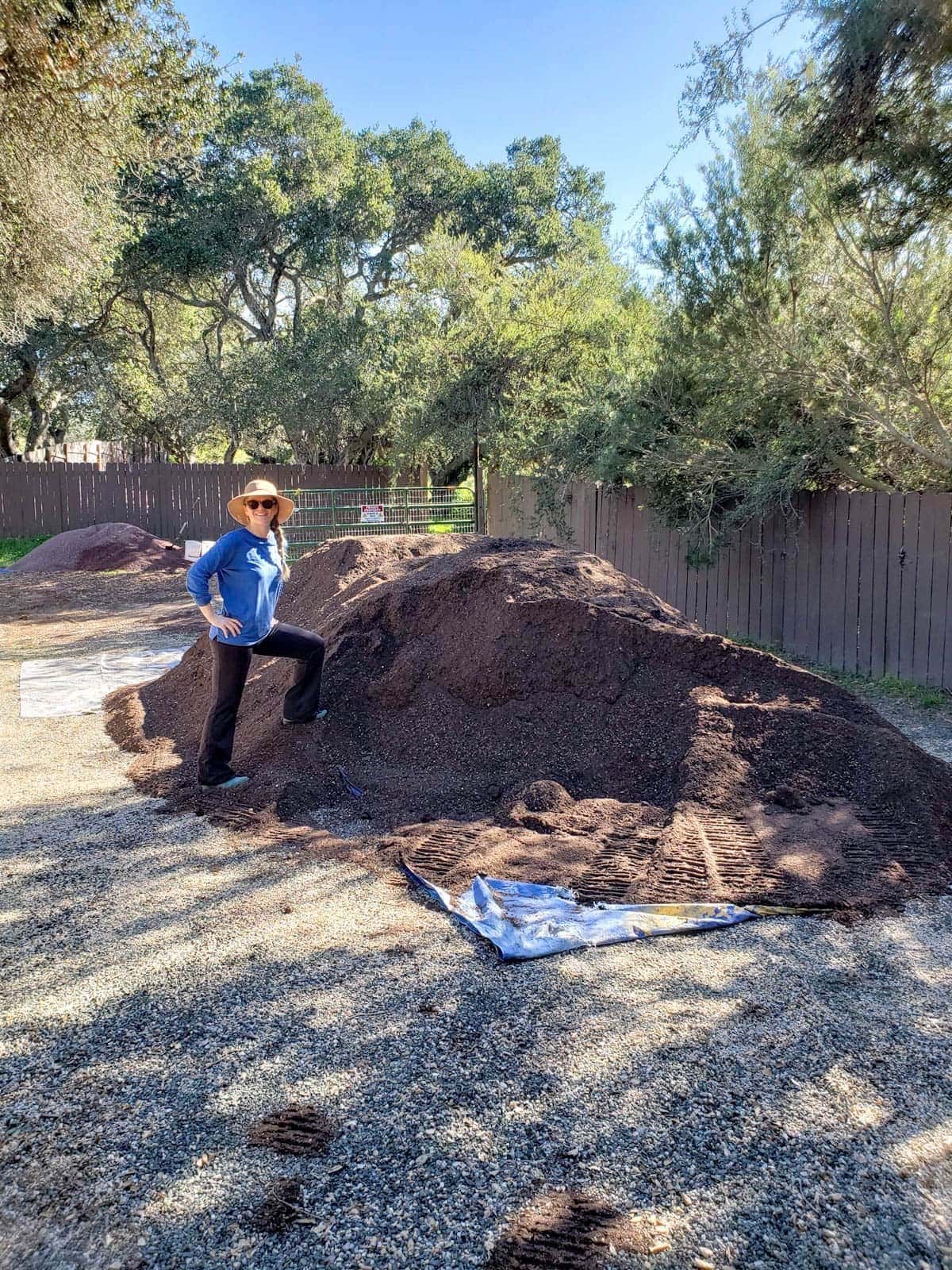
If you calculated that you need several yards of soil to fill your raised garden beds, you are not going to want to rely on bagged soil alone. The cost will add up quick! Look up local landscape supply companies and see what they offer in bulk – either for delivery or for pick-up, if you have a truck.
On the other hand, if you need to fill only one or two modest raised beds, purchasing bagged soil could be the way to go.
We often get bulk soil and compost delivered from Central Coast Landscaping or Mier Brothers here on the California Central Coast.
Bulk Soil Options
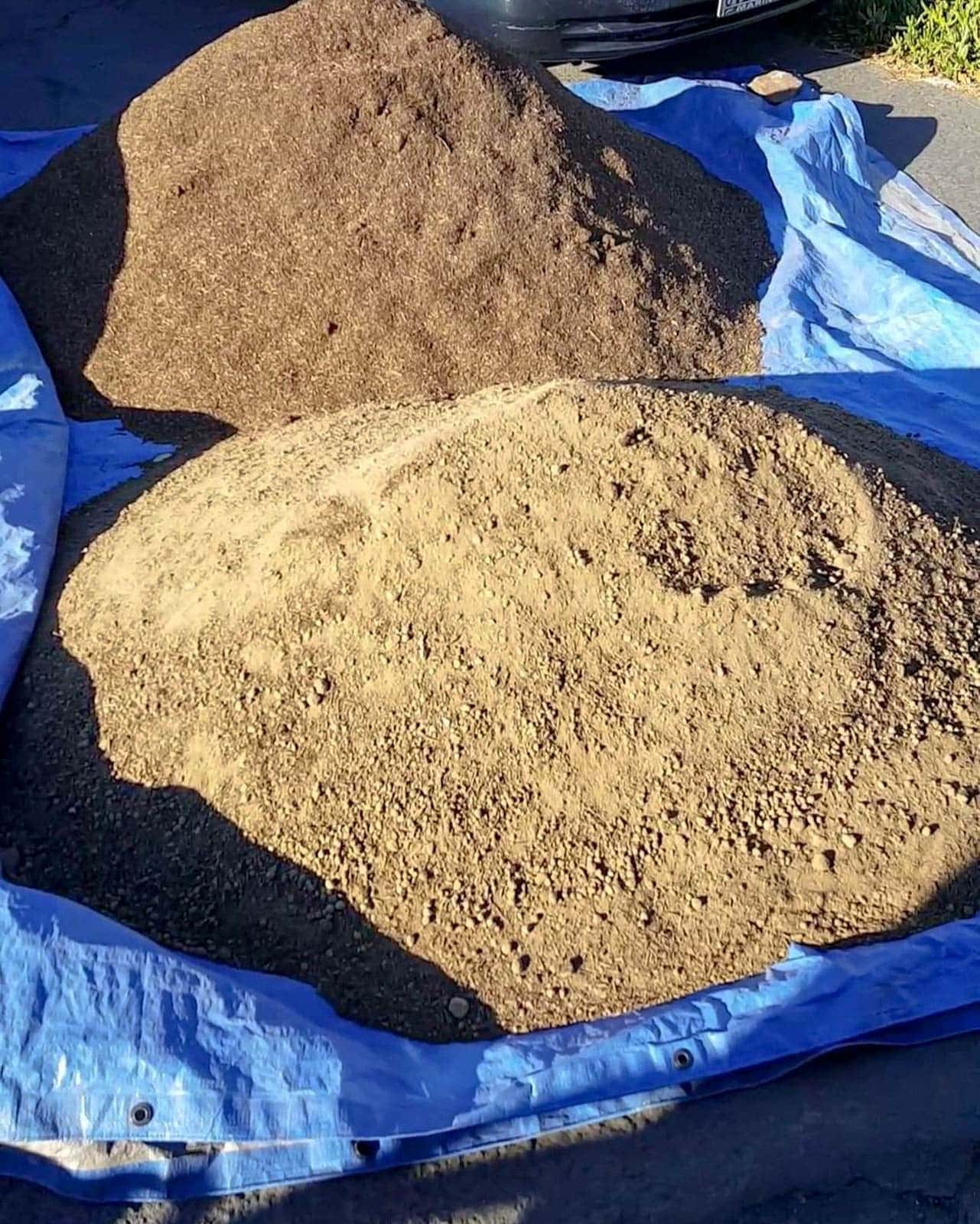
Bulk soil quality, composition and type will vary depending on your location. In our area, we’ve found varying grades of bulk soil including basic topsoil or “fill”, some premium container blends (similar to bagged soil), and a middle-of-the-road “planters mix” that is 2 parts top soil, 1 part compost and 1 part soil conditioner.
The composition of bulk soil will influence how much/what else to mix with it. For instance, if you all you can find is basic fill or topsoil, then you’ll want to follow the full raised bed soil recipe of 40% topsoil, 40% compost and 20% aeration to create a nice well-balanced soil. Or, use mediocre bulk soil as a “filler” at the bottom of deep raised beds, with a better soil on top.
Yet if you’re able to find premium raised bed soil in bulk, then it likely already contains a good amount of compost and aeration (sand, perlite, etc) so you can therefore scale back on those component of the recipe respectively. The landscape supplier should be able to provide details of the ingredients and make-up of the soils they offer!
Bagged Soil Options
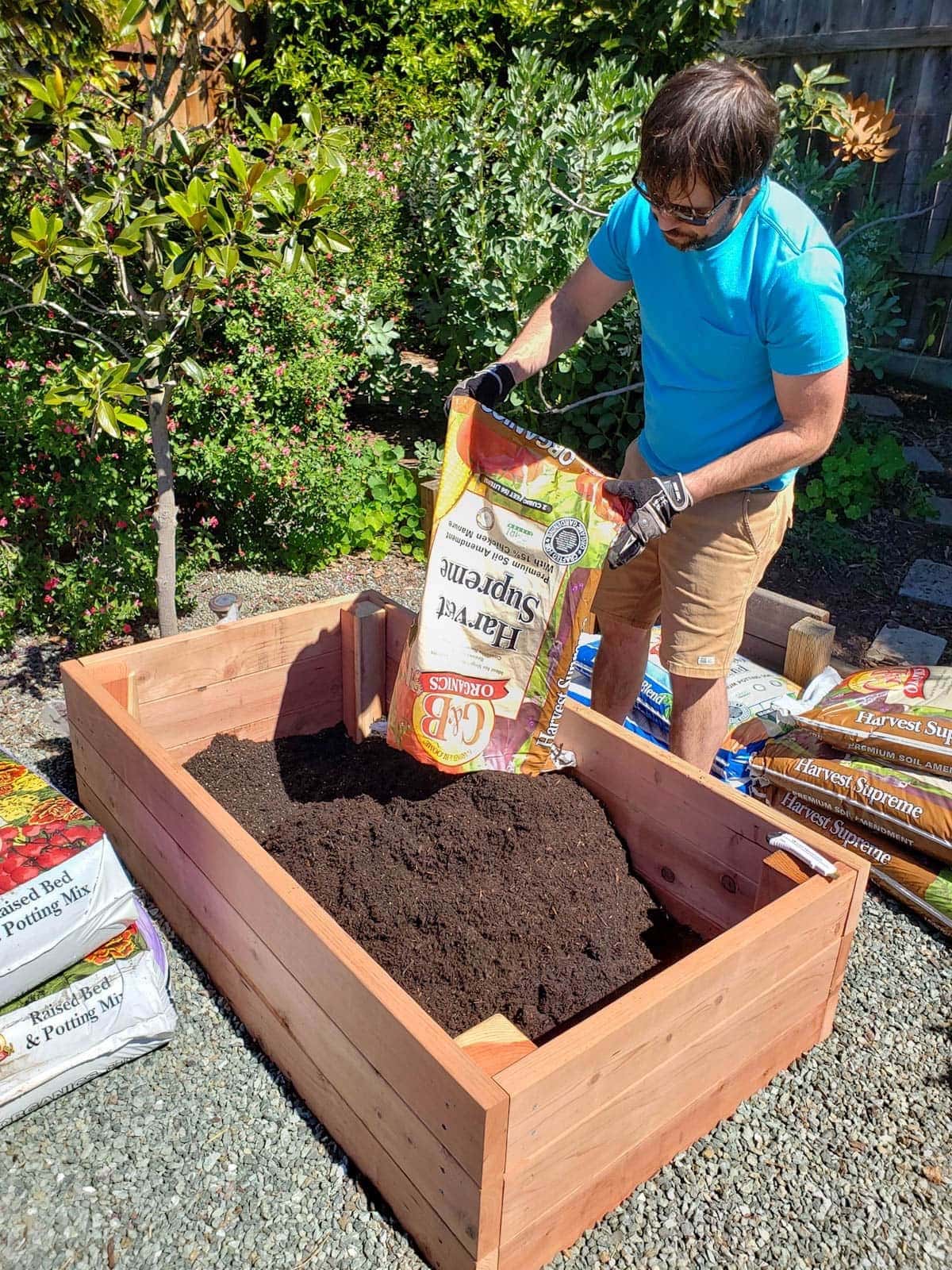
Even if we use good bulk soil to fill the majority of our raised beds, we always add at least a few bags of high-quality organic bagged soil near the top. We’ve used a wide variety of bagged soils over the years, but tend to prefer the selections offered at our local garden centers and nurseries over big box stores. “Hydro” grow shops (those geared towards hemp growers) usually have a great selection of premium soils too.
A few good options include E.B. Stone, Aurora/Roots Organics, Gardener & Bloom (G&B), Dr. Earth’s, and Fox Farms. Other cheaper or generic bagged soil can be used as filler towards the bottom of the bed, especially if you’re filling raised beds with bagged soil alone.
If possible, choose a few different types of bagged soil. Do not use “potting soil” only. It is light, fluffy, and will dry out quickly. In the photo below, you can see that we mix various types of bagged soil and conditioners. By combining a few different things, you’re getting a nice variety of composition and texture. Some are a little more woody, some more fluffy, some with perlite or pumice, some with or without added fertilizers.
40% COMPOST
Compost is organic matter that has been thoroughly broken down and decomposed into rich nutrient-dense plant food. It is a phenomenal soil conditioner, boosts the soil food web, and will make your garden shine!
We add plenty of homemade compost from our worm bin, larger compost piles, and aged/composted manure from our mini donkeys, but usually cannot make quite enough to meet all of our needs – especially for large projects like filling new raised garden beds with soil. So we do end up supplementing with organic bagged compost or bulk compost too.
Keep in mind that most bagged soils usually already have compost in them. So unless you’re using plain topsoil in your raised bed soil recipe, feel free to scale the “compost” ratio down to 10-30% (depending on the soil you’re using).
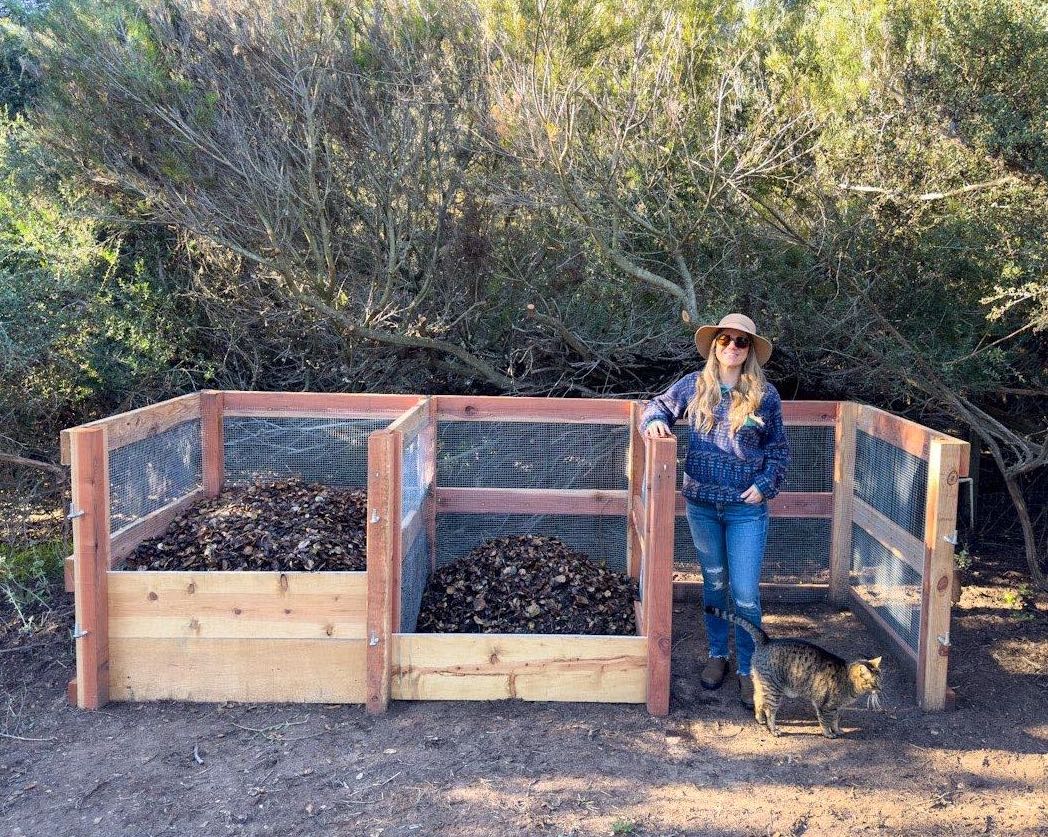
RELATED: See this guide to learn 6 ways to compost at home or this tutorial to learn how to build a DIY compost bin!
Compost Options
Many popular soil companies offer bagged compost products too. Again, these can be found at your local garden center or hydroponics grow shops. You should also be able to find compost locally in bulk, which is usually derived from green waste or possibly composted food waste. The bulk compost we purchase is made from local green waste and is OMRI-certified for organic gardening.
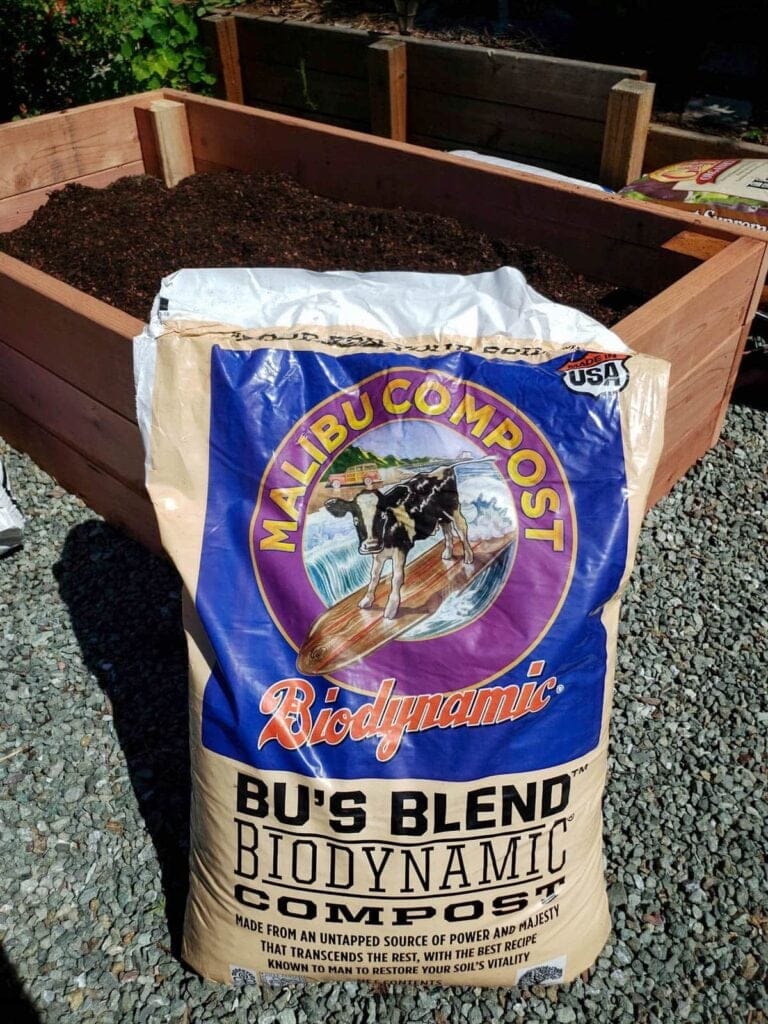
Our favorite bagged compost is Malibu Compost Biodynamic Blend. It is made from aged, composted cow manure from certified-organic, biodynamic dairy farms. However, please note that Bu’s compost is quite rich, so they recommend mixing only 25% of their compost to your soil blend.
Unfortunately, Bu’s is primarily available on the West Coast. If you live in the Northeast, Coast of Maine makes a similar product. I’m sure there are many more companies out there, all over the U.S. Leave a comment if you are aware of a good local product like this in your area!
Worm Castings
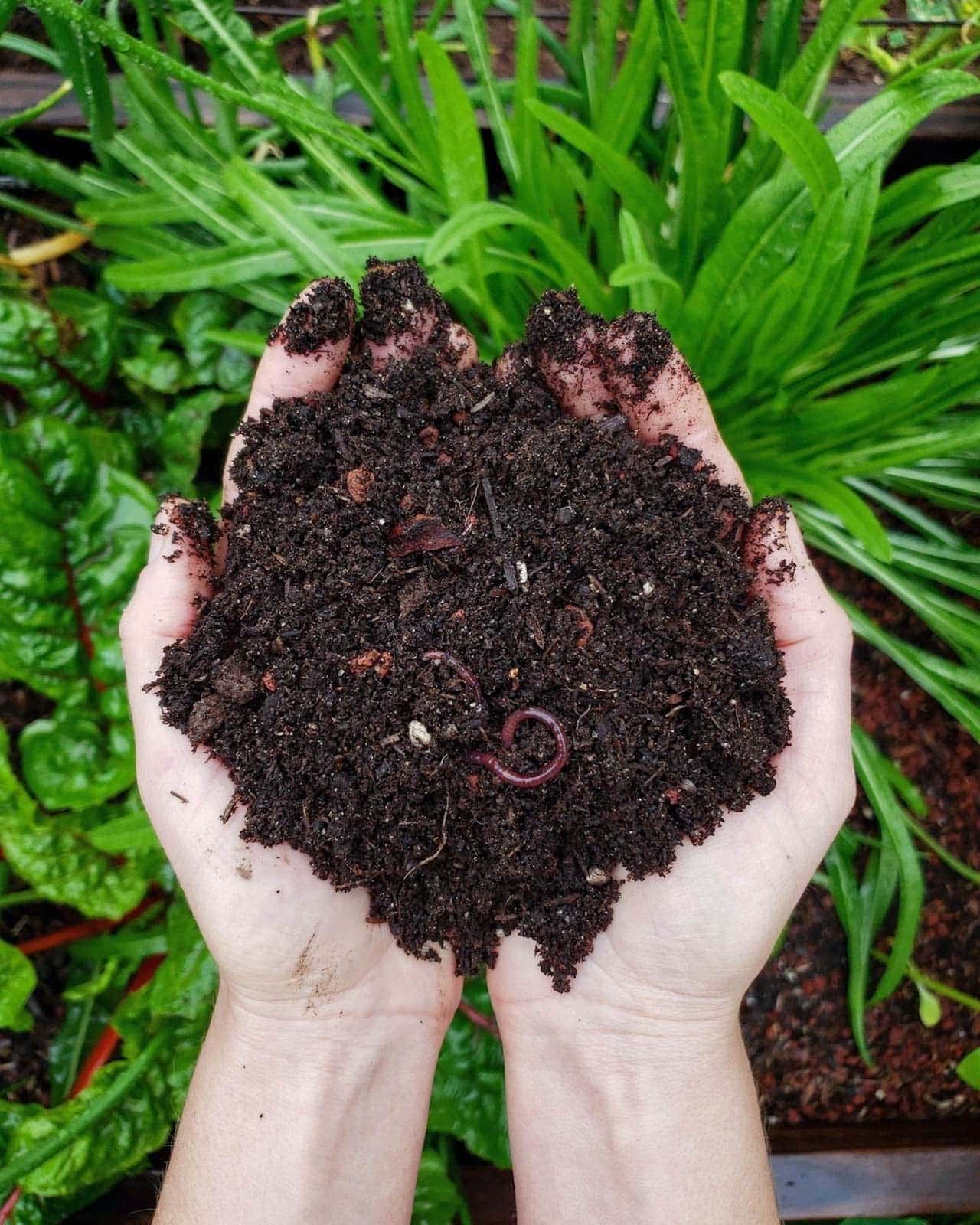
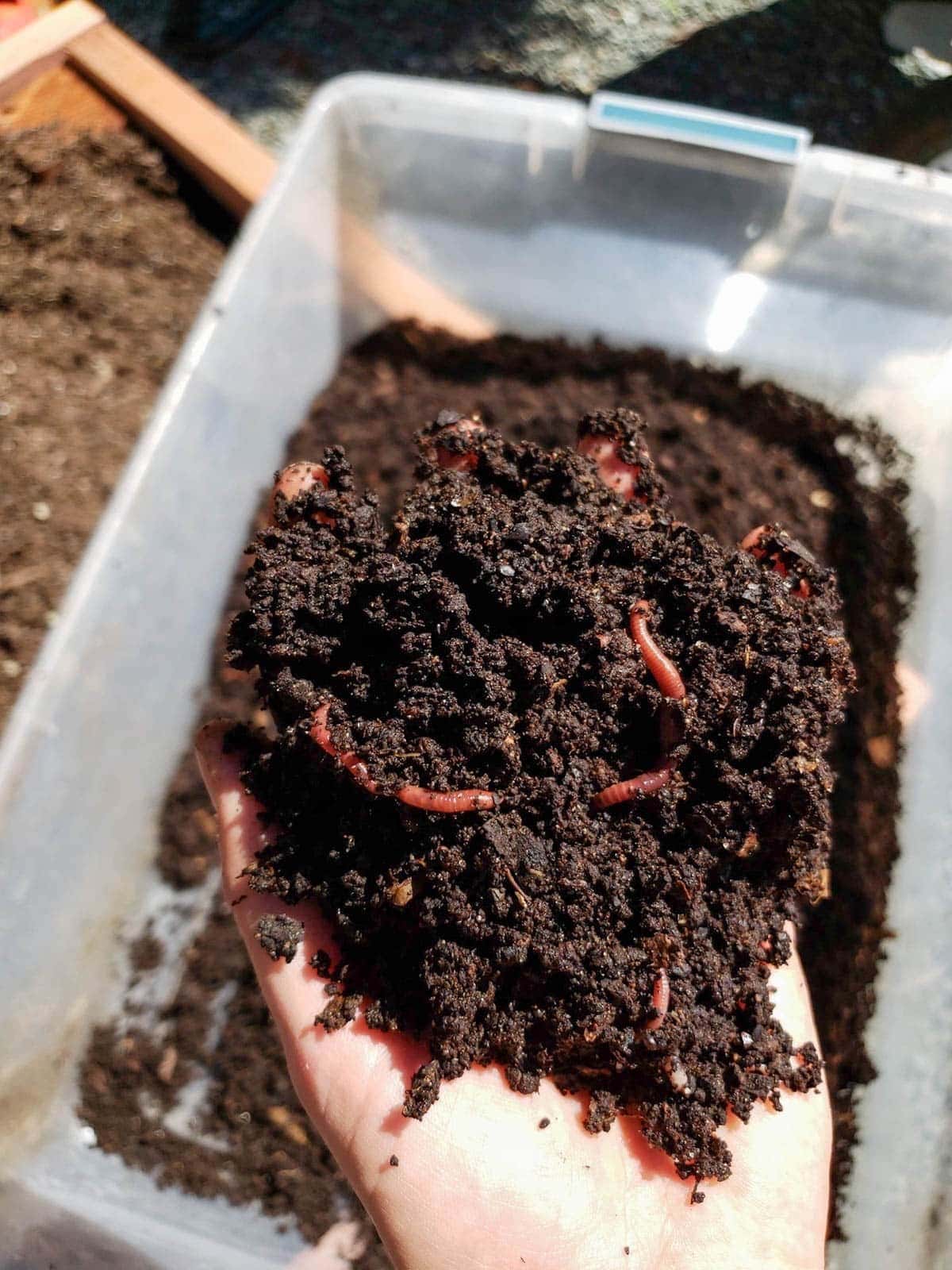
Last but certainly not least, worm castings (aka worm poop!) are compost too. Worm castings are so good for your plants, they’re referred to as “black gold”. Worm castings offer gentle, slow-release fertilizer as well as improve soil structure, microbe activity, water retention, and drainage.
I highly recommend keeping a worm bin at home! It is a terrific way to divert food waste from the landfill, and up-cycle that “waste” into an incredibly valuable product for your garden or house plants. Worm bins are inexpensive and easy to maintain. Learn how to make a DIY worm bin here!
If you aren’t up for keeping your own worm bin, you could purchase finished worm castings and add at least a small mount to each bed. We can usually find bags of G&B Organics Worm Gro locally, or you could pick up some worm castings online here or from Uncle Jim’s Worm Farm.
20% AERATION
An aeration addition is also key to healthy, effective soil. This could include lava rock, pumice, or perlite. Coarse sand also promotes aeration and drainage, but not quite as effectively as the others.
A lot of bagged soil mixes already contain aeration additives, which also includes things like peat moss or rice hulls. So if you use primarily bagged soil, read the ingredient list and adjust accordingly. You can likely go lighter on additional aeration (e.g. perhaps only 5-10% extra, if any).
Benefits of Soil Aeration
All the beneficial organisms found in soil need air to survive, including microbes, nematodes, worms, protozoa, fungi, and more. Even more, plant roots need air to thrive too! Plants breathe through their roots just as much as they do through leaves. That’s why it’s important to not overwater, and always provide drainage holes in pots. Otherwise, plants will drown!
An aeration additive also helps the soil achieve a ideal moisture balance. They create air pockets, promote good drainage, and prevent the soil from over-compacting. At the same time, they also increase moisture retention by absorbing water like a sponge, which helps the soil stay evenly moist for a longer period of time between watering.
Our Choice: Lava Rock
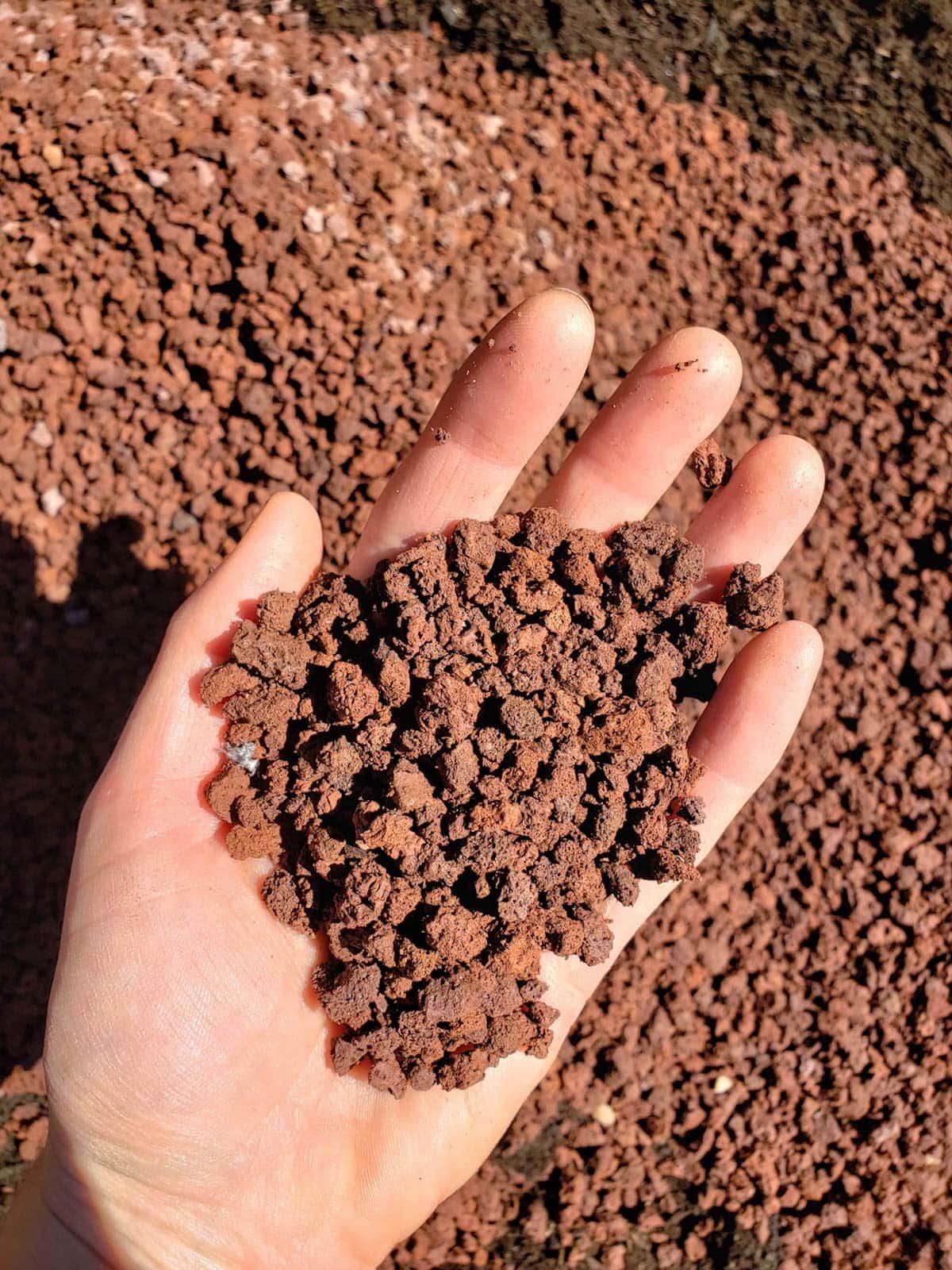
For the aeration portion of our raised bed soil recipe, we have come to love volcanic rock. It is also called “lava cinders” and is frequently used in aquaponics. Use the small 3/8 inch to quarter-inch size, not larger chunks! Lava rock is full of pores, that not only promote aeration and drainage, but are also the perfect habitat for beneficial microbes to grow. They don’t float to the soil surface like white bits of perlite do, and are generally more affordable than pumice.
Our local landscape supply company carries volcanic rock both in bulk and in half cubic-foot bags. If you can’t find volcanic rock, use small perlite or pumice. Availability of all these products will vary depending on your location.
How to Fill a Raised Garden Bed
Now that you have our raised bed soil recipe, it is time to fill them up!
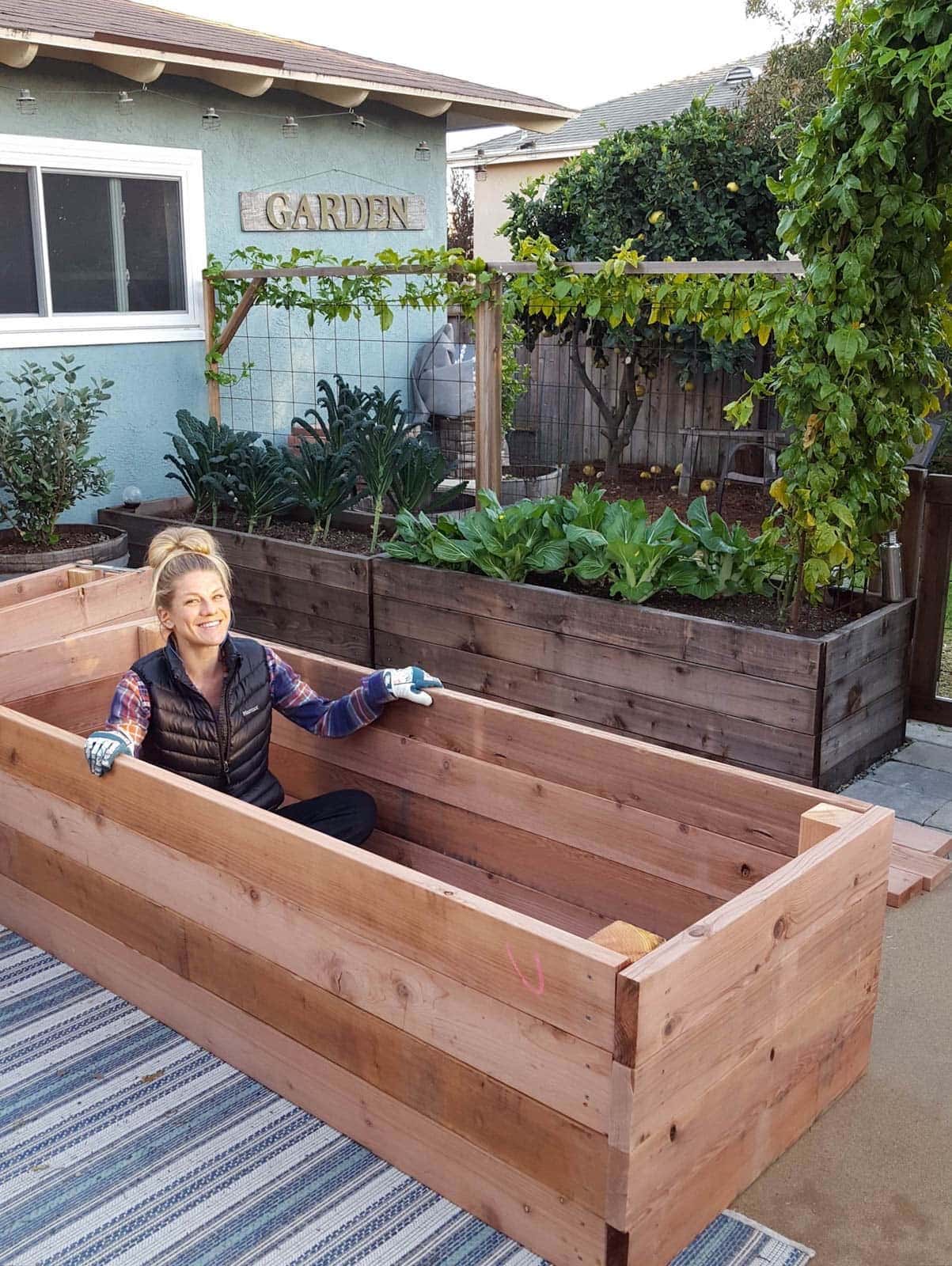
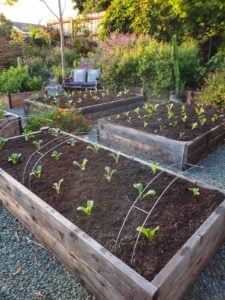
We prefer to fill our garden beds 100% full of soil and compost. Aside from sometimes adding lesser-quality bulk soil to the bottom of our deepest beds, there’s no other “fillers” at the bottom. See notes about fertilizer additions or using hugelkultur (adding leaves or sticks to the bottom of beds) in the sections to follow.
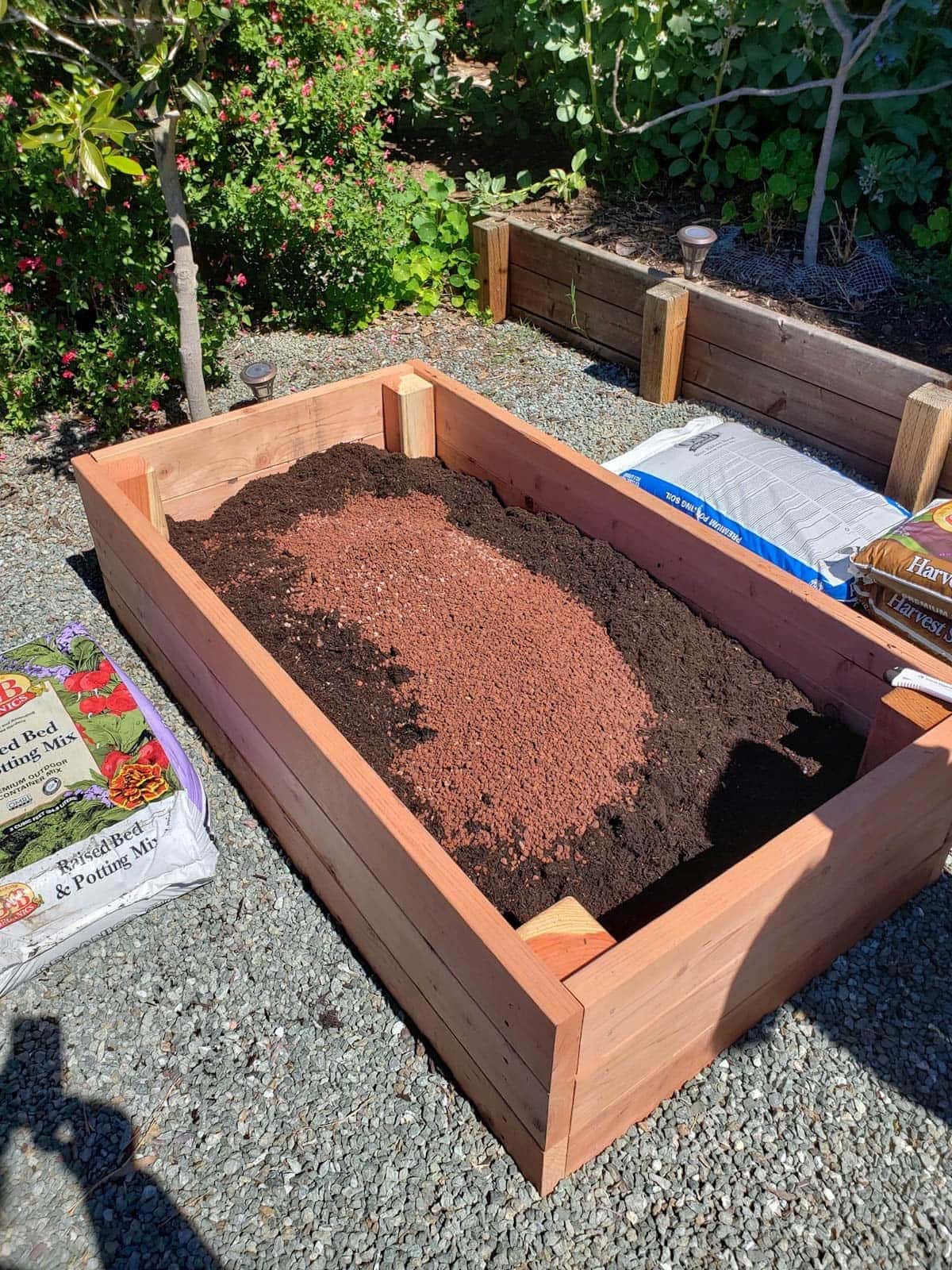
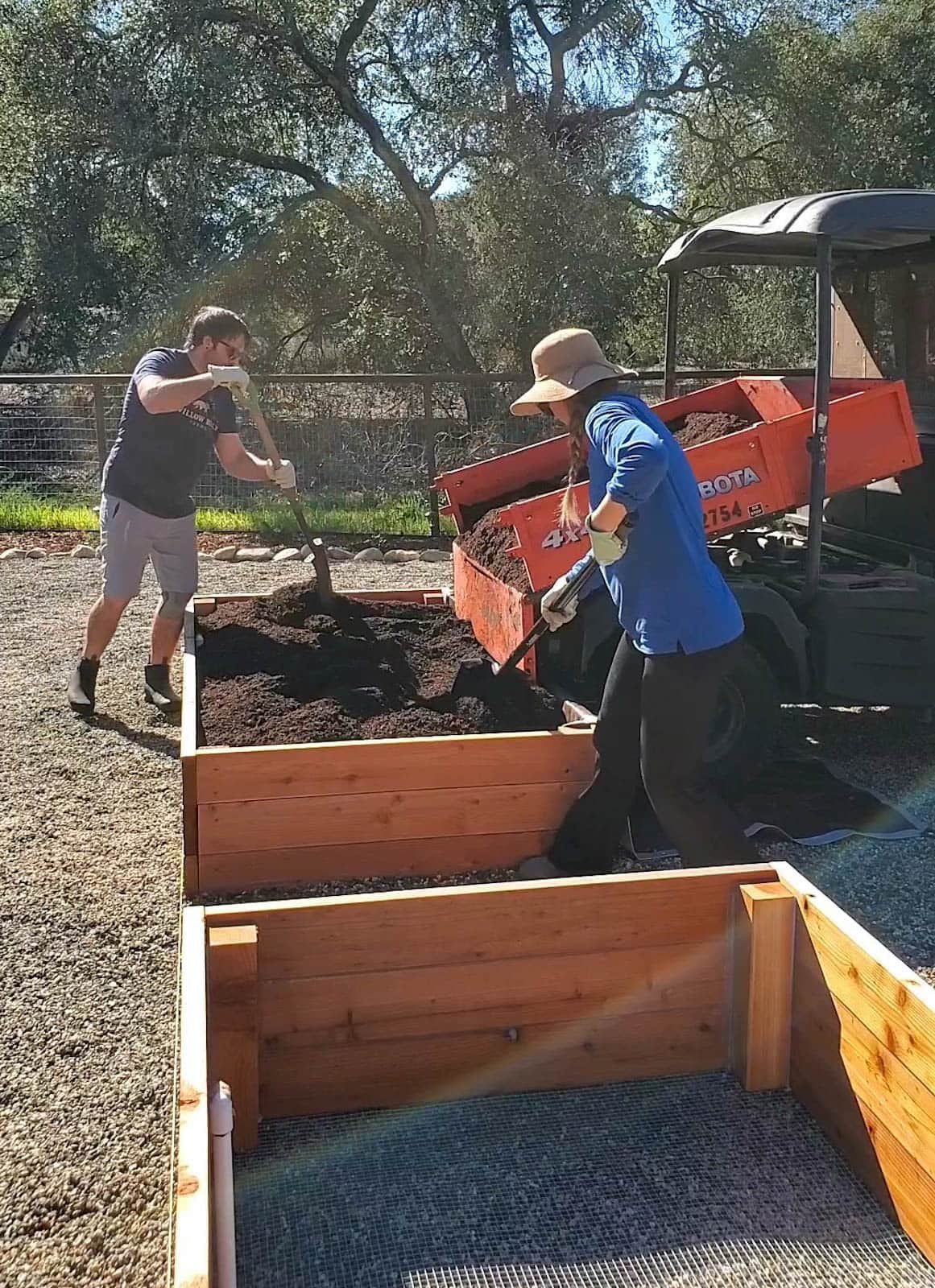
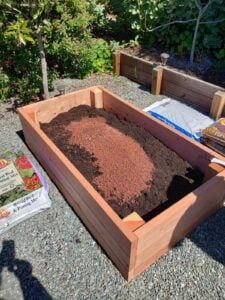
As you fill the beds, try to mix all of the various ingredients as evenly as possible. We’ll generally add them in “lasagna layers”, mixing as we go. For example, add several inches of bulk soil or bagged soil, a good layer of compost, a couple inches of volcanic rock, and mix. With that, the bed may only be about quarter full. Repeat with more layers of each, mix. Continue this process until the bed is full.
Also, it’s best to fill garden beds with soil all the way to the top – giving the roots as much depth to grow in as possible. When you first water a new bed it will compact and sink down a little too. Depending on how much it sinks, you may want to top it off with another layer of compost or soil.
What About Hugelkultur?
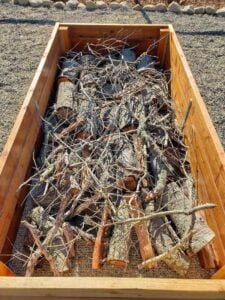
When filling a deep raised garden bed with soil, you can offset some of the cost by adding small logs, branches, leaves, mulch, pine needles, or other natural woody organic matter to the very bottom of the bed, and then add at least a foot of good soil and compost on top. The woody debris eventually breaks down to feed the soil as a carbon source over time.
This practice is called Hugelkultur. Learn hugelkultur pros and cons, best practices and materials to use, and how to make a hugelkultur garden bed here.
However, I do not recommend adding non-organic matter such as rocks, plastic bottles, styrofoam, or other random materials to take up space in your bed. I also don’t recommend using hugelkultur in shallow raised garden beds that are less than 12 to 15 inches deep.

Adding Fertilizer to New Raised Beds
Most “virgin” soil (especially plain topsoil) should be amended with natural fertilizer to keep plants healthy, happy, and productive!
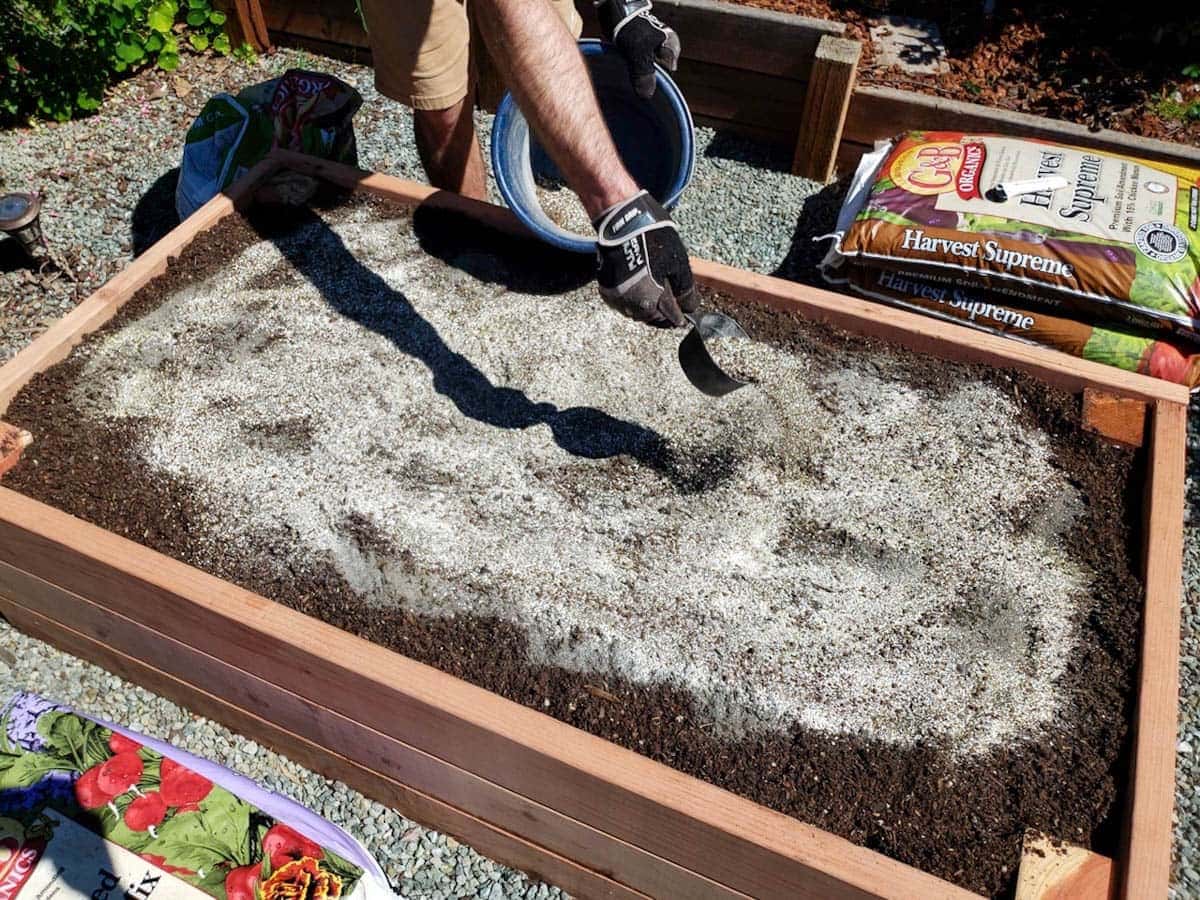
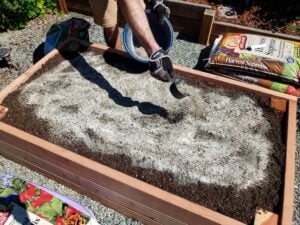
We prefer to use well-balanced, gentle, slow-release organic fertilizer like this one, lightly sprinkled and scratched into the top of the soil a couple times per year. When filling new beds, we also like to add a little Azomite rock dust for important trace minerals, which offer a vast array of benefits for plant growth!
If you fill raised garden beds primarily with high-quality organic bagged soils and compost, you can go pretty light on the fertilizer for the first growing season since the bags often contain amendments already. I always suggest using less than the manufacturer’s instructions in general. You don’t want to accidentally “burn” the plants!
On the other hand, if you started with mostly bulk soil and compost from a local landscape company, you’ll most definitely want to add fertilizer from the start. (That is, unless they say that it’s already amended, but I don’t think that’s common practice for most bulk material.)
Plants use up nutrients in the soil as they grow, so you’ll also want to implement a regular fertilizer routine for your raised garden beds going forward. In addition to adding slow-release fertilizer, we top off our raised beds with fresh compost and water with compost tea a couple times per year.
The Importance of Mulch
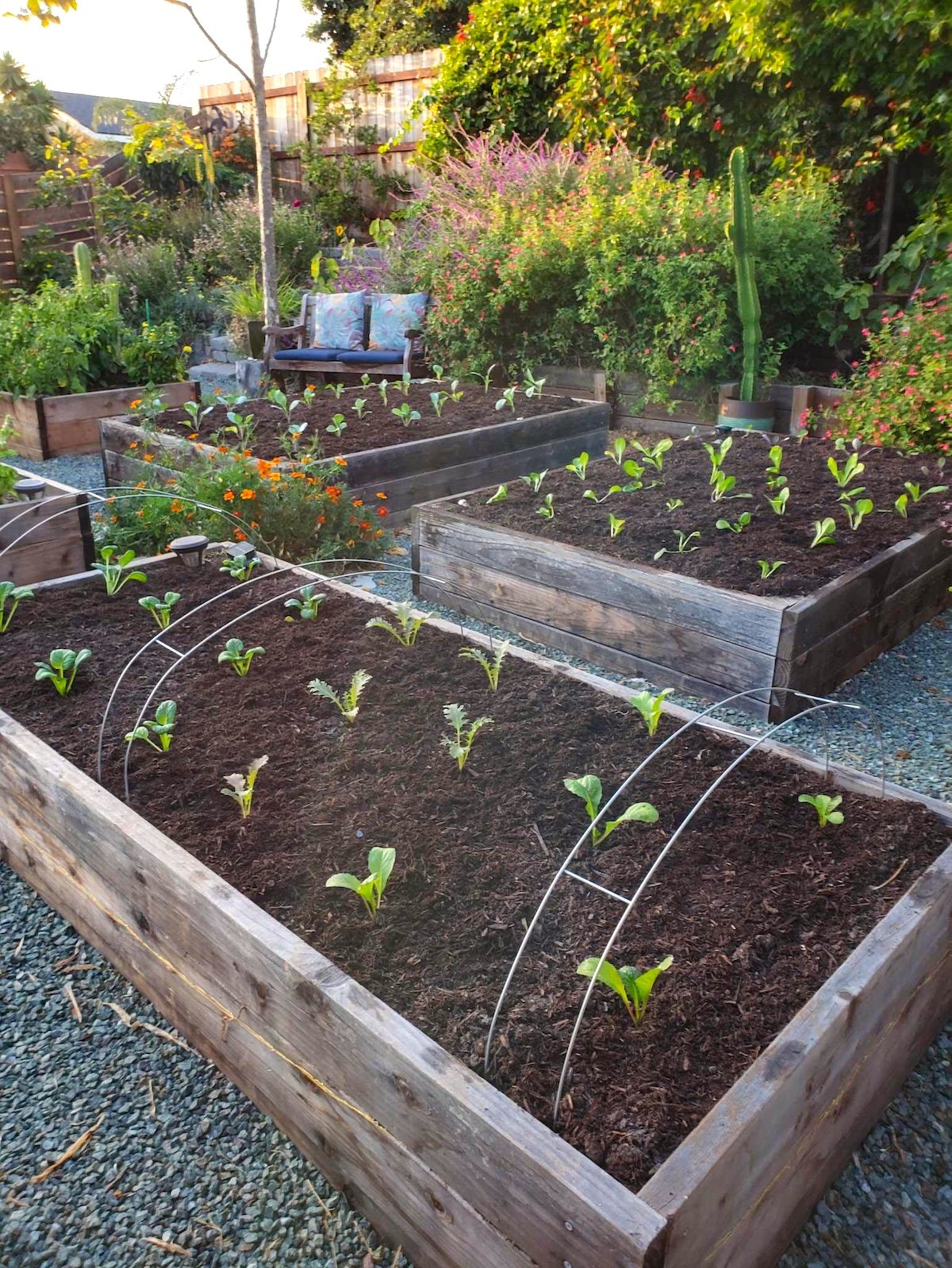
Last but certainly not least, don’t forget to cover the soil with a couple inches of mulch. Mulch protects and improves raised bed soil by reducing evaporation, suppressing weeds, and buffering the soil (and plant roots) from temperature swings. We typically use a woody compost as mulch. Learn more about mulching best practices and pros and cons of 8 popular mulch options here, including bark or wood chips, straw, compost, and more.
How to Improve Existing Raised Bed Soil
Do you have raised beds that are already full of soil that might not be the best quality, is having drainage issues, or the plants don’t seem to be growing very well? Don’t worry, it’s happened to us before too. But don’t feel the need to go dig out all your soil and start over. There is hope!
Before you consider replacing your raised bed soil, try amending it first using some of the materials we’ve discussed already, including compost, fertilizer, and more.
If your plants are sad and small, have you been fertilizing them adequately? Is your soil too compact? Try to loosen it up and mix in some aeration additions. Does it seem like the soil drains too quickly, or dries out too quickly? Add compost and worm castings! That, along with watering with aerated compost tea, will increase the microbial life in your soil. For better moisture retention, drainage, and “fluff”, peat moss or coco coir could also be mixed in. Note that coco coir is the more sustainable option of the two.
First, try those measures for a season and see if there is noticeable improvement. I really think there should be. If not? Next, consider taking out at least a portion of the old soil and replacing with the types of things discussed in this post.
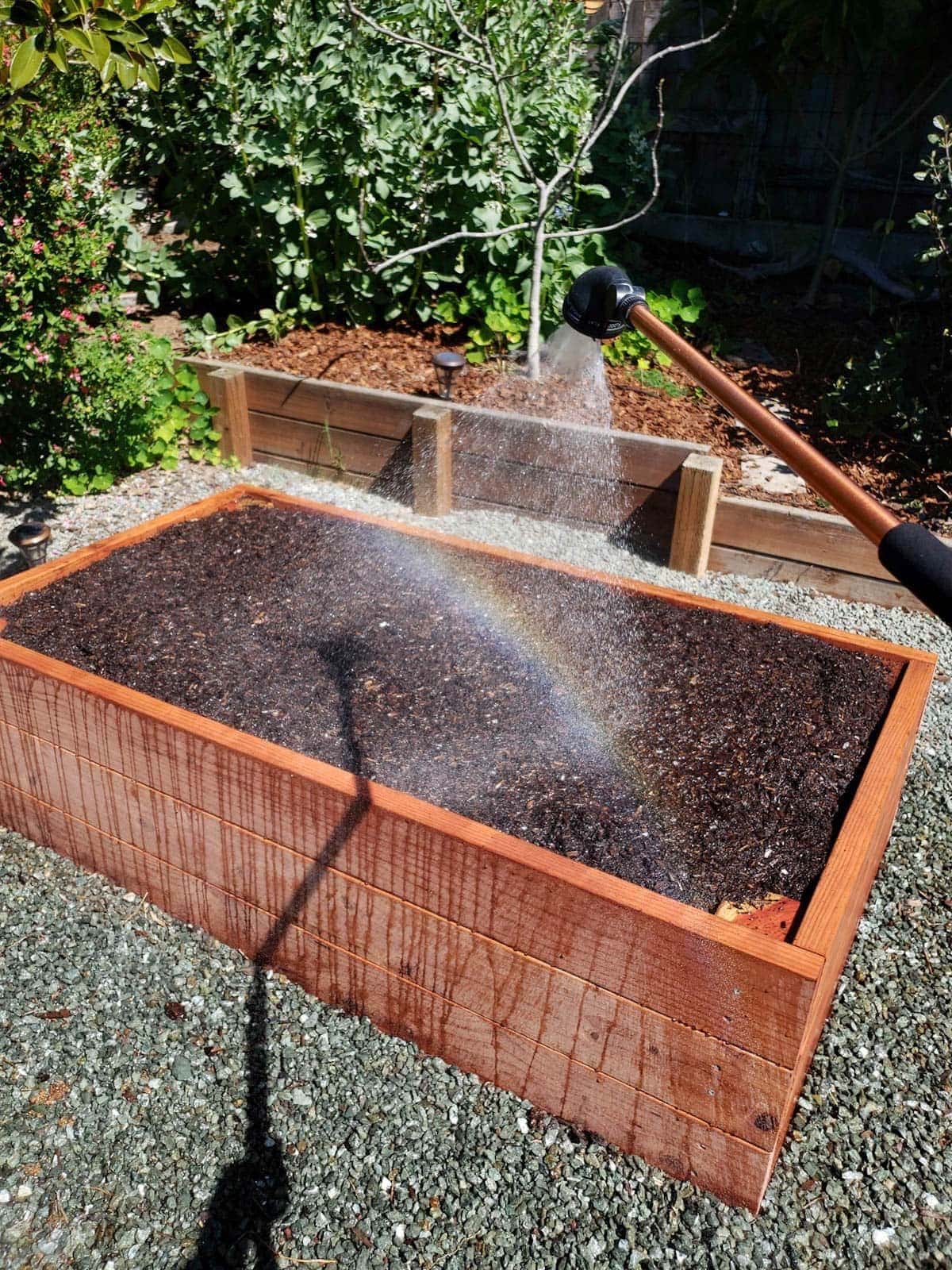
And that’s how we fill new raised garden beds with soil.
I hope that was helpful! If so, please consider leaving a review or comment below – and feel free to ask any questions! Now it’s time to put your new garden beds to good use. Don’t miss our guide on starting seeds indoors, tips for transplanting seedlings outside, or the best easy companion flowers to grow for pollinators!
You may also like:
- How to Install Drip Irrigation in Raised Beds (Drip Tape)
- 7 Ways to Make Wood Raised Beds Last Longer: Non-toxic sealer and more
- How to Make a Sturdy and Inexpensive DIY Trellis
- 9 Ways to Add Whimsy and Interest to Your Garden
How to Fill Raised Garden Beds with Organic Soil
Ingredients
- 40% soil (topsoil, loam, native soil, etc)
- 40% well-aged compost
- 20% aeration addition (e.g. sand, lava fines, perlite, pumice, coco coir, peat moss, and/or rice hulls) to improve texture, drainage, and moisture retention
- other amendments such as worm castings, rock dust, and gentle, slow-release organic fertilizers
Instructions
General Info
- Note that the soil recipe is approximate and flexible, depending on the type of base soil you use. For example, quality bagged soils usually already contain some compost and aeration additives, so you're using mostly bagged soil, you may only need about half the called-for compost and aeration.
- To fill just one or two modest raised beds, using bagged soil and compost alone may work. Yet if you're filling several raised beds, look into getting bulk soil/compost delivered from a local landscape supply company. It will be far more cost effective!

- If using mostly bagged products, do not use "potting soil" alone. Choose a mix of a few different types/brands of potting mixes, raised bed soil, and soil conditioners along with some added compost. See main post for more details and brand recommendations.
Calculating Bed Size and Soil Volume
- To calculate how much soil you need to fill a raised garden bed, begin by determining the volume of your bed in cubic feet. To do this, simply multiply the width by length by depth in feet (For example: 4’ x 8’ x 1.5′ = 48 cubic feet). Bagged soil usually comes in cubic feet.
- If you’re using bulk soil or compost too, you’ll need to calculate volume in cubic yards. To convert to cubic yards, multiply cubic feet by 0.037037 (or use this converter). Given the example of a 4×8′ by 1.5-foot deep bed used above, 48 x 0.037037 = 1.7 cubic yards of soil is needed to fill it.
How to Fill a Raised Bed
- Add the soil, compost, and aeration addition of choice in layers and mix as you go, so all of the ingredients and final soil will be as evenly mixed as possible. We also like to add worm castings mixed into the top 6 inches of the bed.
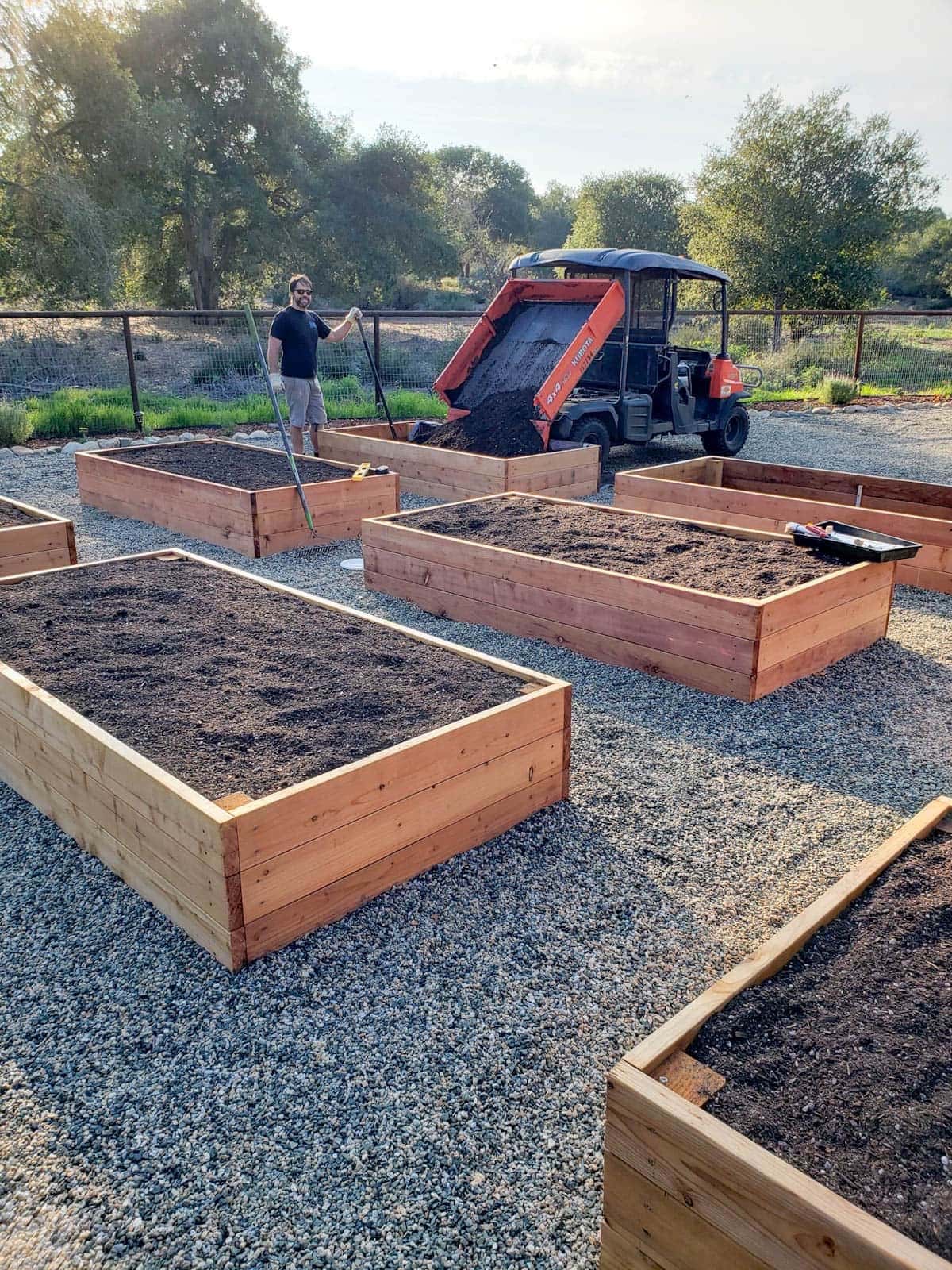
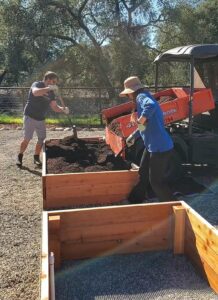
- For smaller projects, we simply used wheelbarrow and shovels. For larger projects, we used a skid steer to load into a UTV to dump into each bed.

- It's best to fill garden beds with soil all the way to the top – giving the roots as much depth to grow in as possible. When you first water a new bed it will compact and sink down a little too. Depending on how much it sinks, you may want to top it off with another layer of compost or soil.
- For extra-deep beds (over 18" tall) you can offset some of the cost by adding small logs, branches, leaves, mulch, pine needles, or other natural woody organic matter to the very bottom of the bed, and then add at least a foot of good soil and compost on top. I don't recommend this method (hugelkultur) for shallower beds.
- After filling the bed, sprinkle on some well-balanced, slow-release organic fertilizer and azomite rock dust (recommended) over the top, lightly scratch it into the soil surface, and then water the bed well.

- Don’t forget to cover the soil with a couple inches of mulch. Mulch protects and improves raised bed soil by reducing evaporation, suppressing weeds, and buffering the soil (and plant roots) from temperature swings. We typically use a woody compost as mulch, though straw and leaves are also popular options.



141 Comments
Jaime
Deanna,
When you say lava rock, is that the same stuff that people put in fire pits? I don’t want to put anything toxic in there of course! I am looking online and most of the stuff I am seeing is marketed for fire pits/fireplace.
I will attach a link to a product I found on Walmart’s website, and maybe you can tell me if you this is the same stuff! I appreciate your feedback!
https://www.walmart.com/ip/Red-Lava-Rock-3-8-Volcanic-Lava-Rock-for-Fire-Pits-Fireplaces-10-Pounds/634487185?selected=true
Jaime
Robin Miller
I am thinking of building raised garden bed on brick paved area, & wondering how I prevent leaching of
liquids out, do I have to put a lining in
DeannaCat
Hi Robin – We have an article all about installing raised garden beds on top of hard surfaces like concrete or pavers! I think it will help – you can see it here. Have fun!
Maggie
Thoughts on cotton burr?
Carla
I am using hugelkultur and loving it. It saves a lot in potting mix / soil costs. I’ve used a few different composts, worms, leaves, grass clippings and some sticks, and my plants are growing SO well!
Rudy
Thanks for the great tips, especially about using lava rock for aeration. I’m in SLO and went straight to Air-Vol Block today. I’ve been experimenting with building my own mix for the last two years and want to reformulate based on your strategy. I’ve been using a blend of 30% native soil, 30% compost from Cal Poly, and 30% peat moss with varying amounts of perlite mixed in, usually 10%. I want to increase my aeration component using lava rock. What do you recommend I adjust to compensate for that 10% extra aeration? I’m inclined to think you would recommend cutting back on the native soil. Yes, I have your basic San Luis Obispo clay. I’m looking forward to more of your insights.
Rudy
Nicolle
I’ve been growing in-ground in the same plot for three years. I just set up my first raised bed and plan to set up more in the spring. Should I still follow the same crop rotation I would if I were growing in-ground still, or is switching to raised beds like starting over?
Nicole Novak
Thanks so much for your reply. I had two five gallon buckets of worm tea ready to go today so I liberally added it to all my tomatoes and cannabis and the leftover went to all of my peppers and squash. I added kelp and alfalfa as I had quite a bit leftover from the creation of the cannabis soil. I added blood meal too because I have it on hand and wanted to use it because I read that it takes a long time for the worm tea to release its nutes.
Another question. Although kelp and alfalfa have lots and lots of nutrients, the label says NOT which I heard is due to the fact that they are not readily available and only readily available nutrients are listed. What’s up with that? So confused.
Nicole Novak
Well, I’ve done my homework and I’m just SO SAD. I’ve made 3 different versions of your soil recommendations for my garden soil, my tomato grow bags and my cannabis grow bags. I used various potting soils, compost from a local soil distributor, and various forms of drainage materials like your volcanic rock, perlite, and these giant balls of lava that I got at the hydro store (I’m embarrassed by that mistake and it will take a hundred years for them to break down). I started noticing that my tomatoes that were SO big and green and gorgeous started to send out smaller leaves. The leaves on the bottom are yellowing and dying. The leaves on the top are green but underneath they are extremely purple and they are also cupped. This is on all 35 or more of my plants. One green zebra just went limp and died in about two days. The reason I went to grow bags and a new soil mixture in the first place was to limit the horrendous problems I’ve been having for 15 years with the soil in the raised beds being infected with wilt of one form or another. I love growing heirlooms but I am getting increasingly frustrated with my utter LACK of tomatoes while the friends I give my seedling to have lush gorgeous plants and high yields.
My cannabis plants are either clones that I cloned from my two very first successful clones from last year’s plants and a few from seed that sexed properly. As soon as I put them in the grow bags with your cannabis soil recipe with all the amendments, they started turning purple and the lower leaves are curled and dying. I just completed a Lusterleaf Rapitest soil test on one of the formulas for my upper deck tomato plants that look the worst and here’s what I got: P for phosphorus: adequate, N for Nitrogen: somewhere between deficient and adequate, K for Potash: depleted.
While I wait for your reply, I will test the other soil from the grow bags in the garden and then the cannabis soil. I know you are VERY busy but you are my guru!
DeannaCat
Hey Nicole! Did you add amendments too, or just the soil/compost/aeration mixture? We use quite a bit of kelp and alfalfa meal in our beds, both of which are excellent sources of potash. Try not to get too discouraged. Sometimes it can take a year for your beds to get established, settled, fed well, and especially to get decent microbial activity. Also, if you got bulk “compost” from a local distributor, it is often times not all that broken down yet. Our local bulk stuff is pretty woody – mostly just chopped greenwaste products – and we were told from day 1 with them that it would take some time and good amending to truly turn into compost. That is why we also supplement with Malibu’s bagged compost – it is good shit, literally! Again, try not to get disheartened. Now that you know what is deficient, you can work to correct it! You may be able to help your plants bounce back this year, and the best thing about gardening… there is always next season! You learn as you go.
Nicole Novak
Update to this thread. My purple shriveled tomatoes are BRIGHT GREEN and beginning to thrive and set fruit. It’s only been a week or so since I took your suggestions and amended the heck out of my tomatoes. I put everything in the bags and watched the miracle unfold. The only major issue I have now is that the soil mix is not retaining water BUT that’s my fault because your soil recipe is for raised beds, not grow bags! So I’m adding more compost this weekend as mulch and for water retention and will continue to hand water as needed. The drip emitters on timers are handy but do not efficiently deliver water to the roots.
I’m so much happier though in general and will continue to feed throughout the growing season. One more thing I did with the non-determinates was to top prune to get rid of the sickly growth.
KENDA K FROST
I am just starting a new raised bed this season. This article is wonderful!
zayna
we added the soil, plus compost, and pumice for aeration. we didn’t do the different kinds of soil, just one kind unfortunately. I’ll add a different soil to it too. I also added lava rock powder, mellow meals, and worms. hoping it starts to come along. thank you for this amazing blog tho! I’m excited to learn gardening and growing my own food!
zayna idrees
Hi Deanna,
we recently built a raised bed and filled it according to this post. however i am not seeing my plants grow much and I think i didnt use the right soil. We used kellogs organic all natural garden soil for flowers and veggies, it doesnt seem to be working. wondering how i can i amend it? i put some worms in there and no sign of them either.
DeannaCat
Hi Zayna, Did you mix a few different types of soils, some compost, and maybe an aeration addition too? We never use just all of one thing. Yes you could definitely amend it – did you add any “mellow meals” like shown in this post? Those, plus compost tea may help. Give it some time. New gardens can be funny to get established sometimes. The soil may not be the issue, too… There are so many factors – weather, water, pests, or the plants themselves!