

When to Start Seeds Indoors: Planting Calendars for Every Zone

Interested in growing a garden from seed, but aren’t sure when to start? Well, we did the tricky part for you! Our handy printable planting calendars show when to start seeds indoors, transplant seedlings outside, or directly sow seeds outdoors – for dozens of different vegetables, and schedules for every USDA hardiness growing zone. We keep ours in a sheet protector on our fridge for easy reference.
Even if you’re not starting from seed, you can still use our garden planting calendars to determine the best time to plant nursery-bought seedlings in your area too. Just follow the “transplant outside” dates.
First, let’s quickly go over a few concepts that will help you decipher how to make best use of your new planting charts.
Note: This post was originally published in January 2021.

Would you like to save this?
Disclosure: Homestead and Chill is reader-supported. When you purchase through links on our site, we may earn an affiliate commission.
RELATED: Don’t miss our beginner’s guide on starting seeds indoors, with tips to grow big healthy seedlings from start through transplant time! Also see our favorite seed starting supplies, trays, and grow lights.
Hardiness Zones and Frost Dates
Your location or growing zone is the main factor used to determine when to start seeds indoors and plant things outside. USDA hardiness zones (aka planting zones or garden zones) are regions grouped by common low temperatures and average frost dates, ranging from zone 1 to zone 13.
Each growing zone is about 10 degrees warmer than the proceeding zone. The lower the zone number, the longer and colder the winters are. Zones are further subdivided by an “A” or “B” classification, such as zone 8a and 8b. There is a 5 degree temperature difference between these sub-zones, with A being the colder of the two.
If you aren’t sure what zone you’re in, use this handy zip code lookup tool to find out!
Once you know your hardiness zone, use the corresponding planting calendar below as a general guide. If you’re in between zones, feel free to reference two! Also, keep in mind that the hardiness zone system does NOT account for heat, humidity, precipitation, or other climatic factors.
Learn more about garden zones here, including their limitations and the 2023 map update.

Type of Vegetable Or Seed
The next key for determining when to start seeds indoors is what types of seeds you are growing. For instance, it’s recommended to start tomato seeds inside about 6 to 8 weeks before your last spring frost date. On the other hand, zucchini seeds should be started indoors only 3 to 4 weeks prior to your last frost date. Each seed package should specify what’s best for that type of vegetable or plant.
As you can imagine, counting forward or backward several weeks to determine the perfect time to plant dozens of veggies quickly gets confusing and difficult to keep track of! Even more, some seed packages don’t include instructions for when to start seeds at all. That’s where our garden planting calendars save the day, packing all that information into one easy-to-follow page!

The Importance of Good Timing
Starting seeds indoors is much like Goldilocks and The Three Bears: not too early, not too late. With time and experience, you’ll figure out the timing that is “just right” for your garden.
If you’re an eager beaver and start seeds indoors too early, you’ll end up with huge seedlings that get unruly or root-bound before the weather is right to transplant them outside. They’ll take up a lot of space under your grow lights, and need water more frequently to stay healthy. Root-bound seedlings may become permanently stunted, so be sure to pot up large seedlings as needed!
On the other hand, starting seeds or planting seedlings too late into the spring season can put your garden behind schedule, resulting in delayed maturity and harvests. This is especially a bummer in zones with extra short growing seasons!

How to Use Our Planting Calendars
Time Ranges
Our seed starting calendars offer a general timeframe or range, not an exact date, since every garden, year, A/B zones, and microclimate will vary slightly. It may take a few seasons of trial and error to figure out the best timing and plant varieties for your particular garden. We take notes year-to-year and adjust our schedule as needed.
Starting Indoors vs Direct Sow Outside
On the planting calendars, you’ll see some vegetables with a timeframe to “plant seeds outside” but not start inside. That’s because some plants don’t take kindly to transplanting, including root vegetables such as carrots, beets, radishes, and garlic, so it’s best to direct sow those seeds right in the garden. Other crops can be started indoors, but seem to thrive best when directly sown, like peas and beans.

Spring vs Fall Seed Starting
Another option you’ll see on the garden planting calendar is both a spring and fall planting time for one crop. However, you may find that spring or fall is more or less successful in your specific garden or climate, but not both. For instance, we can grow broccoli in spring-summer here in Coastal California (zone 9) but it would be too hot to do so in Phoenix, Arizona (also zone 9). Experiment and talk to other local gardeners in your area to see what they’ve had most success with!
Succession Planting
Some vegetables include a fairly long window to plant seeds outdoors. This likely means you have the option to succession plant that crop, or continually sow seeds every few weeks over several months. This results in steady and staggered harvests of certain fast-growing crops. Radishes, bush beans, beets, baby greens, arugula, and even zucchini are prime examples of crops suitable for succession planting (depending on your unique weather).
Transplanting Time
When it’s finally transplanting time, don’t rush! Be sure to properly harden off indoor-raised seedlings before planting them outside to prevent transplant shock. Choose a calm, mild day for planting, and then keep an eye on the weather forecast thereafter. Be prepared to protect tender sensitive seedlings from frost, heat waves, and pests as needed. See how we use garden hoops and row covers for all three!

Seed Starting Charts: Planting Calendars for Every Zone
Below you can find garden planting calendars for every USDA hardiness zone. You can also save a PDF to print. I hope you find them helpful!
These planting calendars are really something special (to me at least 😅). I made each one lovingly by hand, previously only available to Homestead and Chill subscribers. I hope you’ll consider joining our community too; it’s totally free! Then you’ll get the full Garden Planning Toolkit with a companion planting chart, plot plans, and other awesome resources – and stay in touch with our weekly newsletter full of season garden tips, recipes and more.
Zone 2 Garden Planting Calendar

Zone 3 Garden Planting Calendar

Zone 4 Garden Planting Calendar

Zone 5 Garden Planting Calendar

Zone 6 Garden Planting Calendar

Zone 7 Garden Planting Calendar

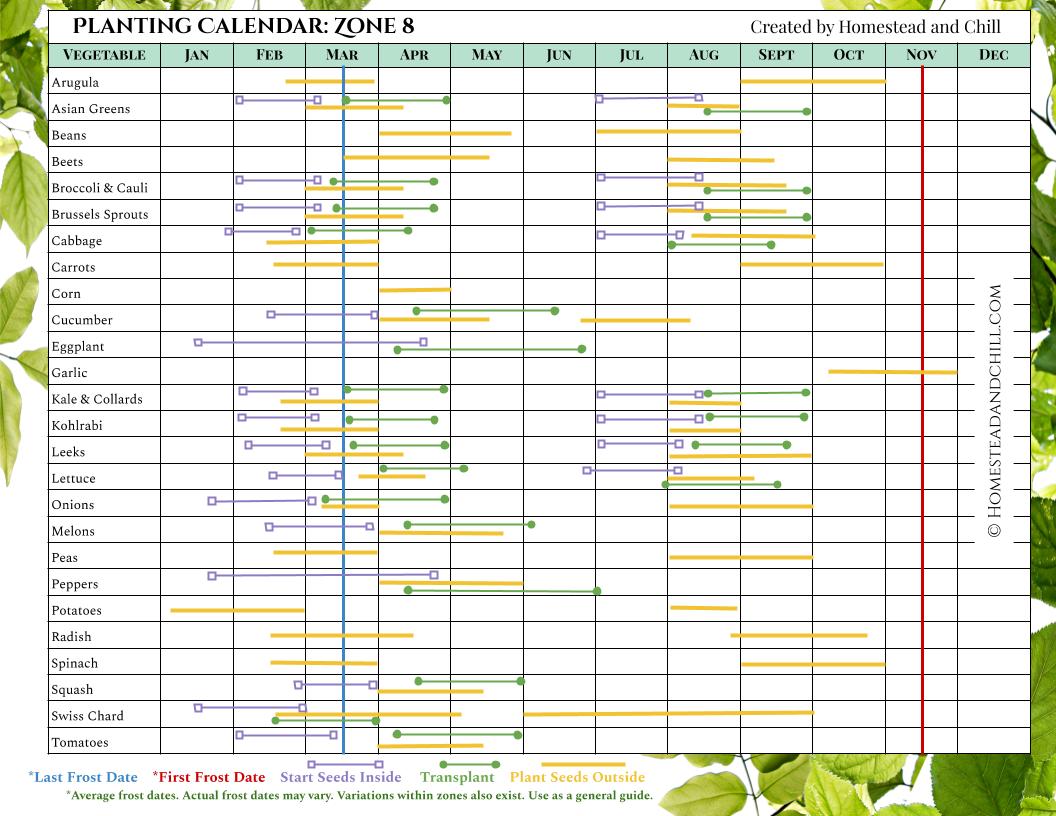
Zone 8 Garden Planting Calendar
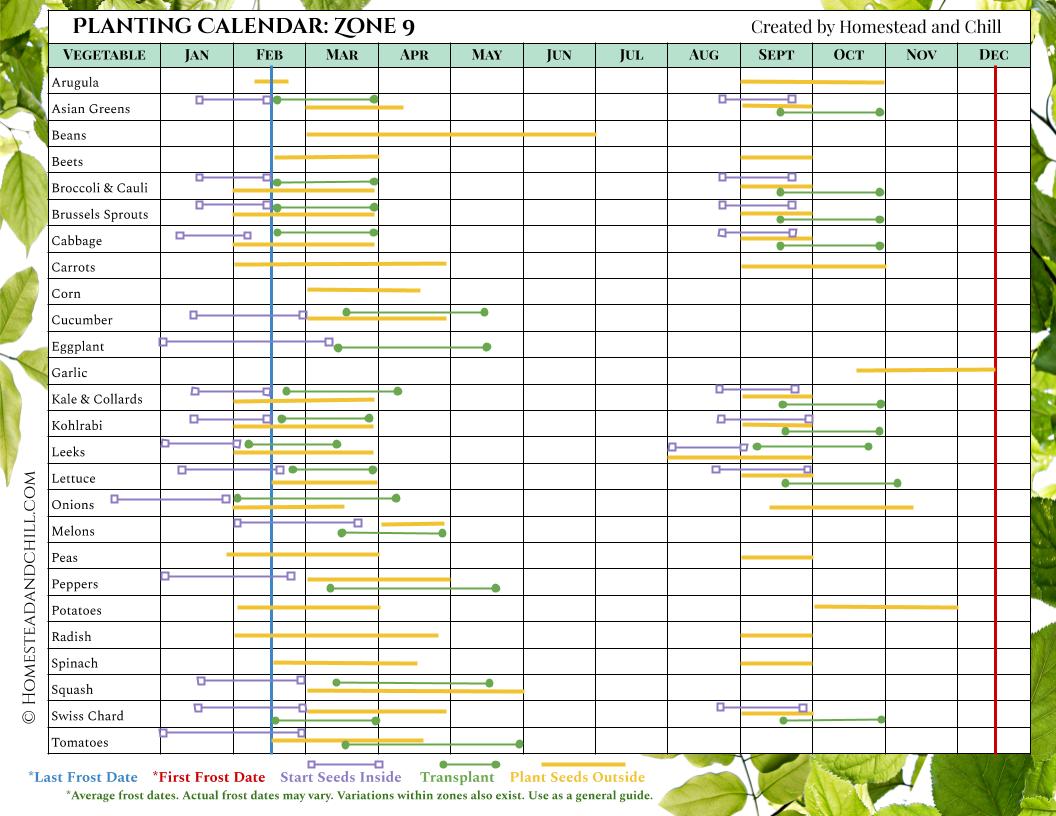
Zone 9 Garden Planting Calendar
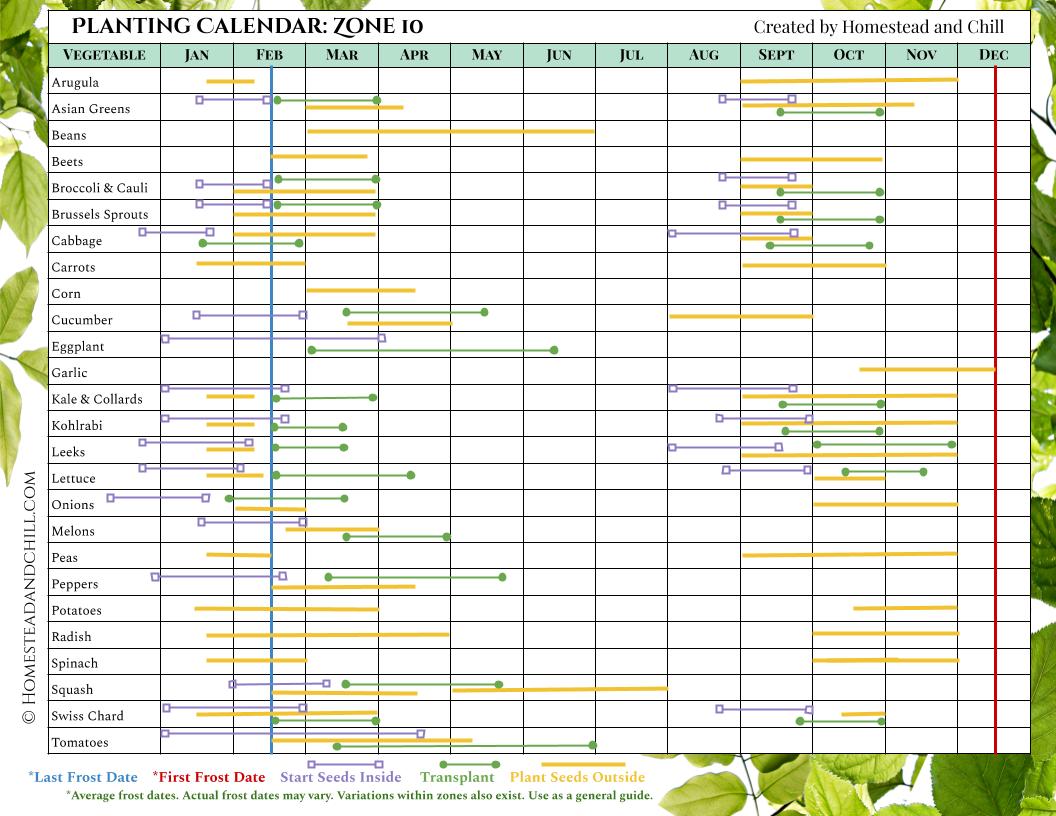
Zone 10 Garden Planting Calendar
Zone 11 and 12 Garden Planting Calendar

Thank you so much for tuning in today! I hope you love using your new planting calendars. Please let me know if you have any questions. Also, please feel free to spread the love by sharing this post. Have a successful growing season ahead!
Don’t miss these related posts:
- A Beginner’s Guide to Using a Hobby Greenhouse
- 9 Common Seed Starting Mistakes To Avoid
- How Long Do Seeds Last? (Seed Viability Chart)
- 13 Best Places to Buy Vegetable Seeds: Organic, Heirloom, Non-GMO


23 Comments
CYNTHIA CARPENTER
Do you have planting times for UK please?
Aaron (Mr. DeannaCat)
Hi Cynthia, we don’t have a planting guide for the UK but you should be able to cross reference the specific US zone in comparison to your hardiness zone in the UK where you could then use our specific planting calendar for that particular zone. Hope that helps and have fun growing!