

Sourdough Supplies List: 12 Must-Have and Useful Items
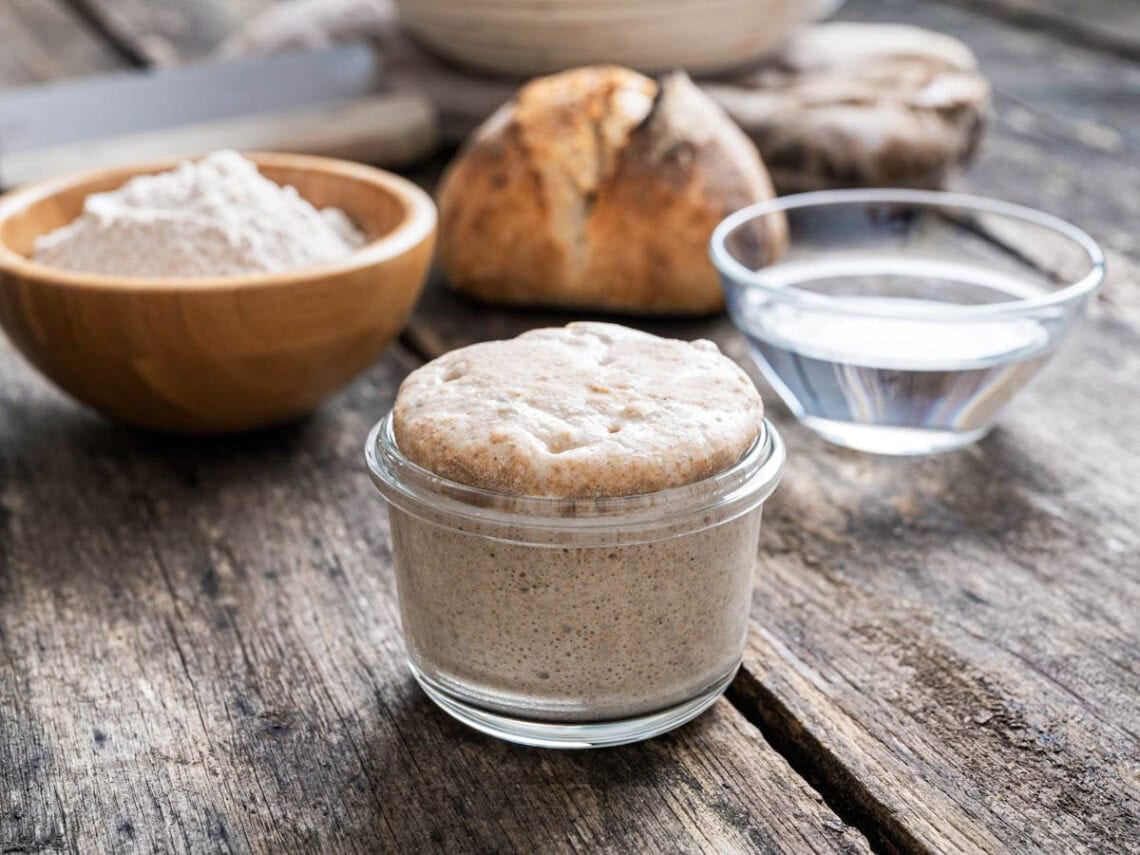
If you’re new to sourdough or wondering “what supplies do I need to make sourdough bread?” then you’re in the right place. Here’s a list of 12 tools, ingredients, or other sourdough supplies – including essentials like starter and salt, as well as a few optional goodies that we find very useful when we’re baking. All of these items are pretty affordable, or may be things you already have around the kitchen!
NOTE: This post was originally published in February 2019 but recently significantly updated.
1) Sourdough Starter
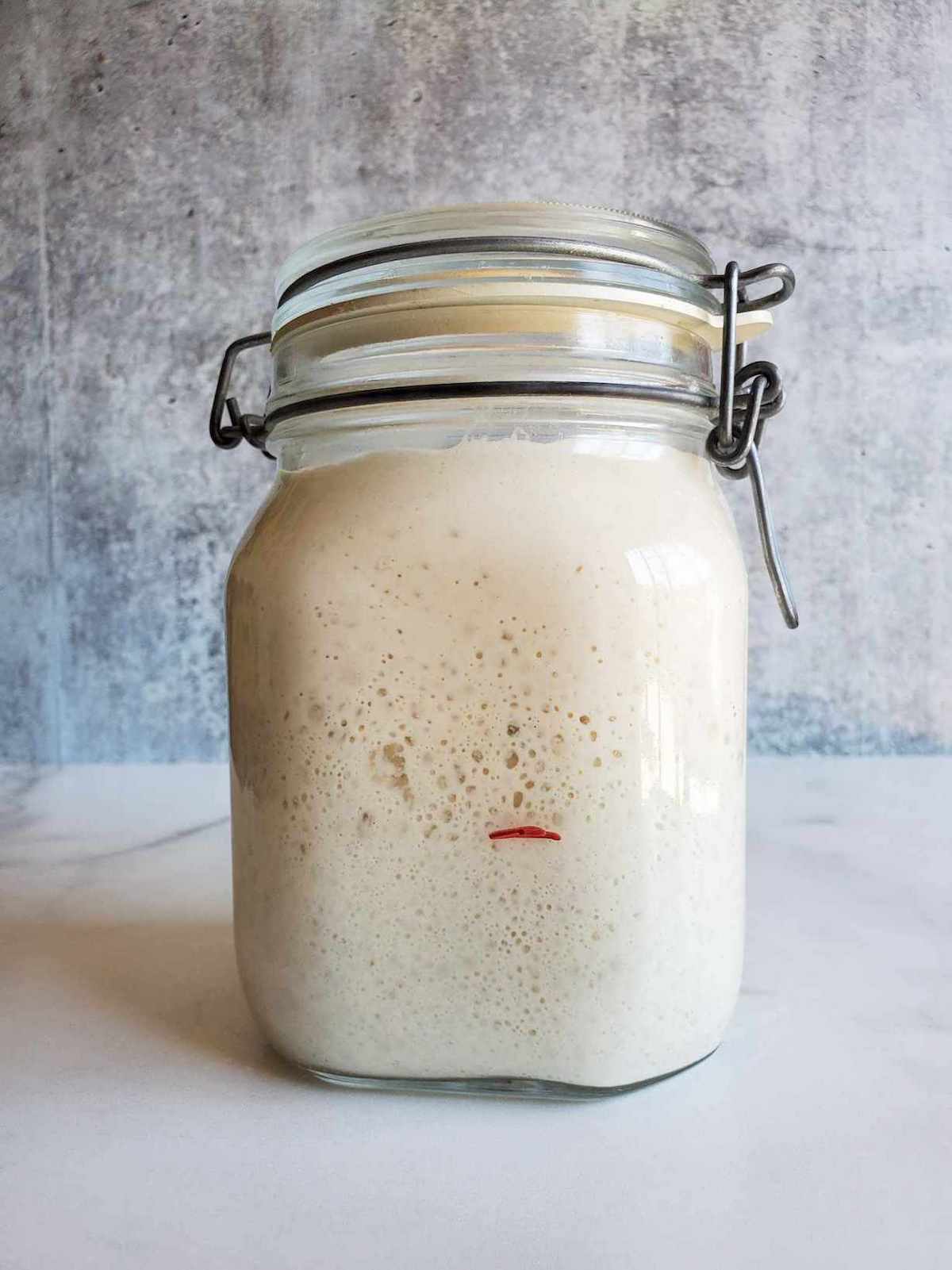
One of the most crucial sourdough supplies you’ll need is a sourdough starter: a colony of beneficial bacteria and wild yeast living in flour and water, nurtured by routine “feedings” to keep it alive and happy. Starter is added to every sourdough recipe – be it bread, crackers, cookies, or bagels. It’s what makes your bread rise without the need for commercial yeast!
If you know a local friend or colleague who bakes sourdough, ask if you can get some from them! I’m sure they’ll be happy to share. Otherwise you can make your own sourdough starter from scratch, or purchase an organic dehydrated sourdough starter from our shop. It comes with easy step-by-step instructions and is literally foolproof to get going. (Thank you for supporting our small business!)
Would you like to save this?
RELATED: Learn how to reactivate a dry starter here, or visit our guide on how to feed a sourdough starter. (Don’t worry, it’s much easier to maintain than you may imagine! We store ours in the fridge and often go months without feeding it.)
2) Starter Warmer
After feeding, it’s best to keep your sourdough starter around 70-75°F to get active and rise. Colder conditions will make it more slow and sluggish. Since our home is often on the cooler side (especially during winter, when we bake the most) we love using a handy sourdough starter warming plate. It’s easy, effective, and makes our starter rise stronger and faster – instead of waiting around all day!
BONUS: you can also set your bowl of dough on the warming plate during bulk fermentation too.

3) Flour, Water, and Salt Options
Beyond starter, the key ingredients needed for every sourdough recipe are flour, water, and salt. Here are a few tips on choosing ingredients for the best results possible.
- While it’s possible to make sourdough with all-purpose flour, it’s typically recommended to use bread flour: the higher protein content yields a higher rise, improved dough elasticity, and that quintessential airy, chewy sourdough texture.
- Sourdough starter and dough thrives with non-chlorinated water, so you may want to use a basic carbon filter or other water filter if you otherwise rely on chlorinated city tap water.
- Skip the table salt! The iodine in basic table salt can hinder the beneficial bacteria and natural fermentation process needed for sourdough. Instead, choose a non-iodized salt such as sea salt or pink Himalayan salt.

4) Kitchen Scale
You’ll want a kitchen scale to measure ingredients since most sourdough recipes call for flour, water, starter, and salt by weight rather than cups or other volumes. And it’s not always easy to convert or substitute since various types of flours (and even salts) are more or less dense, and therefore weigh differently.
We love our handy digital scale, which we routinely use for many other recipes and uses too!
5) Dutch Oven or Combo Cooker
I’m sure you’ve seen people using Dutch ovens for sourdough, but do you know why?… Steam!
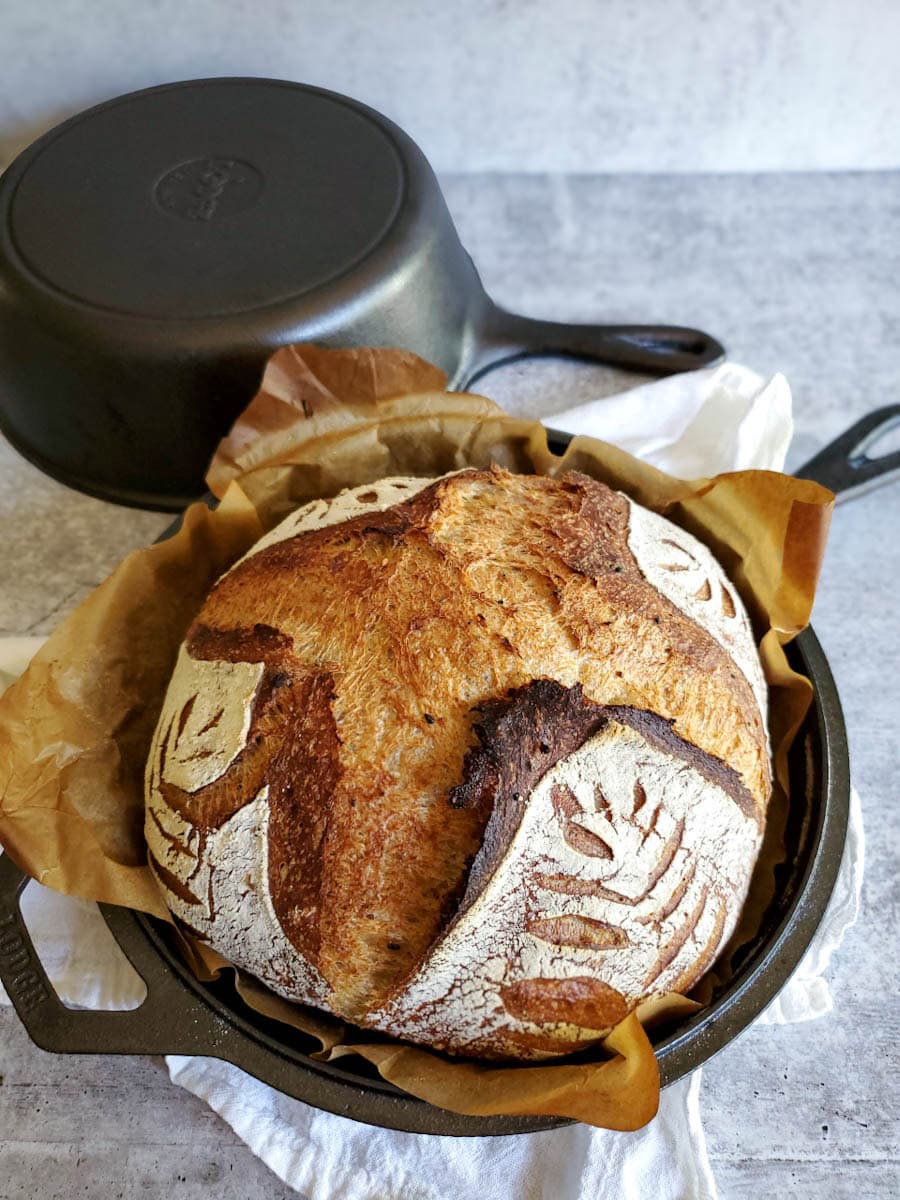
Baking sourdough bread inside a dutch oven traps in steam, prevents the dough from drying out, and contributes to a beautiful springy rise and airy “crumb”. The enclosed environment also helps evenly distribute heat and produce a desirable crisp, deeply-colored crust with blisters and a well-developed “ear”. It’s as close to baking in a commercial oven as you can get at home.
We bake our sourdough in this cast iron combo cooker; it’s like an upside down Dutch oven. With the flat part on the bottom and dome over the top, it makes it exceptionally easy to slide the dough in and out without accidentally burning yourself – especially since you’ll be preheating the dutch oven or combo cooker to nearly 500°F before the dough even goes inside!
6) Proofing Baskets
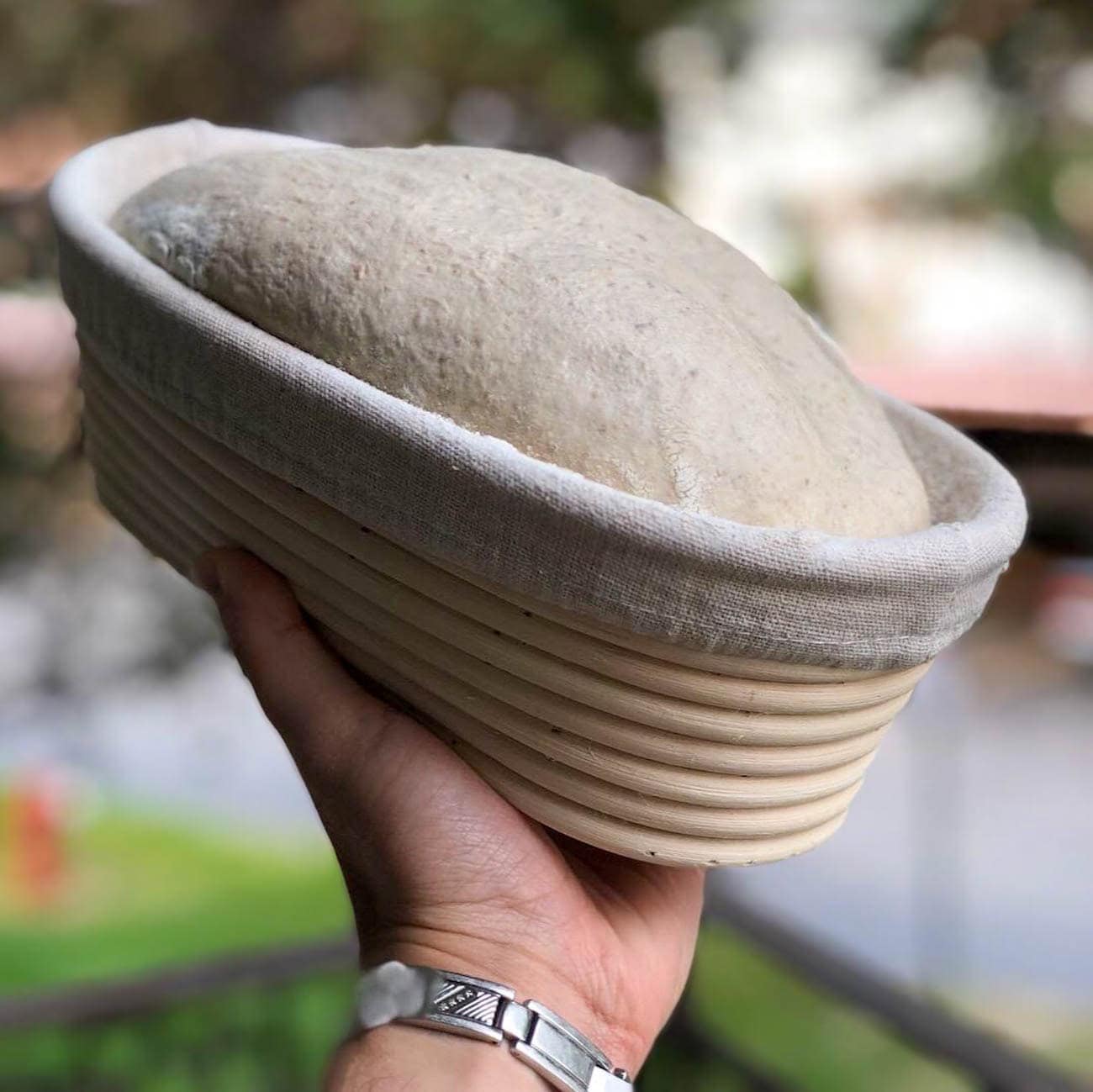
Once the dough is finished with it’s initial rest and rise period (aka bulk fermentation), you’ll fold and form the dough into the shape of a loaf. Then, it’s really helpful to set the dough inside a proofing basket – also called a banneton – which helps it maintain it’s shape during the final rise period. They come in different shapes including a round “boule” loaf (the most common) or oval-shaped “batard”.
Some folks use a cloth-lined mixing bowl, but a banneton can yield superior results since it’s specifically designed for this purpose. Bannetons are made from breathable materials that help the dough stay nice and airy, wick away moisture, easily release the dough without sticking, and contribute to a great crust.
7) Dough Scraper
A bench scraper or dough scraper is another handy tool for your sourdough supplies collection. We use ours during several stages of making bread, including when we first mix the dough (helping to scrape up leftover bits from the edges of the bowl) and while forming the loaf shape on the countertop.
The round banneton that we use (linked above) actually comes with a dough scraper! Or you can get a two-pack of basic dough scrapers for only $6. They also make some nice stainless steel bench scrapers, but because we use a round bowl for our mixing and bulk ferment, we also like using more flexible ones.
8) Non-Toxic Non-Stick Baking Pans
A Dutch oven is great for classic sourdough loaves, but if you want to branch out and bake sourdough focaccia, sweet breads, or other types of sourdough, you may want a few different shaped baking pans.
For instance, we love this non-toxic, non-stick cake pan to make cornbread and focaccia (which is even easier for beginner’s than round loaves). We also have a classic 1-pound bread loaf pan by the same brand. They’re lined with food grade silicone instead of standard toxic non-stick chemicals!
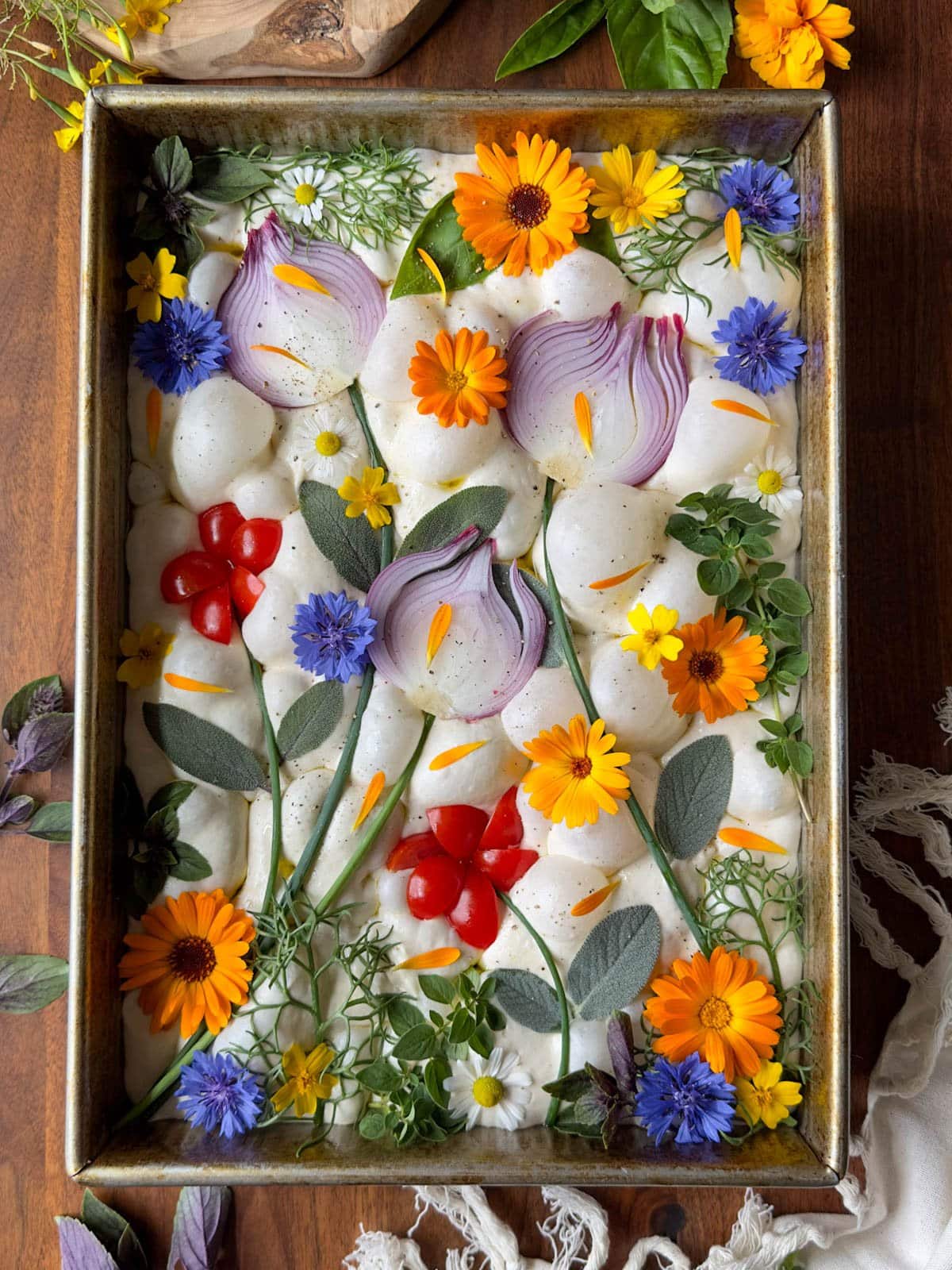

RELATED: Don’t miss our easy sourdough focaccia recipe, delicious sourdough zucchini bread, or healthy sourdough pumpkin bread recipe.
9) Bread Knife
If you don’t have a decent serrated bread knife, I definitely suggest investing in one. The wrong knife (even a nice sharp chefs knife) will simply smush and tear your beautiful fluffy loaf. This inexpensive bread knife has done a great job for us, with many years of use! These trendy bow slicers can make it easier to cut thinner even slices too.
10) Bowl Covers
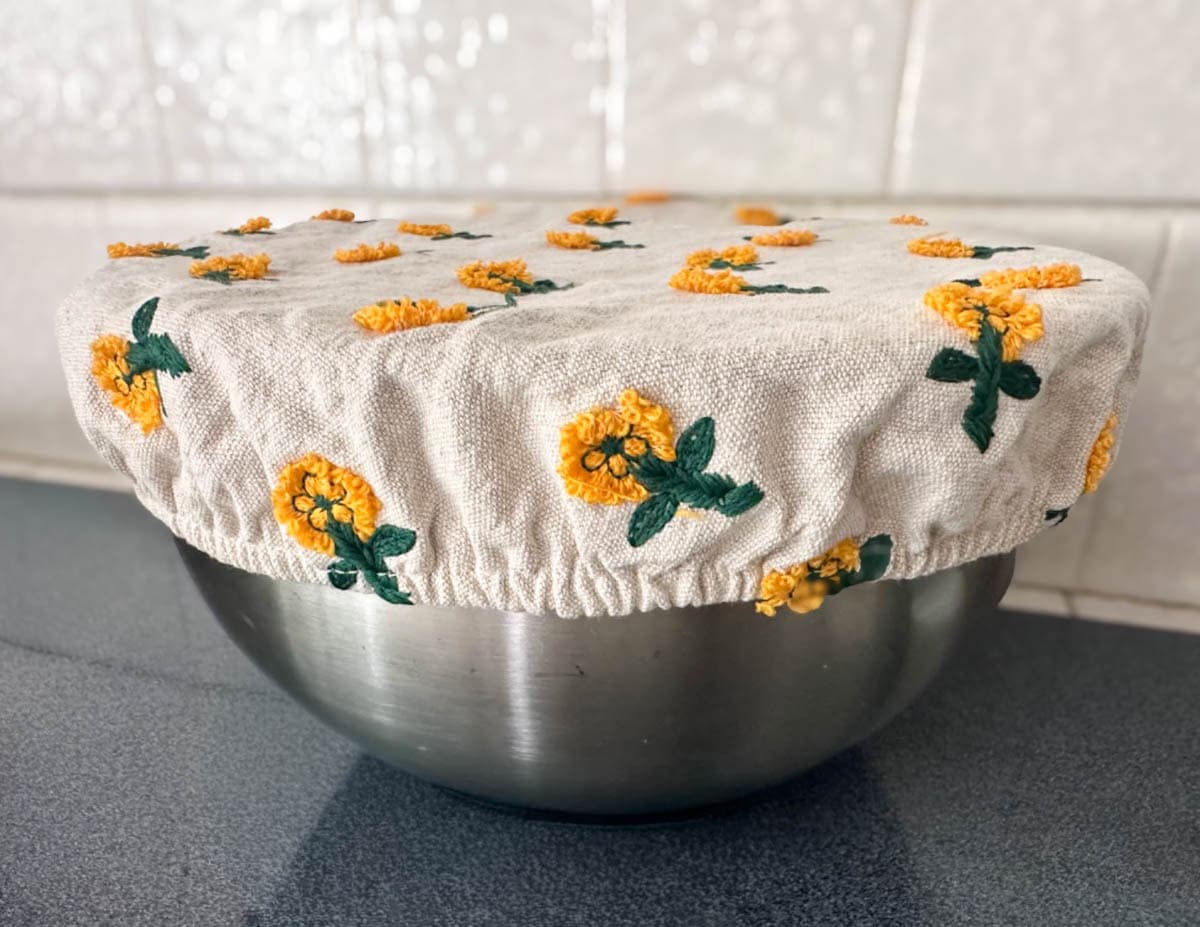
It’s best to cover your dough to prevent it from drying out, including the many hours it’s resting in a mixing bowl during bulk fermentation and also in the banneton or proofing basket.
You can use a lint-free towels like these flour-sack tea towels, or get some handy reusable cotton bowl covers that are specifically designed for this! I usually get the cloth damp before covering the bowl, which helps keep the dough moist but also still lets it breathe. (We generally avoid single-use plastic like saran wrap, which doesn’t allow your dough to breathe either.)
11) High-Heat Oven Mitts
Sourdough is baked in an incredibly hot oven – usually set to between 475 to 500°F. Unfortunately, many basic oven mitts aren’t thick enough to block that level of heat, so be sure to protect yourself with high-heat rated ones! We love these high quality mitts that are rated to 500°F. They have great anti-slip silicone grip and protect fairly high up your arms.
12) Bread Lame
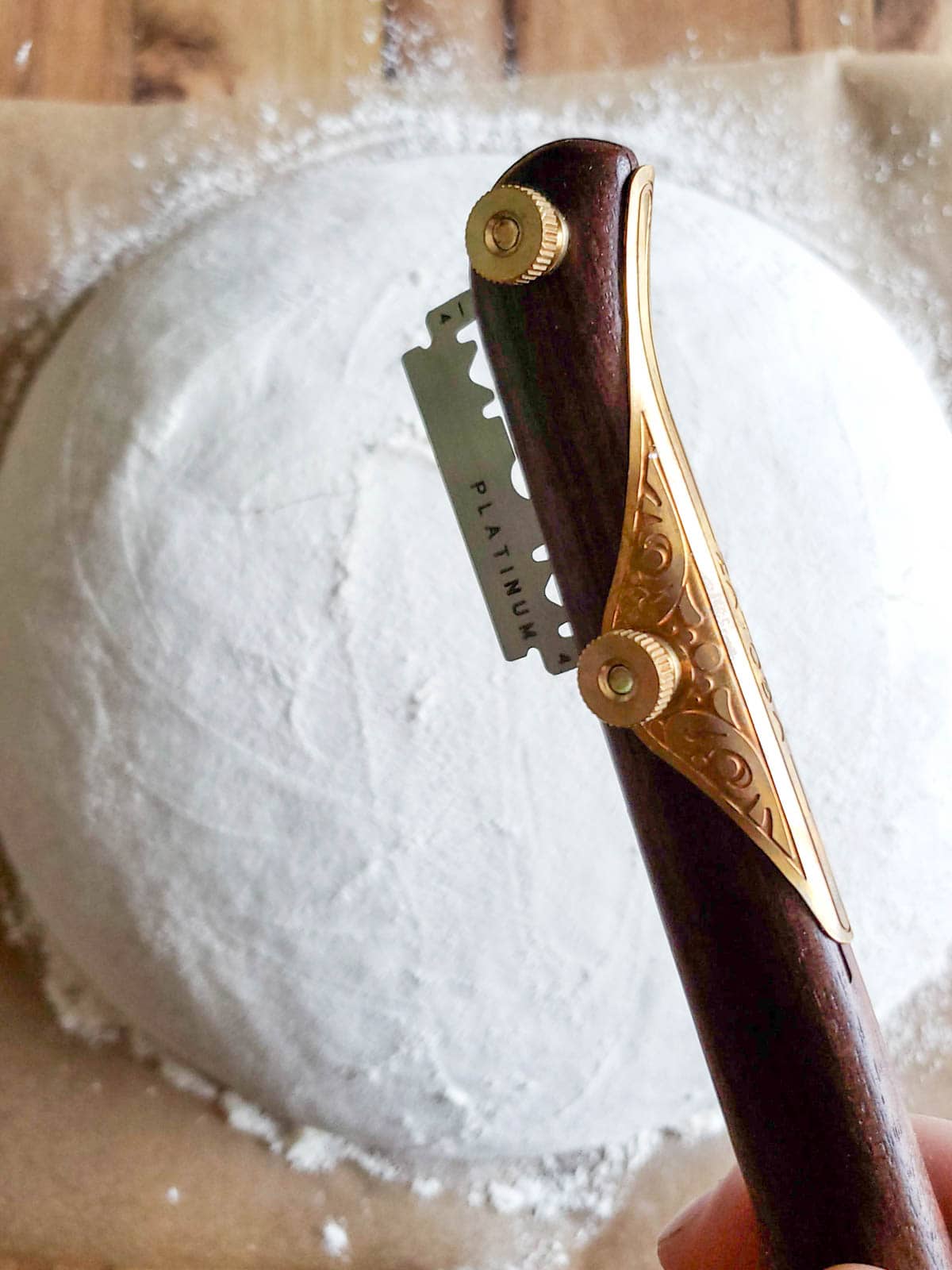
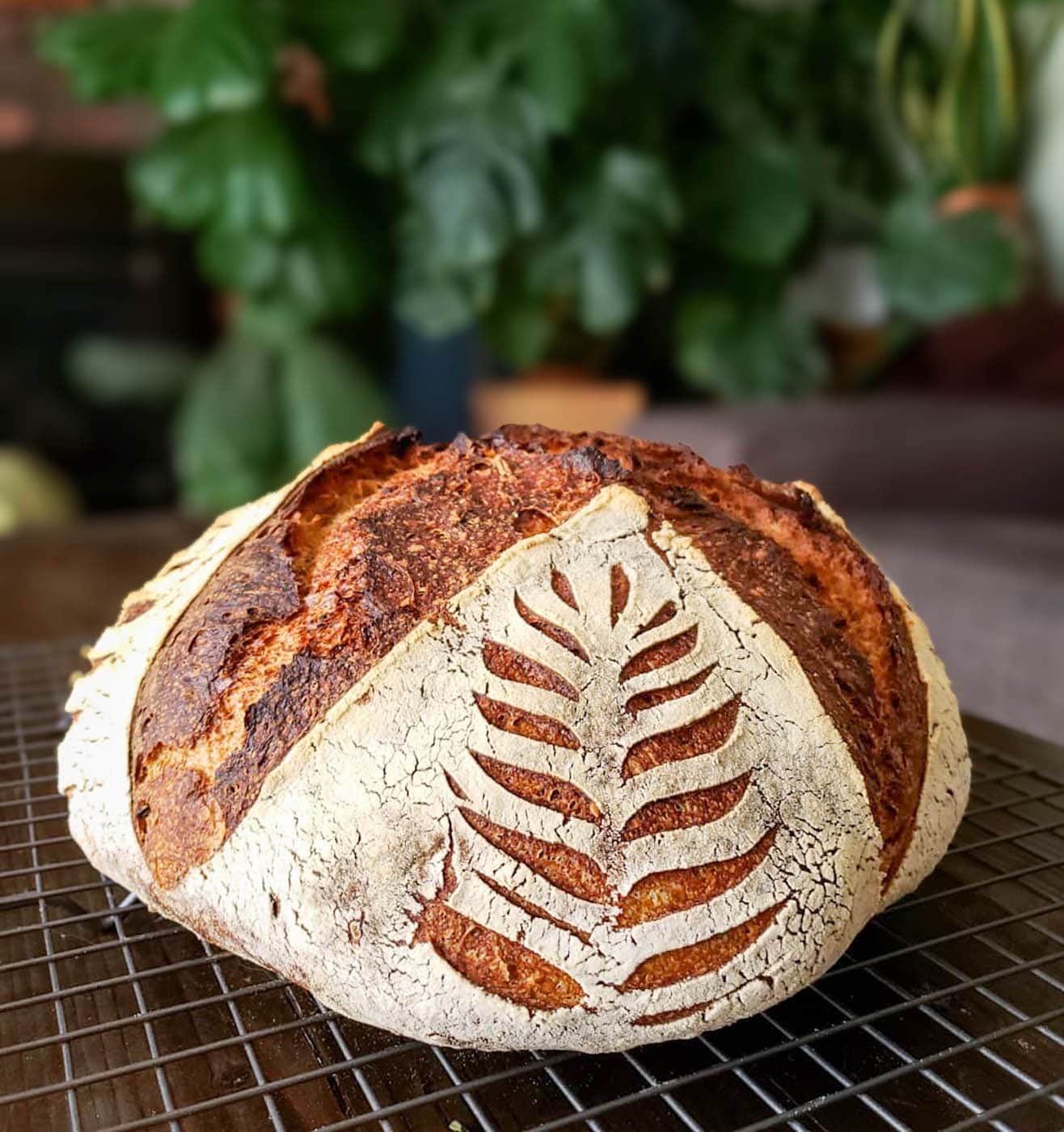
Here’s a final item for your sourdough supplies list: a bread lame, which is basically a razor blade attached to a handle for safety and ease of use. It serves two purposes: 1) so you can carve pretty patterns in the dough crust, and more importantly 2) to score the dough, or make a deeper slash across the top or side that helps control where the bread expands as it rises – which is also what creates a desirable “ear”.
If you don’t score the dough before baking, it haphazardly split open somewhere (or many places) during the rapid oven rise. We have this pretty walnut handled wood lame, but these round UFO style wood lames are also super popular.
Now that you have your supply list, you can get on to the fun part: baking sourdough! Check out our go-to, simple no-knead sourdough bread recipe here and other popular recipes below. I hope you found this helpful!
You may also enjoy:
- Easy Sourdough Discard Crackers Recipe (Optional Cheese or Herbs)
- 15 Best Sourdough Discard Recipes: Ways to Use Starter Discard
- Sourdough Granola Recipe (Discard or Active Starter) with Fermented Option
- Easy Sourdough Pancakes Recipe (Discard or Active Starter) + Topping Ideas



12 Comments
S L Andrews
I do not have a scale.I recieved a starter 2 days ago. Can you tell the way to feed if I have to us a cup and spoons?
Thanks
Aaron (Mr. DeannaCat)
Hi, if you already have an established starter, we typically discard until there is an inch or two of starter left in the bottom of a quart sized jar, we then feed 1 cup flour and 1/2 cup water, adding more water if necessary for the consistency we are looking for. Check out our article on how to feed and store your starter here for more tips. If you are going to start baking with sourdough, you should buy a digital kitchen scale as many recipes go by weight, they are inexpensive and quite handy in the kitchen. Hope that helps and have fun baking!
Megan
Hey Deanna- what size is your combo cooker? The link took me to a 3L sized one but it seems it may be a bit small? Thanks!
Aaron (Mr. DeannaCat)
Hi Megan, that should be the correct combo cooker, ours is 3.2 quarts and it works great. Hope that helps and reach out if you have any other questions.
Michelle
I got the oval banneton because I’d love to have a loaf shape of bread (my kids like it better!) so I’m wondering what pan you suggest using to cook a loaf shape. Would love any ideas! And by the way, I love your recipe for sourdough bread and all your suggestions. It’s been totally helpful and has kept me busy during the stay at home order of 2020. Such delicious bread!!
DeannaCat
Hi Michelle – the oval loaf still actually fits inside the cast iron combo cooker we use! Depending on the rise, it can sometimes get just a tiny bit smushed on the long ends while baking, but otherwise usually makes a great oval loaf! I know there are other large dutch oven/covered bake pans out there that can also accomodate either size. Happy baking! Thanks for being here.
Jamie
I’m looking to get started with this and am wondering what size banner on you use. I see various sizes and am not sure what works best with your recipe.
Sara
I’m so thankful for this supply list! I wouldn’t of even known where to start without it. I love that there are also references to what and where you can by certain stuff on the list! I love when I don’t have to go looking or stuff 😀 Thank you Deanna!!
Laura Cobb
You inspired me to give Homemade Sourdough a try last year! I find I’m always honing this craft and it is definitely enjoyable. There are several invaluable tips provided above! Thanks for your advice!
DeannaCat
Oh yeah! We are far from being pro or having all the nuances figured out! Just trying to keep it simple and delicious over here 🙂 I am so happy it’s worked out for you too!
Vinny B
You make it all so easy! Thank you!!! The sourdough series has been my favorite of the blogs so far. Now, back to the garden with your playlist in the que
DeannaCat
Sounds like a perfect little plan you have there! 🙂 I am working on writing the actual loaf recipe post this weekend, so it should be up soon! Thanks for the support!