

20+ Wonderful Winter Garden Activities (Projects) To Do Indoors
There’s nothing wrong with embracing the slower, cozy days of winter and taking a break from gardening – especially after a busy fall of harvests and preserving! Yet the winter can feel like an awful long time to go without tending to plants and connecting with nature. Especially when some of us feel most fulfilled when we’re in our happy place – the garden.
Thankfully, there are a number of wonderful indoor garden-related projects and activities that you can do indoors to help satisfy that craving! Here are over 20 fun ideas for every budget and skill level.
Beyond the comforts of your home, remember there are many ways to extend your growing season, protect plants from frost, and continue gardening outdoors even as temperatures dip. And if you’re in a mild climate like ours, perhaps grow a fall garden right through winter too!
1) Organize Your Seed Collection
Even if you’re months away from planting them, why not play with your seeds now?
Organizing seeds is one of my favorite indoor gardening activities. I like to go through my seed collection every winter to assess what we have on hand, order what we need more of, and generally tidy things up. It definitely gets me excited in anticipation for spring!
We used to keep our seed packs in a shoe box, overflowing into numerous old mailing envelopes they had once arrived in. It was messy and difficult to locate what I was looking for, and some seeds got completely buried and forgotten!
If that sounds familiar, I highly recommend trying these seed storage boxes instead. They’re perfect to keep seeds dry, organized, easy to find and tote around. Paired with these labels, they make my little Type A heart sing.

Would you like to save this?
Disclosure: Homestead and Chill is reader-supported. When you purchase through links on our site, we may earn an affiliate commission.
2) Grow Microgreens
If you have a hankering to grow something NOW, try microgreens! Kale, alfalfa, and sunflower sprouts anyone?
Growing microgreens is a fantastic indoor garden activity, and something you can do year-round! They’re easy to grow under a small grow light or in a bright sunny window. Plus, the fresh little microgreens are absolutely loaded with nutrients – in exponentially higher concentrations than their mature forms.
To get started, here is cute little all-in-one organic microgreen kit and an adjustable LED grow light shelf. Or you can pop over to our step-by-step guide on growing microgreens to see our favorite supplies and learn even more!

3) Learn Something New
I don’t know about you, but I have stacks of gardening books and magazines that I can’t seem to find the time to read – especially during the busy growing season! Take advantage of the slow, cozy, darker days of winter and learn something new.
Read up on the benefits of no-till gardening and crop rotation, the importance of fruit tree chill hours, or using mycorrhizae to improve plant health. Or, how to grow something new and unique – like turmeric or pineapple guava. We have hundreds of articles here on Homestead and Chill that may tickle your fancy! Or, check out our list of favorite gardening books and homesteading resources here.

4) Try an Indoor Herb Garden
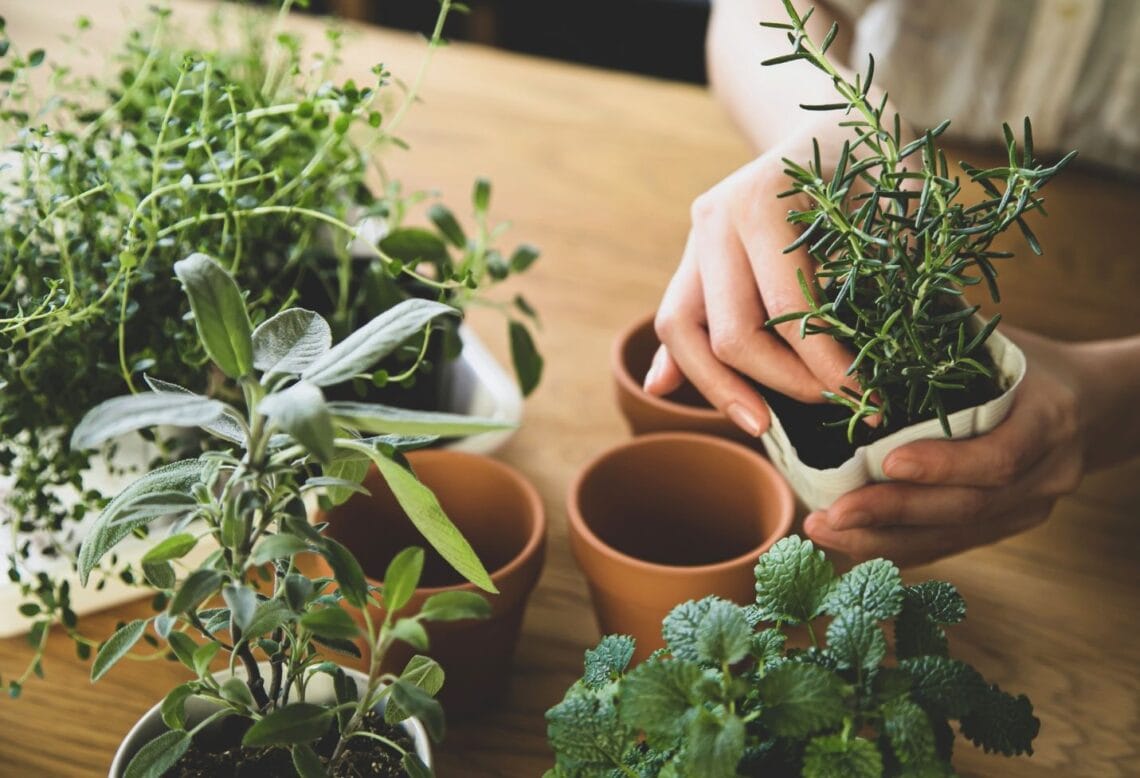
Microgreens aren’t the only thing you can grow inside. Consider growing fresh herbs too! Start a windowsill herb garden with a few small pots, or tuck them under a countertop grow light for even more success. This sleek hydroponic indoor garden and grow light is perfect for herbs and leafy greens too.
The best herbs to grow inside include basil, chives, mint, parsley, lemon balm, and tarragon. Lettuce and other small leafy greens usually grow well indoors too! You can also try to grow woodier perennial herbs like oregano, sage, rosemary, and thyme indoors, though they’re usually most happy outside – with ample sun and warm open soil to grow in. Learn even more about growing and using herbs here.

5) Make Homemade Bird Feeders
The kiddos will especially enjoy this fun winter garden project! Create a simple homemade bird feeder with a pinecone, some peanut butter, and wild bird seed. Lather peanut butter (or almond butter) in the grooves of the pinecone, and then roll or sprinkle it with bird seed – which will stick to the nut butter.
Use twine or a soft pipe cleaner to hang your DIY pinecone bird feeder in a tree outside a window, and watch your feathered friends enjoy their protein-rich snack! It’s best to hang close to a small branch that the birds can perch on while they pick at the pinecone.

6) Play with Pressed Flower Crafts
We love to save and press flowers from our spring and summer garden, so they’re ready to use for fall or winter crafts. For example, check out our tutorial on pressed flower candle lanterns (shown below). They’re made from recycled glass jars, and are a beautiful DIY gift idea! We also like to decorate pumpkins with pressed flowers in fall.
Even if you don’t have your own, you can buy pressed flower kits online for indoor winter crafts. Then consider investing in a simple flower press (or a super-quick microwave press) to press your own flowers, ferns, leaves and herbs next season. I’ve outlined beginner best practices on how to press flowers here, including four different methods!

7) Plan for Spring
Ah, there’s nothing better than cuddling up with a hot cup of tea and stack of seed catalogs on a dreary winter day. Browsing through seed catalogs (or online) and planning for spring is another one of my favorite indoor winter garden activities! (See our favorite places to buy organic and heirloom garden seeds here.)
After we do our seed shopping, I like to start thinking about where I will plant everything in the garden come spring. We try our best to practice crop rotation and consider companion planting while planning.
To help organize my thoughts, I use our garden plot plan template (see example below) to map out where certain plants may go. It makes things SO much easier come transplanting day! They’re also useful to keep and reference from previous years, especially for crop rotation. The plan may change slightly come spring but it’s fun to start daydreaming now.

8) Start a Worm Bin
Worm composting is my absolute favorite way to sustainably repurpose food waste! Not to mention, worm castings (aka worm poo) are the most incredible fertilizer and soil amendment you can use. Worm castings have the nickname “black gold” for a reason. With a worm bin, you can create that for free! And your garden will thank you endlessly.
Worm bins are easy to set up, perfect for small spaces, and can even be kept indoors. Contrary to popular belief, worm compost bins do not smell bad (especially if they’re well-maintained). One of our followers secretly kept a worm bin under her kitchen sink for many months without her husband realizing it (who was opposed to having one)! We’ve had a worm bin for over 15 years, including while living in an apartment in Rhode Island while I was in grad school.
Learn how to create and maintain a simple, inexpensive tote-style worm bin here. Worms do need to be protected from freezing conditions, so if you can’t keep it inside during the winter, wrap the worm bin in insulating material like a wool or fleece blanket and store it in a protected location – such as a garage, shed, or basement.

9) DIY Stepping Stones
If you’re feeling crafty, consider making some homemade garden stepping stones out of concrete and molds. You can keep them plain, “stamp” them with leaves or flowers, create fun shapes, draw designs on them, or even create colorful mosaic stepping stones from glass, broken pottery or dishes. This is a perfect indoor garden activity for winter – ready to jazz up your space come spring!

10) Start Seeds for Spring
Though you likely won’t be planting seedlings outside just yet, winter is the ideal time to start seeds for the spring garden. Not only is seed-starting a fun indoor gardening activity, it’s essential in some cases! Folks with short growing seasons must get a jump start indoors, so they’ll have sizable seedlings to plant come spring – ones that will bear fruit faster. Pop over to our Seed Starting 101 guide to learn everything you need to know!
Many common summer vegetable crops like tomatoes, peppers, eggplants, onions and more are started in the winter, several weeks to months before the last spring frost date in any given area. If you aren’t sure when to start seeds indoors in your area, check out our handy planting calendars. They’ll show you the best time to start seeds, transplant seedlings outside, or directly sow seeds outdoors for dozens of different vegetables, and every USDA hardiness zone!

11) Give Your Houseplants Some Love
If you can’t be outside, tending to your indoor houseplants can be one of the most satisfying winter garden activities – especially if they’ve been neglected! Perhaps it’s time to finally pot-up that root bound monstera, or re-stake your leaning rubber tree. I love to use microfiber gloves to remove dust from plant leaves and make them shine!
Late winter is also a good time to feed houseplants with a slow-release fertilizer, as they generally resume more vigorous growth come spring. Our Houseplant Care 101 article provides tips on soil, light, water, fertilizer, pests, cats, and more.
Maintenance aside, get creative with your plants! Rearrange or swap pots to spice things up, or create a new fun plant shelf, hanger, or display. Heck, you could even adopt a new houseplant or two! Here is a cute DIY succulent terrarium idea too.

12) Make Something With Preserved Garden Goods
There are all kinds of wonderful things you can make with goodies you’ve saved from the summer garden: homemade seasonings or tea blends with dried herbs, medicinal tinctures and balms, or dried flower arrangements and wreaths. Admittedly this may take planning in advance… but perhaps you already have something on hand to use?
For example, harvest and save dried calendula flowers during the busy summer season, and then take advantage of the slower winter months to finally make calendula-infused oil, healing salve, or DIY body butter.
Did you freeze a bunch of fruit that could be made into jam? Or maybe it’s time to turn some of your fall garlic harvest into homemade garlic powder before it goes soft in storage? I know I currently have several bags of whole frozen tomatoes just waiting to be turned into roasted tomato sauce or creamy tomato basil soup!
Ideas to try:
- How to Make Lavender-Infused Oil and Homemade Lavender Salve
- Homemade Calendula-Infused Oil and Calendula Salve Recipe
- How to Make Medicinal Herb Infused Oil: Two Ways
- How to Harvest, Dry and Use Rosehips or make DIY rose hip infused oil

13) Sanitize Garden Tools and Seed Starting Supplies
Winter is a great time to clean and sanitize your gardening tools and reusable seed starting supplies. Then you’re ready to go and can hit the ground running once the busy spring season arrives!
Why sanitize? Routinely cleaning your garden tools is one important way to prevent the spread of disease in your garden, especially for susceptible little seedlings.
Spraying everything down with non-toxic hypochlorous acid is one quick, easy, and effective way to do it! Or, you can see another method we sometimes use to sanitize our garden supplies here.

14) Grow Mushrooms In Your Kitchen
There are some types of fungi that you don’t want lurking in your kitchen (I’m looking at you, moldy creature in the back of the refrigerator) but here is a super neat indoor gardening activity: grow some shrooms!
Mushrooms are fun and easy to grow indoors, especially since there are a ton of mushroom growing kits readily available that make it as easy as 1-2-3. The kits come pre-inoculated with mushroom spores (varieties of oyster mushrooms being the most common), and all you have to do is keep them misted and moist. Then you can harvest fresh, tasty, nutrient-dense homegrown mushrooms right in your kitchen! Mushroom kits also make for an awesome gift, or cool science experiment to do with the kids.
15) Build a Birdhouse or Owl Box
Calling all bird lovers! Even if you’re not a bird nerd like me, building a birdhouse is a sweet little winter garden project – and one your local wildlife will greatly appreciate too. We recently converted an old wooden mailbox into a birdhouse! Check out this great round-up of DIY birdhouses and plans from The Spruce for more ideas.
Or, if you want to step it up a notch, consider building an owl box! In return for providing them with shelter, these majestic birds of prey can offer excellent natural rodent control for your garden. You can find owl box plans online from trusted bird experts – like this Screech owl box plan from the Cornell Wildlife Center, or this Barn owl box from the Audubon Society. Be sure to research what types of owls are most common to your area, since different owl species like particular box shapes and sizes.

16) Do a Garden-Themed Puzzled
So this idea isn’t exactly playing with plants or dirt, but it’s one I sure do enjoy! I love doing puzzles all winter – especially ones with a garden, farmer’s market, fall havest, bird, butterfly, or other nature-themed image. You can find some of my favorite pretty puzzles and handy puzzle board here. We also love to play Wingspan, a super-fun bird-themed board game that anyone can enjoy!
17) Attend or Organize a Seed Swap
Us gardeners tend to hoard seeds. Hey, no judgement here! Yet if you’re like me, we don’t always use up the entire seed pack before they start to get old. (You can still plant and grow most old seeds, though the germination rate will start to decline after a few years). Seed swaps are an excellent way to get rid of extra seeds, discover new-to-you varieties, and spread the garden love.
Seed swaps can operate a few different ways. Sometimes you can bring whatever you want, and take whatever you want. Others have more organized rules, where each participant exchanges the same number of packs or varieties with others in the group. Check with your local garden clubs or Master Gardeners extension office about upcoming seed swap events. Or organize your own – including through the mail!
18) Decorate Your Pots
Feeling crafty? Decorating pots is a fun winter garden project that you can do indoors. Grab some plain terra cotta pots and get creative! You could paint them with pretty designs, or even adorn them with a mosaic tile pattern. Check out this tutorial on How to Make Mosaic Flower Pots from Home is Where the Boat Is. Hunting down mosaic materials (e.g. old plates or china) sounds like a fabulous excuse to go thrift shopping too!

19) Build Something “Inside”
If it’s too cold, wet, or snowy to comfortably work outside, make use of your garage or other outbuildings as a workspace! During rainy winter weather, we’ve built raised garden beds, greenhouse benches, and a potting bench inside our garage – all ready and waiting for spring. This season we’ve been staying dry inside a small barn while we work on a big irrigation project, cutting and gluing certain smaller sections of PVC pipe in advance. I would love to build a produce washing station next!
20) Deep Clean Your Greenhouse
The final winter garden project on this list is for those of you that have a greenhouse. Freshen up your greenhouse in preparation for spring by organizing pots, seedling supplies, tools, or other items you store inside. Wipe down the interior walls and shelves with a natural sanitizing agent to kill any lingering disease or fungal spores from the previous season. We don’t have a greenhouse at the moment, but liked to use this homemade vinegar and citrus spray to clean our old one!

And that concludes this list of winter indoor garden activities!
Well friends, what do you think? Did you see a few fun things on this list that you want to try? Or, did a miss any indoor garden activities that you personally love to do to inside during the dreary cold months? Let me know in the comments below. If you found this list to be useful, please spread the love by pinning or sharing this post. As always, we greatly appreciate you tuning in today. I hope these ideas make it a little easier to get through the rest of winter. Don’t worry, spring is just around the corner!



8 Comments
Julie
Those craft boxes are the BEST for seed storage! After seeing them on your site for years, I finally broke down and bought them last year. Fantastic! And thanks for the other tips, I can’t wait until the snow melts so I can go set up some new beds in Denver.
Aaron (Mr. DeannaCat)
Hi Julie, so great to hear that you have found the seed storage boxes so helpful, have fun growing!
Kendall Zacha Shaw
Hello! What is the reference book that’s opened to the carrots page?? It looks like a good reference! Thanks!
Aaron (Mr. DeannaCat)
Hi Kendall, that is a High Mowing seed catalogue, where we get many of our garden seeds. Hope that helps and good luck!
PJ
I love your website and all the great ideas, information and guides you provide. Since being diagnosed with stage 4 osteoporosis, my activities that I used to enjoy are not ones I can do now due to possibility of bone fracture so easily, but I always enjoy planting vegetables and flowers but it got rather difficult since I cannot lift more than 5 pounds. So, My husband is finishing up a greenhouse build for me which he has never done before, but it is beautiful, and a 25 foot outdoor raised bed where I can enjoy outdoor activity and not be cooped up in the house all the time. He has put a potting bench in the greenhouse so I can germinate and sow all year round. I am a new at a lot of this, but last weeks planning guide and all the information in the download was a great resource. I have used your notes information and created my guide by zone, organized my seeds, and have a chart of each of all seeds, generation info, etc. Your guide was extremely helpful. I will see what works in my greenhouse and outside, but very excited to refer to your information. I feel much more confident in planting in my greenhouse and raised beds, along with the pots I normally plant in. Now when I create my food dishes for my recipes, I will use more and more of my home grown items. Thank you! Oh, and my old china tea cups will now become decorations for my pots in the greenhouse!!!
Aaron (Mr. DeannaCat)
Hi PJ, thank you very much for the kind words and we are glad that you found the Grow Guide so helpful. I am so sorry to hear about your diagnosis but that is absolutely amazing that you will have a new space to play in and enjoy! It sounds like the greenhouse and raised bed should allow for plenty of flowers, vegetables, and whatever else you feel like growing. Wishing you the best of luck this growing season in your new space and have fun growing!
Becca
These are great ideas! Just found your site after getting into gardening during the pandemic. Started with tomato and pepper plants just from home depot last year, going to try seeds this year (that seed organizer looks so nice)!
Also the aerogarden hydroponic grower is awesome! Great for beginners/lazies like me, since the lights/indicators remind you when to add plant food and water and it’s not that often. But I need to learn to harvest/prune way more often, cause they grow like crazy and some of the herbs were even growing past the lights and into the cabinets in my kitchen haha.
Annabelle
This is a very interesting Project. It is a fun activity. I enjoyed a lot this. Thanks for providing this amazing content.