

How to Make Calendula Oil (Easy Calendula Infused Oil Recipe)
Come learn how to make calendula oil with our simple step-by-step recipe. It’s exceptionally easy and affordable to do! All you need is oil, dry calendula flowers, and a little time! Then you can use your super-soothing homemade calendula oil on its own, or as an ingredient in other DIY natural skincare recipes like salve, soap, or lotion.
This guide also explores the healing benefits of calendula oil and 7 ways to use it. We’ve been making calendula infused oil for nearly 10 years, so I have plenty of tips on how to make the most luxurious and nourishing oil possible. In fact, calendula is one of my favorite all-time herbs to grow!
Note: This post was originally published in October 2019 but has been significantly updated.
Would you like to save this?
Disclosure: This post may contain affiliate links to products for your convenience, such as to items on Amazon. Homestead and Chill gains a small commission from purchases made through those links, at no additional cost to you.
What is Calendula Oil?
Calendula oil is made by soaking or infusing dry calendula flowers in a carrier oil of choice (such as jojoba oil or sweet almond oil) for several weeks or longer.
As they steep, the natural healing resins and other beneficial compounds found in calendula flowers are drawn out and into the surrounding oil. The result is a highly therapeutic oil that can be used to soothe a wide variety of skin issues including eczema, rashes, and more. Learn more about the benefits and uses of calendula oil below!
Note that calendula is sometimes referred to as “pot marigold” – but don’t confuse it with true marigolds, such as french marigolds! They’re distinctly different, and not nearly as medicinal in nature.
Benefits of Calendula Oil
Calendula officinalis is a key ingredient in many natural skin care products, and for a good reason! The medicinal resins found in calendula promote cell repair and growth (e.g. wound healing) and have proven natural antiseptic, anti-fungal, and anti-inflammatory properties.
When used topically, calendula can soothe, heal, or otherwise treat a huge array of skin conditions including rashes, sunburn, swelling, eczema, acne, stings, bites, wounds, burns, scrapes, psoriasis, scars, cold sores and more.
In her book Medicinal Herbs, A Beginner’s Guide, expert Rosemary Gladstar suggests using calendula oil or salve on babies to safely soothe cradle cap, diaper rash, or other skin irritations. It also calms my skin after shaving, to prevent or treat razor burn.
It’s hard to put into words just how magical this herb is… and it really works! Our organic calendula salve is the most popular item in our shop; its helped thousands of people heal stubborn skin issues, even when prescription medications did not!
EXPERT TIP: Instead of using petals alone, we prefer to make calendula oil using whole dried calendula flower heads – because the base of the flower actually has the most medicinal resin, not the petals!

Supplies Needed
- Dried calendula flowers or petals, enough to fill your chosen jar or container at least two-thirds full. You can use homegrown or store-bought dried calendula, as long as it’s 100% dry. If the flowers are not fully dry, the leftover moisture can cause the calendula oil to grow mold or spoil! Using dry flowers also helps to extract the maximum essential oils possible. See four ways to dry fresh herbs here.
- Carrier oil of choice – such as olive oil, sweet almond oil, or jojoba oil. You’ll need about the same volume of oil as the size container you select. See more information about choosing the best carrier oil below.
- A glass jar or other container with a lid. Something like a 1/2 pint jar would be great if you only need a small amount. Yet if you intend to make calendula salve or other homemade body care products, I recommend using at least a pint jar or more.
- A fine mesh strainer, sieve, and/or organic cheesecloth
- Optional: organic essential oils to lightly scent it
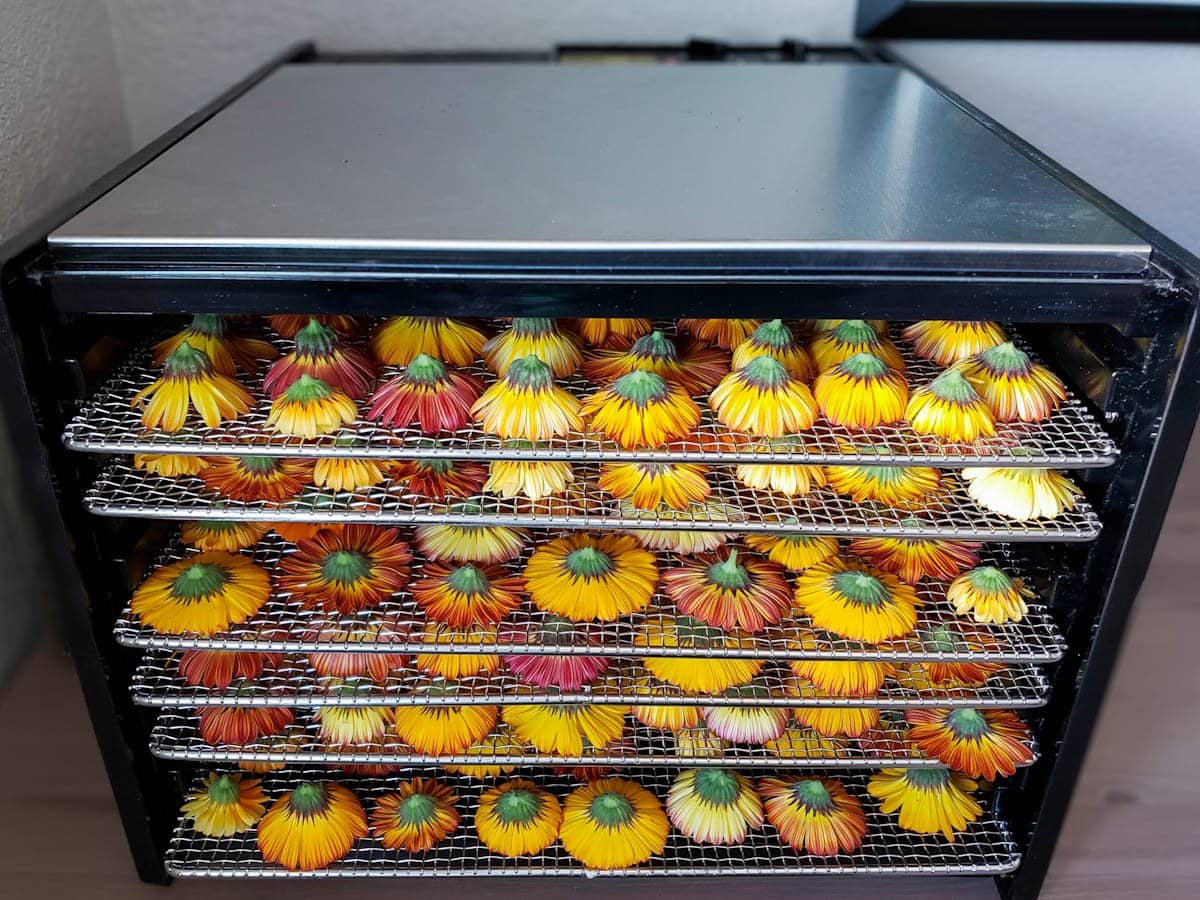
EXPERT TIP: To create the most therapeutic calendula oil possible, harvest young fresh flowers instead of using older, fading blooms. The flowers should also be dehydrated on very low heat to preserve the maximum beneficial compounds. Don’t miss our guide on how to grow and harvest calendula flowers – including tips on how to dry it.
Best Carrier Oils to Make Calendula Oil
Popular carrier oils used to make calendula oil include extra virgin olive oil, sweet almond oil, argan oil, grape seed oil, coconut oil, and more. No matter what you choose, I highly suggest using a high-quality, unrefined, cold-pressed oil. Certified organic is all the better. The goal is to create a healing medicinal oil after all!
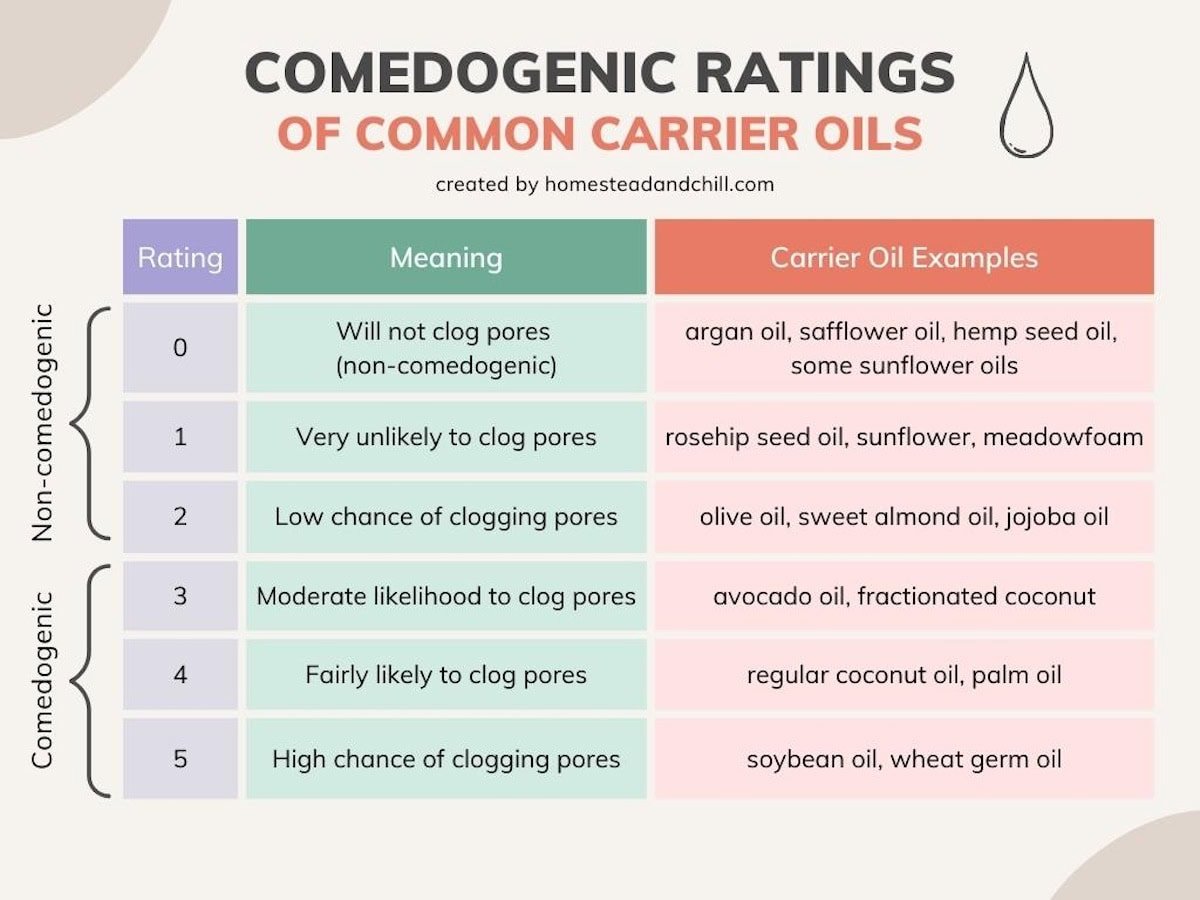
If you’re making calendula oil primarily for topical use, choose a carrier oil that’s compatible and beneficial for your skin type (e.g. consider comedogenic ratings). Organic jojoba oil is my personal favorite, especially for my face! We also sometimes blend two types of oils, such as almond and jojoba oil.
LEARN MORE: Visit our guide on the best 11 Carrier Oil Options for Skin Care, Salves and Infusions to learn more about the unique benefits and properties of each.
Instructions
1) Infuse
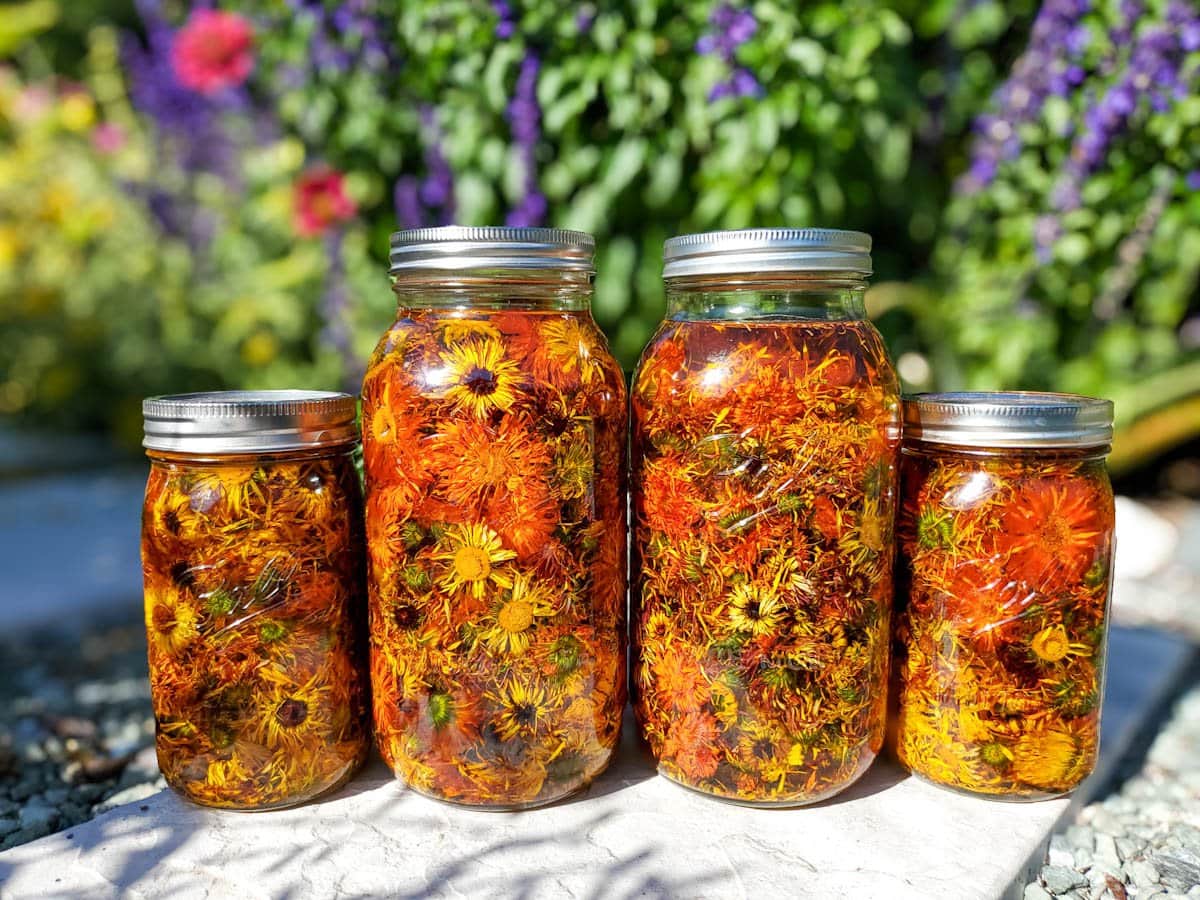
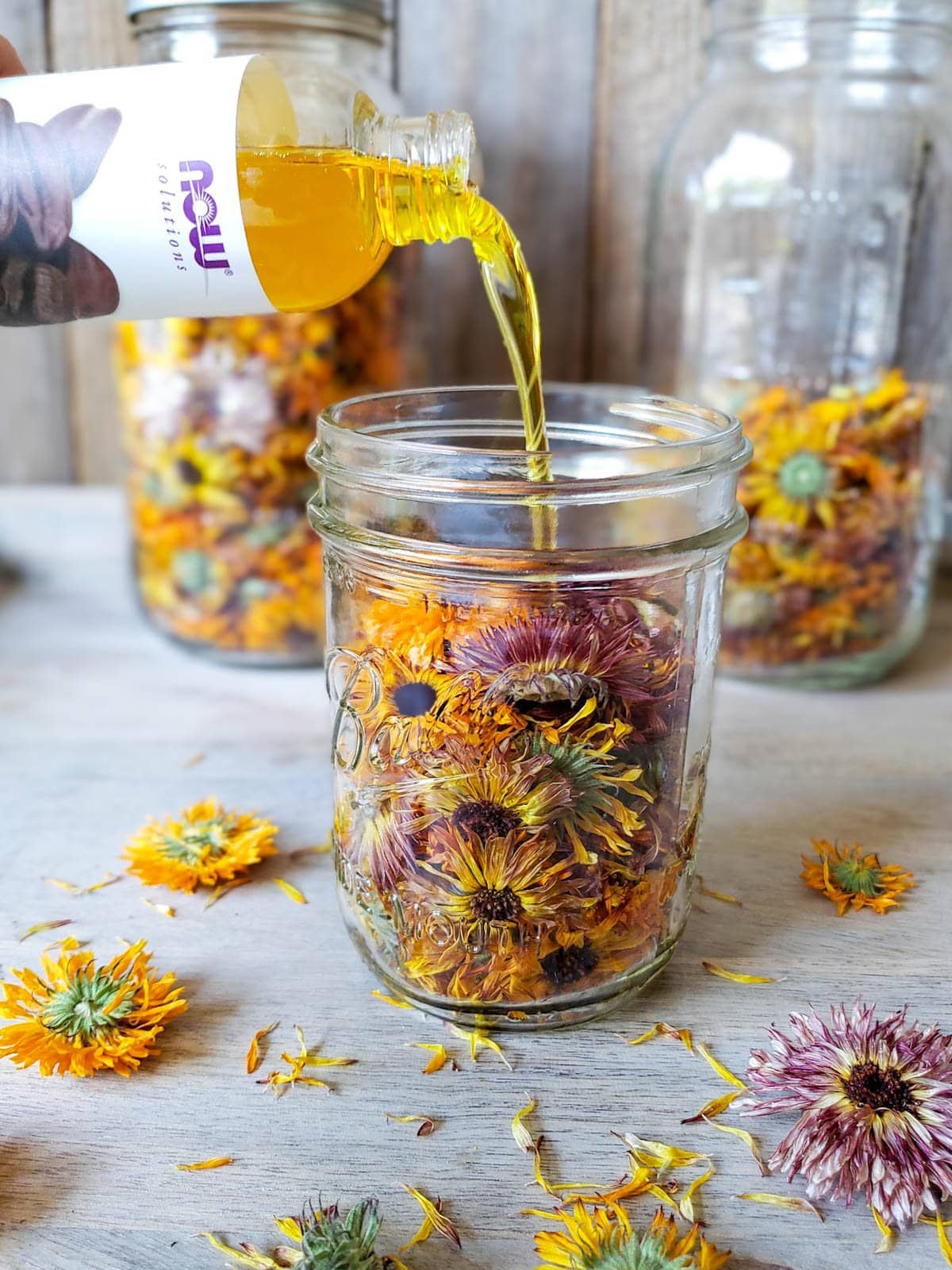
- Fill a glass container at least three-quarters full of dried calendula flowers or petals.
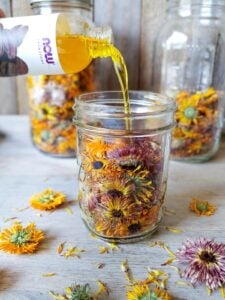
- Pour your carrier oil of choice over the calendula, filling the container enough so that all the flowers can be fully submerged and move freely in the oil. Add a tight-fitting lid.
- Place the jar in a moderately warm location, such as near a sunny window, inside a warm cabinet, or on top of a warm appliance. While some herbalists may have a preference, it doesn’t make much of a difference if the jar is stored in the dark or light – but a little warmth does help it infuse better!
2) Wait
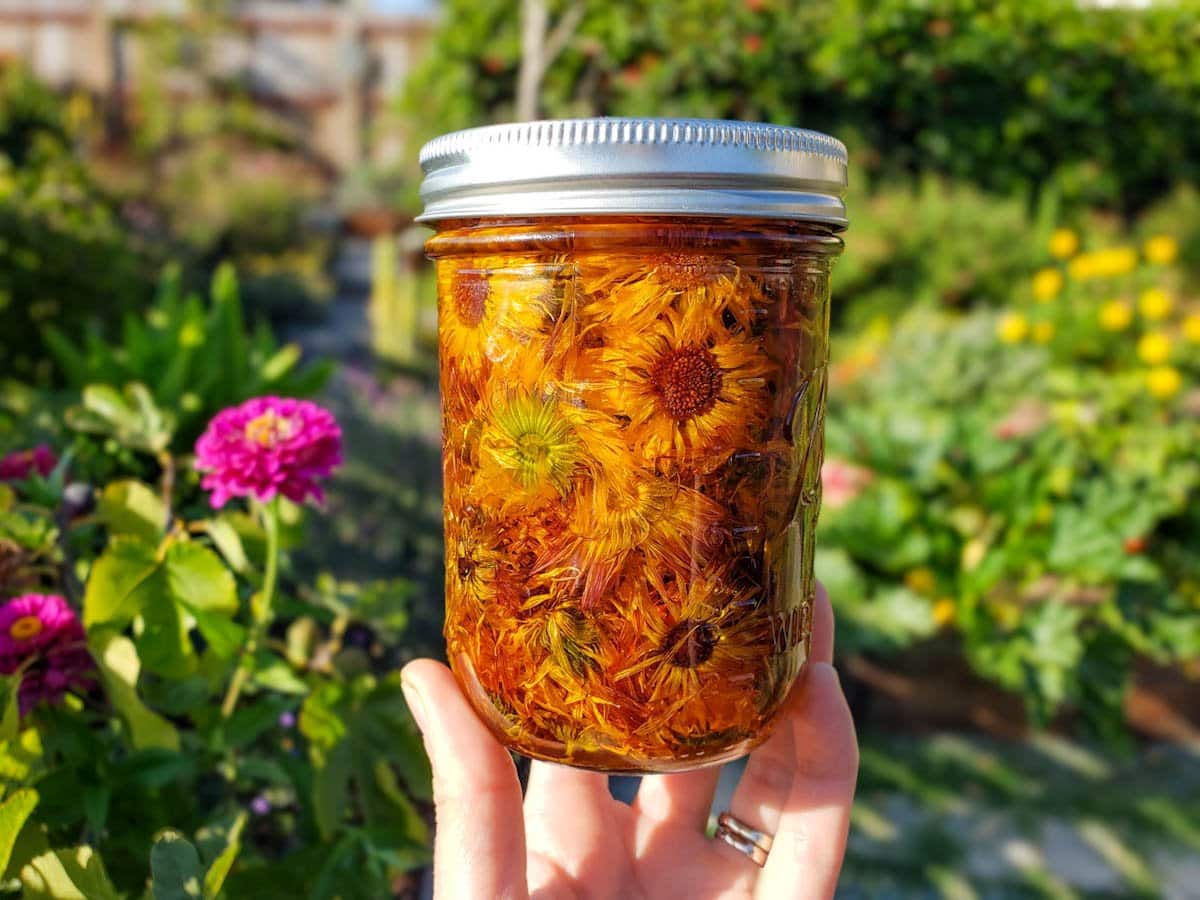
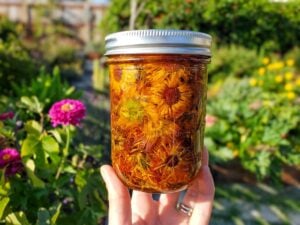
- Allow the calendula oil to to infuse for at least two weeks* or up to 1 month (or longer) for the best results and maximum extraction possible.
- If possible, set the jar somewhere you’ll remember to stop by and gently shake it on occasion to stir things up.
*I much prefer this slow, passive infusion process (since many therapeutic compounds can be destroyed by heat) but it’s also possible to gently heat calendula and oil on the stove to get same-day results. Learn more in this separate guide on how to make herb infused oil.
3) Strain
- When the time is up, strain the calendula flowers and reserve the oil.
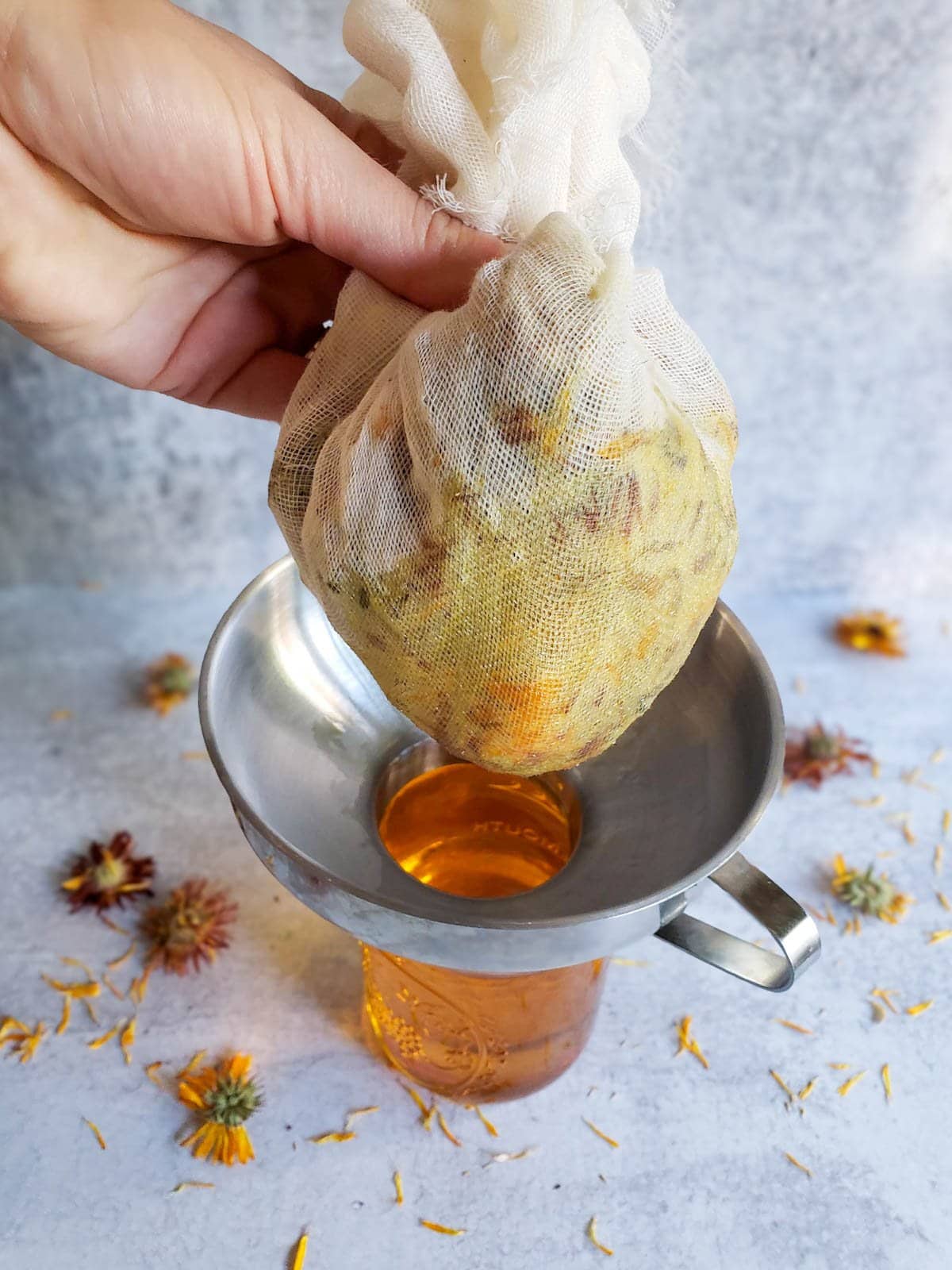
- We usually do this by positioning a fine-mesh strainer over a bowl and pouring it all through. Let it sit to fully drip and drain for at least 15 minutes.
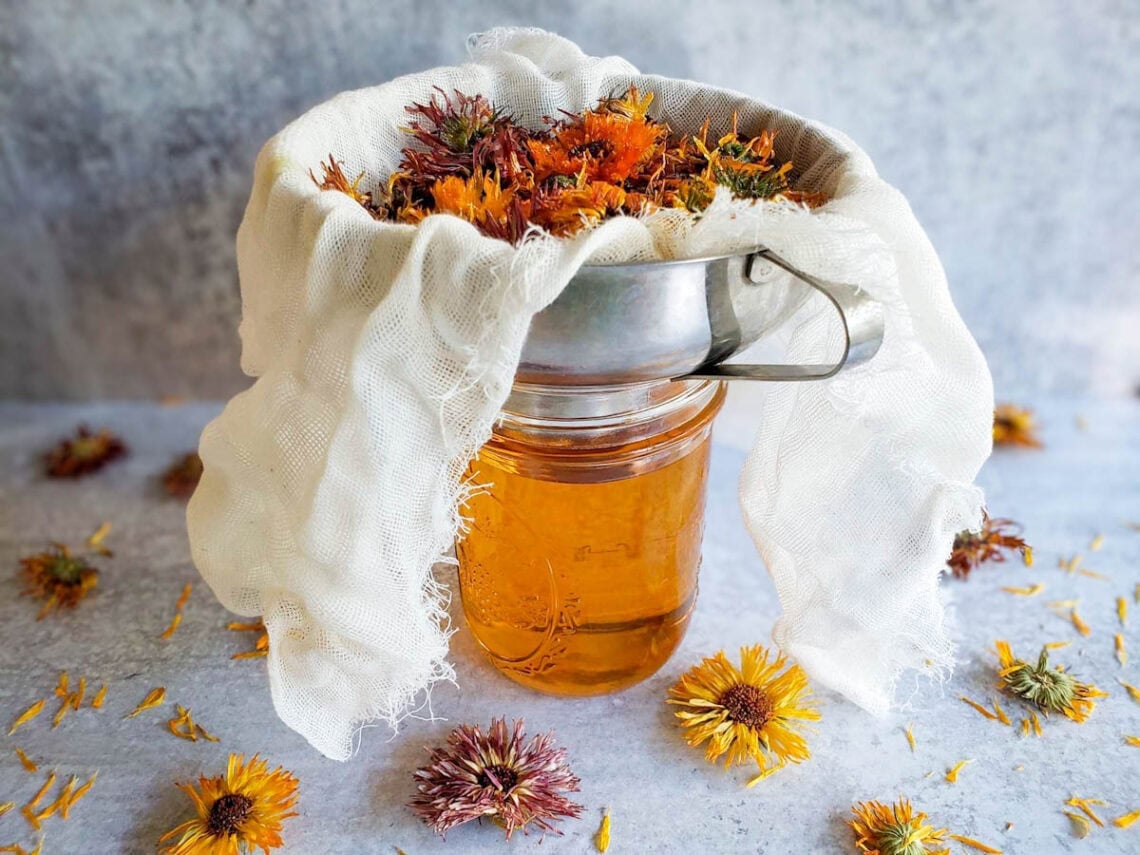
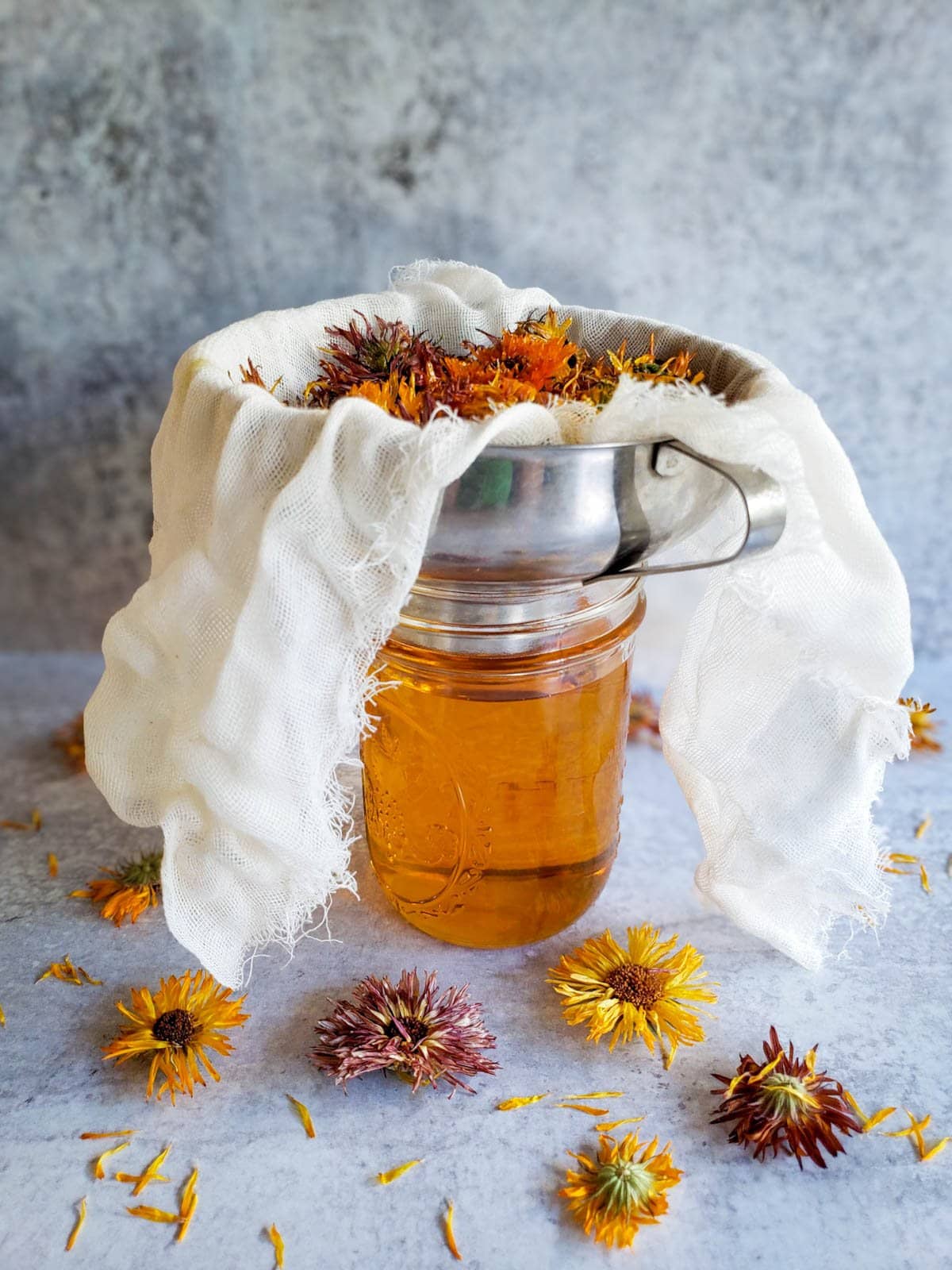
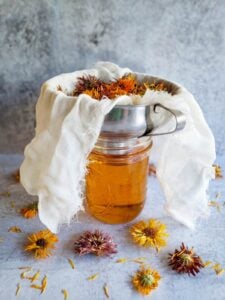
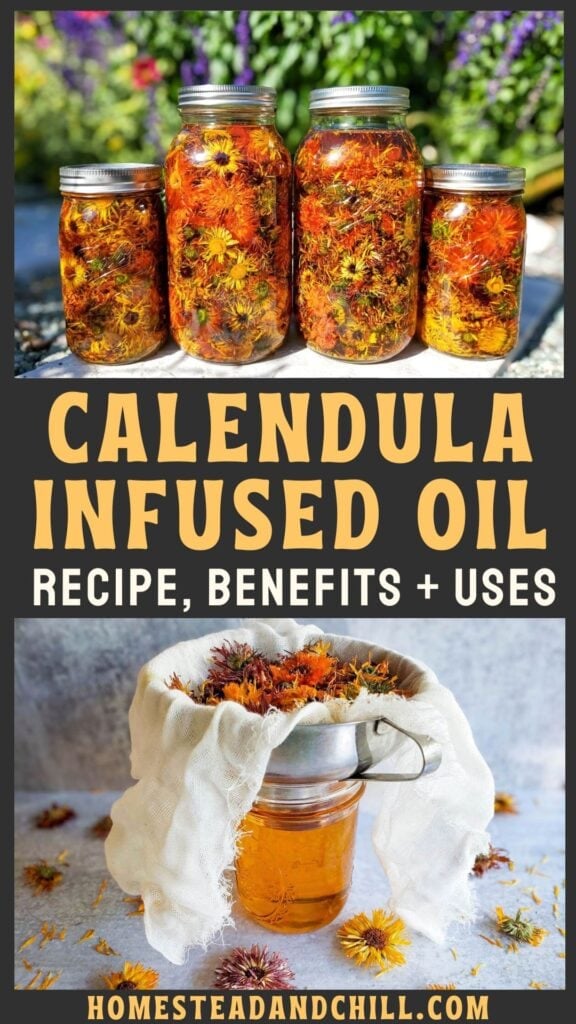
- I like to line our strainer with cheesecloth or a reusable nut milk bag for extra-fine filtration. That way, I can also wring out the cloth or bag of calendula to squeeze out every bit of oil possible. (I’ve also lined a canning funnel with cheesecloth over a clean jar, as shown in the photos.)
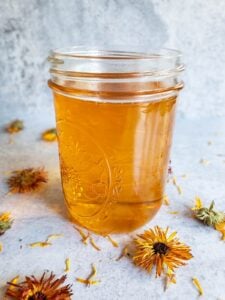
- Finally, pour the strained oil into a clean jar for storage. If you wash and re-use the same jar, be sure it’s fully dry before storing the oil in it!
- Optional: Since calendula oil has a very mild earthy aroma, feel free to add a few drops of your favorite organic essential oils to lightly scent it. I especially enjoy the addition of chamomile and lavender essential oil.
Storage and Shelf Life
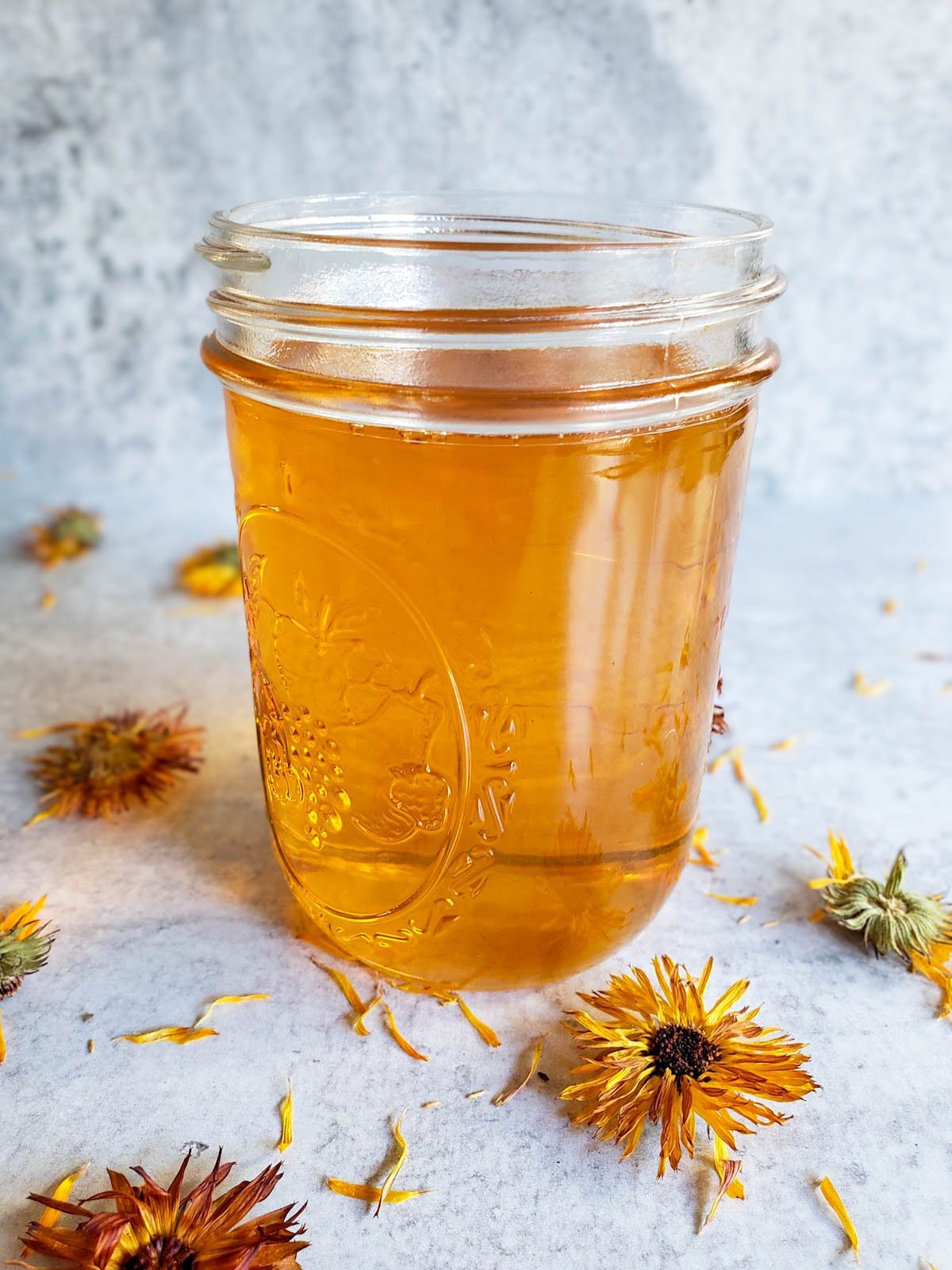
Store the finished calendula oil in a clean glass container with a tight-fitting lid. Keep the container in a dry, cool, dark location. You can also store calendula oil in the refrigerator to extend its shelf life.
The shelf life of homemade calendula oil varies and depends on the type of carrier oil (check the bottle) and condition of flowers used. Some oils are more prone to becoming rancid faster than others. Most have an average shelf life of about 1 year. (Another reason I love jojoba oil: it’s good for up to 5 years!)
7 Ways to Use Calendula Oil
- As a soothing facial moisturizer to help with redness, dry skin, acne, and more. A little goes a long way! You’ll only need a few drops.
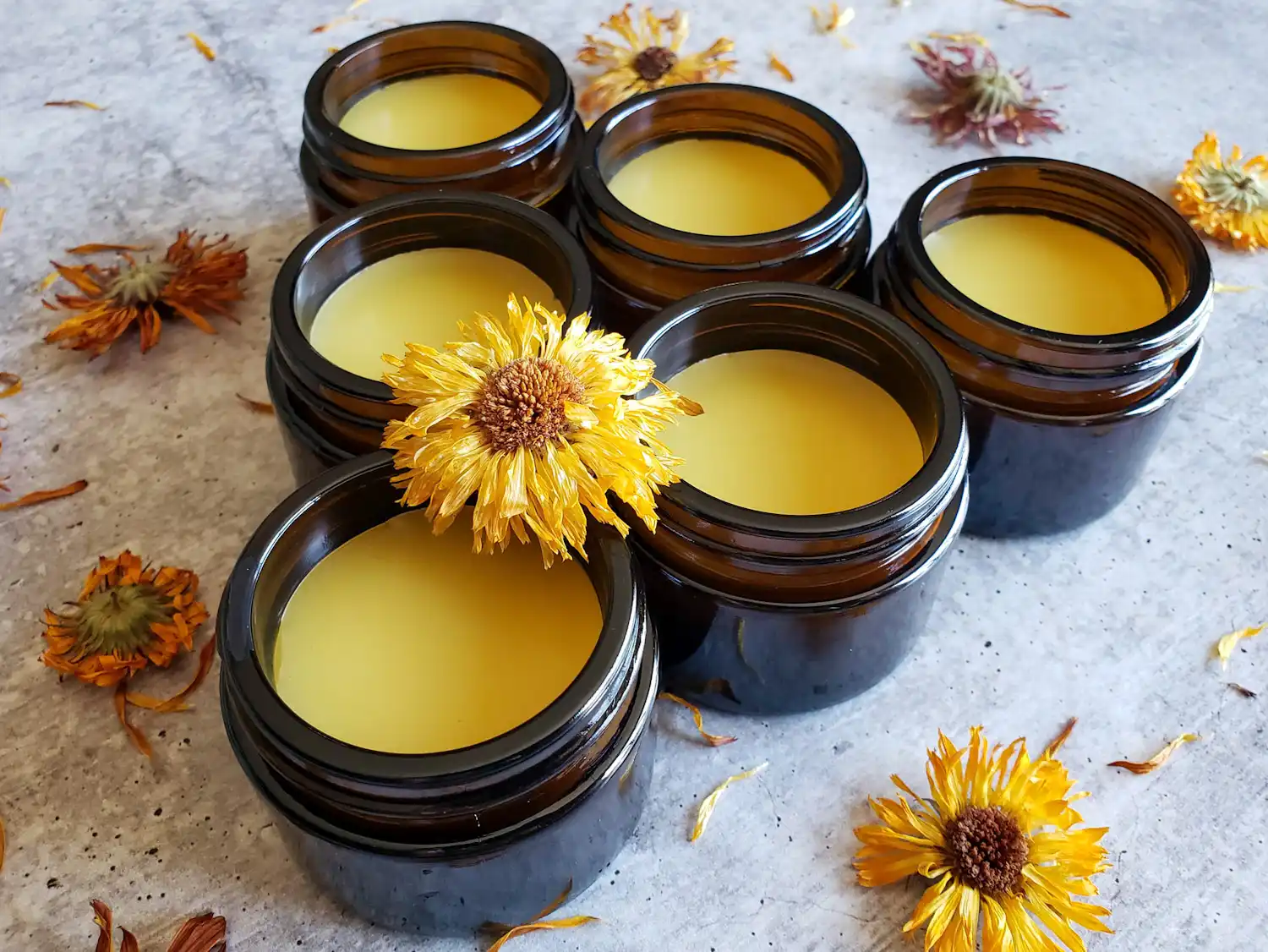
- As an ingredient in other homemade skincare products. Many natural body care recipes call for oil, such as in homemade whipped body butter, lotion, salve, soap, and more! See our popular homemade calendula salve recipe here. For more ideas, I highly recommend this organic body care recipe book.
- As a luxurious and nourishing massage oil.
- Other topical applications: You can use calendula oil directly on other parts of your body as a general moisturizer, on bug bites, sunburns, eczema, stings, rashes, scars, scrapes, and more!
- As a hair treatment to condition hair, moisturize your scalp, and potentially thicken hair. Coconut oil, olive oil, and argan oil are especially popular for deep moisturizing hair treatments. Simply apply an even coat of oil to your hair, massage it into your scalp, pin your hair up away from your clothes, and allow it to sit for anywhere from 15 minutes to a few hours. Then use shampoo as usual to wash away the oil.
- To remove makeup. Calendula oil makes a great natural makeup remover! Oil naturally draws out impurities, while the calendula soothes redness, inflammation, and targets acne. Avoid contact with sensitive areas around your eyes.
- Give it as a gift. Make a bigger batch and divvy it up into cute little bottles or jars to share with friends and family. Include a note or label to share the many ways to use it, or direct them here! See this list of my favorite 30+ DIY gift ideas, including mason jar gifts, food, sustainable crafts and more.
So beautiful yet simple.
So, what do you think? Are you excited to go make your own calendula oil? If you found this post useful, please leave a review below – and feel free to ask questions. Thank you for tuning in, and happy infusing!
You may also enjoy:
- How to Make Homemade Lavender Salve to Soothe Skin & Nerves
- How to Make Soothing Chickweed Salve Recipe and Infused Oil
- Natural Lip Balm Recipe: How to Make Homemade Lip Balm
- How to Make Nourishing Rosehip Oil + 12 Ways to Use It
- DIY Bath Salts Recipe: Beautiful Natural Herbal Bath Salts
- How to Make Salve or Balms 101: Simple Flexible Recipe
Homemade Calendula Oil Recipe
Ingredients
- Dried calendula flower or petals, homegrown or organic if possible
- Carrier oil of choice. Select a high-quality, unrefined, cold-pressed, and organic oils for the most healthy and healing calendula oil. Popular options for natural skincare include jojoba oil, olive oil, argan oil, hemp seed oil, grapeseed oil, sweet almond oil, rosehip oil, and more! **Choose an amount that matches the size of your infusion container.
- 1 glass container for infusing, such as a half-pint or pint jar
Instructions
- Fill a clean glass container at least ¾ full of dried calendula flower heads or petals.
- Pour your choice of oil over the dried calendula flowers, until the container is full and/or until the flowers are completely submerged. Add a tight fitting lid.

- Place the jar in a moderately warm location, such as near a sunny window, inside a warm cabinet, or on top of a warm appliance. While some herbalists may have a preference, it doesn’t make much of a difference if the jar is stored in the dark or light – but a little warmth does help it infuse better!
- Allow the calendula oil to to infuse for at least two weeks or up to 1 month (or longer) for the best results and maximum extraction possible. Gently shake it on occasion to stir things up.

- When the time is up, use a strainer and/or cheesecloth over a bowl to strain the flowers and reserve the oil. Let it sit to fully drip and drain for at least 15 minutes, and squeeze out all the excess oil from the dried flowers.
- Finally, pour the strained oil into a clean jar for storage. If you wash and re-use the same jar, be sure it’s fully dry before storing the oil in it!
- Store the finished calendula oil in a cool, dry location. It can also be stored in the refrigerator to extend the shelf life. Read the information on your carrier oil bottle to determine the recommended shelf life of your calendula oil.
- Enjoy! Use your calendula oil as a daily facial moisturizer (only a few drops needed), as spot treatment for irritated skin, a massage or body oil, an ingredient in other homemade skincare recipes (salve, lotion, soap etc), to condition hair, as a makeup remover, or give it as a gift!





99 Comments
Kimberly Duffy
I’m getting ready to infuse my typical face-cleansing jojoba oil with the flowers and I wondered if I could do mix of oils–jojoba, argan, and almond? I’d love to be able to get the varied benefits each offers in one product.
Aaron (Mr. DeannaCat)
Hi Kimberly, absolutely you can mix oils, we frequently use a variety together ourselves. Enjoy your calendula face oil!
Michelle Collins
Just made my jars up this evening and can’t wait to see how my calendula infused oil comes out! I was just wondering if there is a use for the flower heads and petals after they have had the oil squeezed out? It seems a shame to throw them away or just compost them?
Aaron (Mr. DeannaCat)
Hi Michelle, you can save the flowers and use them in homemade DIY bath salts or a body scrub are a couple options. Hope that helps and enjoy your calendula oil once it infuses!
Gabriela
Hi there, I am looking to make a salve to help with pregancy stretch marks. In the past i’ve infused Calendula in olive oil but I’m hoping to use an oil that is more easily absorbed, and not as heavy. What do you suggest? I use an alcohol-intermediary technique for oil infusion.
Aaron (Mr. DeannaCat)
Hi Gabriela, we love using sweet almond oil or argan oil and think that either would make a great carrier oil for your calendula salve. Hope that helps and good luck!
Constance
Hello! Getting ready to let my flowers sit in oil from the next week and was wondering if you can crush the flowers in a food processor down to more of a powder in order to use less oils and make smaller batches?
Aaron (Mr. DeannaCat)
Hi Constance, feel free to experiment but blending the flowers into a powder could make the straining process difficult, plus you would likely have to add enough oil so the powder and oil combined don’t just make a paste. The oil still comes out plenty strong and medicinal, even without turning the flowers into powder, also, you can make as small of a batch as you want. Add in a small amount of flowers that fill a pint jar 1/4 full, then add just enough oil to fully cover the flowers. Hope that helps and good luck!
Alli
I infused extra-virgin olive oil with well dried calendula flowers for about four weeks. The infused oil doesn’t have any kind of smell other than olive oil. Is that normal? How do I know that the calendula goodness has soaked in? Hoping to make lotion bars for Christmas gifts. Thanks!
Aaron (Mr. DeannaCat)
Hi Alli, using EVOO can have an affect on the color of your oil as well as the scent as EVOO is fairly strong smelling as well. While this isn’t an issue, the oil will just be more green in color while smelling like olive oil. Calendula flowers themselves actually don’t smell like a whole lot, Deanna and I joke that it actually kind of reminds us of artichokes. While a month long soak is a good amount of time for their medicinal benefits to be transferred to your oil, the flowers themselves don’t offer a whole lot in terms of aroma or scent. You may want to try adding an essential oil to your lotion bars during the process of making the bars if you are after a more fragrant end product. Hope that helps and good luck!
Alli
Thanks for confirming, Aaron! Just wanted to make sure it was as expected. I’ll plan to add some other yummy smells to the lotion bars.
Judy
I am finally at the stage of adding my calendula flowers to the oil and have filled the pint jars more than 3/4 full of dried whole flowers (compacted them somewhat). What is the danger or issues of using more than 3/4 full? Will they expand? Do I need to be checking that they are always submerged? Also I went with Emilie Noel Sunflower Oil, but reading the bottle (of course after pouring it) it says linoleic. Will that be ok for now, or for future purchases look for low oleic? Once the oil is ready I’m planning to try making the salve. Thx
Aaron (Mr. DeannaCat)
Hi Judy, the flowers won’t go bad, spoil, or expand once they are in the oil as long as the flowers are completely dried before you add the oil. You can fill up the jars as much as you like, ours are usually close to the top of the jar. The sunflower oil you used should be fine as well, sunflower oils that contain linoleic acid don’t have as long of a shelf life compared to high oleic sunflower oil but it should still work just fine in your instance. Hope that helps and good luck with turning your calendula oil into salve!
Mary Obradovich
Thank you for this wonderful explanation on carrier oils. My mom has made calendula salve for years using crisp and whatever oils she had around. She’s 94! I would like to follow your article but I don’t have sun for weeks on end in the Midwest! What stovetop method would you suggest?
Aaron (Mr. DeannaCat)
Hi Mary, the calendula oil doesn’t need sunlight as it steeps with the flowers, it just needs time (3 weeks should do it). Hope that helps and good luck on making your calendula salve, it is our favorite body product to use.
Karin Collinsworth
(I found the note about why the flowers should be dried or mostly dried. Thank you for the article. )
Javeria
Hi, thanks for all this useful information, these flowers are scattered all over by garden and I didn’t know how beneficial they are, I will have to make an oil jar for my self now, will be so good for the kids now the summer holidays are coming, all the falls cuts and grazes! I’ll be ready with my home made remedy! I have a question I was thinking to use olive oil 50% and rapeseed oil 50%the reason for rapeseed is high in vitamin E and the omegas, would you recommend this or should I just stick to olive oil? Can it be normal olive oil or extra virgin olive oil?
Aaron (Mr. DeannaCat)
Hi Javeria, calendula oil is very medicinal and can really do wonders for ones skin. When we pick oils to use in our body care products, we look for ones that aren’t too refined or processed. We usually look for virgin or cold pressed oils that aren’t overly processed. For your instance, I would just stick with olive oil and would opt for extra virgin as well. Hope that helps and good luck!
Javeria
Thank you Aaron for your fast prompt reply and pointing me in the right direction 🙂
Kitty
Can I add calendula petals to my cannabis when I infuse my coconut oil, or does it need to steep for a few weeks instead?
Aaron (Mr. DeannaCat)
Hi Kitty, yes you can infuse your dried calendula flowers and cannabis in coconut oil over low heat instead of doing the slow infusion process at room temperature. I would use the whole flowers though as the green base portion of the flower has more resin and beneficial properties than the petals alone. Hope that helps and good luck!
Danyelle Stapleton
Fantastic article, thank you. I have learnt things about calendula that I did not know. I have also made my first infused oil, my question is…… Can I use the petals again to make another batch of oil or have they now become compost? what do you do with your calendula leaves after you have infused your oil>
Cheers
Danni
Aaron (Mr. DeannaCat)
Hi Danni, we assume most of the beneficial properties of the calendula have been infused into the oil at the end of the steeping process. You can compost the flowers or throw them away at the end, hope you enjoy your oil and get more calendula flowers drying for your next batch.
Suzanne
This looks so good! I didn’t know there were so many uses for this oil!