

How and When to Thin Seedlings: Tips for Fast Healthy Growth
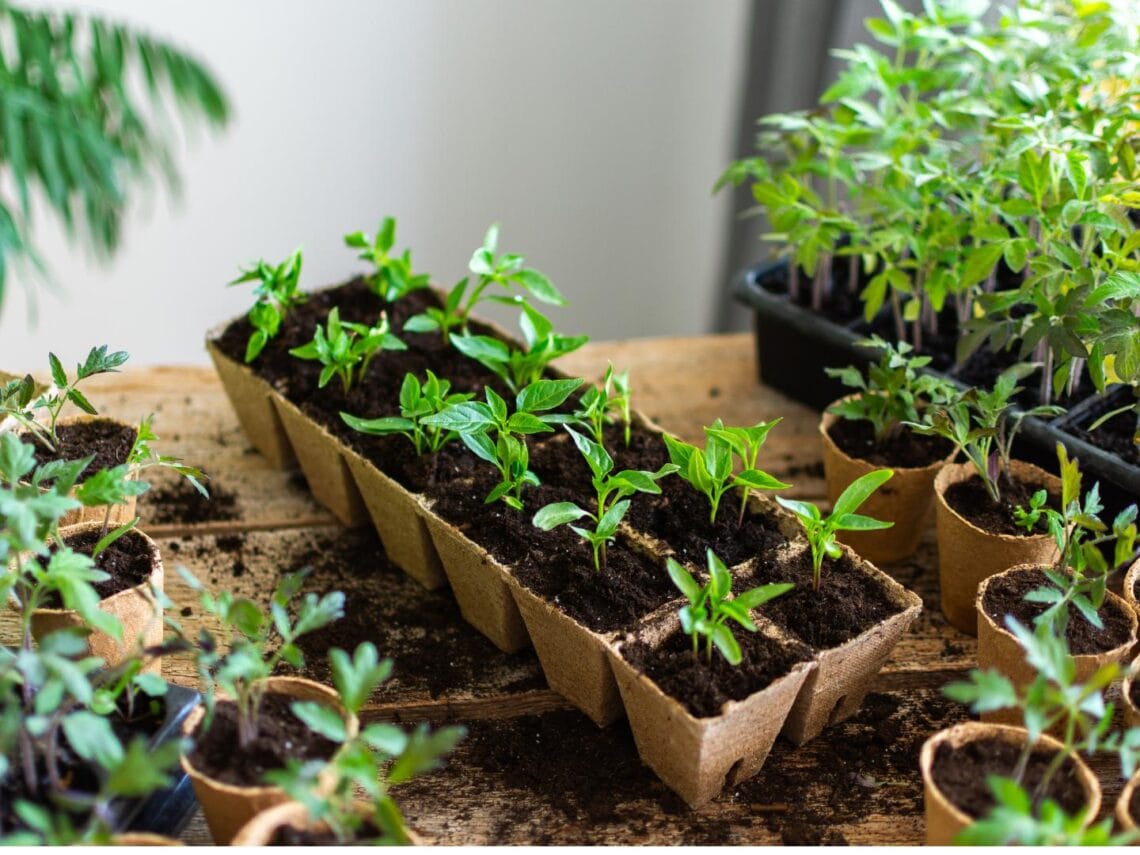
Thinning seedlings early is KEY to growing big healthy plants, and fast! This quick guide covers the benefits, when to thin seedlings, and three methods to do so – including the pros and cons of each option.
This is one of my top seed starting tips for success. I’ve conducted many side-by-side experiments and comparisons of thinned vs un-thinned seedlings over the years, and the results are undeniable!
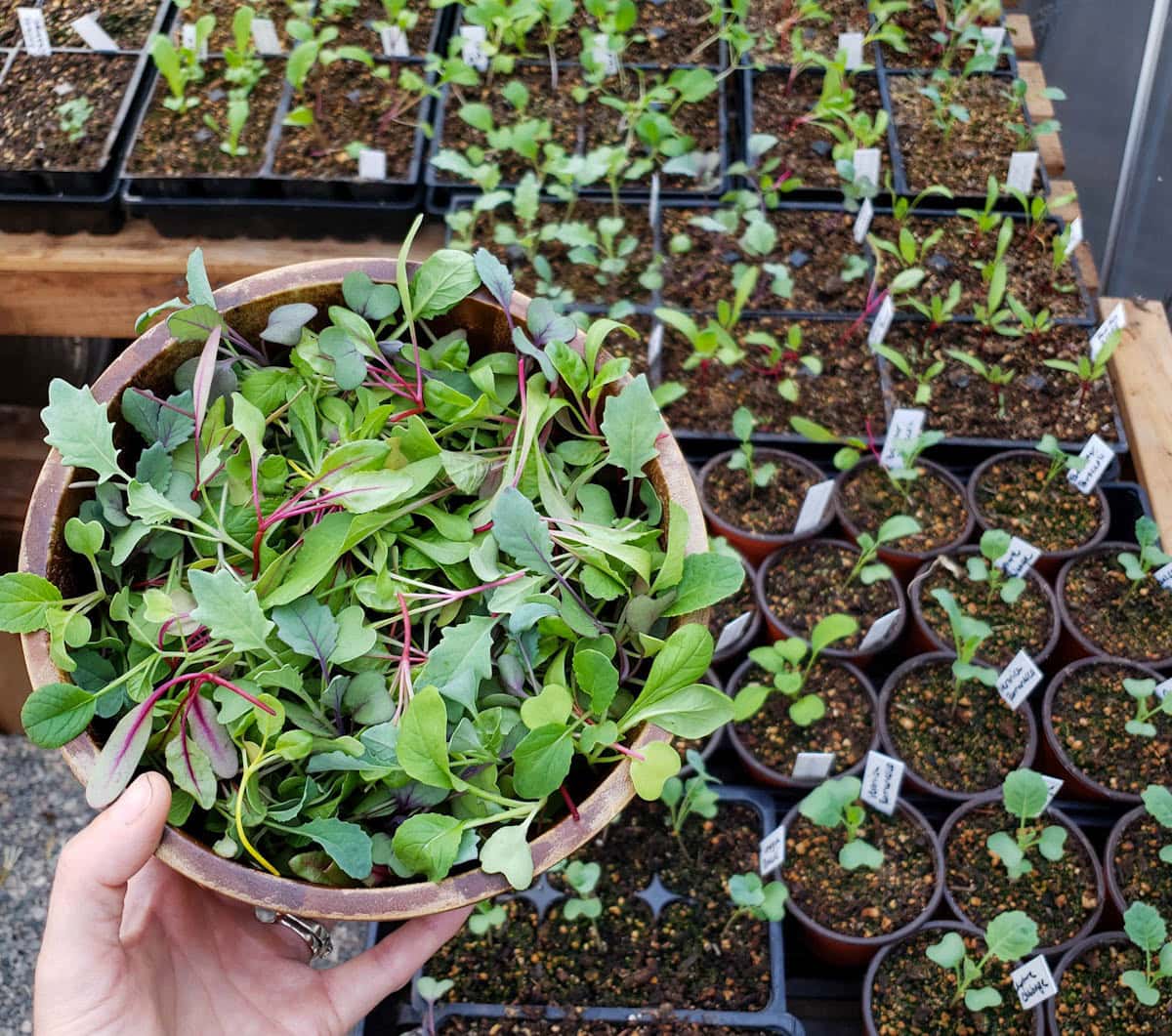
I’ve also included a demonstration video at the end, along with a list of which seedlings are edible to enjoy as nutrient-packed microgreens so they don’t have to go to waste.
NOTE: This post was originally published in February 2019 but has been significantly updated since.
Would you like to save this?
What is Thinning?
After planting seeds, thinning is the practice of removing excess, weak, or crowded seedlings in order to give each plant more space. Don’t feel bad doing so! Once thinned, your seedlings will reward you with explosive growth. This applies to starting seeds indoors in containers, and for seeds directly sown or planted outside.
Seedlings can be thinned several ways: by trimming or cutting out extra seedlings (my personal preference), by plucking or pulling out extra sprouts, or by gently separating and teasing them apart – and potting up each seedling into its own container after. See tips, pros, and cons for each option below.
RELATED: Don’t miss our beginner’s guide on Starting Seeds Indoors full of step-by-step tips, tricks, and tools for success – including our DIY seed starting mix recipe. Also, don’t forget to thin your fruit trees!
Benefits of Thinning Seedlings
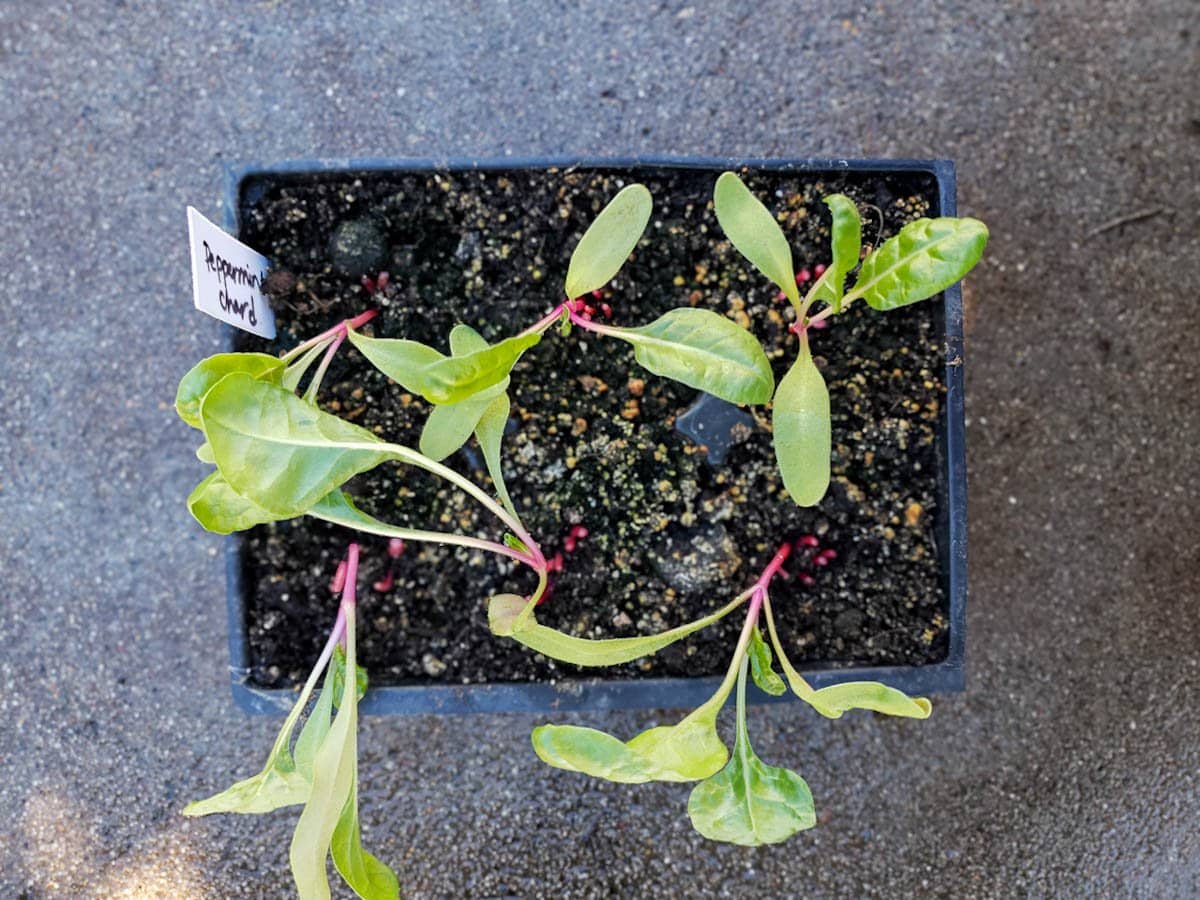
When left un-thinned, crowded seedlings compete for nutrients, water, light, and root space and therefore grow much slower and smaller compared to those with more room and resources.
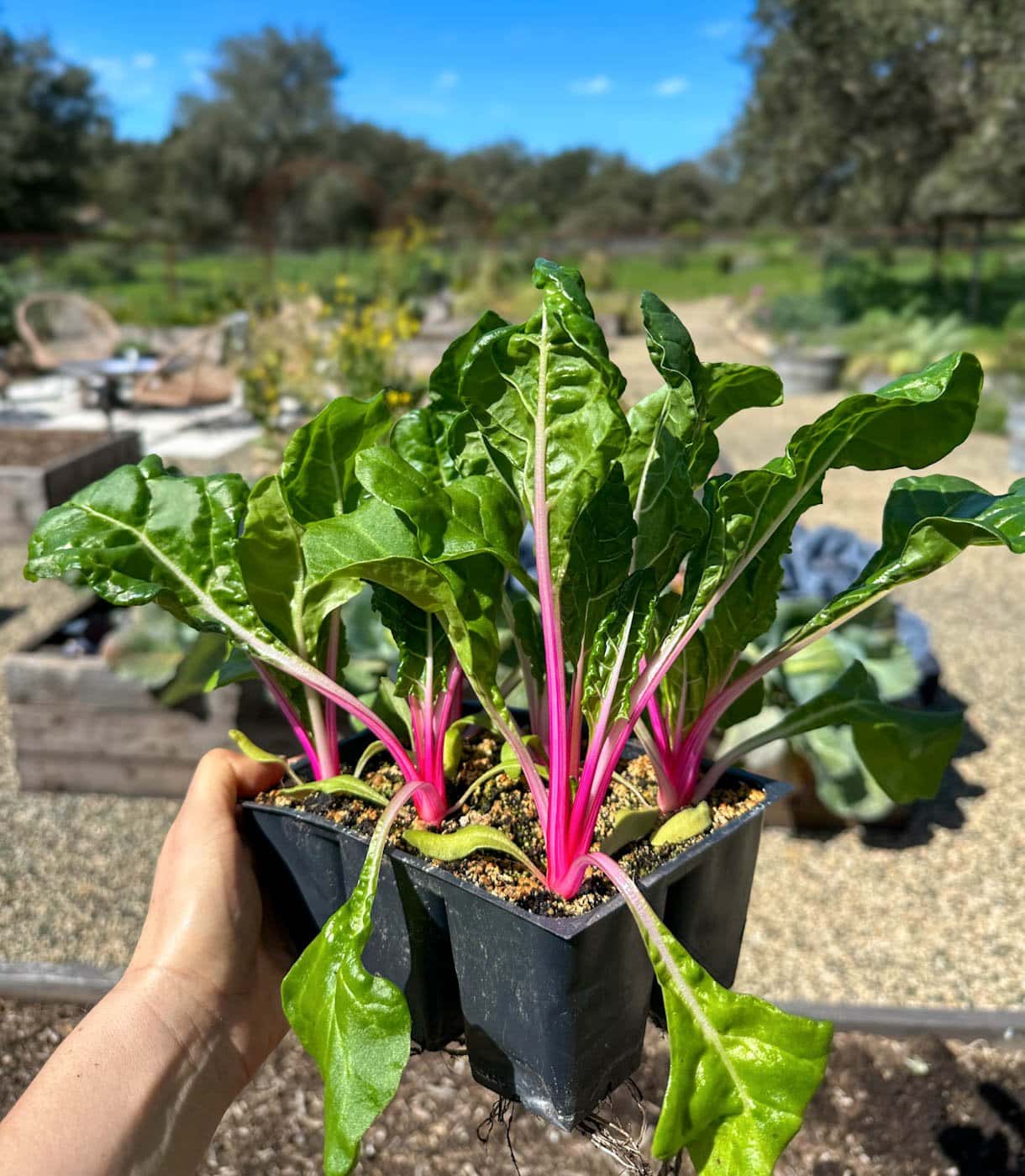
On the other hand, thinned seedlings can quickly grow up to four times the size compared to their un-thinned counterparts, in just a matter of weeks! I’ve experienced this first-hand many times over the years. See the example photo below.
Good spacing and thinning practices also increases valuable airflow between the plants, which reduces the risk for pests and disease – especially fungal diseases like powdery mildew.
When to Thin Seedlings
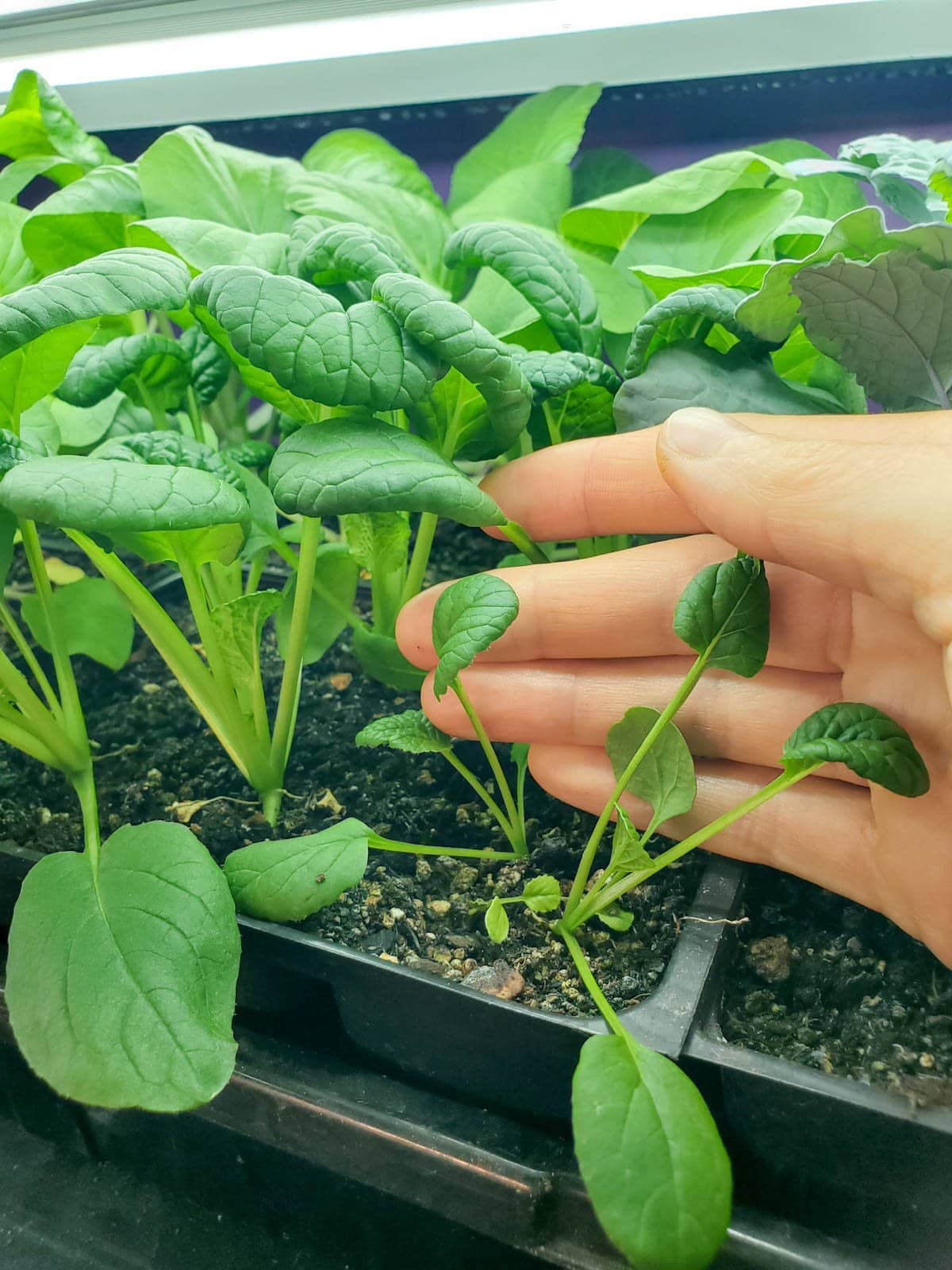
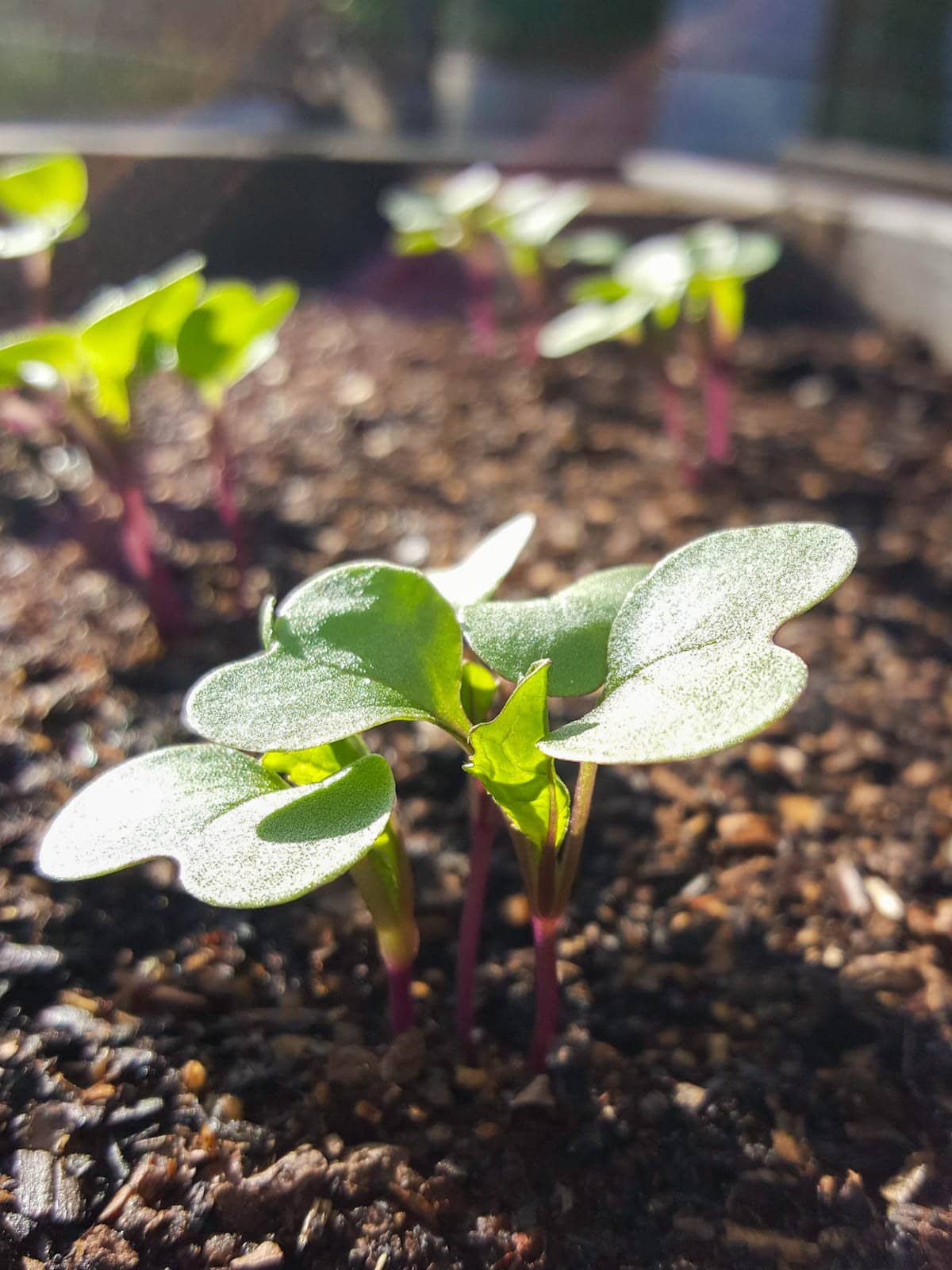
It’s best to thin seedlings within a couple weeks after sprouting, soon after they grow their first full set of “true leaves” (true leaves are the ones that emerge after the initial sprouting leaves). This encourages fast and healthy growth early on, before the plants become stunted or root bound.
If you’re going to thin your seedlings by gently teasing them apart, doing it early also reduces the chance of their roots becoming too intertwined and tangled.
How to Thin Seedlings (Three Ways)
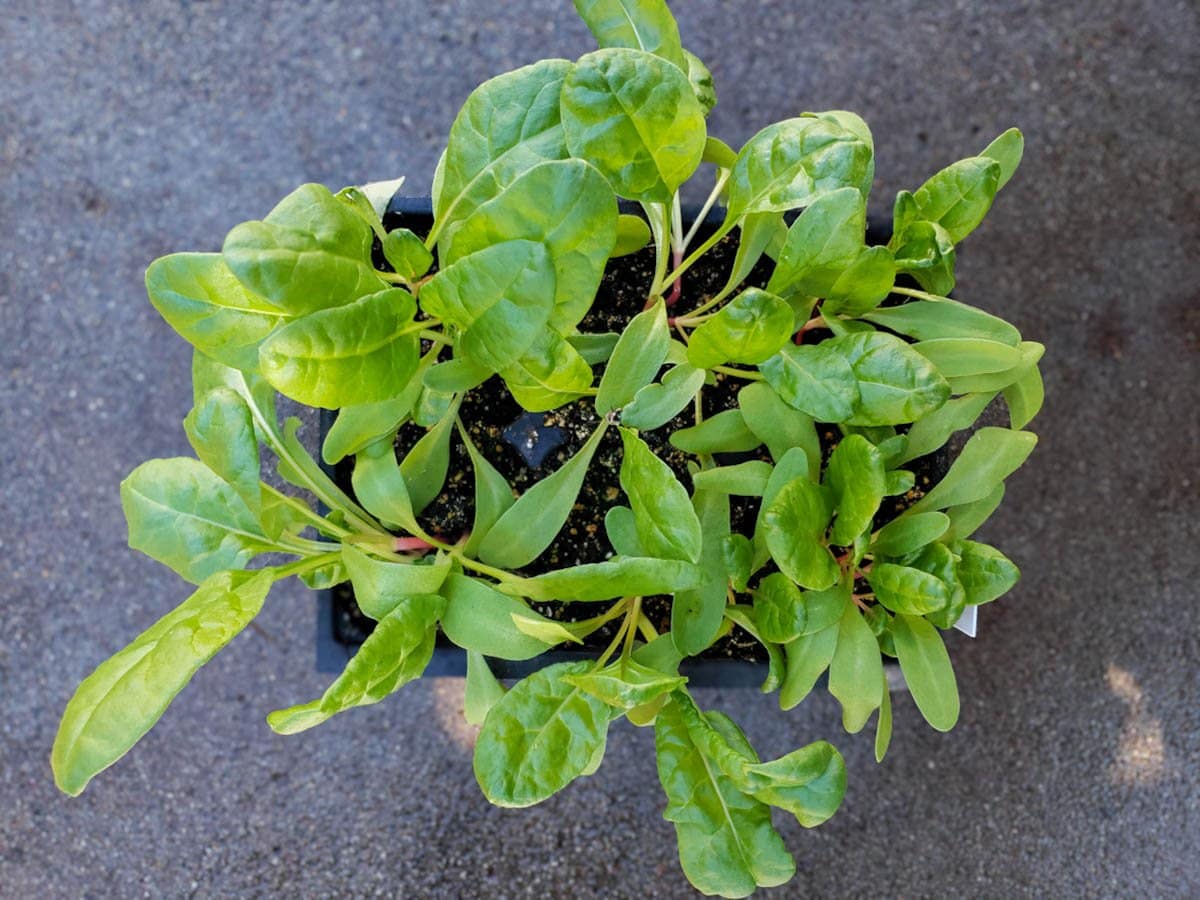
When it comes time to thin, choose the strongest, healthiest seedling to keep around. But that doesn’t always mean the tallest! In fact, shorter seedlings are often stronger than floppy “leggy” ones. I look for thick straight stems and the largest, best-looking leaves.
1) Thinning by Trimming
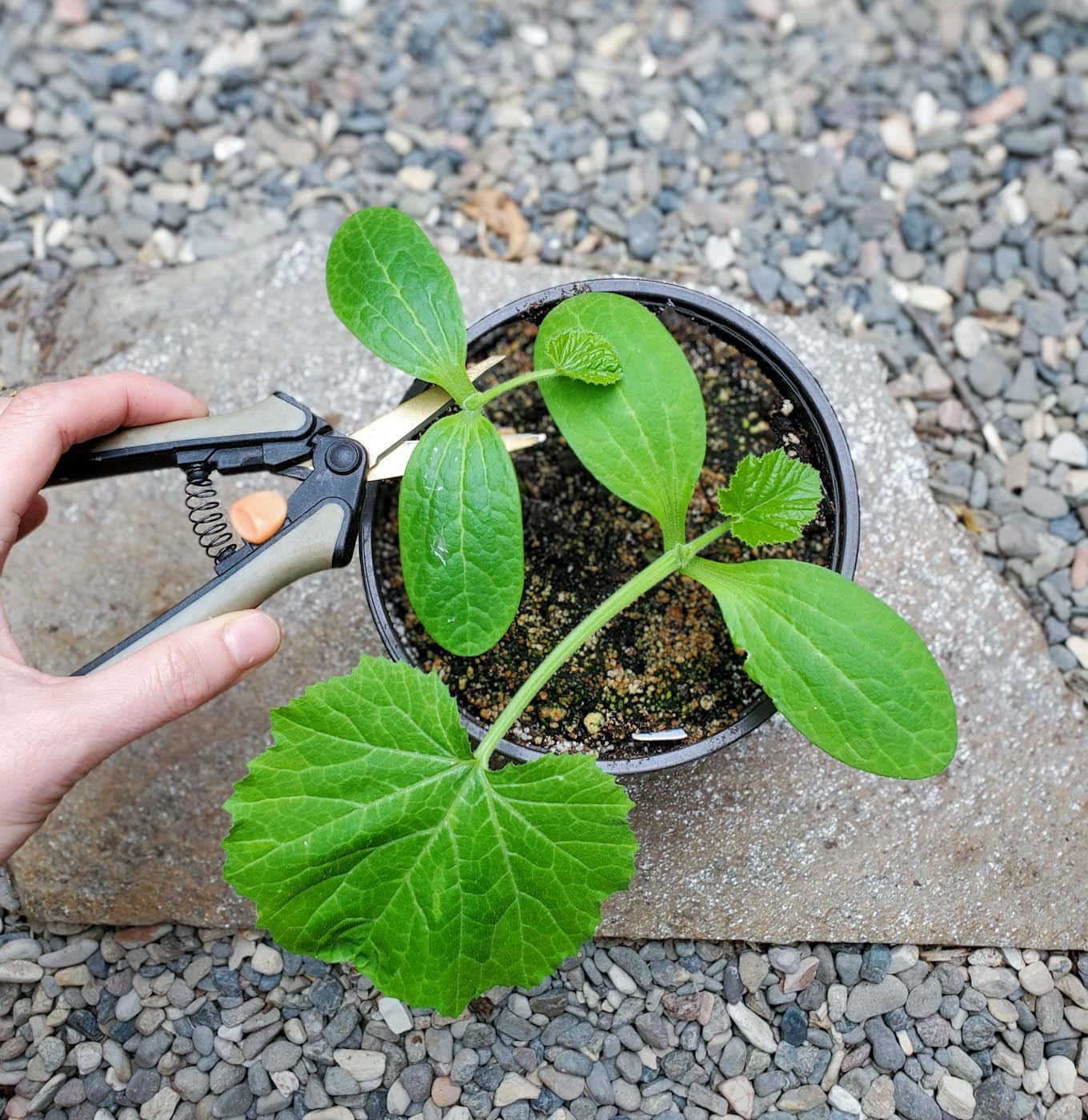
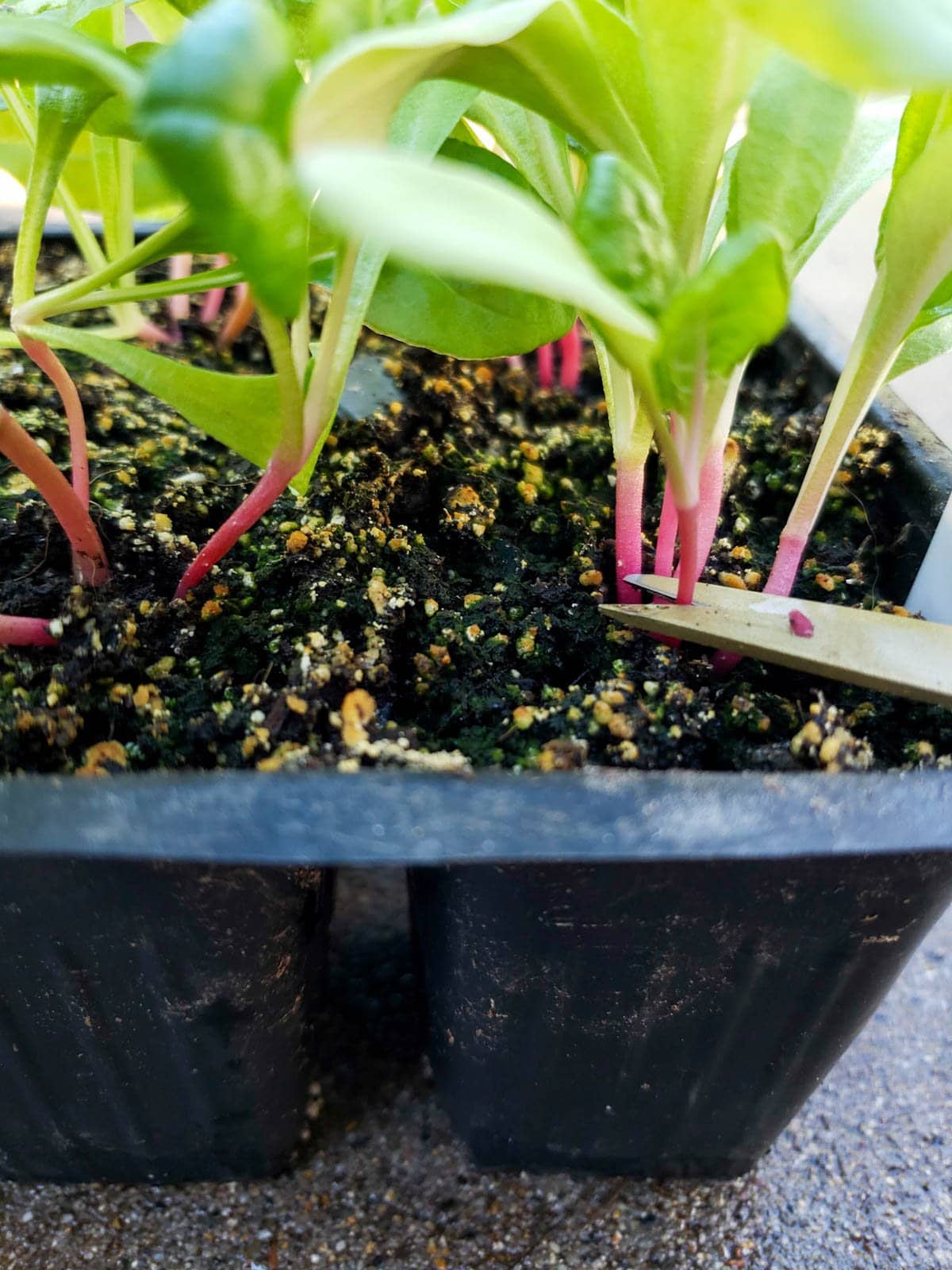
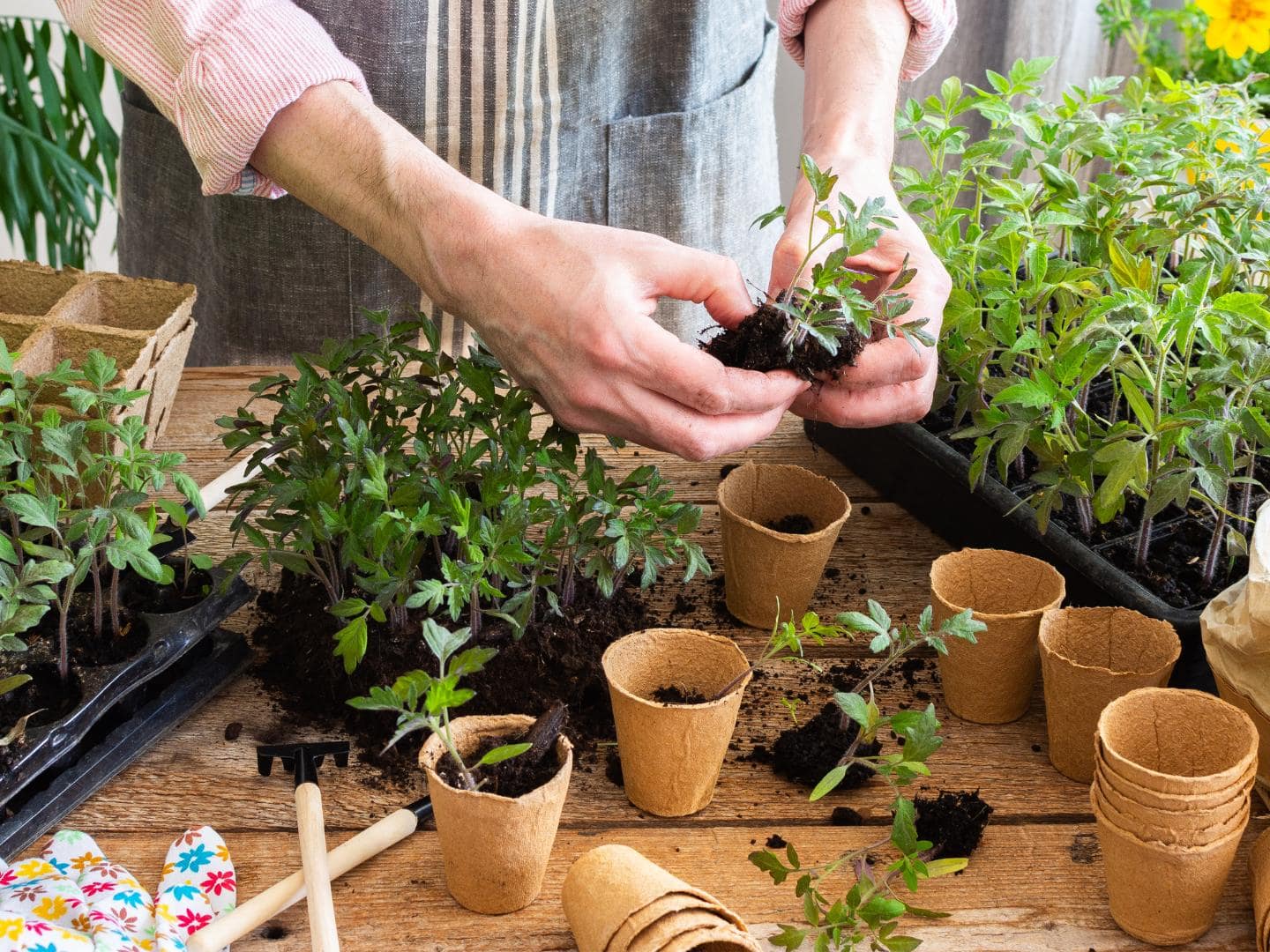
The easiest, quickest, and most effective way to thin seedlings is to simply cut out the extra sprouts. Use small garden snips to cut out unwanted seedlings at the soil level, leaving just one per cell or pot. Be careful to not accidentally cut the one you want to keep.
With this method, there’s zero risk of disturbing the roots of the “keeper” seedling. It’s also a huge time saver since you don’t have to fuss with potting up or transplanting the seedlings (as you would when teasing them apart).
This is my preferred way to thin most seedlings, especially since we don’t often pot up our seedlings (with the exception of large plants like tomatoes and eggplant). Instead, I like to start most of our seeds in large 6-packs with 2×2-inch cells or small 4-inch pots so they have ample room to grown without potting up.
PRO TIP: Since the extra sprouts are effectively culled, I try to sow only 2 to 3 seeds per cell so I don’t waste too much seed. We also eat many of the sprouts (hello microgreens!) or share them with our chickens. See a list of edible seedlings to follow.
2) “Pricking Out” and Potting Up Seedlings
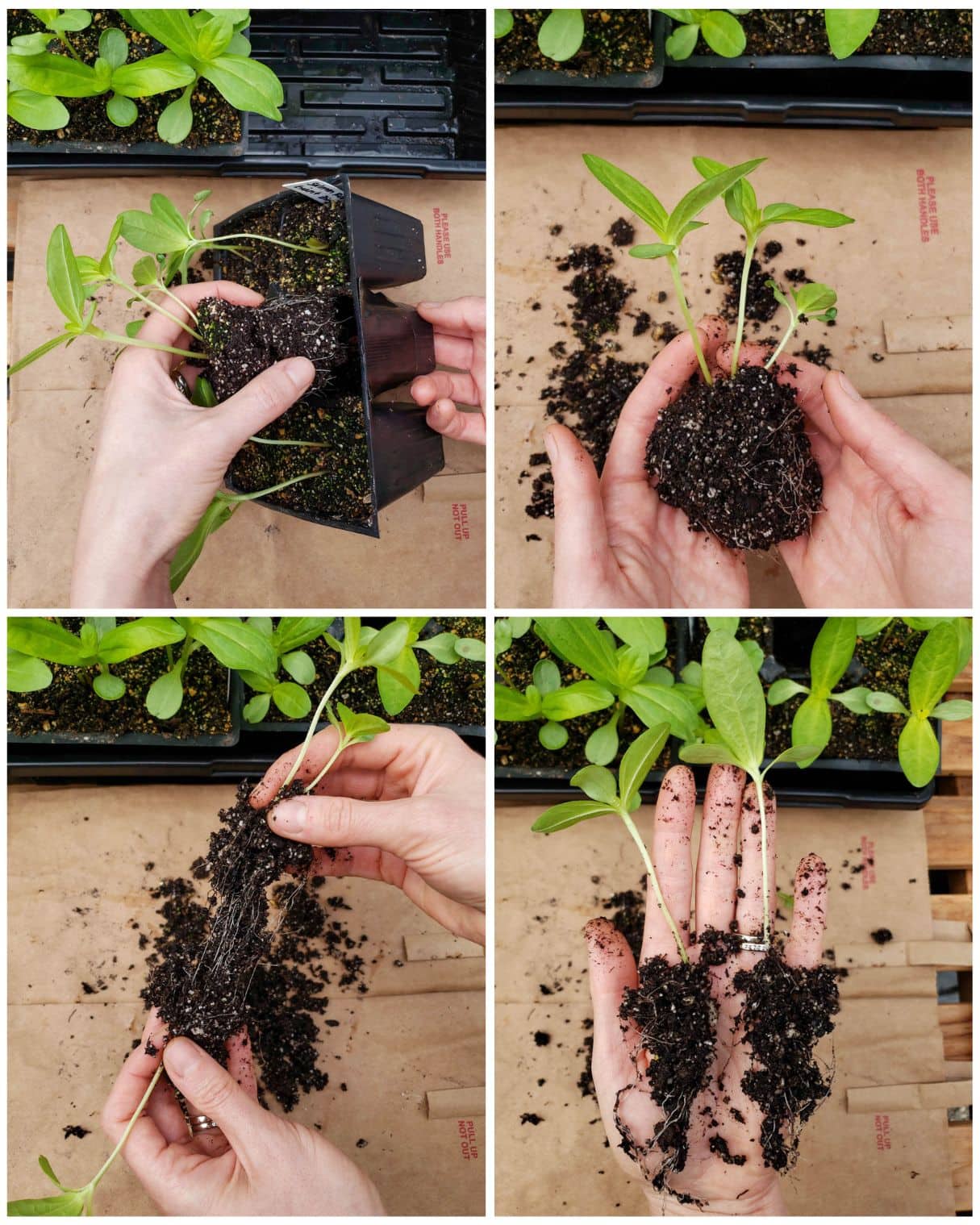
Teasing apart seedlings (or “pricking out” as UK gardeners call it) is the process of gently separating seedlings from crowded trays or cells and moving them into their own individual pots.
When seedlings are still very tiny, this can be done by using a pencil, dibble, chopstick, butter knife, or other small narrow tool to gently dig down and uproot crowded seedlings – so that you can lift up or “prick out” individual sprouts by carefully holding onto their leaves (with the roots still intact).
For slightly larger seedlings, you’d generally want take the entire soil mass/root ball out of the cell or container and then very gently tease apart the seedlings from one another – taking care not to tear the roots.
This thinning method maximizes the number of seedlings you can start and plant with little-to-no waste, which is great for large gardens, farms, or if you really want to grow out ALL those seedlings!
However, separating seedlings poses some risk of damaging roots, slowing growth, or even breaking seedlings. Plus, you then need to individually pot up or plant each seedling in a new container, which is time consuming and requires more soil, containers, and space (including under grow lights).
PRO TIP: I always heavily sow onion seeds and tease them apart later – they don’t mind at all! I also sometimes gently separate flower seedlings to keep as many as possible. However, I do not recommend teasing apart or pricking out plants with notoriously sensitive root systems including cucumbers, squash, melons, peas, beans, or root vegetables.

3) Pulling Extra Seedlings
Not to be confused with pricking out, a final way you can remove extra seedlings (especially those you don’t intend to keep) is to simply pull and pluck them out by the stem – without the use of a tool to help carefully ease them out of the soil.
However, this is almost guaranteed to damage the roots of the ones you pull up, and also poses some risk of ripping or disturbing the roots of the neighboring seedlings that you’re trying to keep too!
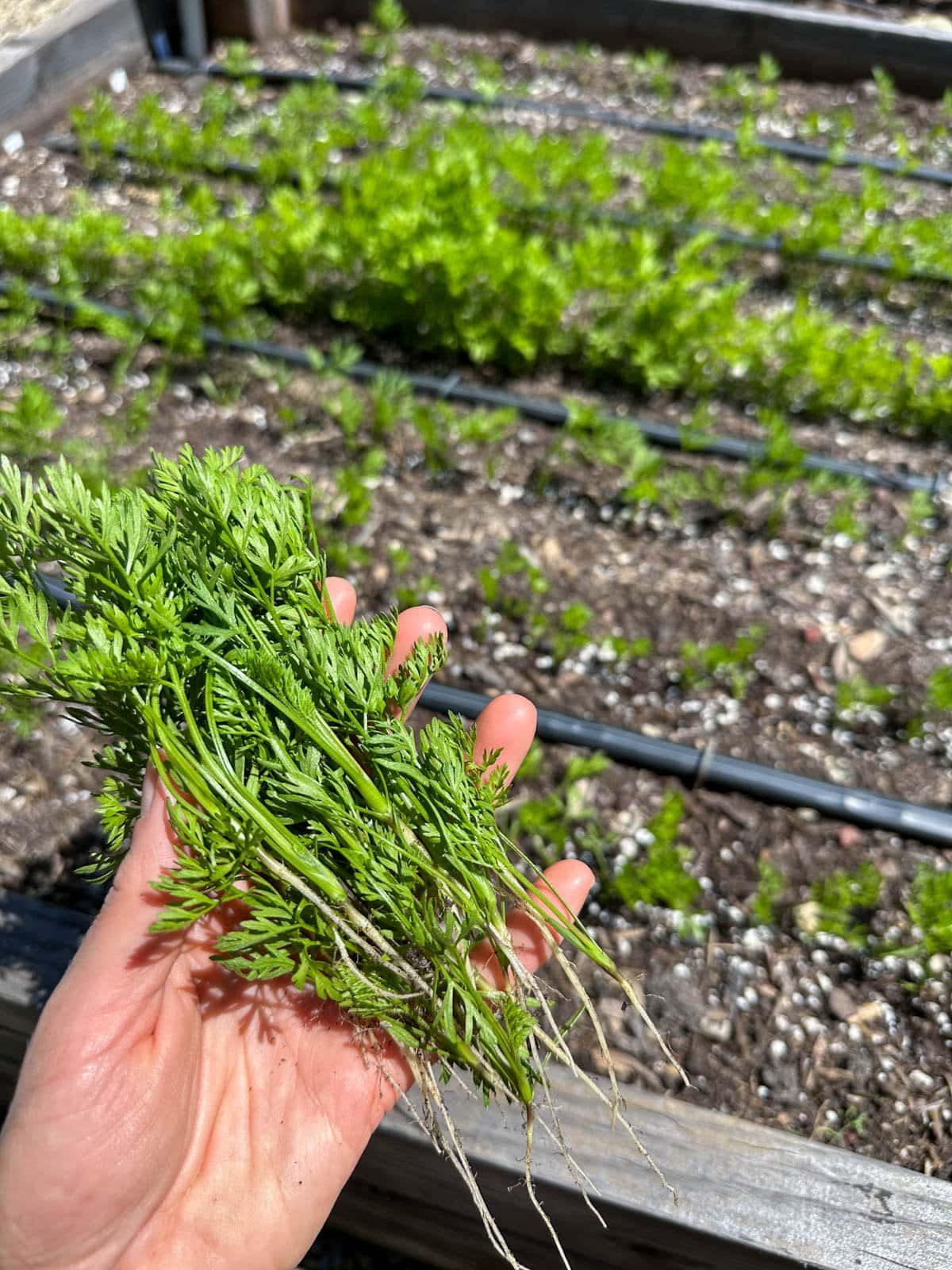
Carrots are the ONLY seedlings I ever pluck out since it’s the most quick and easy way to thin several rows of carrots. I try to thin them within a couple weeks after sprouting, when the carrot roots are still tiny and straight. I also try to plant carrot seeds in a way that reduces my need to excessively thin them (e.g. not seeding too liberally) to reduce this tedious task.
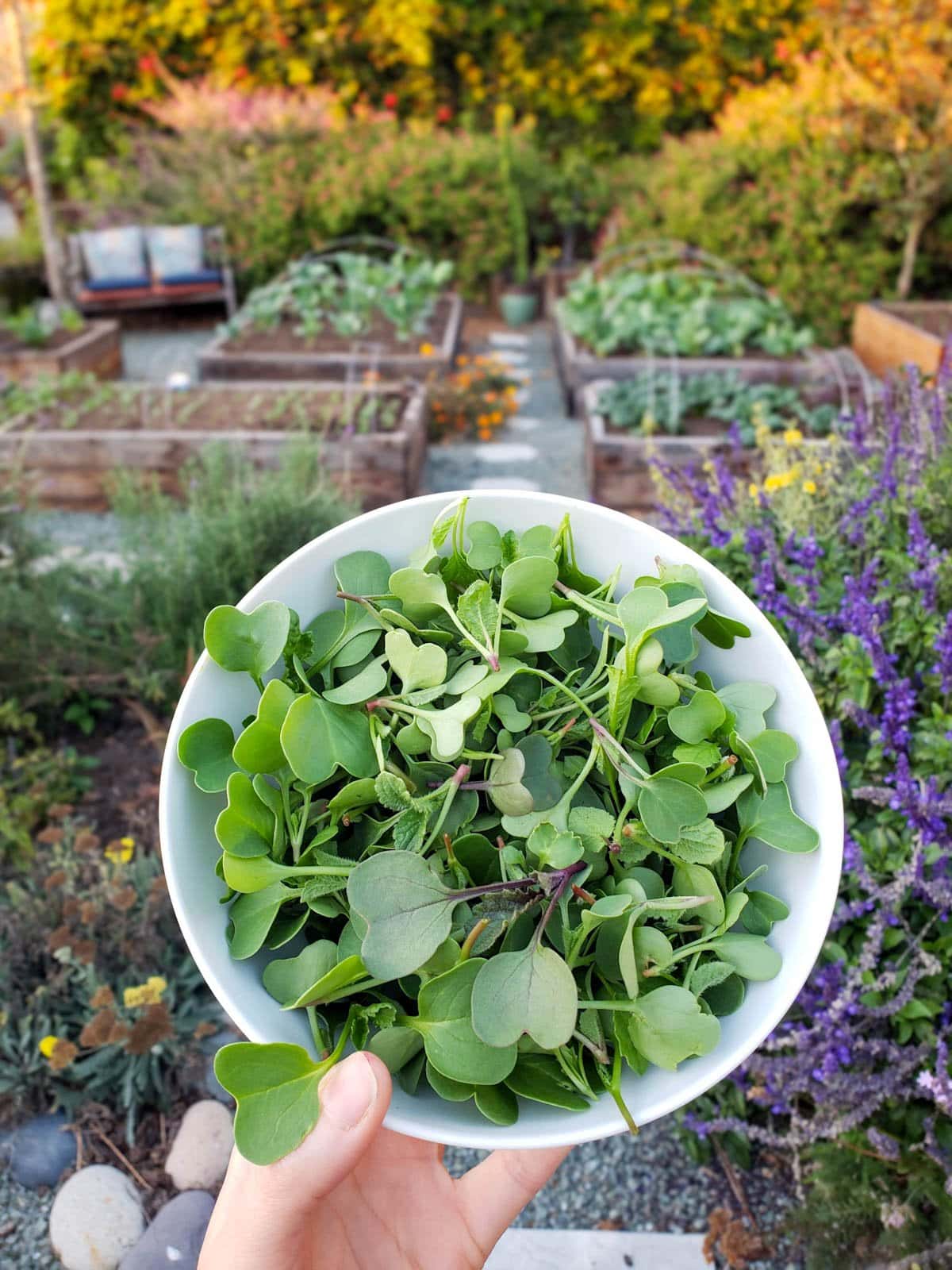
Edible Seedlings (Mircogreens)
If you’ve seen broccoli, radish, kale or sunflower microgreens for sale at the natural food store – those are seedlings! So if you thin seedlings by cutting them out like we do, they don’t necessarily need to go to waste. Plus, tender little microgreens are even more nutrient-dense than their full-size counterparts.
We like to eat our thinned seedlings (microgreens) raw on top of salads, sandwiches, tostadas, or a quinoa/lentil bowl. Our spoiled backyard chickens also go crazy for them! Store microgreens in an airtight container in the refrigerator, with just a tiny splash of water inside to help them stay crisp and fresh.
Many types! Examples include peas, beets, radishes, leafy greens like lettuce, bok choy, arugula, or kale, brassicas including broccoli, cauliflower, or cabbage, or any other vegetable that you could otherwise eat the foliage of. On the other hand, avoid eating nightshade seedlings such as tomato, pepper, or eggplant leaves. See a complete list in the chart below.
| Edible Seedlings | Do Not Eat (Compost Instead) |
| Kale Spinach Radish Arugula Beets Carrots Celery Turnips Pea shoots Cabbage Collard Greens Mustard Greens Basil or other herbs Lettuces Onion/Leeks Swiss Chard Bok Choy | Tomatoes Peppers Eggplant Cucumber Melon Green Beans Potato greens – except for sweet potatoes, they’re okay! Rhubarb leaves are toxic! Squash are a maybe? Some cultures enjoy eating pumpkin leaves. |
Finally, here’s a demonstration video of me thinning seedlings two ways at our old homestead. (Sorry it’s a tad long, it’s an older video!)
That concludes this lesson on thinning seedlings.
Now that you can see how important it is, I hope this article inspires you to thin your seedlings early with confidence – and without guilt! Please feel free to ask any questions in the comments below
Don’t miss these related articles:
- When to Start Seeds Indoors: Planting Calendars for Every Zone
- How to Thin Fruit Trees: Apples, Peaches, Plums and More
- 7 Useful Seed Starting Supplies for Success Indoors
- How to Prune and Harvest Basil for More Productive Plants (With Photos)
- Topping Pepper Plants and Pinching Flowers for Better Harvests


29 Comments
Kathleen
Thank you! Really helpful information from both the written article and the video.
When do you recommend turning off the heat mats?
Thanks!
Aaron (Mr. DeannaCat)
Hi Kathleen, we typically remove the seedlings from the heat mats once the seeds have germinated and sprout above the soil line. If your seedlings are in a colder environment (60 degrees F or lees), they may grow more quickly if you keep them on heat mats as keeping their soil warmer will help them grow faster. Hope that helps and good luck!
Savannah Peacock
Thanks for this detailed video! I’m just starting my first indoor seedlings and garden this spring. I was wondering, can you feed chickens the tomato cuttings from thinning them?
Aaron (Mr. DeannaCat)
HI Savannah, chickens aren’t supposed to eat any nightshade plant material such as tomato plants, eggplants, potatoes, or peppers as far as the plant greens themselves go. They will gladly eat any seedlings from greens, brassicas, or turnip, beet and radish greens to name a few.
Shely
Hi. I am growing Mexican Sunflower and Zinnia along with some milkweed for Monarchs, for the first time. I noticed the leaf edges of my Mexican Sunflower seedlings after three weeks are turning slightly brown. So, I decided to thin them and repot them separately with the idea of also fertilizing with the seaweed potion you recommended. BUT, I did not have any more seedling mix, so I used Black Gold Natural Potting Mix. Was this a mistake? I just realized that was probably not a good idea since the potting mix has fertilizer in it. I do have another small pot of Mex Suns that need the same treatment. Should I try to use seedling mix and seaweed fertilizer on the second batch? Might make for a good comparison. What has been your experience? THx.
Aaron (Mr. DeannaCat)
Hi Shely, that is totally fine. We usually pot up seedlings if needed into straight potting soil as the larger the plant gets, the more nutrition it needs. Seedling mix is great for the first 2-3 weeks but they often need mores substance after that. Our initial seed starting mix ratio is usually 70% seedling mix and 30% potting mix and that usually will hold most seedlings over for the first month or so of their life before they get planted into the garden or potted up into a larger container. Hope that helps and have fun in the garden.
Shelly H
Ok, great. A couple more questions if I may: Would you still recommend adding the Seaweed Extract food after I repot? Also, I did not expect these plants to germinate so quickly. They will not be planted outdoors for another few weeks until after my last frost (April). Do I have to keep them under my grow light? Thanks again for all of your help. This is definitely a great learning experience. 🙂
Aaron (Mr. DeannaCat)
Hi Shelly, yes you have to keep them under the grow lights until you can plant them outdoors, don’t forget Hardening Off Seedlings to Prevent Transplant Shock so they can have a seamless transition from indoors to the outdoors. If you have the liquid seaweed you can give the seedlings a feeding of that after the repot and they should enjoy the extra bit of nutrition. Hope that helps and good luck!
Maxine lewi
Thank you for so much good information..I have tried seedlings indoors many times, this year I bought heat mat and planting trays with covers. I have never had luck, this year again my plants have a tall thin , weak steams. Steams are about two inches tall with two small leaves on top and are all toppling over. What am I doing wrong
DeannaCat
Do you have a decent grow light, hung low over them? It sounds like not enough light. Did you see our articles about starting seeds indoors?
Cerena
This is the most superlative post on thinning! It’s thorough, thoughtful, super useful to experienced and beginner gardeners both. Usually I do the writing, but in this case I simply linked to your post! You did it! Thank you for a fine piece!
Susan Daigneault
Thank you for this article, I never had any luck with starting seeds. I am looking forward to this year though now that I understand the importance of thinning seedlings!
DeannaCat
Excellent, I’m glad it helped! Good luck this growing season!
Petra Ahnert
THANK YOU! My seedlings have been going “topless” for the last day and they are already looking the better for it!