

Harvesting Fresh Lavender: How to Harvest, Prune & Dry Lavender Flowers

In this guide, I will share my top tips to harvest fresh lavender flowers along with several ways to dry and use them. Don’t be shy… the more you harvest, the more they’ll bloom! I’ll also cover how to more deeply prune lavender plants, including tips for English, Spanish, and French lavender varieties.
Of all the scents in our garden, the fragrance of fresh lavender blooms has to be one of my all-time favorites. Yet lavender is so much more than just a pretty, aromatic flower. Soothing to both your skin and mind alike, lavender is an edible, versatile, highly-healing plant. Pollinators love it too!

Would you like to save this?
Disclosure: Homestead and Chill is reader-supported. When you purchase through links on our site, we may earn an affiliate commission.
RELATED: Come get our best tips on growing herbs at home, along with four ways to preserve and dry fresh herbs.
Quick Tips on Growing Lavender
- Lavender can grow as a perennial in USDA zones 5-10, but it especially thrives in warm, sunny, arid Mediterranean climates. Lavender doesn’t do well in high humidity or wet conditions.
- In wetter climates, I recommend growing lavender in a container so you can better control the soil moisture. Use a well-draining potting soil mixed with sand, or even a cactus potting mix.
- Above all else, avoid overwatering it. Excessive moisture and overwatering is the most common cause of death in lavender. Soggy roots will quickly lead to fungal disease and demise.
- When planting lavender directly in the ground, choose a sunny location with excellent drainage and sandy soil. Lavender doesn’t need a lot of compost, fertilizer, or overly rich soil. In fact, it is happiest in poor rocky soil.
- The quick-and-easiest way to grow lavender is to start with an established seedling or nursery plant, which is what I always do! It’s slow and finicky to start from seed, though possible.
- Lavender can be a slow grower at first, so be patient. First year = sleep, second year = creep, third year = leap.

Lavender Varieties
Lavender is typically categorized as English, French, or Spanish lavender, though there are dozens of unique varieties within each group. Some stay quite compact, while others get huge! Dozens of hybrids exist too. All varieties offer wonderful aroma and are technically edible, though English and lavandin varieties (L. x intermedia) are the most sweet and palatable for culinary applications.
Seek out varieties that are well-suited to your climate. For example, true English Lavenders (Lavandula angustifolia) are the most cold-hardy, including ‘Hidecote’ and ‘Munstead’ varieties of English lavender (rated down to zone 5).
French and Spanish lavenders do better in warmer climates and higher zones. ‘Phenomenal’ is a French hybrid that is known to handle the heat and humidity of the southeast. Lavandula stoechas and L. dentata are also among some of the more humidity-tolerant varieties.
I grow a wide selection of French, Spanish, and English lavender varieties in my temperate Coastal California garden. See a more complete list of lavender varieties here!
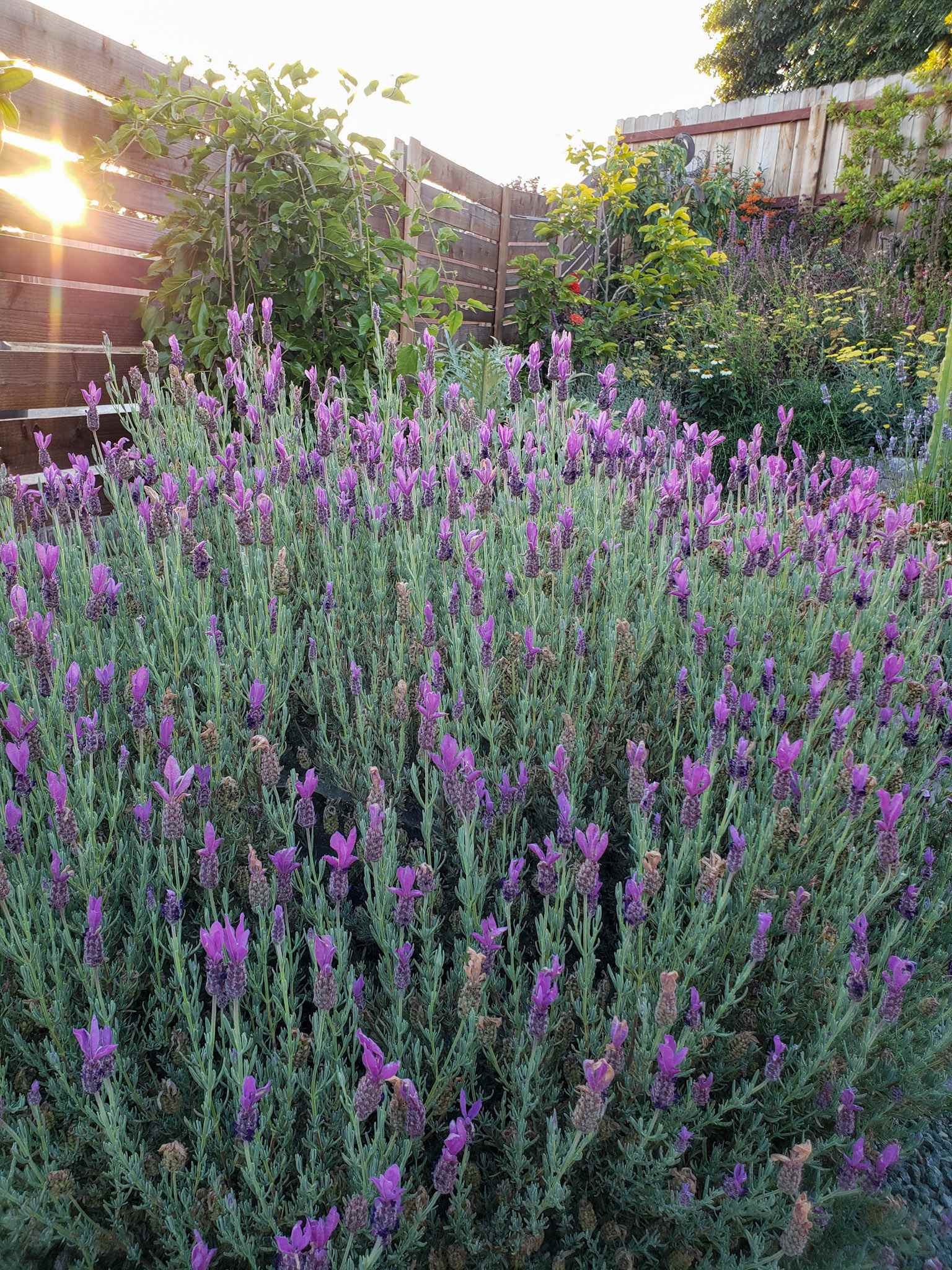
When to Harvest Lavender
The best time to harvest lavender is early: early season, early bloom, early morning.
By harvesting lavender in the early spring (or early summer, whenever it first blooms), the plant has ample time to produce another flush of flowers by late summer to fall. This is especially key if you have a short summer growing season. In frost-free climates where some varieties of lavender may bloom year-round, you can continually harvest small bunches over and over throughout the year.
For the best fragrance and essential oil content, try to harvest lavender shortly after the flowers bloom – when young tender buds are tight and barely starting to open. Fully-open lavender flowers will boast the most color and are highly attractive for bouquets. Yet as the flowers continue to age, their aroma and therapeutic oil content decreases. However, I don’t let that stop me from sometimes using older blooms too! Late is better than never.
Finally, most herbalists recommend harvesting medicinal flowers in the early morning, once any dew has dried but when the plants are still perky from the cool night air. As the day goes on, some of the fragrant essential oils and terpenes will begin to dissipate in the hot sun. I try to follow this practice as much as possible, but life is busy… so pick ‘em when you can!

How to Harvest Lavender
It’s incredibly easy to harvest lavender – and the more you prune, the more flowers will grow! Harvesting and pruning also encourages branching, resulting in an increasingly bushy plant.
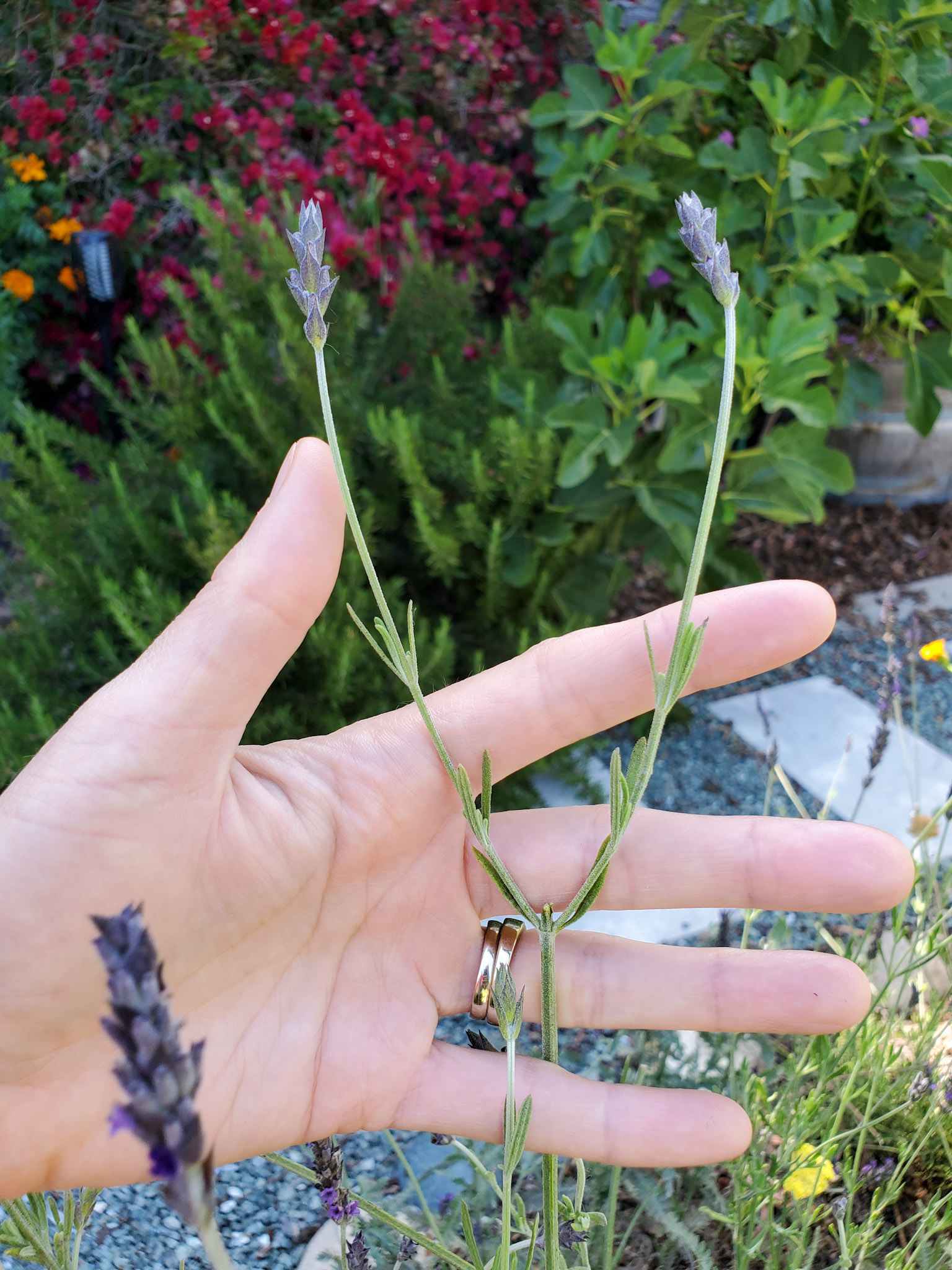
To harvest individual (or small amounts of) lavender flowers, follow the stem down from the flower bud until you reach a junction where two side leaves, new buds, or branches have begun to form. Using small pruning snips or scissors, cut the stem there – just above the leaves or side branches. Once the center stem and flower is removed, the side shoots will quickly grow into new long stems and flowers of their own!
For longer stems or a full bouquet, simply follow the main stems down farther and cut above a similar branching junction deeper into the plant. After harvest, you ’ll be left with a nice little bunch of lavender – perfect to hang and dry, or to display as a beautiful bouquet. Keep reading below to learn how to dry fresh lavender.
PRO TIP: When I’m harvesting a large amount of lavender at once, I like to grab a handful of long stems and use large pruning shears or an electric hedger to quickly cut through a larger bunch all at once. (I’ll usually hold the handful while Aaron cuts, or vice versa.)


When to Prune Lavender
It’s best to prune lavender plant once or twice per year, always after flowering.
The first and less crucial “pruning” session can simply entail removing or harvesting the first flush of flowers in spring, since deadheading (removing spent blooms) promotes new growth and is great for overall plant health. During the spring, aim to prune back about a quarter to one-third of the plant.
The best time to more fully prune lavender is in the fall, after the last flowers fade. Hardy English lavender varieties naturally die back in the winter and respond better to hard pruning than non-English varieties. See tips on how to prune English, French, and Spanish varieties below.


How to Prune English Lavender
Prune English lavender back by one-half to two-thirds of the new growth each fall. Similar to harvesting, trim just above leaf nodes or side branches. Avoid cutting into the lowest bare woody growth.
PRO TIP: Take a peek around the base of the plant: you’ll see tough woody growth close to the ground that has no sprouts or leaf nodes, and more tender growth (green or light brown) above that. Trim at least a few inches above the naked woody part, leaving behind a couple leaf nodes per branch.

How to Prune Spanish and French Lavender
To prune more tender Spanish and French lavender varieties, be more gentle than you would with English Lavender. Cutting back too much can damage and potentially kill the plant. Lightly prune, harvest, or deadhead blooms throughout the growing season. Then towards the end of summer, prune the shrub into a rounded mound of foliage. Most gardening resources recommend taking off no more than one-third of the plant.
Rememeber that lavender may look a bit sad and bare just after pruning, but in my experience, it will always bounce back and fill in nicely! Plus, routine pruning actually prolongs the life of the plant. In the past, I’ve cut some established plants waaaaaay back (almost to the ground, into the “no-no” woody zone) and they were full of lush new growth within a few months. The more established the plant, the more resilient it is to a hard prune.


How to Dry Lavender Flowers
After harvest, here are three different ways you can dry lavender. (I’ll share my experience with the pros and cons of each.)
1) Hanging Lavender to Air Dry
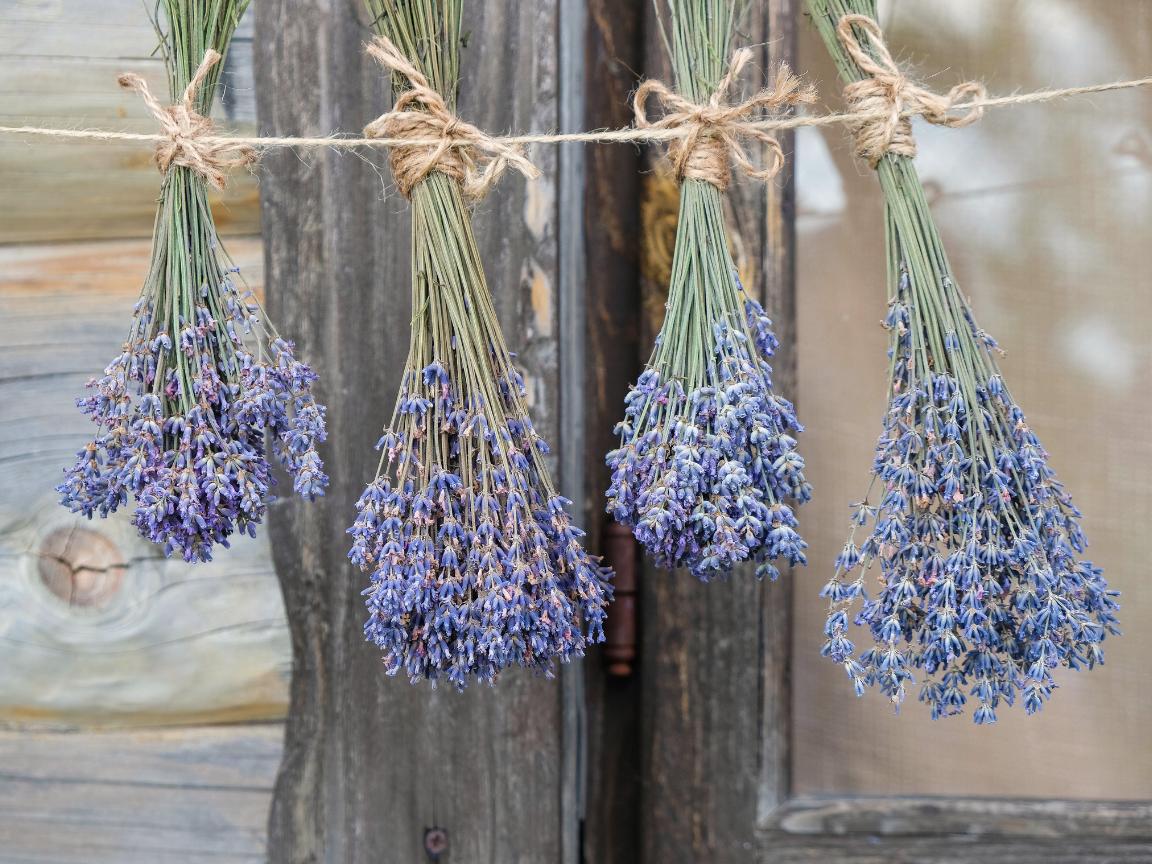
The most simple way to dry fresh lavender is to let it hang dry. This method of drying lavender works best in warm arid climates, or controlled indoor conditions that enable the lavender to thoroughly dry.
- Collect handful-size bouquets, secure the stems together with twine or a rubber band, and hang them upside down to passively dry.
- For the best airflow, it’s best to create and hang several small bunches rather than one large one. Large dense bunches will dry more slowly and are more prone to developing mold.
- For that same reason, do not tie the bands too tightly. The bunches should be tied secure enough to not fall apart, but not crazy-tight against the stems.
- Hang the lavender bunches in a warm, dry location with good air circulation. An open window or fan nearby will help. Drying lavender in a dark place (out of direct sunlight) will improve color retention.
- The time it takes to fully dry can vary from a couple of weeks to over a month, depending on your climate. To test if the lavender is dry, try to break one of the stems. When completely dry, they will crisply snap in half rather than bend.
- You could also place bunches upright to dry in a similar manner (such as in an airy vase without water) though the tops may flop over and dry less straight.
I live in a fairly cool, humid climate so I usually prefer to dry my lavender in a dehydrator (especially if I plan to make oil or salve with it) but I have successfully hung many decorative bouquets to dry too.
2) Drying Lavender in a Food Dehydrator
You can also dry lavender in a food dehydrator. It’s very easy and effective, dries much quicker than letting it passively dry at room temperature, and ensures the flowers are 100% dry. I always use a dehydrator when I plan to make lavender-infused oil or salve, since any leftover moisture can easily cause mold and spoilage.
However, it’s best to avoid overheating the lavender in order to preserve the highest level of essential oils and therapeutic benefits possible. Therefore, I suggest using the lowest temperature setting on your dehydrator (no more than 100 to 110°F) for the best results. I don’t recommend oven-drying for this reason.
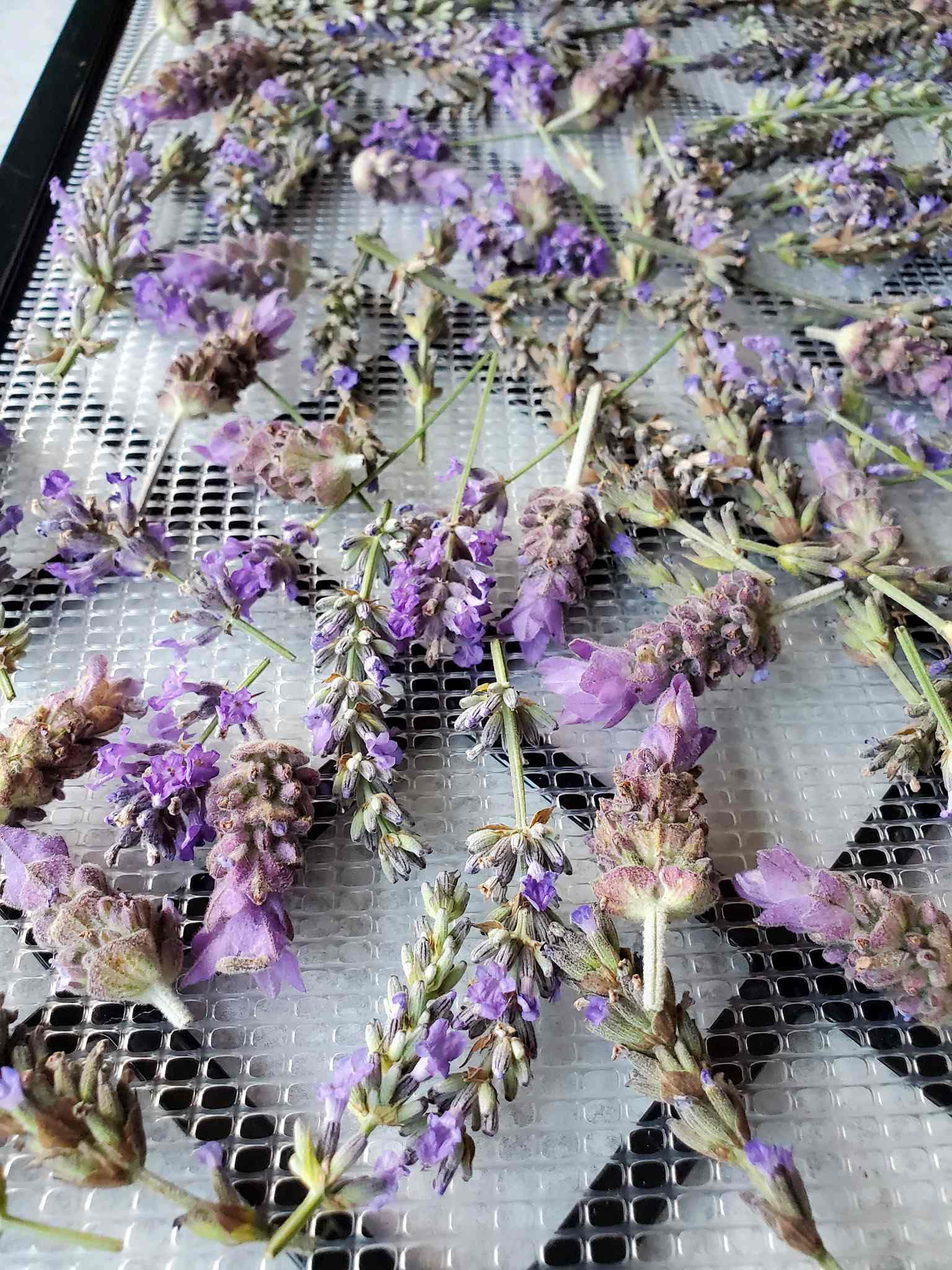
- Lay the lavender out on the dehydrator trays in a single layer. I like to remove the stems and dry only the flower buds.
- If your lavender is extra crumbly or your dehydrator trays have large openings, I’ve found it’s helpful to use silicone tray liners to catch the small bits. Alternatively, you can line the trays with parchment paper (though it may blow around).
- Dry lavender on a low temperature setting. Our Excalibur dehydrators have a “living foods” setting (95-105°F), designed to preserve beneficial enzymes.
- It should take about 24 to 48 hours to fully dry depending on the variety, bud size, and dehydrator used. To test if they’re fully dry, try breaking a large bud apart. It should feel dry, crumbly, and the middle stem should snap rather than bend.
- Once dry, transfer the flowers to an air-tight container for storage or their other final destination/use.


3) Drying on Screens or in Baskets
Finally, you also can air dry lavender without hanging it in bunches. Many traditional herbalists simply lay their fresh herbs and flowers flat to dry on screens or in airy baskets. You can buy a specialized herb drying rack, or create a DIY drying rack from framed screens or similar breathable material.
Spread the lavender flowers out in a single layer to allow good air flow between them. Like hang drying, this method works best in warm arid conditions and can take several weeks to fully dry.
How to Store Dried Lavender
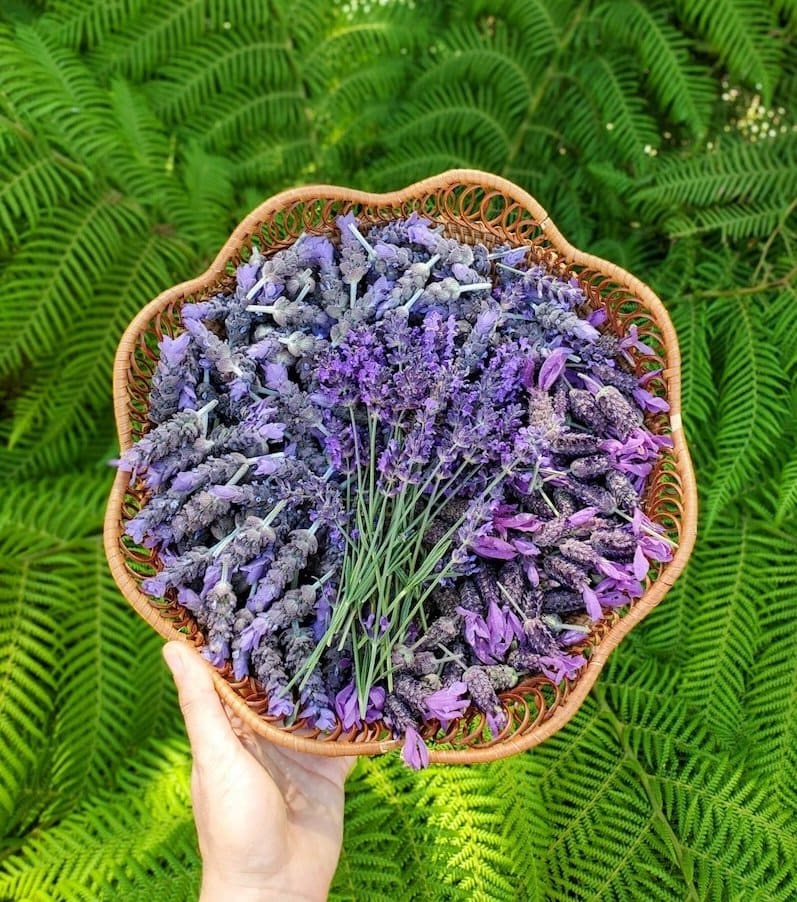
After drying lavender, one option is to leave the flower buds intact on the long stem, ideal for displaying dried bouquets or to use in dry floral arrangements. Otherwise, snip or strip the flower bud portion off of the stem and store it in an airtight glass container for maximum freshness, flavor, and aroma. Store the container in a cool, dark, and dry location.
Using Dried Lavender
Floral bouquets aside, there are dozens of creative ways to use dry lavender! Lavender is incredibly versatile and beneficial. It’s used for aromatherapy, proven to help reduce anxiety, stress, depression, and insomnia. With natural anti-inflammatory, antioxidant, antibacterial, anti-fungal, and pain relieving properties, dry lavender is ideal to use in homemade medicine and body care products.
As an edible flower, there are many culinary uses for lavender too! Remember, English and lavandin hybrid varieties are most popular to use in edible applications. The higher camphor content in Spanish and French lavender make them less palatable and sweet – yet camphor is an excellent terpene to ease swelling, itching, and pain!
Here are a few ways to use dry lavender:
- Use a small mesh bag or cheesecloth to create sachets of soothing lavender potpourri, perfect for a dresser drawer, bathroom, car, or bedside table.
- Make a refreshing lavender room or linen spray.
- Use it as an ingredient to make lavender-infused oil, homemade lavender salve, DIY bath salts, tinctures, soap, body scrub, and more.
- Create lavender simple syrup. We love making a light lavender syrup to add to homemade kombucha (I go light on the sugar, heavy on the lavender). In fact, lavender-lemon is one of our favorite kombucha flavors. Lavender syrup is also killer in cocktails!
- Make lavender sugar to incorporate into desserts like sugar cookies, cake, or cupcakes.
- Lavender can be included in sweet and savory marinades – most often used for meats, but also amazing with roasted potatoes or other veggies.
- I like to sprinkle dry lavender in my chicken coop and nesting boxes to repel flies, cut odor, and give our spoiled hens some soothing vibes.

And that is how you harvest, prune, and dry lavender.
As you can see, harvesting and drying fresh lavender is super simple and rewarding. I also find the process really therapeutic – the perfect excuse to turn on some music, tune out, and snip snip snip away… Thank you for reading, and happy harvesting!
You may also enjoy:
- How to Make Homemade Lavender Oil, and 9 Ways to Use It
- How to Make Homemade Lavender Salve to Soothe Skin & Nerves
- All About Calendula: How to Grow, Harvest, Dry & Use Calendula Flowers
- How to Make Calendula-Infused Oil
- Top 23 Plants for Pollinators: Attract Bees, Butterflies, and Hummingbirds
- Growing Herbs 101: How to Start a Kitchen Herb Garden



53 Comments
Lynnda
I loved your article! I have just harvested my french lavender and am wanting to dry them. Are you able to tell me if I need to strip the leaves before drying? I am wanting to make dried lavender bouquets with them. Thank you and I hope you guys are keeping well and safe!
Aaron (Mr. DeannaCat)
Hi Lynnda, you don’t need to strip them of their leaves, if you don’t want the leaves to use in your bouquet, it may be easier to remove them once they are dry anyway so it is up to you. Good luck and enjoy your lavender bouquets!
Julia
Great article! Thank you for the awesome pictures showing exactly where to prune and what the buds should look like!
Aaron (Mr. DeannaCat)
Glad you found the article helpful!
Michele
Loved your article! I just trimmed up my lavender, flowers have already bloomed. Can I use those spent flower stems, dehydrate and use for soapmaking?
Aaron (Mr. DeannaCat)
Hi Michelle, I would definitely use the dried blooms for soap making but I would try and avoid the stems as they can be a bit more tough on the skin. I bet the soap will smell amazing, good luck and thanks for reading!
Ingrid
Thank you for reassuring me that I am doing it all right! I am growing some old fashioned English Lavenders, as well as Lavendulas, eg Grosso. The main fact I am trying to establish is when it is the best time to actually cut lavender to make lavender wands. I tend to pick them at the exact same stage as for drying, but I find the aroma is not very strong at all when the first few months have passed. I first discovered lavender wands when I was given one by a friend, who had made it with blooms that had almost gone over (as she had not had time before), and the scent lasted for years. Do you have any experience of making wands?
Kind regards from the UK
Ingrid
Aaron (Mr. DeannaCat)
Hi Ingrid, we have yet to make lavender wands but it sounds like a cool process! I would recommend that you harvest the flowers in the early morning and choose the blooms that are still young and even closed in the bud. Let us know how your wands turn out and good luck!
Ingrid
Let me know if you do try, please!!! I find it very difficult when doing more than, say 15 stems, but they do look a bit skinny then! If you do, would you email me? Best wishes from the UK x
Aaron (Mr. DeannaCat)
Will do Ingrid, it may be awhile before we are able to give it a go but it sounds like a fun project. Good luck and thanks for reading!
Kelly P
Can I use lavender leaves the same way I would use the blooms?
For example, could I make lavender water using the leaves?
Aaron (Mr. DeannaCat)
Hi Kelly, yes you can simmer the leaves and or blooms for a bit to create lavender water. Yet, the flowers have higher amounts of essential oils which is where most of the medicinal properties lay. Good luck and enjoy!
Sarah
Wow such a great article! Thank you for all the details. So easy to read and understand. Much appreciated!
Dina
I love your website… very informative. Leaves no questions. I also appreciate all the other
side notes and info that applies to the directions given. Very, very helpful. Thank you so
much. Look forward to using your site more.
James
Great post! Exactly what I was looking for. 🙂
Joanna
Great article! Any known tips for trying to grow lavender in a very humid and wet area? Zone 9b, summer has rain almost every day and humidity 90%+..
Aaron (Mr. DeannaCat)
Hi Joanna, unfortunately that sounds like it is going to be difficult to do, maybe someone has some tips or can help out though. Good luck!
Fay Waller
Thank you for this extremely helpful information!
I’m in the middle of our first harvest, learning as we go, and praying all the way. The unusual amounts of rain for several weeks are putting several plants in jeopardy. I learned from your article that I can cut further back than I was.
Bless you!
Aaron (Mr. DeannaCat)
Hi Fay, we’re glad you found the information so helpful and good luck with the lavender harvest. It seems most lavender prefer more dry conditions so too much rain can make them a tad less happy, well draining soil can help out a bit in that regards. Yet, they are fairly hardy so hopefully they bounce back for you.