

How to Make a Cannabis Tincture: Easy Cold Alcohol Extraction

Come learn how to make your own homemade cannabis tincture using a simple cold alcohol (ethanol) extraction method with our step-by-step guide. I’ve included plenty of photos to make the process as clear and easy to follow as possible. There is also a printable summary at the end – though I don’t think you’ll want to miss the extra tips in the body of the post.
Tinctures are a convenient, discreet, and easy way to enjoy your plant medicine. It’s kinder to your lungs than smoking or vaporizing, and offers more controlled and consistent dosing compared to smoking or homemade edibles. (I love that I can take just a few drops if needed.) You can use this homemade cannabis tincture recipe with any of your favorite cannabis strains, with CBD hemp only, or like we do – with homegrown herb!
What is a cannabis tincture?
A cannabis tincture is a concentrated alcohol-based cannabis extract, often referred to as “Green Dragon” among the cannabis community. High percentage alcohol is used as a solvent to extract the medicinal compounds (cannabinoids and terpenes) from the plant flower or “buds”. Though tinctures are essentially cannabis-infused alcohol, you do not get drunk since only a tiny amount is consumed.
Cannabis tinctures are highly therapeutic. Studies show that cannabis can be used to soothe a wide variety of physical and mental ailments, including sleep disorders, stress, anxiety, ADD/ADHD, muscle tension, joint pain, migraine headaches, inflammation, seizures, cancer, chronic pain and more. Cannabis tinctures can contain THC only (such as THC isolate), a blend of THC and CBD, or CBD alone.
When it comes to CBD, I always use my favorite certified organic full-spectrum CBD oil from NuVita. It’s federally-legal and is the most effective, potent and pure CBD oil I’ve ever tried. It does wonders for my anxiety, TMJ, and sleep issues! (Use code “deannacat” or this link to save 10% off) But if we want something with THC, we make our own tinctures using homegrown cannabis. It’s fun, rewarding, and a great way to save money!

Want to save this?
Disclosure: Homestead and Chill is reader-supported. When you purchase through links on our site, we may earn an affiliate commission.
What type of alcohol to make homemade cannabis tincture?
It is best to use either 190 to 200-proof food grade ethanol (aka ethyl alcohol) or 190-proof Everclear alcohol for this cannabis tincture recipe. Both are strong natural solvents that will effectively strip and separate the desired cannabinoids from the plant material. We use this USDA organic ethanol. It is pure food-grade grain alcohol, and doesn’t contain any additives or water!
Lower-proof alcohol (e.g. 80 proof vodka) is a weaker solvent and also has a higher water content than ethanol, which can interfere with the extraction and tincture-making process. You technically can make homemade cannabis tincture with vodka or other lower proof liquor, but it requires additional steps that we aren’t going to cover in this article.
Do not use rubbing alcohol.

What type of cannabis should I use?
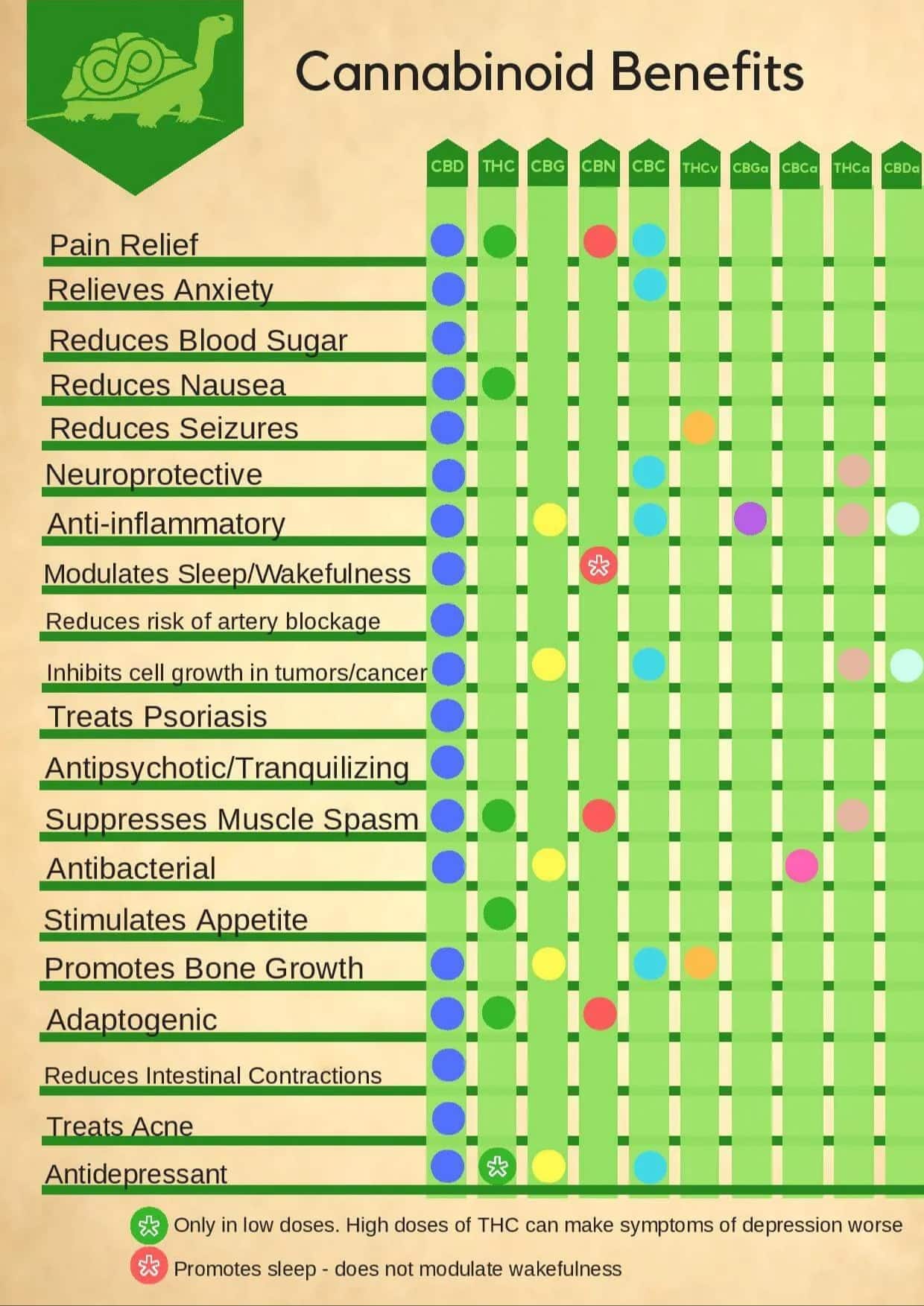
It’s important to use decarbed cannabis in this homemade cannabis tincture recipe. If you’re not familiar with decarboxylation, it’s essentially the process of heating cannabis to “activate” it (explained more below). When exposed to heat, raw forms of THCA, CBDA, and other cannabinoids are converted to their active forms of THC and CBD – making it psychoactive as well as more therapeutic. (It’s the same reaction that occurs when you heat cannabis via smoking or vaporizing, and why eating raw bud doesn’t get you high).
Aside from that, use whatever cannabis you prefer or have on hand! Choose a strain (or combination of a couple) with traits you personally desire from your homemade cannabis tincture. We use what we grow: well-rounded sativa/indica hybrids that also offer a good amount of CBD. Learn how to grow your own organic cannabis at home here, and shop for seeds here.
For the most therapeutic tincture, I recommend using strains with a well-balanced THC to CBD ratio. If you’re looking for daytime relief with less mental effects, choose a CBD-dominant strain. Yes, you can totally use this cannabis tincture recipe with CBD hemp alone!
Why freeze alcohol and cannabis for extraction?
This homemade cannabis tincture recipe uses a cold ethanol extraction method, also referred to as quick wash ethanol extraction or “QWET”. Freezing the cannabis makes the trichomes detach from the plant material more efficiently. When mixed with cold ethanol, the desirable cannabinoids and terpenes readily extract and combine with the alcohol – resulting in a stronger, better tincture.
Furthermore, keeping the mixture at a very low temperature helps reduce the amount of undesirable compounds in your tincture, such as lipids and chlorophyll. It’s a chemistry thing, but basically the freezing temperature influences the polarity of the lipids and chlorophyll so they’re more likely to stay bound to the plant material (and therefore get filtered out) rather than combining with the ethanol.
When done right, the resulting filtered tincture wash will be clear and golden in color rather than cloudy or green.
Supplies Needed to Make a Homemade Cannabis Tincture
- 8 grams of decarbed cannabis
- 6 ounces of 190 to 200-proof food grade ethyl alcohol (ethanol) or 190 proof Everclear
- Freezer-safe glass containers, such as wide-mouth pint mason jars or half-pint jars with lids.
- Small unbleached coffee filters, like these ones
- Cheesecloth
- Digital Scale
- Dropper bottles to store your finished tincture. We like these 2-ounce amber bottles; the droppers have mL markers on them for accurate dosing.
Yields: 2 ounces of homemade cannabis tincture
Please note that this is a two-day process, though ingredients are just sitting in the freezer for 97% of that time.
INSTRUCTIONS
Step 1: Decarb your cannabis
To decarb cannabis, start by tearing up the buds into fairly small pieces. Then spread it out evenly on a baking sheet. For THC-dominant strains, heat the cannabis in the oven at 250°F for 25 to 30 minutes. For high-CBD strains, bake it for 40 to 50 minutes at the same temperature. (It takes slightly longer for CBDA to convert to CBD than THCA to THC does.) If you’re using a well-balanced THC:CBD strain, meet in the middle at 30 to 35 minutes. See this article for a more in-depth look at decarbing cannabis.
Don’t want to stink up the house? Consider using an Ardent Nova device for an easy, nearly odor-free decarboxylation experience. We just got one recently and love it!
Note that your cannabis will decrease in weight slightly during the decarb process (as it gets more dry). So, start with a few extra grams so you’ll end up with the 8 grams needed for this cannabis tincture recipe. Or, bake plenty so you have enough leftover to make homemade cannabis oil or topical salve!

Step 2: Freeze Cannabis and Alcohol (separately)
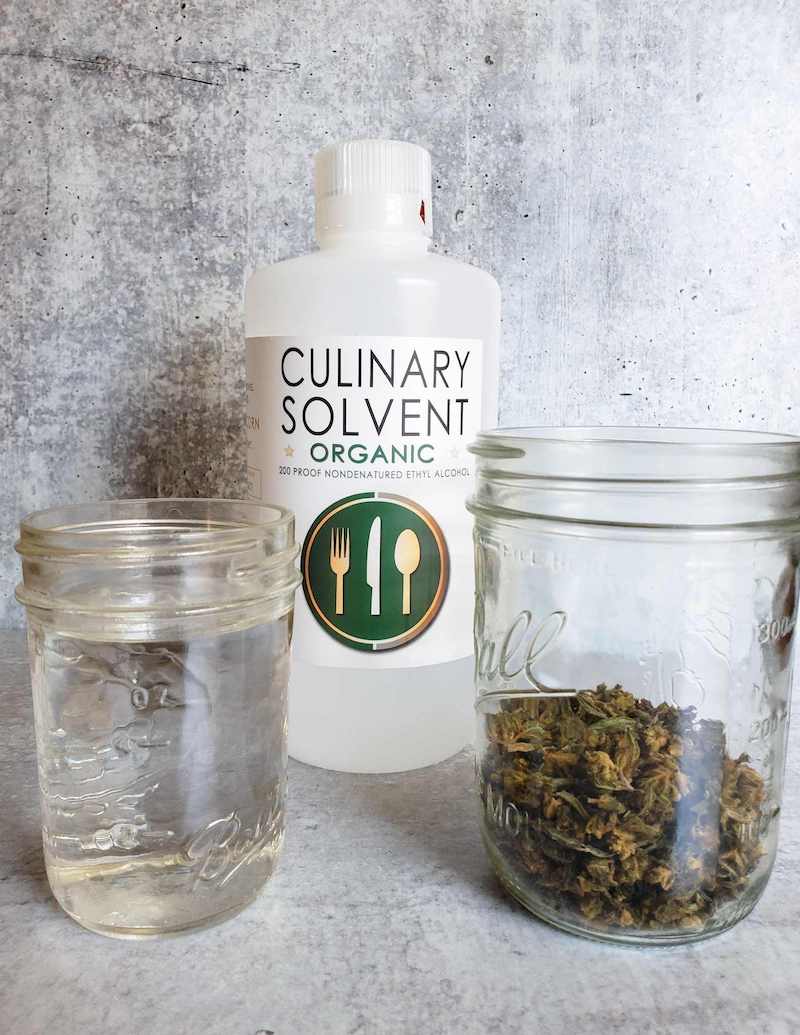
Use a scale to weigh out 8 grams of decarbed cannabis. Add the cannabis to a freezer-safe glass container with a lid. We like to use a wide-mouth pint glass jar. (Even though it seems more than large enough, the extra room in the jar makes it easier to shake compared to a half-pint jar.) Next add 6 ounces of ethanol to a separate freezer-safe container. Do not mix the alcohol and cannabis yet. Put both containers in the freezer for at least 24 hours.
Step 3: Combine Cannabis and Alcohol (First Wash)
After the initial 24 hours (or longer) is up, remove the cannabis and alcohol from the freezer. Pour ONLY HALF of the cold alcohol (3 ounces) into the container of frozen cannabis. Add a lid and shake vigorously for 5 minutes. Wrap the jar in a kitchen towel if it’s too cold to comfortably hold.
This process extracts the cannabinoids and terpenes from the plant material, and is considered the “first wash”. We’ll do two rounds total.
Now return the cannabis-alcohol mixture as well as the separate remaining 3 ounces of plain alcohol to the freezer for an additional 2 hours.

Step 4: Shake and Strain
Once the two hours are up, it’s time for another shake – and then we strain! Remove the jar of mixed cannabis and alcohol from the freezer, and shake it again for an additional 5 minutes. (We don’t need the jar of plain alcohol at this time.)
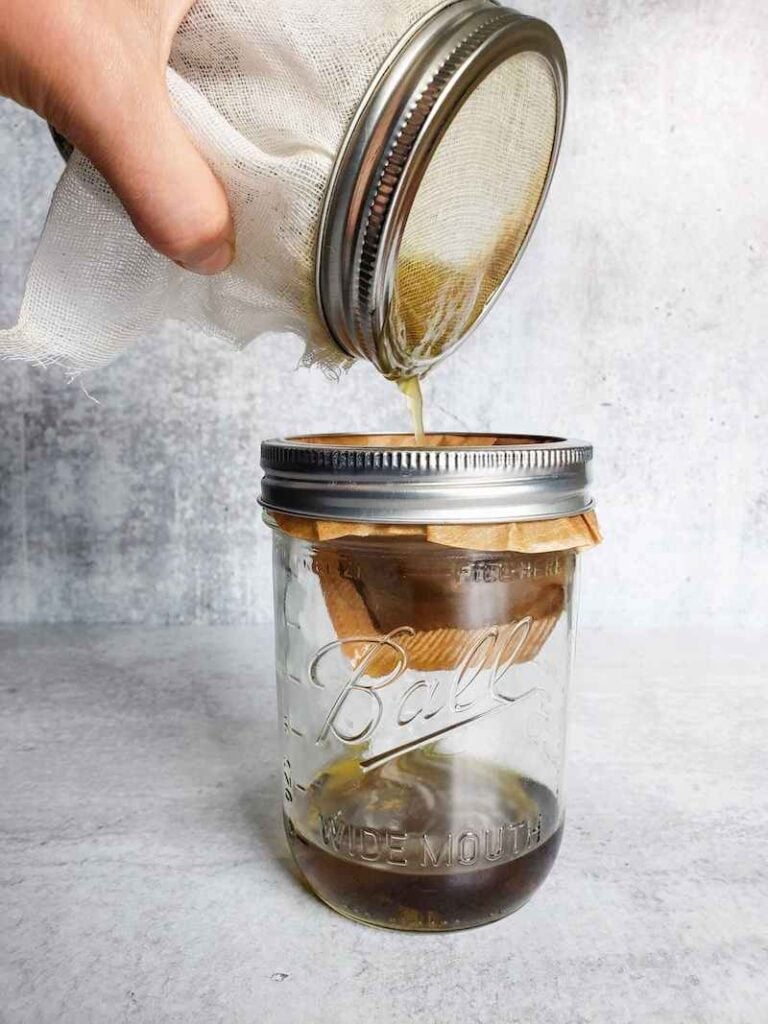
Next we’re going to strain the tincture through two mediums: cheesecloth first to filter the larger plant material, and then a finer coffee filter to further remove unwanted lipids and other residue.
First set up the coffee filter straining station. We find it easiest to set a small coffee filter in the top of a separate clean pint glass jar, fold it over the rim of the jar, and then screw on a lid ring to hold it in place. The cannabis tincture takes a while to seep through the filter, so holding it by hand isn’t fun.
Next, put cheesecloth over the jar that contains the cannabis-alcohol mixture (we use the ring trick again) and slowly pour it through the cheesecloth and into the coffee filter jar. See the photos below.
Now return the jar of remaining cannabis to the freezer while the first wash liquid is straining through the coffee filter (about 10 minutes).

Step 5: Second Wash & Strain
Now it’s time for the second and final wash. This step helps extract any final remaining cannabinoids from the plant material into your homemade cannabis tincture.
Grab the jar of cannabis that was in the freezer while the first wash strained (for about 10 minutes) and then repeat the washing/straining process from steps 3 and 4. Add the remaining 3 ounces of cold plain alcohol to the cannabis jar, add a lid, shake vigorously for 5 minutes, and strain through the cheesecloth and coffee filter once again – pouring it into the same filter and jar as the first wash.

Step 6: Reduce
After all the liquid has strained through the coffee filter into the jar, it’s time to reduce it by about half the volume. Excess alcohol will easily evaporate off, and the result is a more concentrated and effective homemade cannabis texture.
Do this by simply allowing the jar to sit out at room temperature with the lid off for several hours. We place the jar in front of a fan to help expedite the process. Note the volume of liquid in the container when you start (use a rubber band around the jar, or a glass marking pen). Keep an eye on it! Once it reduces by half, add a lid to stop further evaporation – or go ahead and bottle your final homemade cannabis tincture.

Step 7: Bottle and Store
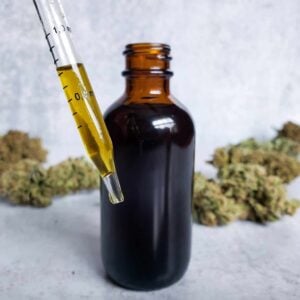
Once it’s reduced by half, transfer the strained cannabis extract to a final storage bottle – such as these amber glass dropper bottles. Amber bottles are ideal since they reduce light exposure, which degrades cannabinoids. Store the bottle in the refrigerator for the best long-lasting quality. Congratulations, you just made a homemade cannabis tincture! Keep reading for usage and dosing information.

How to Use or Take a Cannabis Tincture
You can consume your cannabis tincture either under your tongue (sublingually) or mixed with a beverage (oral ingestion). Sublingual consumption will result in more immediate effects, while oral ingestion will have a slower onset but longer-lasting results. See the graphic below.
However, proceed with some caution! 200 proof ethanol is very strong, and I find it causes a burning sensation when applied straight under my tongue. To avoid that, I put a very small amount of water in my mouth first, squirt in the tincture, hold the diluted mixture in my mouth for a few minutes, and then swallow. Therefore my intake is mostly sublingual, but with a little oral ingestion too.

Strength and Dosing for Homemade Cannabis Tincture
When first trying your tincture, I suggest to start low and go slow. Without lab testing, it’s difficult to say exactly how potent a homemade cannabis tincture is. There are simply too many factors: the initial cannabinoid concentration and strain you used, how long and hot you decarbed it, the efficacy of your ethanol extraction process, and how much it was reduced at the end.
Start with a few drops, and then gradually increase the amount to find your “sweet spot” and desired results. (But wait a couple hours to see how you feel before taking more.) With this recipe, a quarter dropper is a fairly conservative starting point. I personally like to take .25 mL or a quarter dropper (though I’ve taken more just fine) while Aaron prefers about .5 mL or half a dropper. That’s just enough to take the edge off, relax our muscles, and help us sleep better without being too stony.

That was fairly simple, right?
Well folks, I hope this tutorial was easy to follow – and will enable you to successfully make your own cannabis tinctures at home now. Let us know if you have any questions in the comments below. If you found this information useful, please consider leaving a rating/review and pinning or sharing this post. We greatly appreciate you tuning in today. Now go have fun making your own medicinal Green Dragon!
Don’t miss these related posts:
- How to Grow Organic Cannabis at Home: Seeds, Soil, Containers, and Care
- Homemade Cannabis Oil Recipe
- Homemade Cannabis Salve Recipe
- How to Feed Cannabis, Organically: Top-Dressings, Teas & More
- Organic Cannabis Pest Control: How to Keep the Bugs Off Your Nugs
- How to Harvest, Dry, Trim, Cure and Store Cannabis
Homemade Cannabis Tincture Recipe
Want to save this?
Equipment
- 2 freezer-safe glass containers, such as wide-mouth pint mason jars or half-pint jars
- 1 small unbleached coffee filter
- cheesecloth
- digital scale
- Baking sheet
- freezer
- bottle for final storage, such as 2-ounce amber dropper bottles
Ingredients
- 8 grams decarbed cannabis
- 6 ounces 200-proof food grade eylth alcohol (ethanol) or 190-proof Everclear alcohol
Instructions
- Decarb your raw cannabis. Tear it up into fairly small pieces and spread on a baking sheet. For THC-dominant strains, heat the cannabis in the oven at 250°F for 25 to 30 minutes. For high-CBD strains, bake for 40 to 50 minutes and 30 to 35 minutes for a well-balanced THC:CBD strain. (I suggest starting with a few more than 8 grams since it will get lighter as it dries.)
- Add 8 grams of decarbed cannabis to a freezer-safe glass container with a lid, and 6 ounces of ethanol to a separate freezer-safe container. Put both containers in the freezer for at least 24 hours.
- First Wash: After the initial 24 hours (or longer), remove the cannabis and alcohol from the freezer. Pour only HALF of the cold alcohol (3 ounces) into the container of frozen cannabis. Add a lid and shake vigorously for 5 minutes. Now return the cannabis-alcohol mixture as well as the separate remaining 3 ounces of plain alcohol to the freezer for an additional 2 hours.
- After two hours, remove the jar of mixed cannabis and alcohol from the freezer and shake it again for an additional 5 minutes. Then strain the mixture twice: first through a cheesecloth and then through a coffee filter into a separate clean container (as shown in this article). Return the jar of remaining cannabis to the freezer while the liquid is straining through the coffee filter (about 10 minutes).
- Second Wash: Grab the jar of cannabis that was in the freezer while the first wash strained (for about 10 minutes) and then repeat the washing/straining process from steps 3 and 4. Add the remaining 3 ounces of cold plain alcohol to the cannabis jar, add a lid, shake vigorously for 5 minutes, and strain through the cheesecloth and coffee filter once again – pouring it into the same filter and jar as the first wash.
- Reduce the liquid by half via evaporation. Simply set the jar out at room temperature with the lid off for several hours, or place in front of a fan to expedite the process. Note the volume of liquid in the container when you start. Once it reduces by half, add a lid to stop further evaporation – and/or transfer your finished tincture into it's final storage bottle.
- Store your homemade cannabis tincture in an opaque glass bottle in the refrigerator. We recommend 2-ounce amber dropper bottles.
- Consume the tincture either under your tongue (sublingually) or mixed with a beverage (oral ingestion). Sublingual consumption will result in more immediate effects, while oral ingestion will have a slower onset but longer-lasting effects. **Please see notes of caution and additional information on usage/dosing below.
Notes
- **Ethanol alcohol is very strong and may cause a burning sensation when applied straight under the tongue. To avoid that, I put a very small amount of water in my mouth first, squirt in the tincture, hold the diluted mixture in my mouth for a few minutes, and then swallow. Therefore my intake is mostly sublingual, but with a little oral ingestion too.
- Re: Dosage, start low and go slow. Start with a few drops, and then gradually increase the amount to find your “sweet spot” and desired results. (But wait a couple hours to see how you feel before taking more.) With this recipe, a quarter dropper is a fairly conservative starting point.


490 Comments
Julie
I’ve made this recipe, very potent and good! I saw a recipe for tincture using 200 proof culinary alcohol and only washing it for three minutes, theory being that at 200 proof the alcohol will dissolve the cannibinoids in a short amount of time. Have you tried that and if so what are your thoughts? Thank you!
Aaron (Mr. DeannaCat)
Hi Julie, I think it’s likely worth a shot to try it out but it’s not something we have tried personally, even our recipe is fairly quick and only involves 10 minutes of your time actively shaking the container. Let us know how it turns out for you and good luck!
Leland Roberts
Hi Aaron. I followed the process through final straining. Insted of evaporating off half the tincture (while I tried, I think it was too cool and I didn’t use a fan), I froze the original tincture and used it to wash a 2nd batch of decarbed bud, repeating the process entirely.
The original, un-reduced tincture was about as strong as a THC tincture I got at a dispensary. I’ll be trying the 2nd run extraction here shortly.
Do you have reason to believe the resulting tincture shouldn’t be twice as strong? Any other reason for not trying this method?
Thanks.
Aaron (Mr. DeannaCat)
Hi Leland, it sounds like your tincture should be more or less twice as strong after using the original for a second extraction run. Just start small when first dosing until you are fully aware of the strength of the tincture. Good luck!
Susan
So, why do some recipes call to steep it for 2-6 weeks and this one is done in one day?
Aaron (Mr. DeannaCat)
Hi Susan, because this uses the Quick Wash Extraction Technique (QWET), the cannabis and alcohol being at freezing temperatures before the wash allows for the cannabinoids to be stripped in a shorter period of time.
Jonathan
Thank you for all the great information and advice.
Deanna mentioned the tincture burning when put under the tongue. Do you think there is any downside to diluting the tincture 50/50 with purified water, so it would be a more manageable 100 proof? Or maybe even diluting it a bit more? Would that interfere with its shelf life?
Thanks!
Aaron (Mr. DeannaCat)
Hi Jonathan, adding water to the entire tincture itself would likely interfere with the shelf life of the tincture. When I take a dose of the tincture, I like to take a small drink of water and take the dose of tincture while the water is still in my mouth. From there, you can either swish it around a bit if you want to take the dose sublingually or just swallow it for an oral dose. In all, diluting each dose as needed is the easiest way to reduce the burn while still maintaining the integrity of the tincture. Hope that helps and good luck!
Julian
Hi! One other question – is it ok to work in larger sized batches? I have 2 oz of avb that I would like to make into tincture all at once. Is there anything that needs to be done differently (i.e. longer soaks and/or freeze time)? TIA!
Aaron (Mr. DeannaCat)
Hi Julian, you just need to increase the alcohol per amount of AVB you are using. You may want to use at least two jars for straining as it can take some time for the alcohol extraction to filter through the coffee filter and you may have more liquid than one filter can hold at a time. That is really the only step that may need modification so the whole process doesn’t take longer than necessary, good luck!
Steve
Great article and very informative.
I have a question.
Can you decarb your flower directly in the alcohol (everclear) by heating up the alcohol while the flower is in it? Basically skipping the oven decarbing process.
Thanks,
Steve
Aaron (Mr. DeannaCat)
Hi Steve, no I wouldn’t decarb directly in the alcohol as alcohol evaporates at a lower temperature than even water and your alcohol would likely burn off before the decarb process was complete. Also, you should never use any form of gas heat when working with alcohol due to it being extremely flammable, electric heat would be the only way to go. If you were making cannabis oil or butter, you could likely get away with not decarbing beforehand and just let it steep/cook in a crockpot for 8-12 hours. If you are going to be making a lot of edibles, tinctures, or salves going forward, getting an electric decarboxylator could be worth the investment, we have this one and it makes decarbing very easy and less stinky. We usually just use the machine in a spare bedroom with the windows open and your entire house doesn’t end up smelling, plus it does a great job decarbing. Hope that helps and good luck!
Florian
Looking forward trying this recipe in the next days.
One question regarding the 2nd wash. Do I put the Cannabis – Alcohol mixture again in the freezer for 2 hours or just one 5 minute shake?
Aaron (Mr. DeannaCat)
Hi Florian, during the second wash, you just combine the cannabis and remaining alcohol, shake for five minutes, then strain and filter. Hope that helps and enjoy your tincture.
susan
it’s confusing if you add the second half (3oz) of alcohol to the buds or to the first cannabis/alcohol blend that got strained?
Aaron (Mr. DeannaCat)
Hi Susan, you are doing two separate washes with the plant material using 3 ounces of alcohol each time. The first wash gets most of the cannabinoids but the second wash will help extract whatever is left, the second wash gets added to the first afterwards, filtering it through the cheesecloth and coffee filter.
Tigerlily
I’ve been making this recipe close to 2 years and it’s an incredible product. It’s simple, unfussy and potent.
Small tip I recommend is to presoak the cheesecloth and coffee filter in solvent so it’s not absorbing your tincture at first pour.
Thanks so much for this.
Aaron (Mr. DeannaCat)
Great tip on soaking the filter and cheesecloth beforehand with your solvent, thanks for sharing!
Diane
Hi Aaron, Thank you for the recipe and for patiently answering our questions! I used your recipe when I started making tincture and it worked very well, even the evaporating was done in about 4 hours by putting a fan on a stack of books and pointing it to the jar with the liquid. More recently, I’ve been making it the other way, leaving it in a jar for 30 days, with a mild shake daily. Finally, I decided to use less alcohol (for 1/2 ounce flower, I use 5 oz. culinary grade alcohol) so I end up with about 4 oz. of tincture. I can’t really tell much difference in the effects between starting with double alcohol and reducing it by half or just starting with less alcohol to begin with and not reducing it. Your thoughts?
Aaron (Mr. DeannaCat)
Hi Diane, so glad the tincture recipe has worked out for you. We also like to reduce the tincture as some of the alcohol will evaporate off which will reduce some of the burning sensation that one gets from using an alcohol based tincture. If you want to save on the amount of alcohol you use per batch, using more flower and less alcohol while foregoing the reduction step makes sense.
Bob Strand
Did everything as per and let the end result sit overnight but it didn’t reduce! Maybe 1/16″. Wha is ‘several hours’?
Aaron (Mr. DeannaCat)
Hi Bob, for us, putting the jar of tincture directly in front of a fan so we see ripples along the top of the liquid, the tincture will evaporate in about 3-4 hours. If you used 90% or higher ethanol and still haven’t gotten the tincture to reduce, you may have to make a hot water bath using an electric appliance such as a crockpot or rice cooker, heating the tincture to get it to evaporate faster. If you used a lower proof alcohol, you will have a much harder time getting it to reduce as there will be a lot of water in your tincture.
LISA Robertson
I forgot to do the coffee filter, I used cheese cloth and a small strainer
Thomas
Hi,
New reader here. I love this recipe. Although, I am searching for a similar recipe using fine grade hashish, instead of flower. It’s more readily available in my country. On top of that, if any of you have a way figure out the strength of such a hash tincture, it would be much appreciated.
Thank you!
Aaron (Mr. DeannaCat)
Hi Thomas, hash is typically more potent than flower itself as the THC content can vary from 30-60% where most cannabis flower is 15-20%. If you know the potency of your hashish, that would make it easier to estimate how much you should use. I would guess using 2-4 grams of hash would be on par for this recipe but you may want to err on the lighter end (2 grams) just so the tincture doesn’t end up too potent. As far as the process goes, I would just follow the same steps but add all of the alcohol at the beginning for the first wash, shake the jar in step 4 but don’t strain it, then in step 5 you can shake the jar again before straining out the hashish using a coffee filter. Then reduce the tincture down to 2 ounces or 60 ml. Hope that helps and good luck!
Julian
If I want to use water-cured AVB (already vaped bud) in this recipe, do I need to dry out the AVB in the oven after the water cure process is done or can the wet avb go directly into the alcohol solution?
Aaron (Mr. DeannaCat)
Hi Julian, I would dry the water-cured AVB to get rid of all of the water before you use it to make tincture. Water may mess with the efficiency of the extraction and it will be harder to reduce the tincture to increase its potency as alcohol will evaporate faster than water. Hope that helps and good luck!
Luis Morales
You briefly mentioned how it’s possible to use vodka or other low abv solvents with a different process. Could you direct me or briefly explain what that process looks like?
Aaron (Mr. DeannaCat)
Hi Luis, the lower proof alcohols doesn’t extract the cannabinoids at nearly the same rate when compared to higher proof alcohols due to the higher amount of water that is in them. With this, you will have a lot more water that ends up in your tincture which doesn’t evaporate as readily as alcohol does. You can follow the same extraction processes but your tincture won’t evaporate on its own for the reduction stage, you will need to create a water bath with an electric heating source such as a crock pot, rice cooker, or even electric oven or hot plate if you have one. You set the jar of tincture inside the water bath and heat the water until you get the excess water to evaporate out of your tincture. Again, you must use an electric heat source as alcohol is extremely flammable. Hope that helps and good luck!