

What Is Green Garlic? 6 Ways to Use or Preserve It

Are you curious about green garlic? Or, did you harvest your garlic early but aren’t sure how to use or store it? Come learn all about it!
Green garlic, also known as spring garlic or young garlic, is delectably flavorful, versatile, tender, and even easier to prepare than regular garlic. This article will explore 6 awesome ways to use or preserve it – including ideas and recipes for fresh cooking, freezing, pickling and more.
Note: This post was originally published in June 2019.

Would you like to save this?
Disclosure: Homestead and Chill is reader-supported. When you purchase through links on our site, we may earn an affiliate commission.
What is Green Garlic?
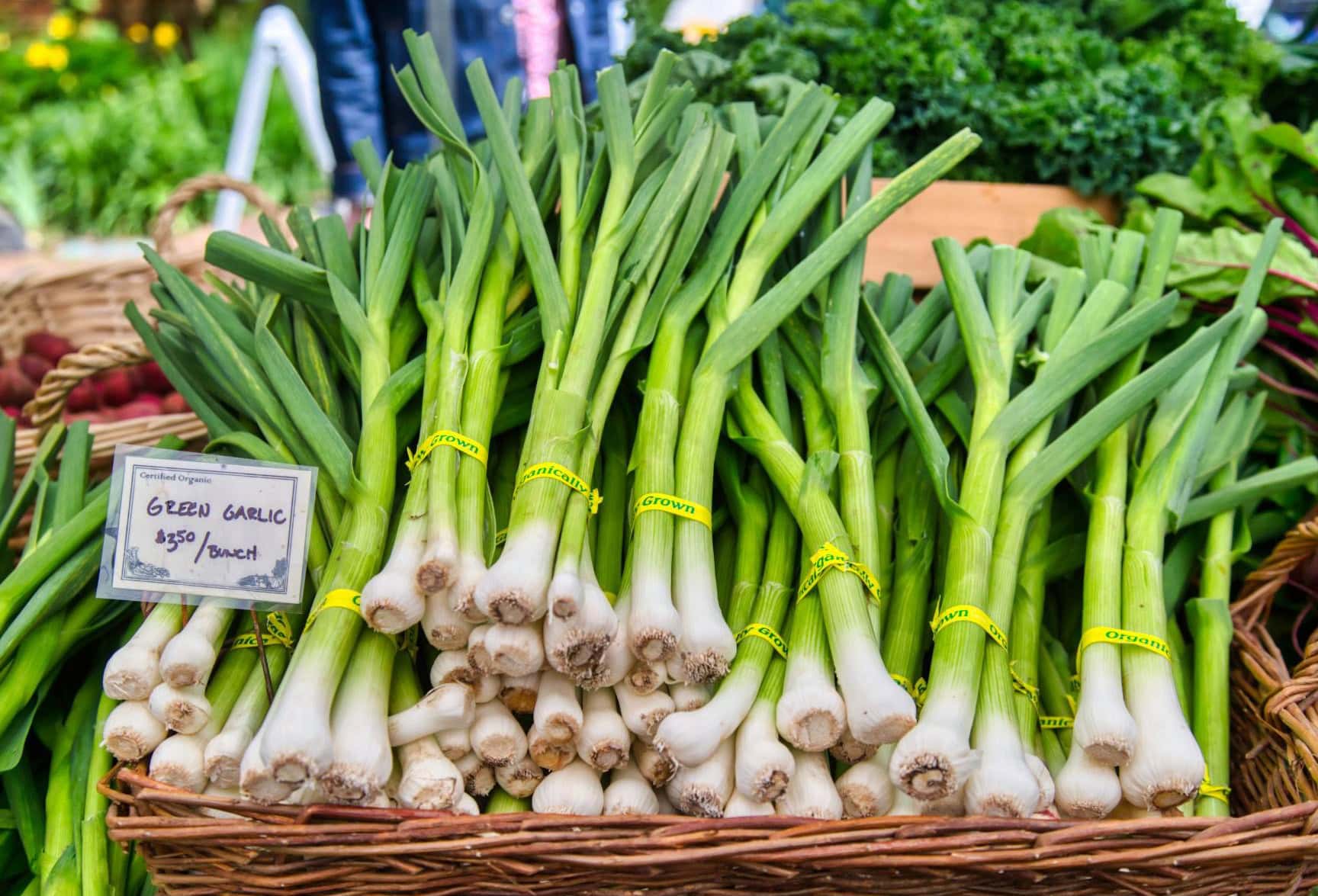
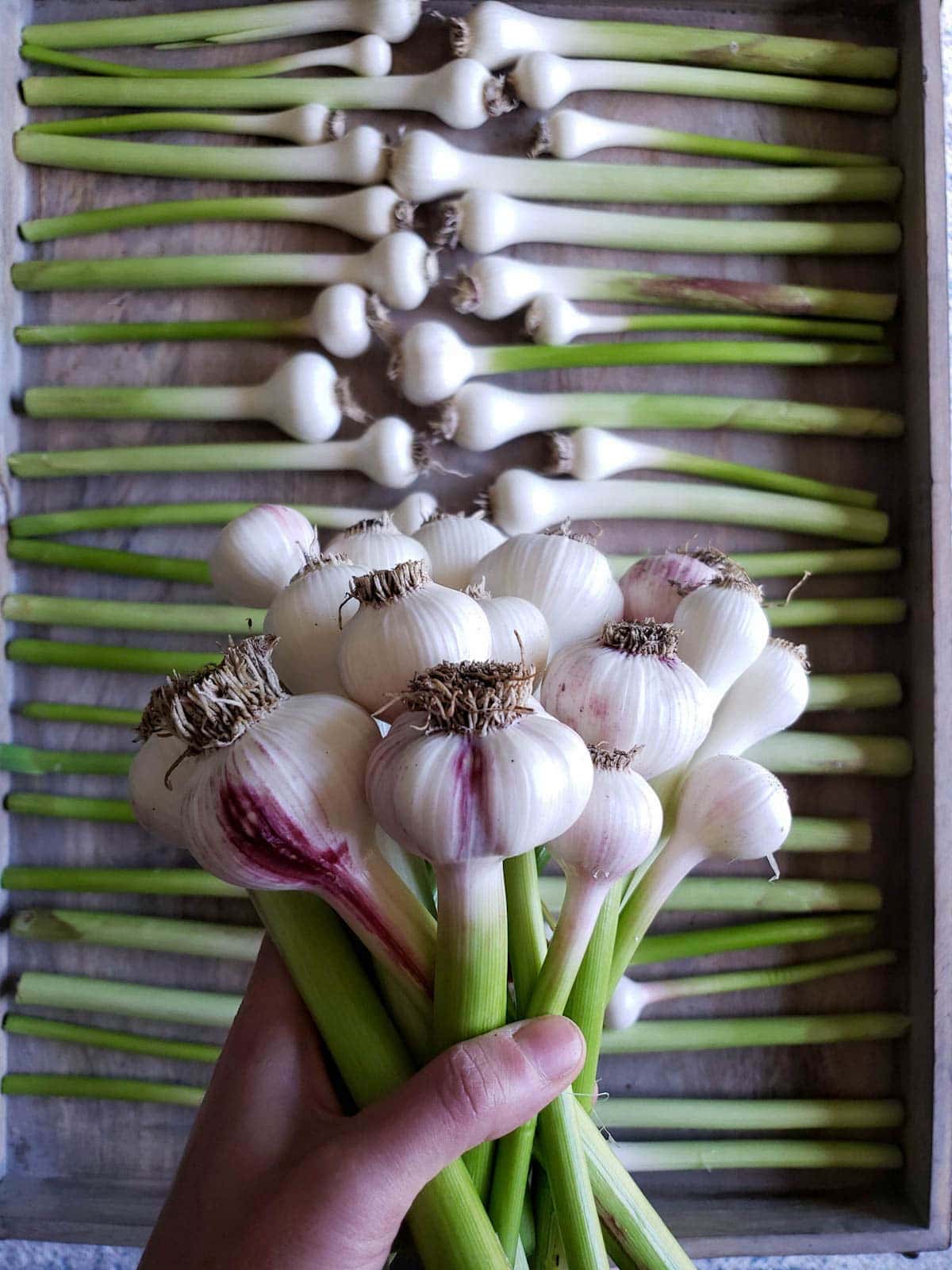
Contrary to popular belief, green garlic isn’t some exotic variety of garlic. Rather, green garlic is simply immature garlic or regular garlic that was harvested early in the spring. Both the white bulb and the green stalk are edible.
Most often, green garlic is the result of farmers thinning their main garlic crop – and making good use of those thinnings by selling it. Other times, it’s intentionally grown and harvested early as a rise in popularity has created a demand for it as a worthy crop of its own.
If you grow your own garlic, there may be times you have to harvest it early (even if you didn’t want to) – resulting in green garlic that can’t be stored long term. However, it’s nice to be able to pull a few heads early to use in recipes as needed too!
Green Garlic Storage and Shelf Life
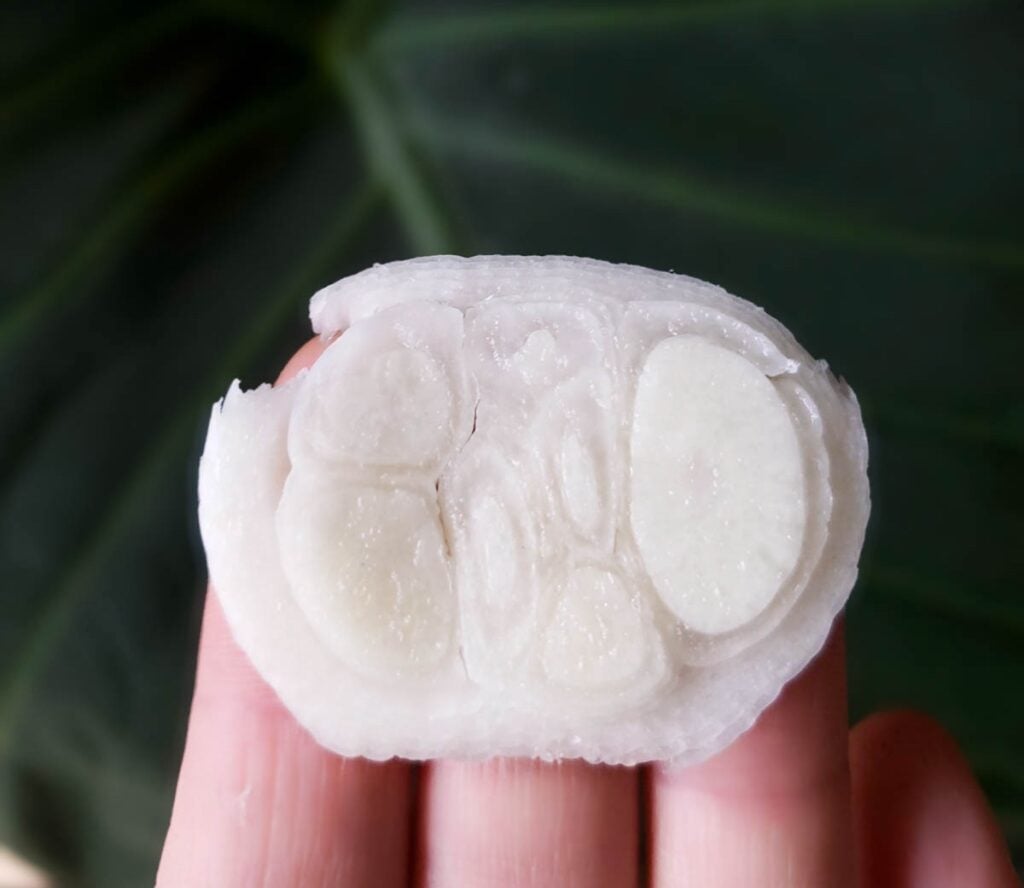
Garlic is typically planted in the fall, goes dormant over winter, resumes growth the following spring, and then is harvested in summer once it reaches full maturity. By then, the large garlic heads have developed individual cloves with protective papery skins, which enable it to last for many months in dry storage post-harvest.
On the other hand, spring garlic is smaller, more tender, and hasn’t formed tightly-wrapped cloves yet. Because of this, green garlic lacks the long term storage potential of its mature counterpart. Instead, it must be used fresh or be preserved within a week or two of harvest. We do a little of both!
RELATED: See this guide on how to harvest, cure, and store mature garlic to make it last as long as possible!
What does green garlic taste like?
Young green garlic is usually more mild and fresh-tasting than mature garlic. It offers a verdant onion or scallion-like flavor profile (but still has notable garlicky attributes). However, the longer it is allowed to grow and develop, the more classic sharp and rich garlic flavor will shine through. Many of our larger green bulbs taste just like mature garlic!
Where to Get Green Garlic
The best place to buy green garlic is at your local farmer’s market in the spring, or possibly from a small local grocery store. I personally haven’t seen it available at large chain grocery stories. Have you?
Or, you can grow your own! See our complete guide on how to plant and grow garlic here. While we typically like to let our garlic reach full maturity, we’ve had to harvest garlic prematurely for a number reasons over the years: due to disease like garlic rust, because we were moving, or to make space in a garden bed for another crop.
How to Prepare Green Garlic for Cooking
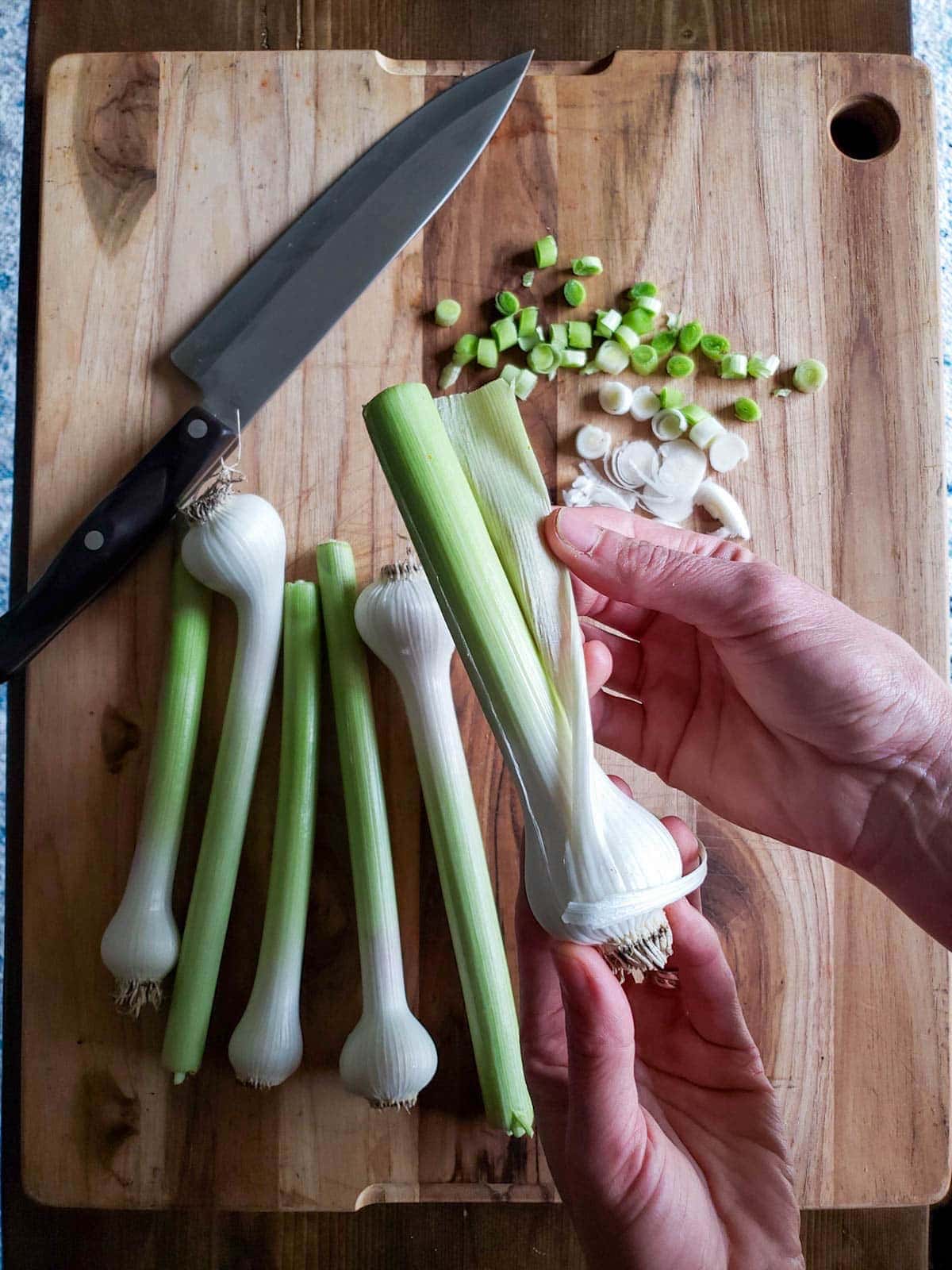
Because there are no papery parts, and no need to peel individual cloves, preparing green garlic can be much more quick and easy than mature garlic! The exact preparation required depends on how mature it was at the time of harvest, and how you’re going to use it.
- For small tender pieces of spring garlic, simply wash and cut it as you would prepare a green onion. Trim off the tough root end if it’s still attached. Again, both the bulb and tender green stalk is edible!
- Larger, more mature green garlic may have started to form a papery skin, so you may want to peel away a couple of the most tough outermost layers around the bulb and stem – similar to peeling an onion. Since we often make garlic powder with ours, we don’t bother peeling it much since it will just be dried and ground up anyway.
7 Ways to Use Green Garlic
1) Eat It Fresh
The bulb and tender stalks of green garlic can be used in the place of regular garlic, onions, leeks, scallions, or shallots in any recipe – raw or cooked! This includes sautéed with vegetables or stir fry, added to soups, sauces, pasta, egg dishes, and more. We love to use our young spring garlic in homemade fire cider, with roasted artichokes, easy garden tzatziki, and our favorite pesto recipe too.
Also consider saving the leafy greens or tough stalks in the freezer with other veggie scraps to later make homemade vegetable broth. Or, add them to infuse flavor into soup, rice, or beans while cooking, and then remove them before serving – like you’d use bay leaves.
It’s best to store fresh green garlic in the refrigerator, and use it within one to two weeks after harvest. Otherwise, see ideas to preserve it to extend the storage time below.
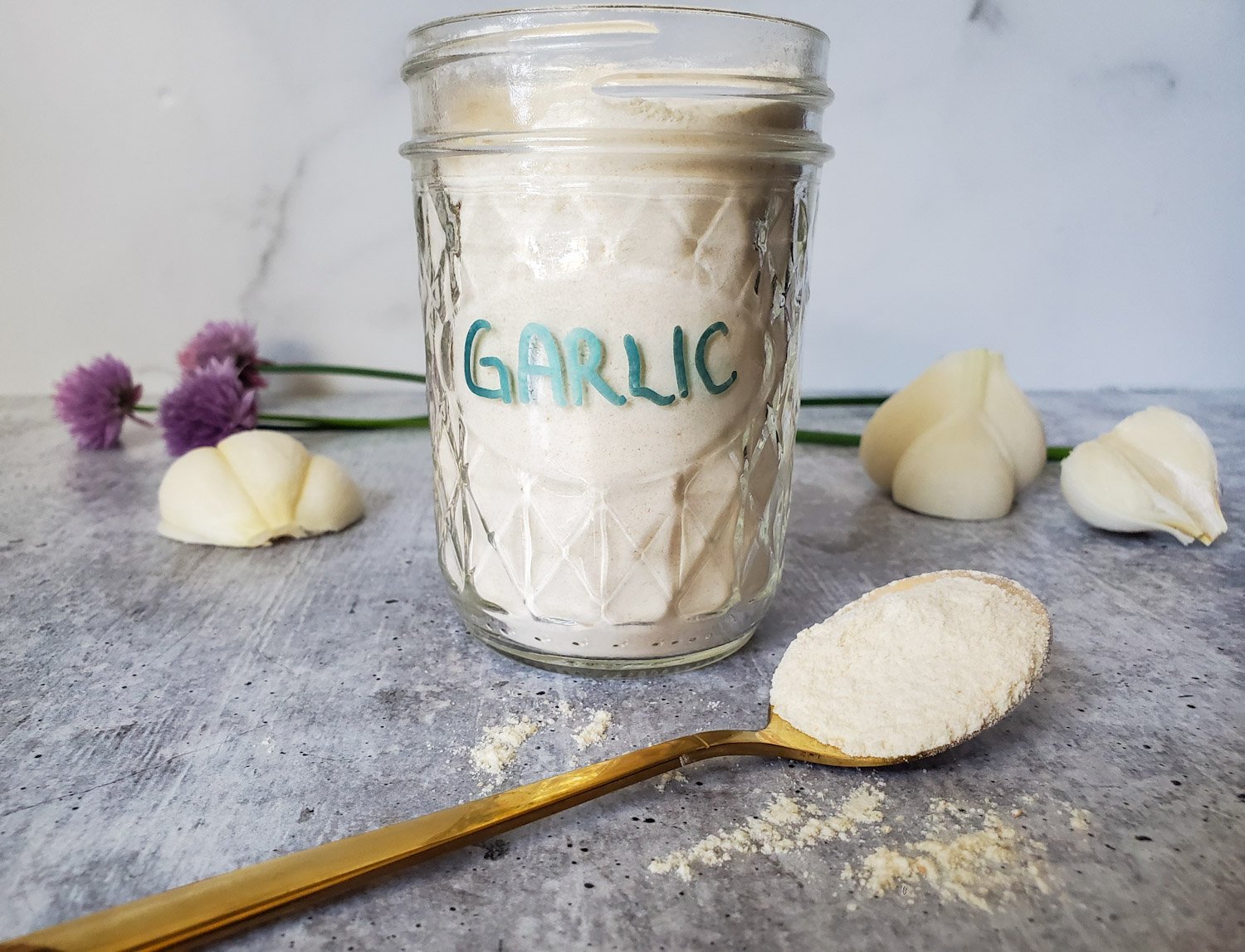
2) Green Garlic Powder
Making homemade garlic powder is my favorite way to preserve green garlic – or any garlic for that matter! It is easy to do, can be used with a variety of meals, and neatly condenses a lot of garlic into a small concentrated volume. You could also mix garlic powder with other spices to create your own seasoning blend. When done right, garlic powder stays good stored at room temperature for well over a year.
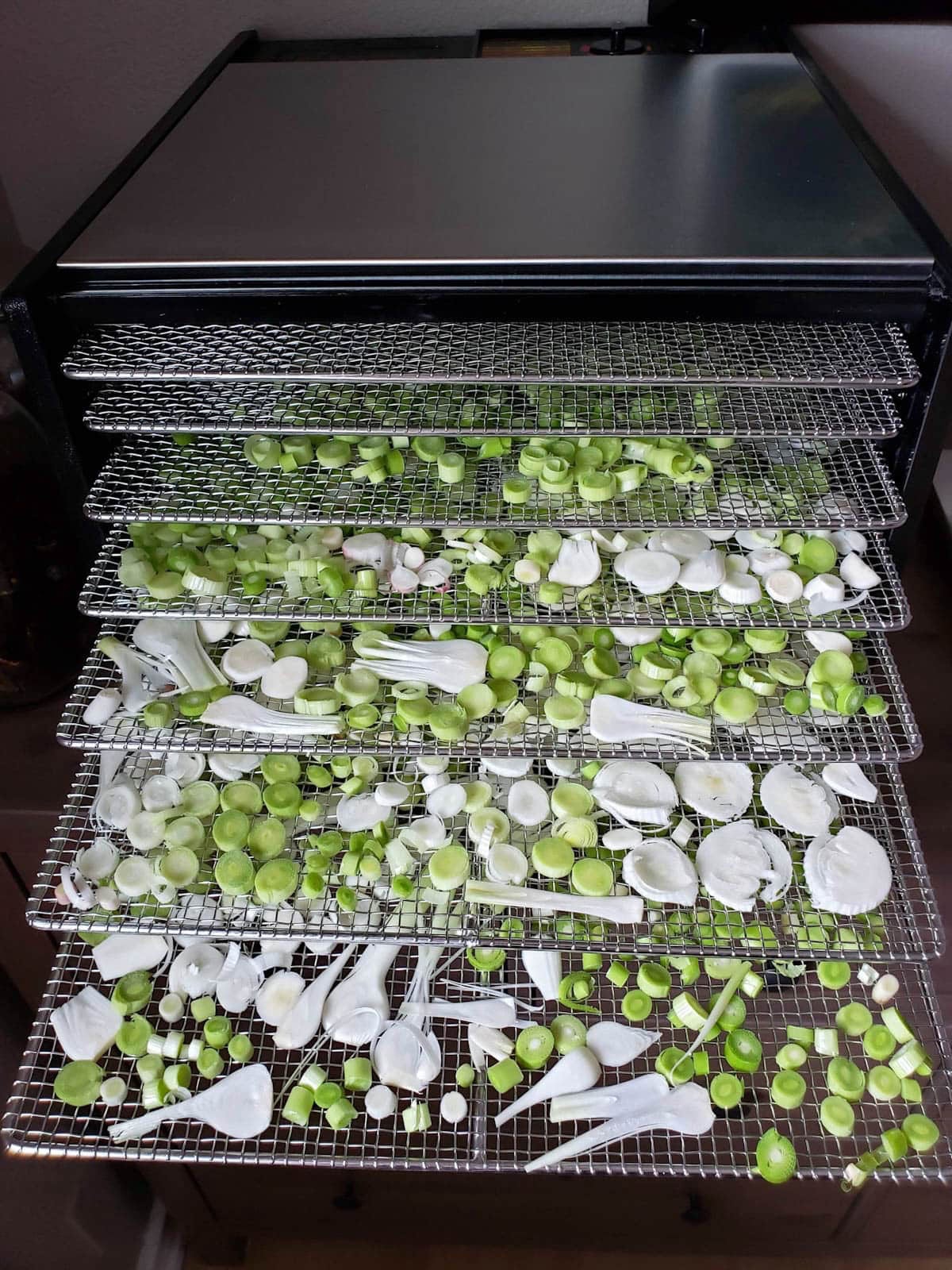
Learn how to make garlic powder in our step-by-step guide. In summary: thinly slice the garlic (or chop it up in a food processor) and dry completely in a food dehydrator. Next, grind into a fine powder using a Vitamix, coffee grinder, food processor, or similar. Store in an air-tight container.
3) Fermented
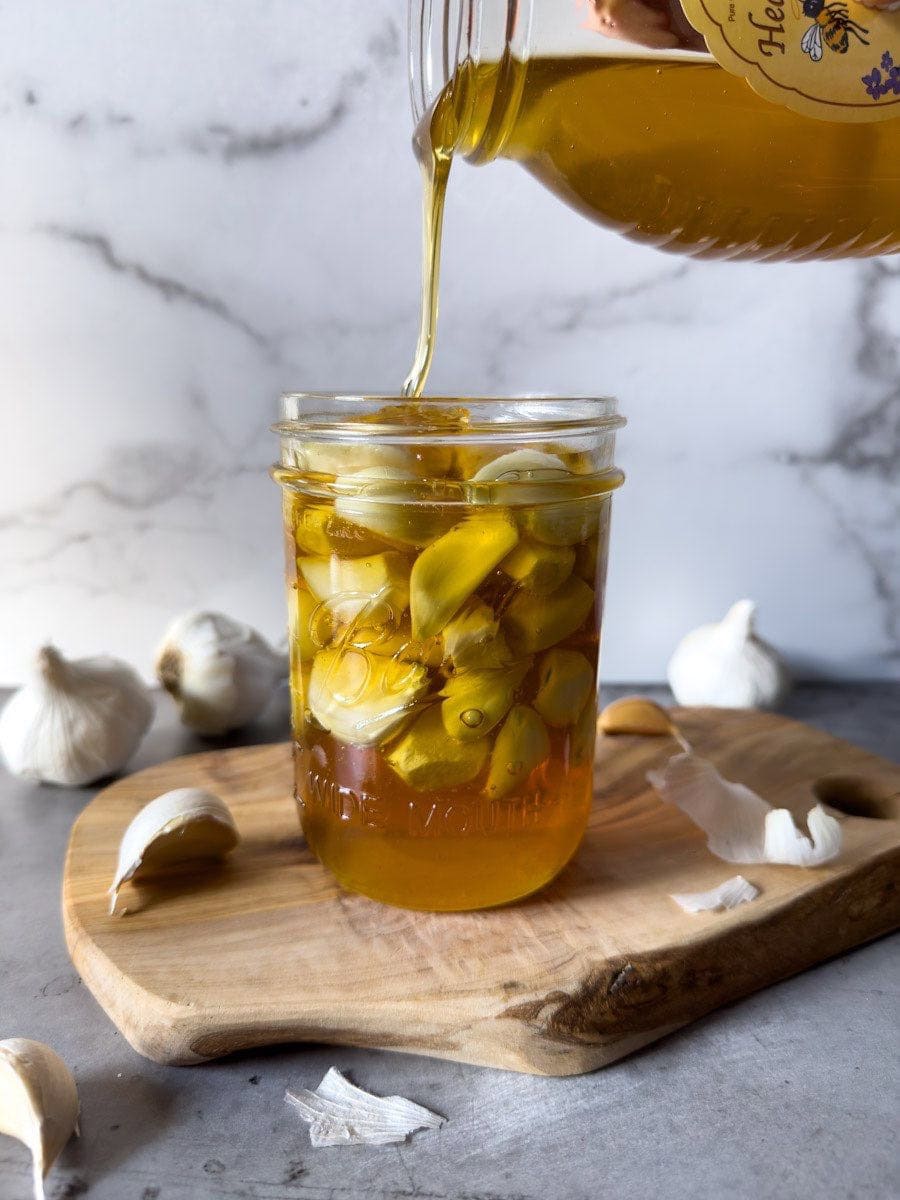
Up next: consider fermenting green garlic in honey! Fermented garlic honey is a simple natural health remedy commonly used to support the immune system, cardiovascular system, and digestive health as well as alleviate cold and flu symptoms such as coughs or sore throats. It’s a delicious way to preserve garlic and incredibly easy to make – the perfect project for beginners or experienced fermenters alike.
Or if you prefer a more tangy, savory, pickle-like fermented garlic, use a basic lactofermentation salt brine recipe like this one.
4) Roasted
Roasted green garlic is just as gooey and delicious as regular roasted garlic. I love to spread it on crusty homemade sourdough bread, on its own or with other sandwich fixings. It’s also awesome in hummus, sauces, soups, and more!
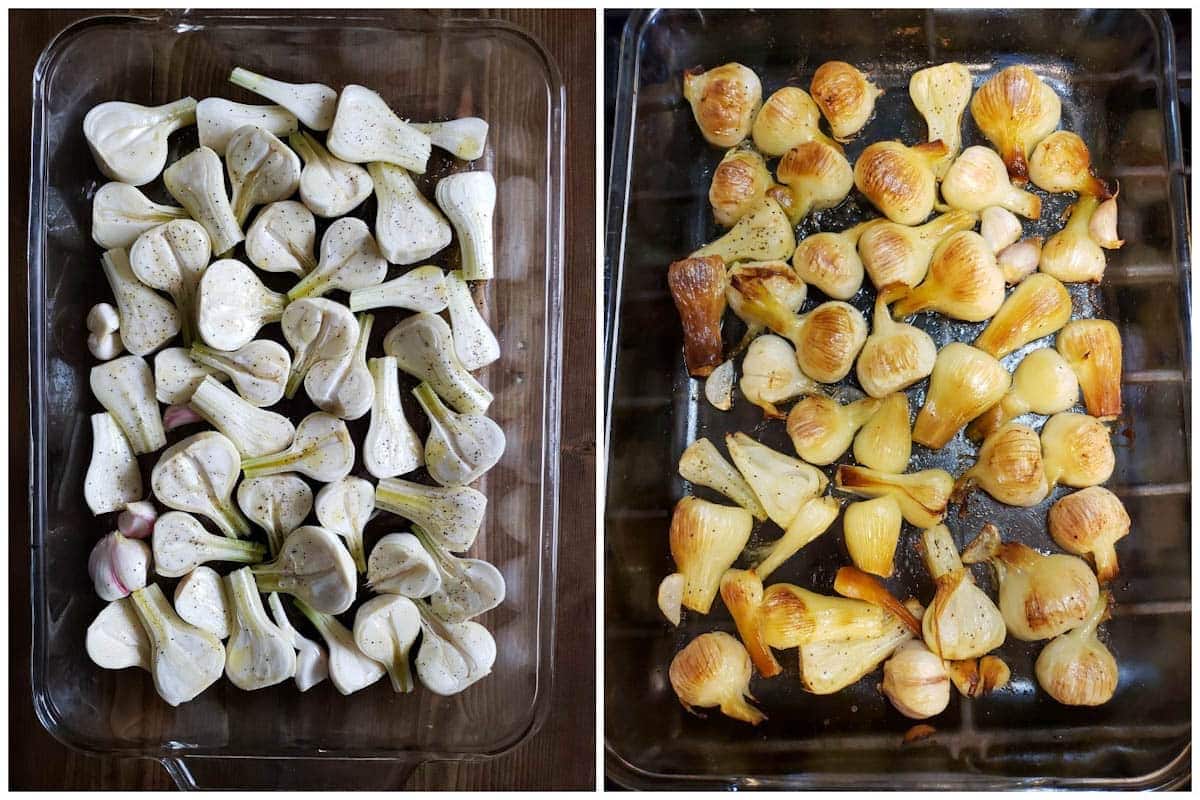
l like to roast garlic in a large glass baking pan (instead of the classic tin foil method). After peeling away any tougher outer layers, cut the garlic bulbs in half, drizzle with olive oil, toss to coat, and sprinkle with salt and pepper. Roast on 400F in the oven until it is golden brown and soft.
The time will vary depending on the age and size of your green garlic. For our larger, more mature bulbs, we found that roasting them for 20 minutes covered followed by 10 more minutes uncovered worked well. Flip or toss the pieces over once during baking to evenly roast both sides.
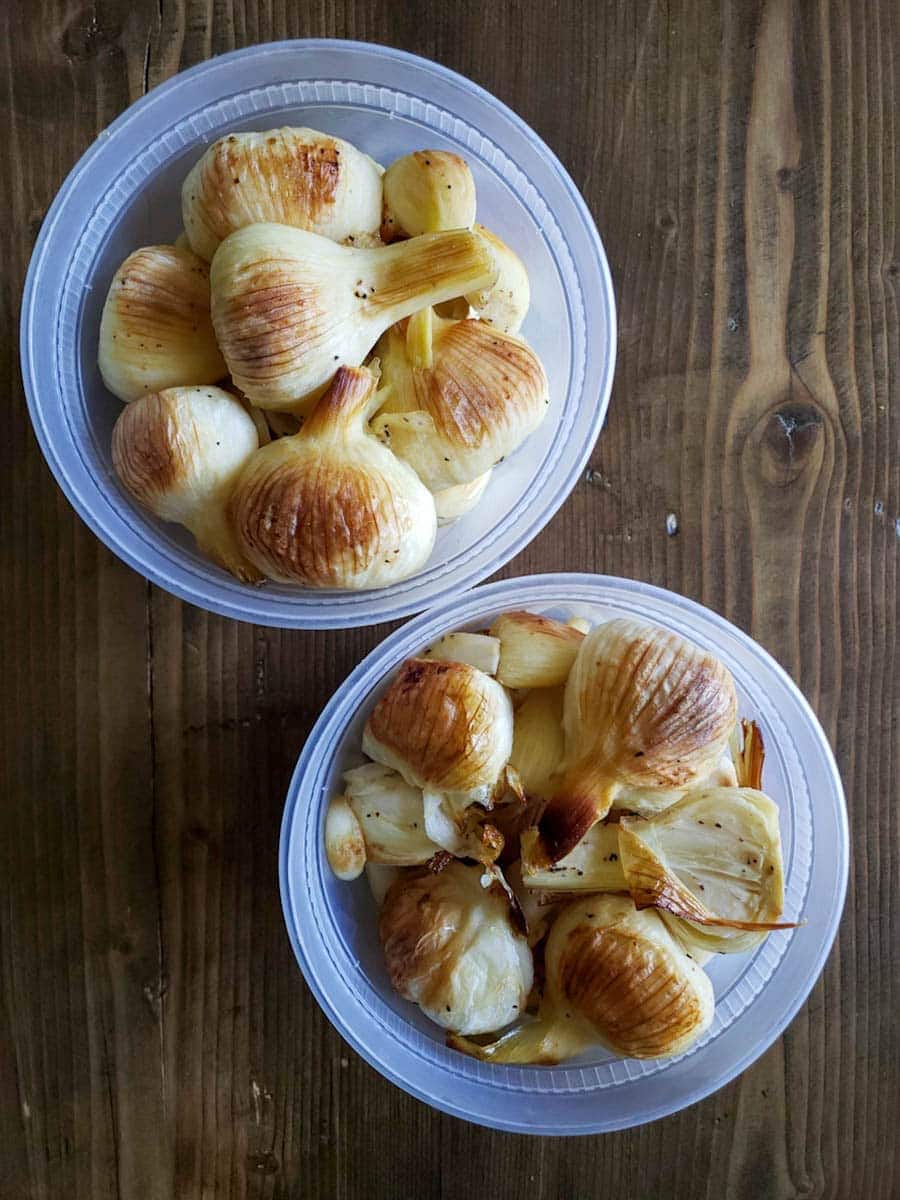
When done, you can enjoy it immediately, refrigerate for up to 5 days, or freeze it for later use – explained next.
5) Freezing Green Garlic
Freezing is a super quick and easy way to preserve garlic. It can be as simple as freezing whole raw bulbs, cut into pieces, or roasted and then frozen. We also like to mince garlic to freeze in ice cube trays with olive oil, like our frozen basil cubes.
No matter how you choose to freeze green garlic, store it in an air-tight freezer container with a lid that will effectively reduce air contact, which is important to prevent freezer burn!
To use large chunks of frozen spring garlic, you can let it defrost at room temperature before prepping (it will get quite soft) or simply grate it frozen. Frozen minced garlic can be added to dishes as-is, since it will very quickly defrost.
6) Pickled Green Garlic
Last but not least, you can pickle it! Pickled green garlic is a welcome addition to Bloody Mary’s, salad dressing, stuffed in olives, served with cheese and crackers, mixed with sautéed vegetables, or in hummus.
To pickle green garlic, cut and peel away any tough upper and outer portions, revealing the most tender middle parts. Pack into a jar with a vinegar-based brine and seasonings of choice. See our easy refrigerator pickling brine recipe here. It’s used for pickled peppers in this example but can easily be applied to a variety of veggies, including garlic.

What about Preserving Garlic in Oil?
While you may see garlic preserved in oil at the grocery store, it’s not something I necessarily recommend trying at home. If you do, proceed with extreme caution! Botulism organisms (naturally present in soil) are commonly found on garlic and can grow to dangerous levels in the absence of oxygen, such as in an oil solution.
To safely preserve garlic in oil, the garlic must be acidified first, explains a food safety expert from Oklahoma State University. Otherwise, it’s best refrigerate garlic and oil mixtures and use within just a few days.
And those are the top 6 ways to use green garlic.
I hope you enjoyed this lesson on green garlic and the related recipes! While I don’t necessarily suggest you go and pull out your whole crop of garlic early, I hope you get to try it sometime.
What do you think? Have you tried spring garlic before? If not, are you eager to now? Did I forget any tasty ways that you like to use it? Let me know in the comments!
You may also enjoy:
- How to Make Chive Blossom Vinegar + 8 Ways to Use it
- 5 Easy Ways to Preserve Garlic: Freeze, Dry, Pickle & More
- When to Harvest Onions and How to Cure Them for Storage
- DIY Container Herb Garden Planter + The Best Herbs to Grow
- Preserved Lemons Recipe (How to Make Salt Pickled Lemons)




38 Comments
Tammy Samsel
Hi, I planted garlic a long time ago (probably 10 yrs). Every year it comes up and I forget to dig it out before the stalks dye and I don’t know where to dig. I just dug it out because most of the stalks have died and disappeared. Most of the garlic were not formed. They are just round balls and don’t have many roots on them. When I cut it it doesn’t look like the picture you have. It’s solid and doesn’t have any clove formations at all. Is this green garlic? I tasted it raw and it has a very mild garlic flavor and is very good. I couldn’t find any other information about this and I’m so happy that I found this site. I was afraid to eat it before reading this article. Thank you
Aaron (Mr. DeannaCat)
Hi Tammy, hopefully you will finally start harvesting some of that garlic you planted as it has continued to reseed itself year after year. Going by your description, it does seem that you harvested some green garlic. However, it is surprising that there weren’t green stalks still attached to the garlic bulbs which is usually the case with green garlic… Let us know how you like it and how you end up using it.
Kelly
Hi Tammy,
I think you might be growing a different type of garlic to the regular clove forming sort. Try googling ‘solo garlic’ or ‘elephant garlic’ to see if it’s either of those. I’ve also grown it and it’s great for when you want a reasonable quanity of garlic but don’t want to peel all those individual cloves!
Unlike onions, garlic is ready to harvest when the first couple of leaves die off so you don’t have to wait for the whole top to die (and then lose the location of the bulb)!
Kelly
Katie Starin
We have grown garlic a few years now but this is the first I’ve heard of green garlic. Im so excited to try some. I have some that sprouted two stalks… Am I good to thin these this way? I’m not sure if they are connected below the dirt or just beside each other. I had some like this last But can’t remember if they were connected. Will this invite diseases underground? Great post!!
Aaron (Mr. DeannaCat)
Hi Katie, I am not sure if the two sprouts are from one clove or if two cloves got planted close to each other? Either way, weather you leave it or harvest it, I wouldn’t be too worried about disease. If the garlic was planted last fall and the leaves are fairly mature, you could harvest it as green garlic, if they are still fairly young it may be best to wait to see if the garlic will “bulb up” somewhat. Hope that helps and good luck with your bounty of garlic!
Marin Scotty
Thank you for writing such a great description of how to use green garlic. Fortunately here in Marin County at the local farmers markets twice a week we have great produce. I got a box recently with green garlic and haven’t worked with that much but now I’m starting to play around with it. Using it in my Korean barbecue recipe throwing some of the top greens into the marinade with the meat. Will roast some on the side after marinating The more tender portions. Looking forward to trying it later on today! Trying to learn some new things while under lock down from coronavirus.
Lara
I’ve wrestled garlic rust in the past and was disappointed with the loss of the crop. I have never heard of green garlic until now — so, thank you! 🙂 You’ve given me an option if I ever have the rust issue pop up again in the future!
Tracy Douthit
I’m going to try freezing mine and dehydrating for garlic power. Could you plant the unused (whole cloves) frozen garlic in next years garden? Would that work?
DeannaCat
No, you can’t plant something once it has been frozen – It will likely turn to mush a bit once it is defrosted. Also, green garlic isn’t mature enough to be used as seed for future garlic crop. It has to be fully developed with a papery outer clove, dried, and then planted later. I hope that helps!
Nicolle
Is it bad if my garlic stalks have started to lean? We’ve been getting quite a bit of rain in zone 7 and they’re leaning. I just had to dig one up because the stalk broke off while I was weeding. Only 4 or 5 cloves had just started to form.
DeannaCat
Nah, it’s not a huge deal. If you want, you can top off with a very thin layer of fluffy compost and lightly pack it around the bulbs to stand them more upright. Don’t bury the stalks though! Especially if you’ve had a lot of rain… Don’t want those babies to rot.
Lilia Beltran
Bought garlic to start but time got away from me and they are still in a paper bag. Hoping they survive the summer to plant in the fall. These roasted green garlic look divine!
DeannaCat
As long as they don’t get soft and rotten, go for it! Even if they start to sprout a little green for you!
Alicia
Hi Deanna!
Thank you for this post, and thank you for explaining the importance of commenting on the blog. I didn’t realize our comments were directly supportive!
I can tell I will be referring back to this post (and others, of course) often. We love garlic here. I bought 5oz of powdered garlic at the market recently and the cashier commented that “I must really love garlic”. Well I do, and 5oz didn’t seem like that much…
I am growing onions currently with plans to grow garlic starting in the fall. The grass right outside my garden bed has a serious rust-looking infestation. I’ve pulled some of it out and kept a close eye on the onions, but it doesn’t seem to be spreading. I assume there are other, non-allium specific rusts? Do you know for sure?
One more question: we have pet donkeys that would love to eat my vegetables. Any idea if it’s a bad idea to feed them plants infested with fungal diseases like rust or powdery mildew? Would the fungi survive the digestion process, do you think?
Thanks for all your generous know-how!
DeannaCat
Hey Alicia! So, I believe there are many types of “rust” or reddish types of fungus, but garlic rust is specific to the allium family only. I can’t say for sure, but I don’t think the stuff on your grass will impact your onions and garlic. Especially if they aren’t touching. For the donkeys (it is ridiculously cute that you have these, by the way!) I really don’t know much about them… But with our chickens for example, we do avoid feeding them diseased plants. Since they have a “crop” that can get fungal disease and infections, we are extra cautious. My gut instinct says if it has just a tiny bit, it probably isn’t a big deal, but I wouldn’t feed any animal anything super diseased. I hope that helps!
Haley
Amazing info!!! Thank you for that extra push on your last insta post to go check out your blog and comment on what we read. Because of that I choose to subscribe to your news letter and look forward to reciving the garden plan kit! Unfortunately my garden is mostly planted this year but I will most likely start using it with my fall crops!!! Love your images and your amazing write ups!!!
DeannaCat
Well thank you for being here! I truly appreciate it. Where are you located? It sounds like you may be a lucky on like us, that can start fall crops and grow through the winter?
Amy
HI! This was SO helpful! Thank you!!! Do you find that garlic (green, roasted or otherwise) loses some of it’s flavor after it has been frozen? I made a roasted garlic butter last year and after it was frozen, the garlic flavor had almost disappeared while all other herbs in the butter were unchanged. I am not sure if it was something with the butter, the garlic, or user error :).
DeannaCat
Hi Amy! Interesting observation! That isn’t something we have come across specifically, though over time various flavors can get a stale in the freezer – but usually many many months or a year later. Was it a strong garlic flavor to begin with? If you were using green garlic, it is sometimes less overtly “garlicky” than mature garlic to start. Anywho, I’m not sure that is helpful or not – but I am glad you liked the article!
Vicky
Do you purchase new seed garlic when you have disease problems like the rust?
DeannaCat
Yes. We typically buy new seed garlic each year anyways, just because we like to try new varieties… and use all the garlic we grew 🙂
Zipporah Scicchitano
Thank you! This was so informative for me. I had no idea garlic normally grows for that long, nor that you can eat it green. We love garlic over here so I’m going to plant some this year. And watch for rust. I’m guessing if I plant it in a sunnier and dryer area of our yard we can maybe escape that.
DeannaCat
You’ll probably be just fine. Garlic rust isn’t alllll that common – but we get a lot of powdery mildew here too, so I am not surprised rust likes it here too. You may be able to start some asap and harvest them green, but otherwise I suggest ordering your garlic seed this summer and planting it in the fall at the “standard” time to do so. Stay tuned for the more detailed garlic growing post!