

7 Best Easy Annual Flowers to Grow In Any Zone (With Photos)
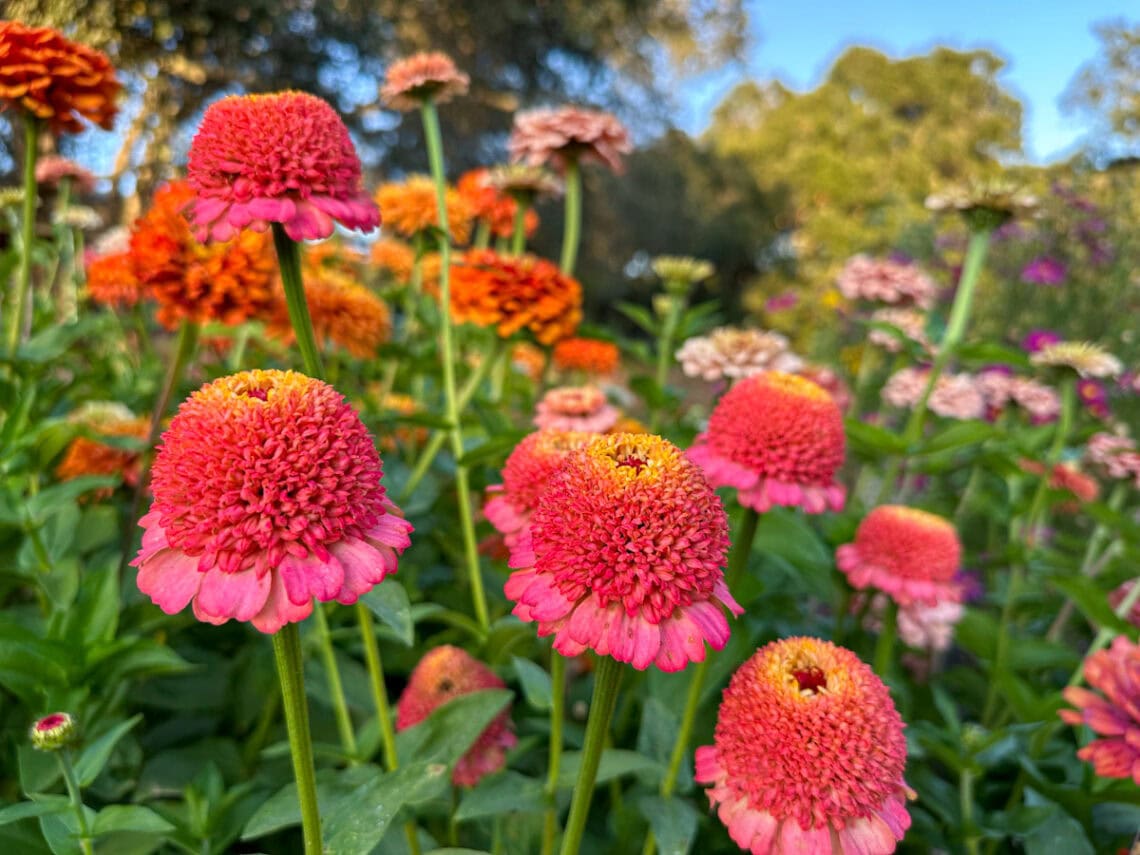
Here are 7 of the best annual flowers to grow in any zone, including my top favorites to plant in our garden every year! This guide will cover key growing tips, benefits, uses, and our go-to varieties of each one.
Every flower on this list is low-maintenance, easy to grow from seed, and does well in containers. They all make excellent companion flowers in a vegetable garden – attracting pollinators, birds, and other beneficial insects. Plus, flowers bring a delightful pop of color, beauty, and whimsy to any garden space!
If you don’t want to start from seed, you should be able to find most of these flowers at your local nursery in the spring too.
This post was originally published in February 2020 but significantly updated since.

Would you like to save this?
Disclosure: Homestead and Chill is reader-supported. When you purchase through links on our site, we may earn an affiliate commission.
Looking for flower seeds? Don’t miss the Homestead and Chill Prized Pollinator Pack – our very own flower seed collection that we curated with High Mowing Organic Seeds!
What Are Annual Flowers?
Annual flowers complete their entire life cycle – from seed to flower and back to seed – in one growing season. The original plants won’t continue to grow or come back the following year, though some may self-seed to produce new plants (aka volunteers). Therefore, annual flowers must be replanted each spring in most climates.
All the flowers on this list are most commonly grown as annuals, though a few can persist as short-lived perennials in warmer, frost-free zones (9-11) including nasturtiums and calendula.
Starting Annual Flowers from Seed
Each flower on this list can either be started from seed indoors, or directly sown outside in spring once the risk of frost has passed. We start most of our annual flowers indoors to get a jump start on the growing season, which means more blooms and color in the garden sooner!
To start indoors, sow flower seeds in containers of fluffy seed-starting mix about 5 to 6 weeks before the last spring frost date in your zone. Use a seedling heat mat to help encourage quick germination, keep the soil evenly damp but not soggy, and provide ample bright light (e.g. a grow light) to prevent them from getting leggy. See our complete guide on starting seeds indoors for more detailed tips.
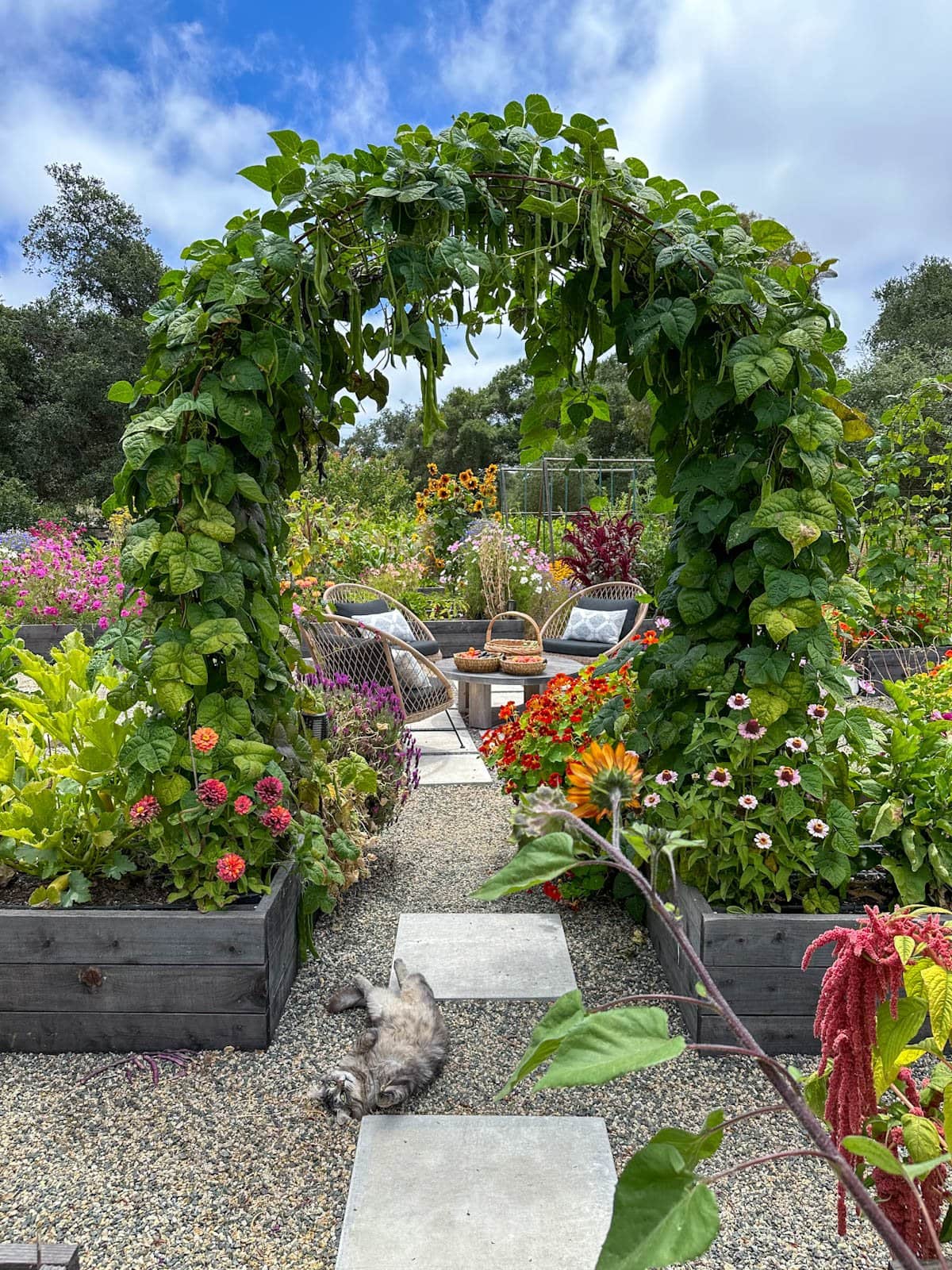
You can transplant seedlings outside once the risk of frost has passed, but be sure to harden off indoor seedlings first to prevent transplant shock! I like to tuck annual flowers into almost every corner of our DIY raised garden beds, and between vegetable plants where there is space.
1) Calendula ~ Calendula officinalis
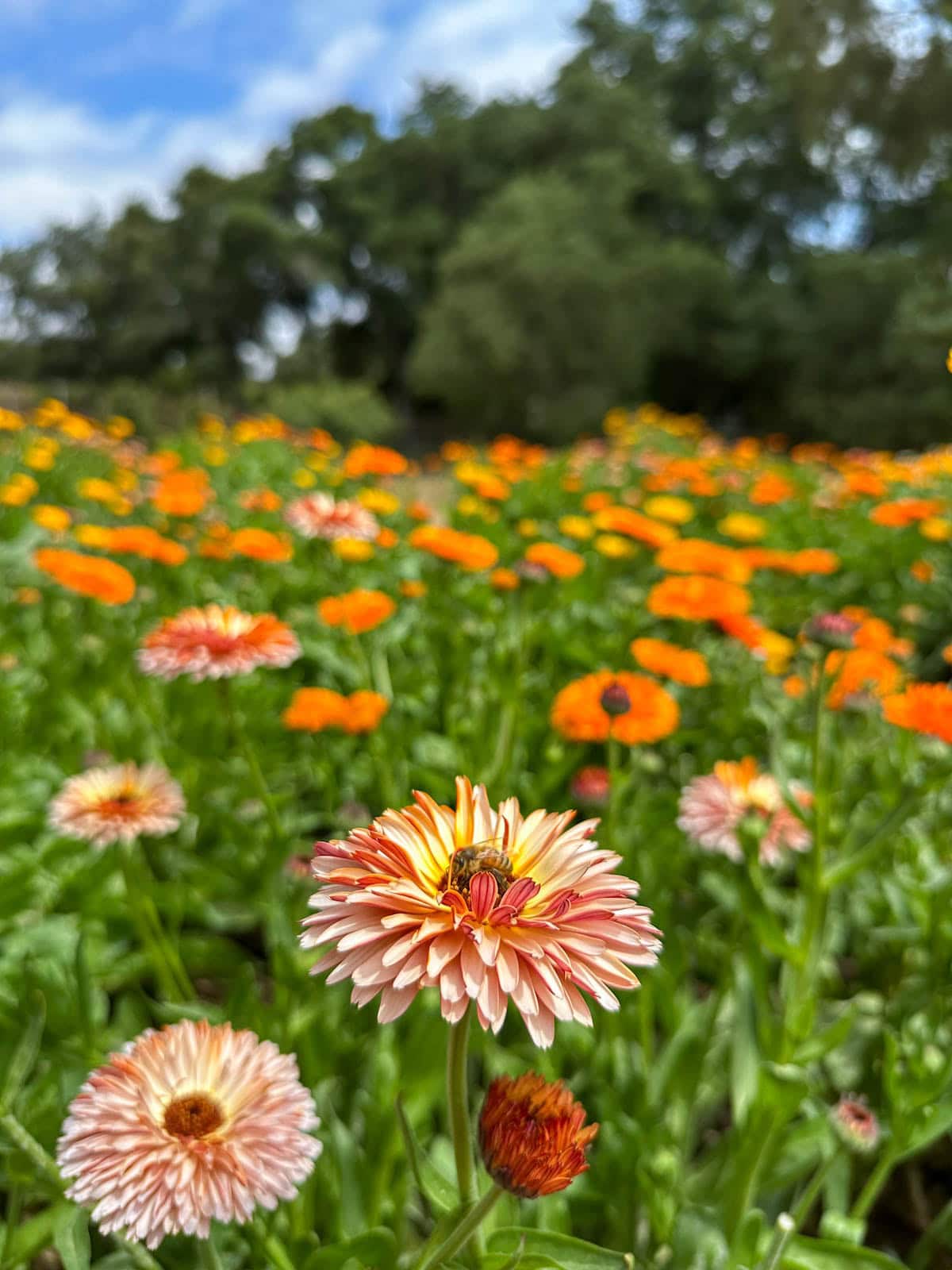
Cheerful and daisy-like, calendula is one of the best all-around annual flowers to grow. It’s beautiful, boasts a long blooming season, and has SO many wonderful uses. Calendula is especially renown for its ability to soothe skin issues.
Calendula is sometimes referred to as “pot marigold” but don’t accidentally confuse it with true marigolds, such as french marigolds. Marigolds are on this list too, but are distinctly different and not nearly as medicinal in nature.
Some of our favorite calendula varieties include: Resina, Pacific Beauty, Strawberry Blonde, Pink Surprise, Oopsy Daisy and Zeolights.

Benefits of Calendula
- Calendula flowers attract bees and butterflies while repelling pest insects.
- Calendula is a highly medicinal and edible herb with many wonderful uses beyond the garden – including in the kitchen, natural medicine, and skin care products.
- We make homemade calendula oil and calendula salve that can help heal rashes, burns, psoriasis, eczema and more. It’s a star ingredient in our organic skincare line for a reason!
- According to the Chestnut School of Herbs, calendula tea can ease reflux, sore throats, heartburn, and IBS.
- I also like to use calendula petals as a garnish to add a beautiful pop of color to a variety of dishes such as salads, beverages, spring rolls, or flower-infused ice cubes.

Tips on Growing Calendula
- Direct sow calendula seeds outdoors in spring after the last frost, or start seeds indoors up to 6 to 8 weeks before the last frost. (We start our calendula indoors.) In places with mild winters, calendula can be grown year-round!
- Once planted outside, calendula are fast-growing and will often self-seed (especially if you don’t harvest the flowers). That means they’ll come back as volunteers year after year.
- Calendula is not picky about soil type, and actually thrives in poor or sandy soil. Some of our volunteer calendula plants grow happily in gravel!
- Calendula is drought-tolerant and grows best in full sun, though partial shade can be beneficial in places with exceptionally hot summer weather.
- Expect prolific blooms from calendula in spring through fall. Pro Tip: Don’t be shy about harvesting the flowers. The more you pick, the more they’ll bloom!
RELATED: Learn even more about how to grow and use calendula here, including tips on how to harvest, dry, and use the flowers for natural skincare and more.
2) Sunflowers ~ Helianthus
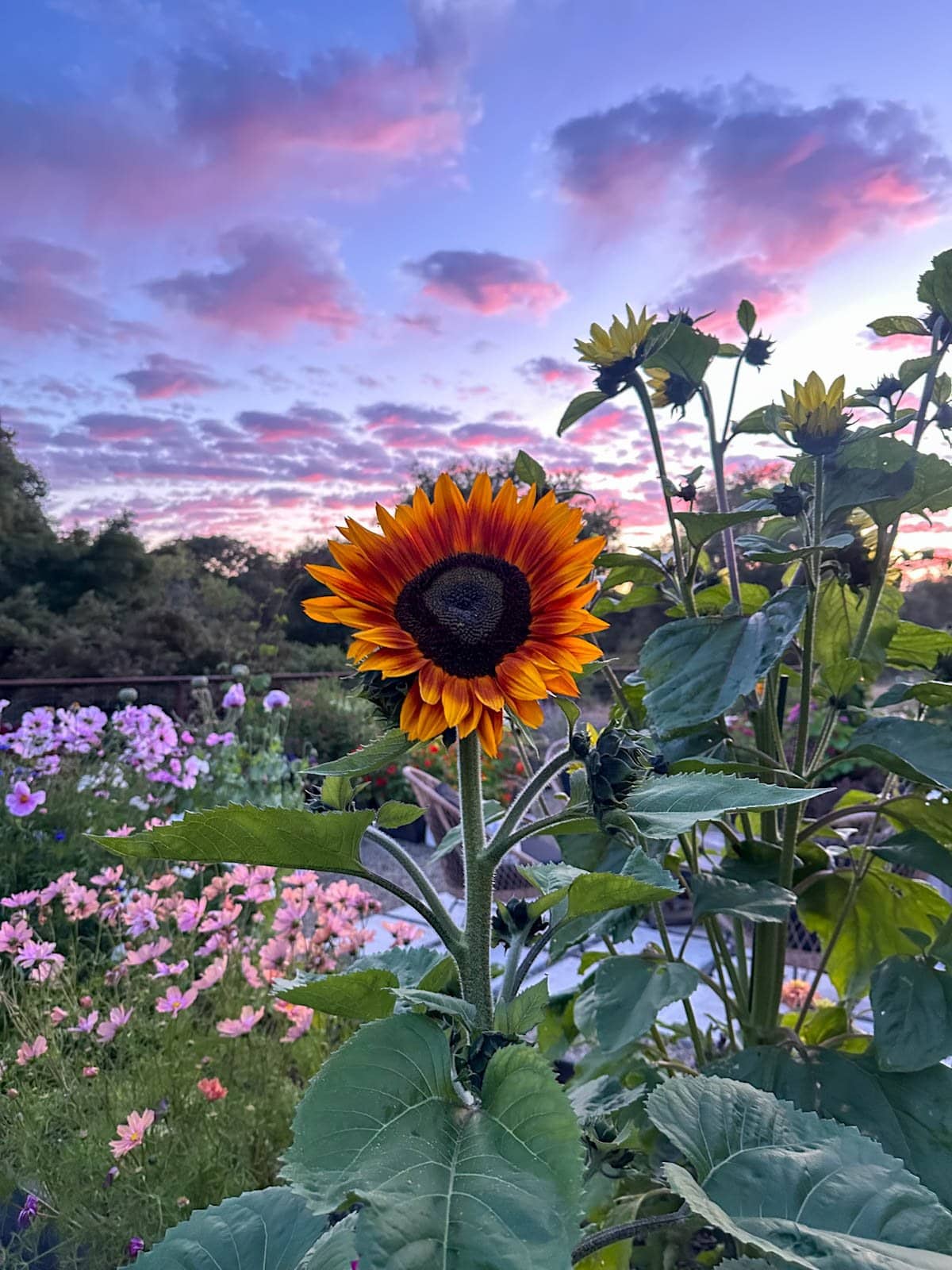
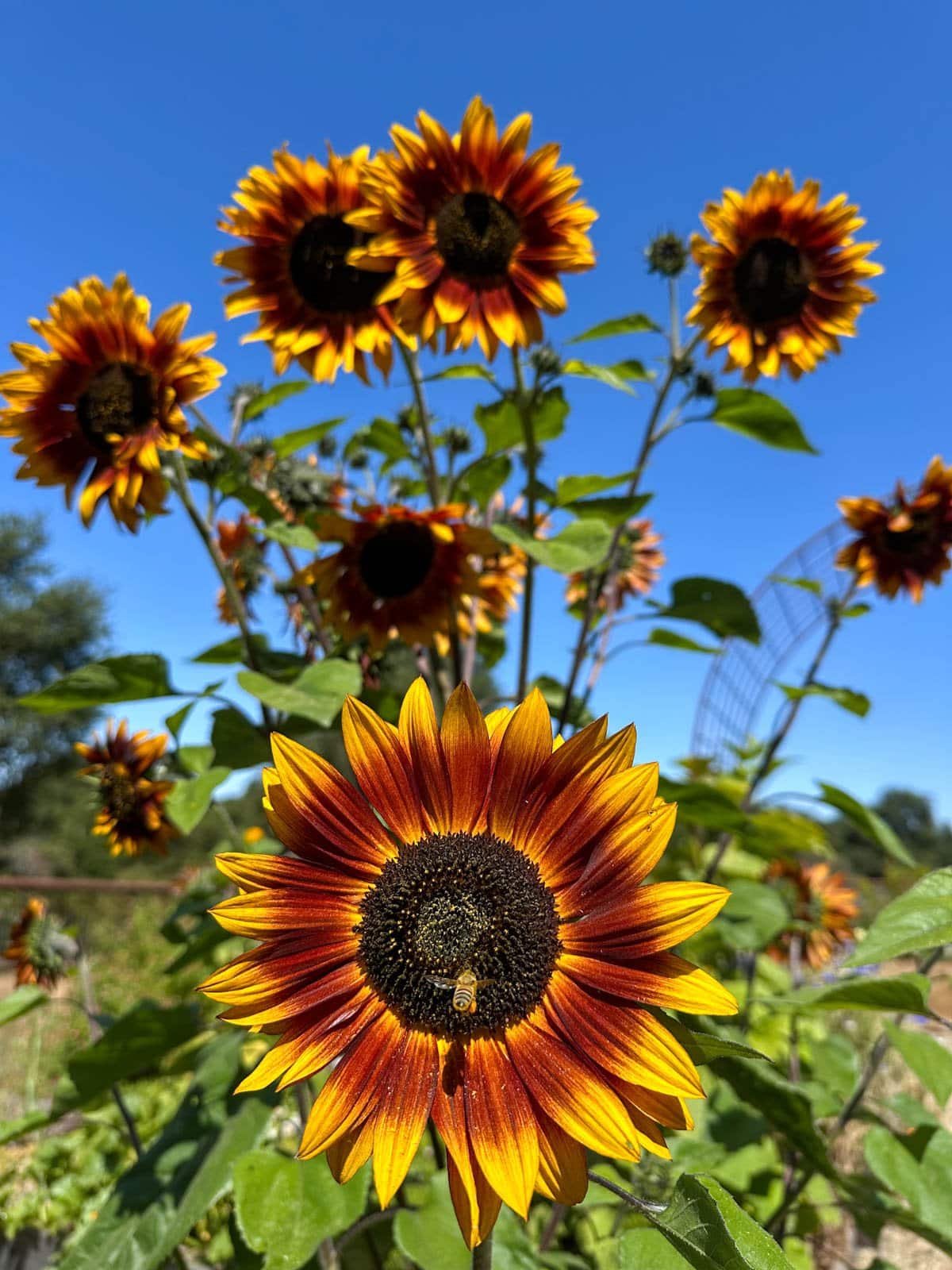
Who doesn’t love sunflowers? Birds, bees… I know I do! These big cheery flowers always bring a smile to my face. Sunflowers come in a wide array of sizes, shapes, and colors. Personally, I’m a sucker for multi-headed or branching sunflower varieties, which offer an extended season of beautiful blooms and even more seeds per plant.
We love these sunflower varieties: Goldy Double, Autumn Beauty, Evening Colors, Rouge Royal, Lemon Queen, Mammoth, Snack Seed and Velvet Queen. Or, check out this awesome variety pack of over 15 different sunflower types.
Benefits of Sunflowers
- With their wide open flower structure, sunflowers provide ample easily-accessible pollen that bees go bananas for. Pro Tip: avoid pollen-less sunflower varieties if you want to feed the bees!
- Sunflower seeds are great source of food and nourishment for wild birds. Our chickens also love pecking at spent sunflower heads near the end of summer.
- Wildlife aside, certain sunflower varieties produce big meaty seeds that are ideal for human consumption too, like these “Snack Seed” or Mammoth varieties. You can also grill and eat whole sunflowers heads!

Tips on Growing Sunflowers
- True to their name, sunflowers prefer to be planted in full sun. Fun Fact: did you know the face of a sunflower moves throughout the day to follow the path of the sun? It is called heliotropism. So keep that in mind when you choose your planting location – they may turn their backs on you!
- Sunflowers often grow best when directly sowed outside, though you can start seeds indoors too. To avoid getting too large or root-bound (which can stunt them), I like to start my sunflowers indoors only 3 to 4 weeks before transplanting.
- Sunflowers vigorous roots may stunt the growth of nearby plants including beans, potatoes, rhubarb and onions. However, we always plant sunflowers in our raised garden beds amongst our veggies and haven’t had issues – minus them casting some unwanted shade at times.
- Some sunflowers may require staking for support, especially in windy conditions or before they’re well-established.
- Most sunflower varieties are drought tolerant, so don’t overdo the water!
- Sunflower seeds are ready for harvest when the plant foliage dies back, flower petals fade away, and the seeds look plump. Seed-save from spent dry flowers at the end of the season.

RELATED: All the flowers on this list are also easy to save seed from, making them both affordable and sustainable! Learn how to save annual flower seeds here.
3) Zinnia
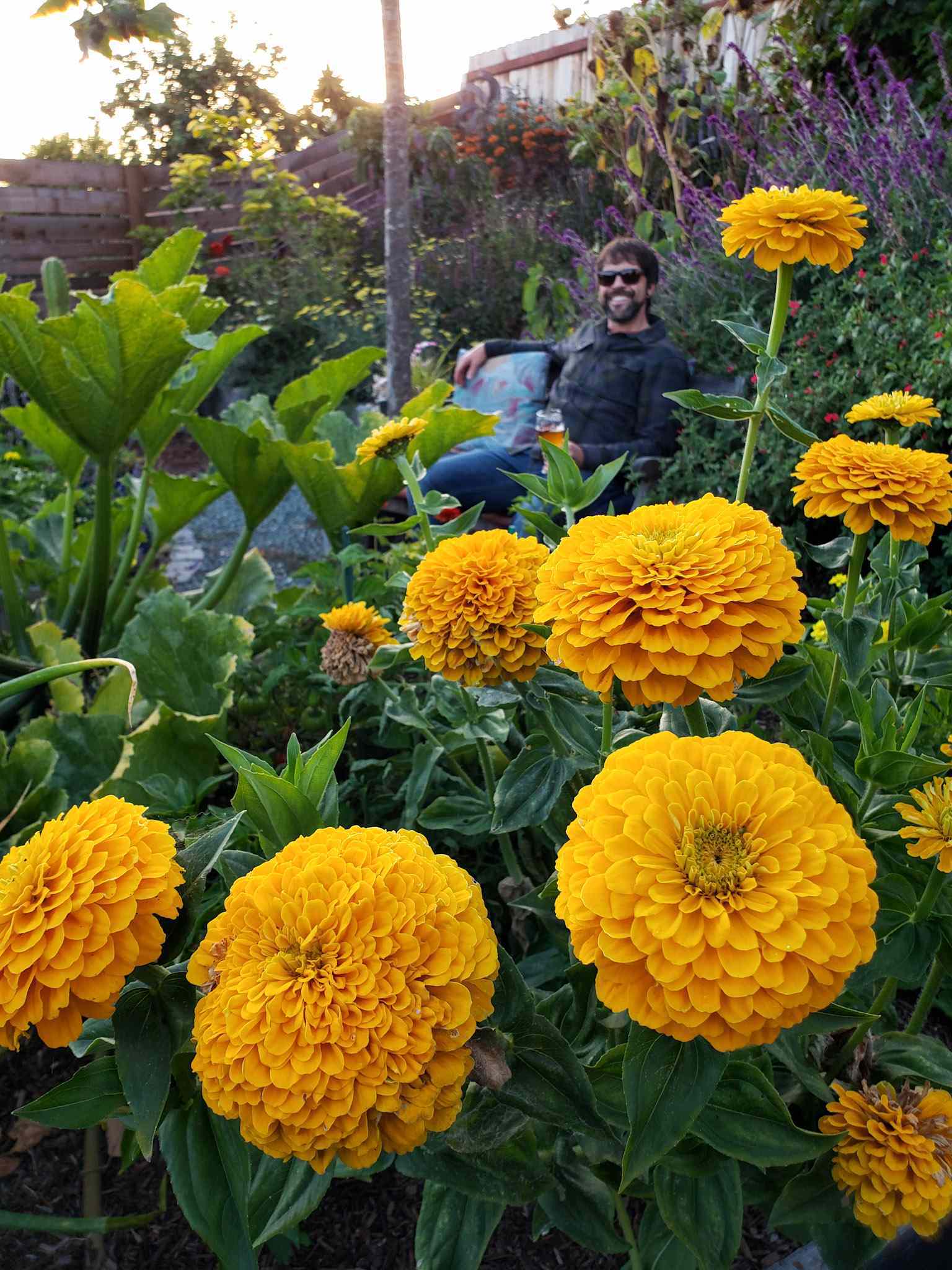
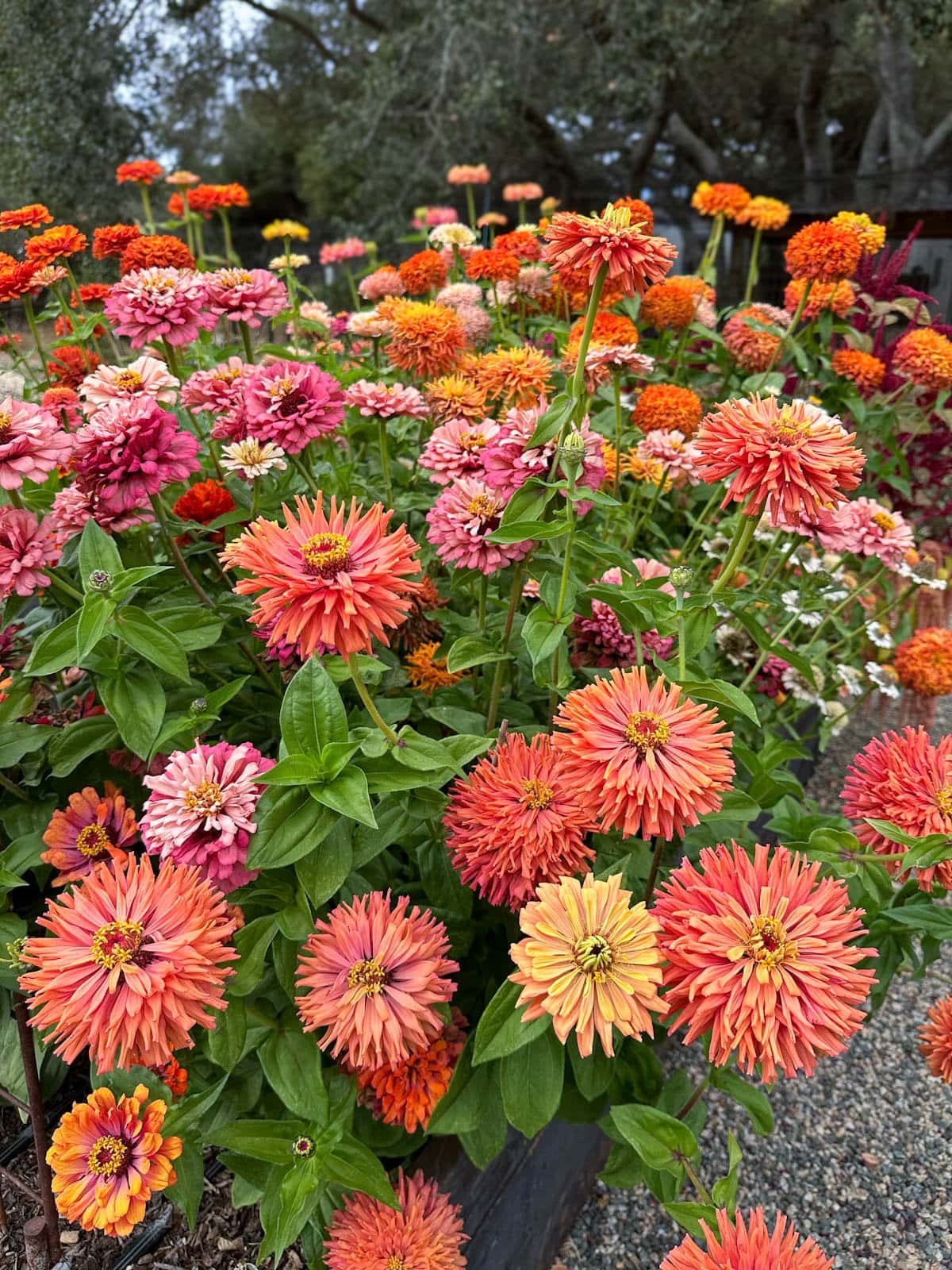
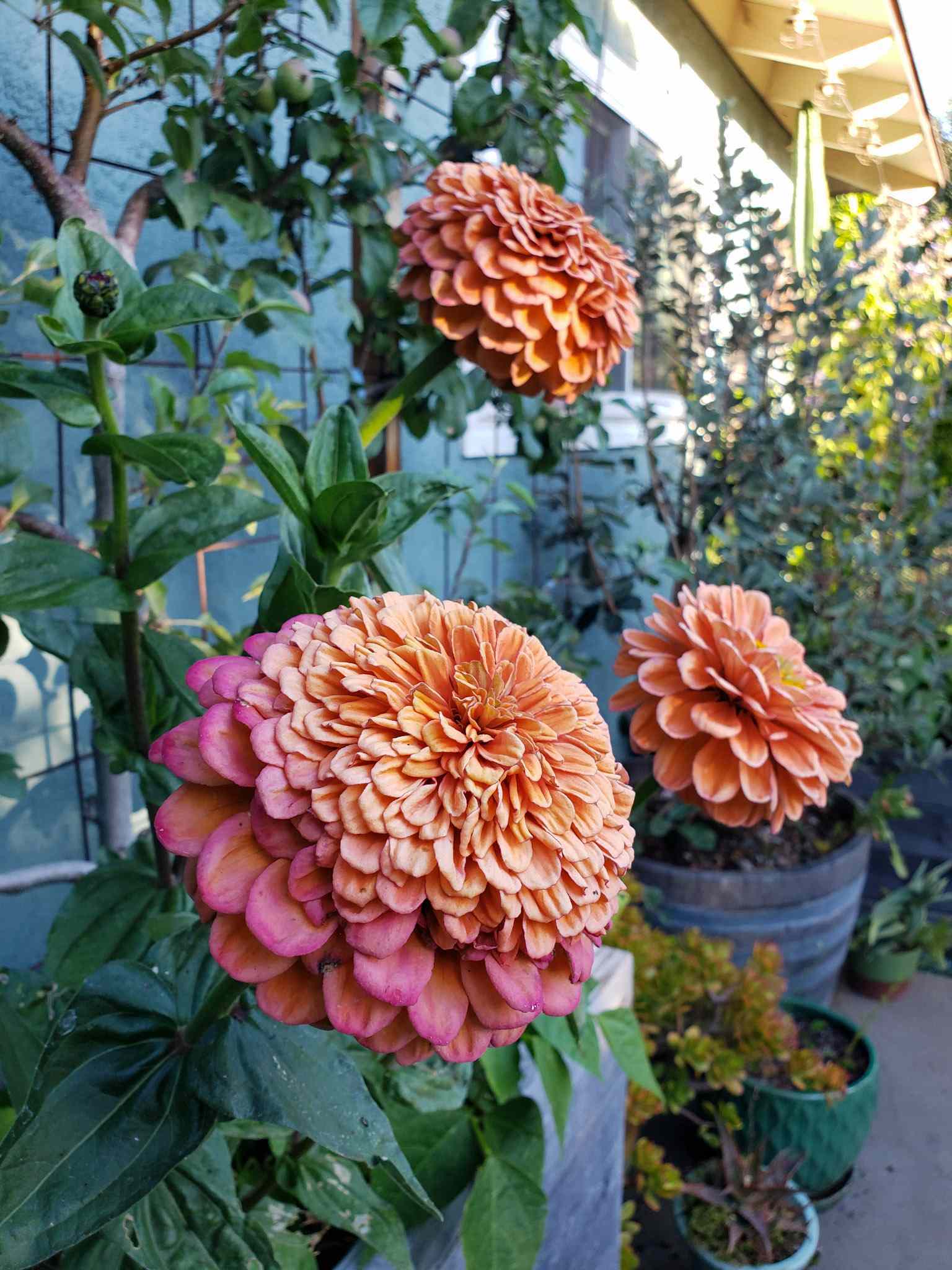
Zinnia flowers are gorgeous pouf balls of vibrant color. They’re another all-around favorite in our garden! Some zinnias grow on smaller, compact plants while others can reach several feet in height. They come in various shades of pink, red, purple, yellow, and even lime green.
My favorite zinnia varieties include Giant Coral, Giant Yellow, Benary’s Giant (various colors), Aurora, Queen Lime, Giant Purple and Ballerina. For smaller spaces, try these adorable dwarf Thumbolina or Zinderella zinnia (shown in the feature photo at the top of this article!)
Benefits of Zinnia in the Garden
- Zinnia are an absolute favorite source of nectar for monarch butterflies. Bees, bumblebees, and hummingbirds enjoy their nectar and pollen too.
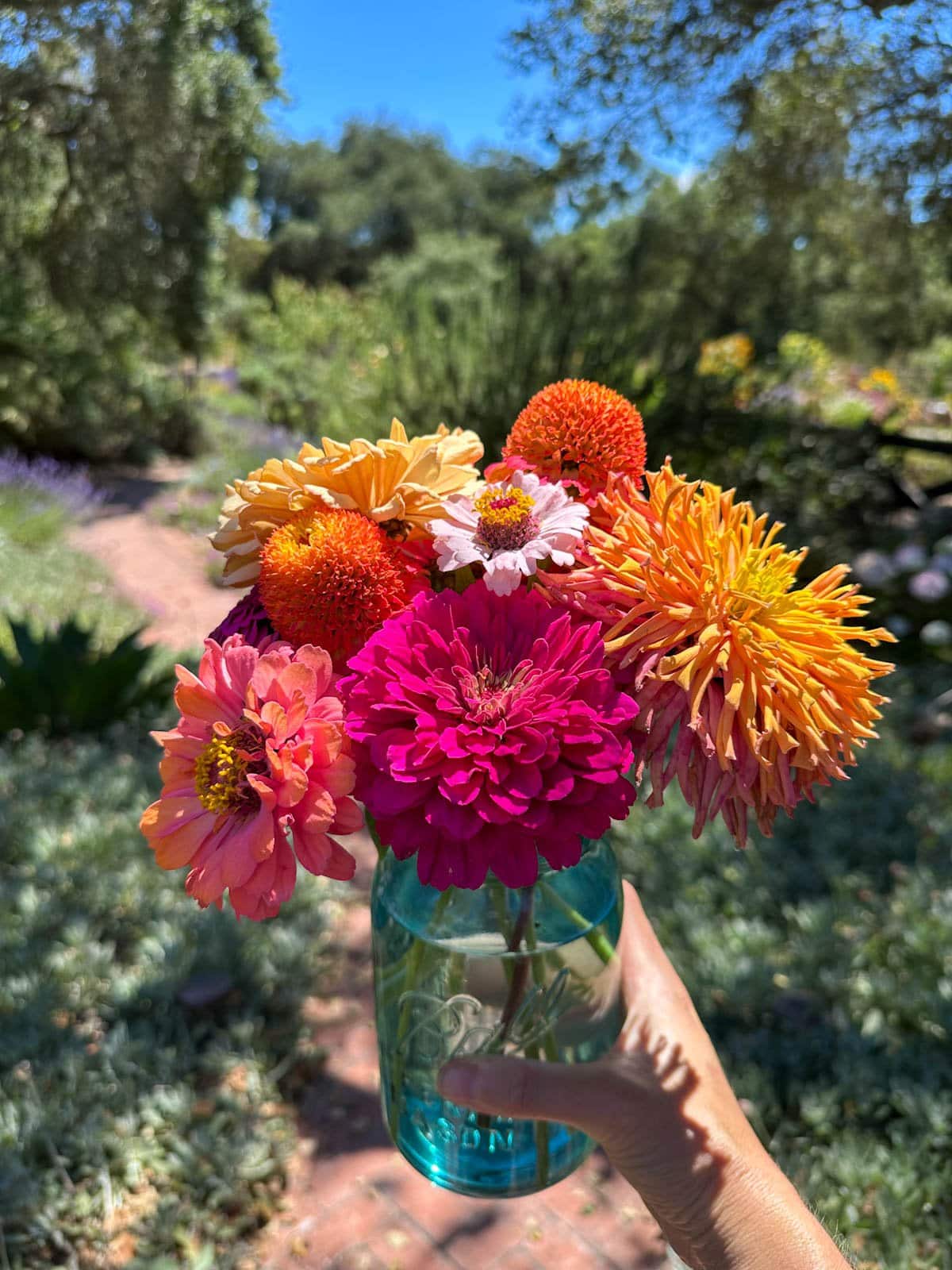
- Zinnia’s tall erect stems make them excellent cut flowers. We usually have several vases full of zinnias throughout our house in summer!
PRO TIP: For long-lasting cut flowers, wait to cut zinnias until the flowers are fully open and the stems are firm (they shouldn’t easily wiggle on top when you jiggle them from below). If cut too young, zinnias will quickly wilt in a bouquet or vase.
Tips on Growing Zinnia
- Some resources suggest only direct-sowing zinnia seeds outside, saying that they don’t tolerate transplanting well. However, we always start our zinnias from seed indoors without issue! Just be sure to transplant them out when they’re still fairly small (after being properly hardened off) so they don’t become root bound or stunted.
- Zinnias like full sun but will tolerate a little shade (though they may bloom less).
- Plant zinnias in well-draining soil that is rich with compost or other organic matter.
- One bummer about growing zinnias is their susceptibility to powdery mildew, which is rampant here. Thankfully, some varieties are naturally resistant so we try to plant those. See our top tips on managing powdery mildew here.
4) Cosmos
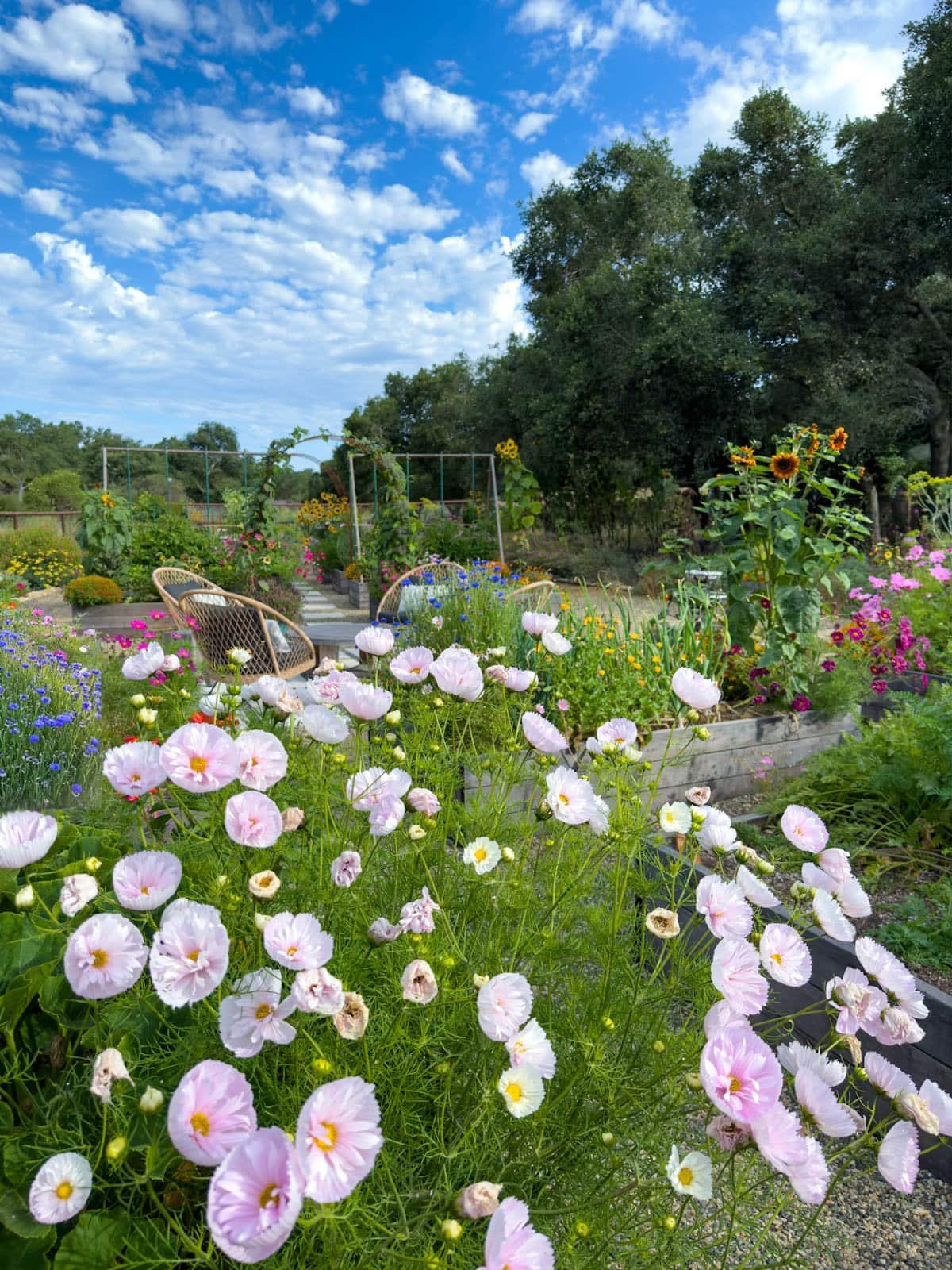
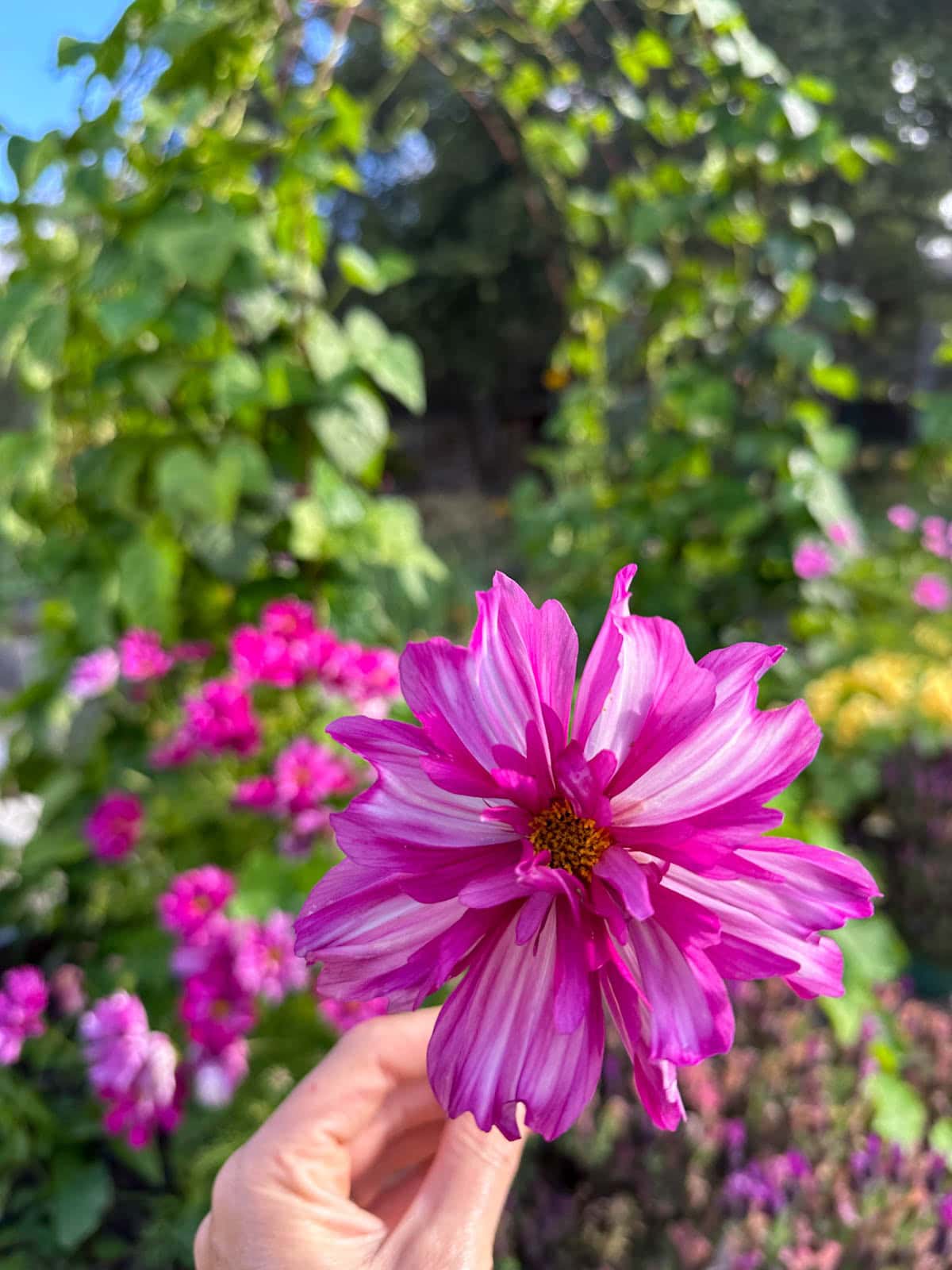
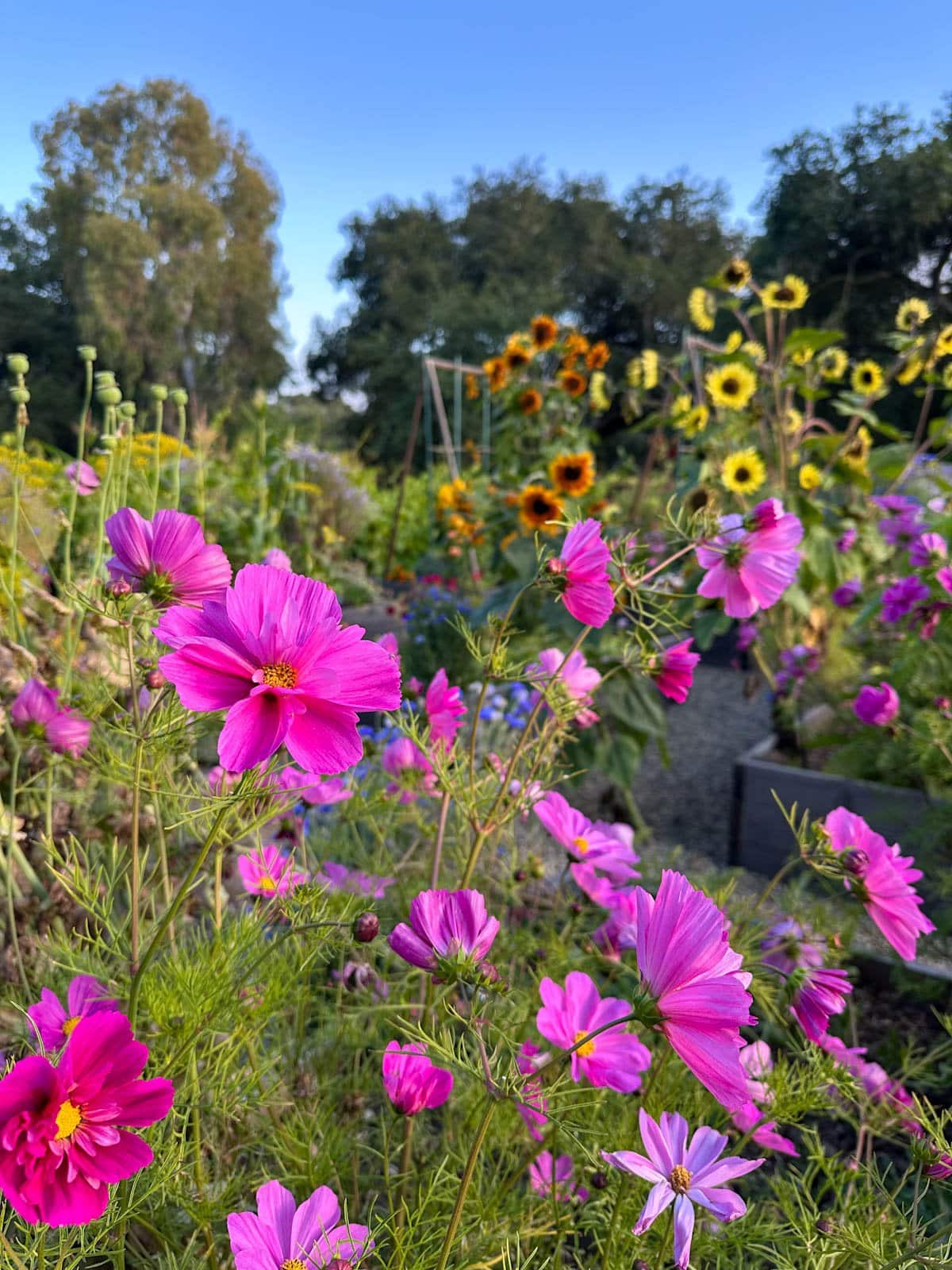
I’ve become slightly obsessed with cosmos lately, planting more and more each season. These dainty daisy-like flowers sit atop long slender stems. They look so whimsical (especially blowing in the wind) and give off a classic cottage garden vibe. While the most common cosmos varieties come in hues of pink and purple, they can be found in shades of yellow, orange, red, and even chocolate too!
We love Blush Cupcake cosmos, Sensation Blend, Candy Stripe, Double Click Rose and BiColor Violet, and the stunning Seashell varieties.
Benefits of Cosmos
- Cosmos attract a wide variety of pollinators including birds, bees, butterflies, and other beneficial insects. I always see native bees, bumblebees, and birds enjoying ours!
- On the other hand, cosmos seem to have little-to-no pest issues. Definitely a bonus.
- The flower petals are edible and can be used as a playful garnish in drinks, salads, and more.
- Cosmos boast a long blooming season and can be used as cut flowers.
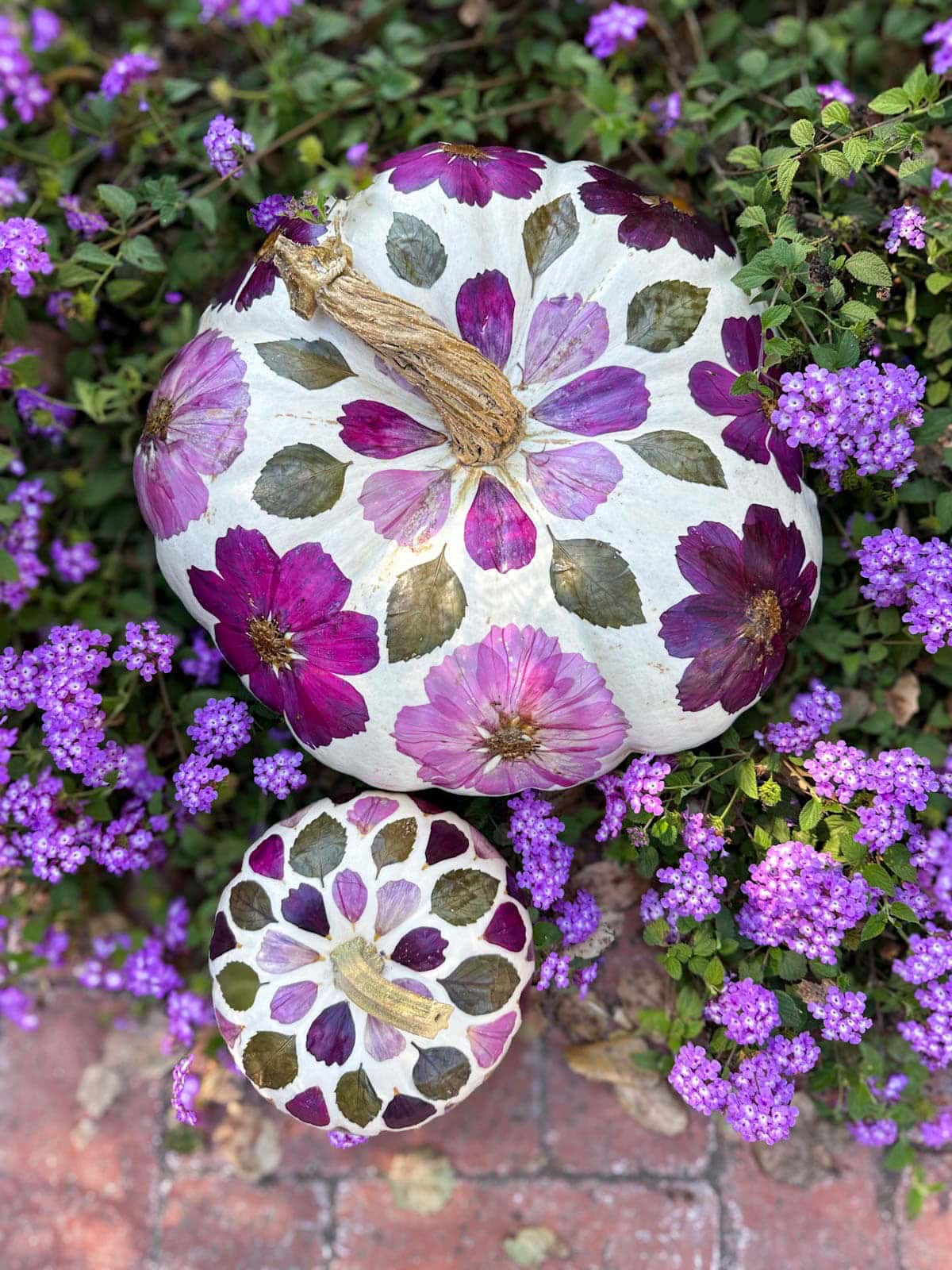
PRO TIP: Their thin flat petals make cosmos my favorite flowers to dry for pressed flower crafts! I pick and press them all summer to save for fall and winter crafts. Don’t miss our beginner’s guide on how to press flowers.
Tips on Growing Cosmos
- Cosmos sprout readily and are easy to direct-sow outdoors. (That means they also re-seed as volunteers easily!) Simply scatter seeds on bare soil in springtime after the danger of frost has passed. We usually start our cosmos indoors to get a jump start on the spring season.
- Cosmos are known to survive in even the poorest soil conditions, as long as it has good drainage. This makes them a perfect “filler” in any oddball place, with little-to-no effort required! They also grow easily in containers.
- Cosmos are drought-tolerant and prefer warm, dry weather and plenty of sunshine. In extremely hot climates, choose a location with partial shade.
- Depending on the variety and height, cosmos plants may need staking or other support to prevent the plants from flopping over.
PRO TIP: Deadhead cosmos regularly to promote even more new blooms! Learn exactly when and how to deadhead flowers here, including example photos for cosmos. Regularly removing fading flower heads also reduces seed spread, if that’s a concern.
5) Bachelor Buttons
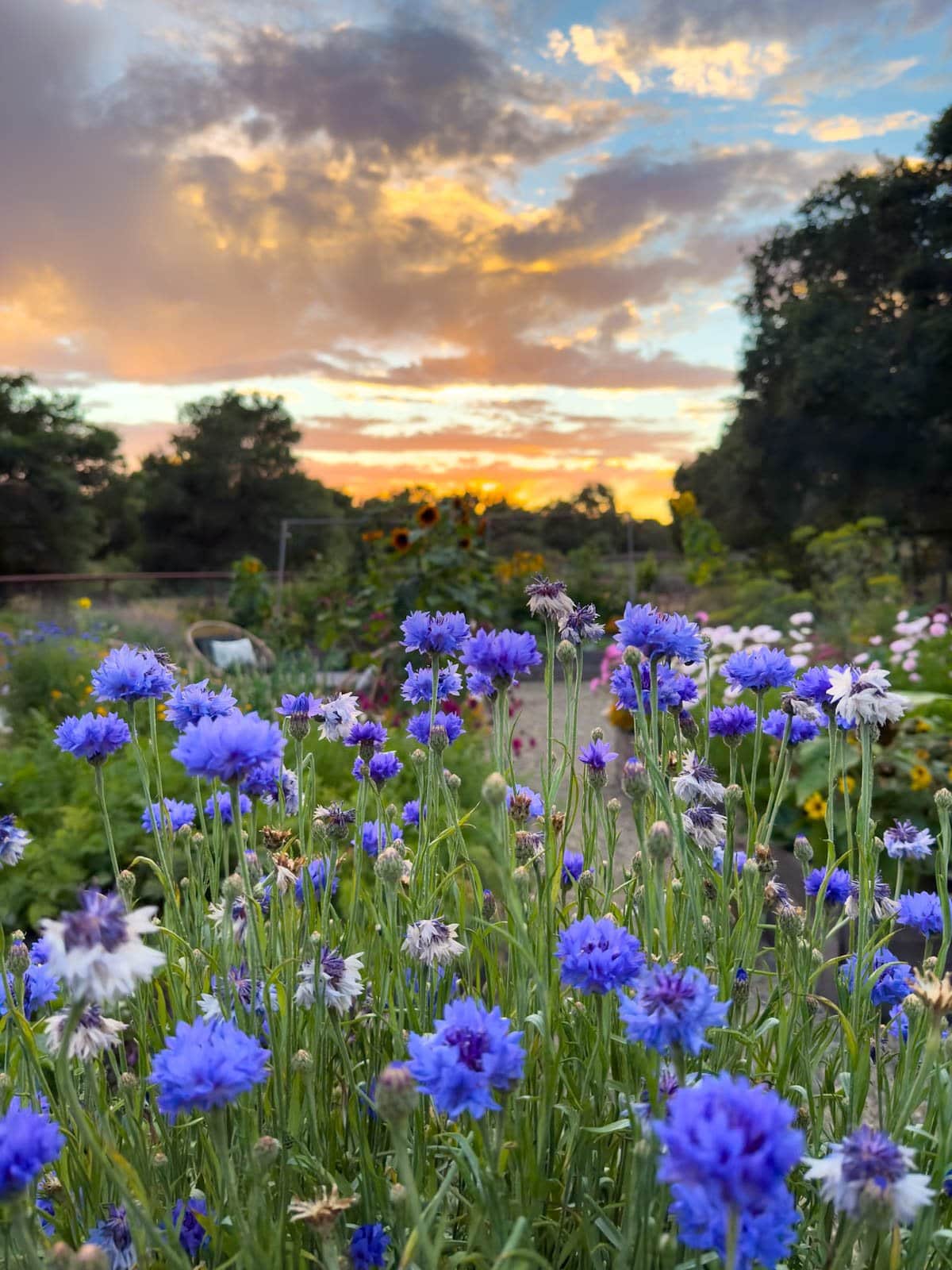
Also known as cornflower, stunning blue Bachelor Buttons have become one of my favorite annual flowers over the last few years. Classic Bachelor Buttons are bright blue (a magnificent and unique addition to the garden color palette) though they also come in lavender, light pink, and other shades of purple-blue.
A few of our favorite varieties include Blue Boy, Polka dot mix (blue, pink, white and lavender), and dark purple Black Magic
Benefits of Bachelor Buttons
- Birds and bees absolutely love cornflower. Our native Lesser goldfinches simply can’t stay off of them – and we’re happy to share!
- The tall erect stems make beautiful cut flowers, and also retain their gorgeous color when dried. I love to press them too!
- Bachelor button flowers are edible and make an absolutely beautiful garnish. I like to pluck the petals off to add flecks of blue to mocktails, salads, and spring rolls.
- They readily re-seed, so that means you’ll have free plants for years to come! I simply remove the ones I don’t want, but often leave many to grow – and the volunteer bachelor buttons are usually the first to flower in our garden in spring!

Tips on Growing Bachelor Buttons
- Bachelors buttons (cornflowers) are easy to start from seed – either indoors about a month before your last spring frost, or directly outside after.
- They aren’t picky about soil conditions as long as it’s well-draining. Cornflowers are drought-tolerant so they will not thrive in swampy, soggy conditions. Allow the soil to dry out slightly between watering.
- Plant bachelors buttons in a location that receives full sun, though they’ll tolerate partial shade.
- Many Bachelor Buttons varieties grow quite tall. In my experience, I usually need a stake, small cage, or other support to prevent the plants from toppling or breaking by mid-summer.

6) Marigolds ~ Tagetes
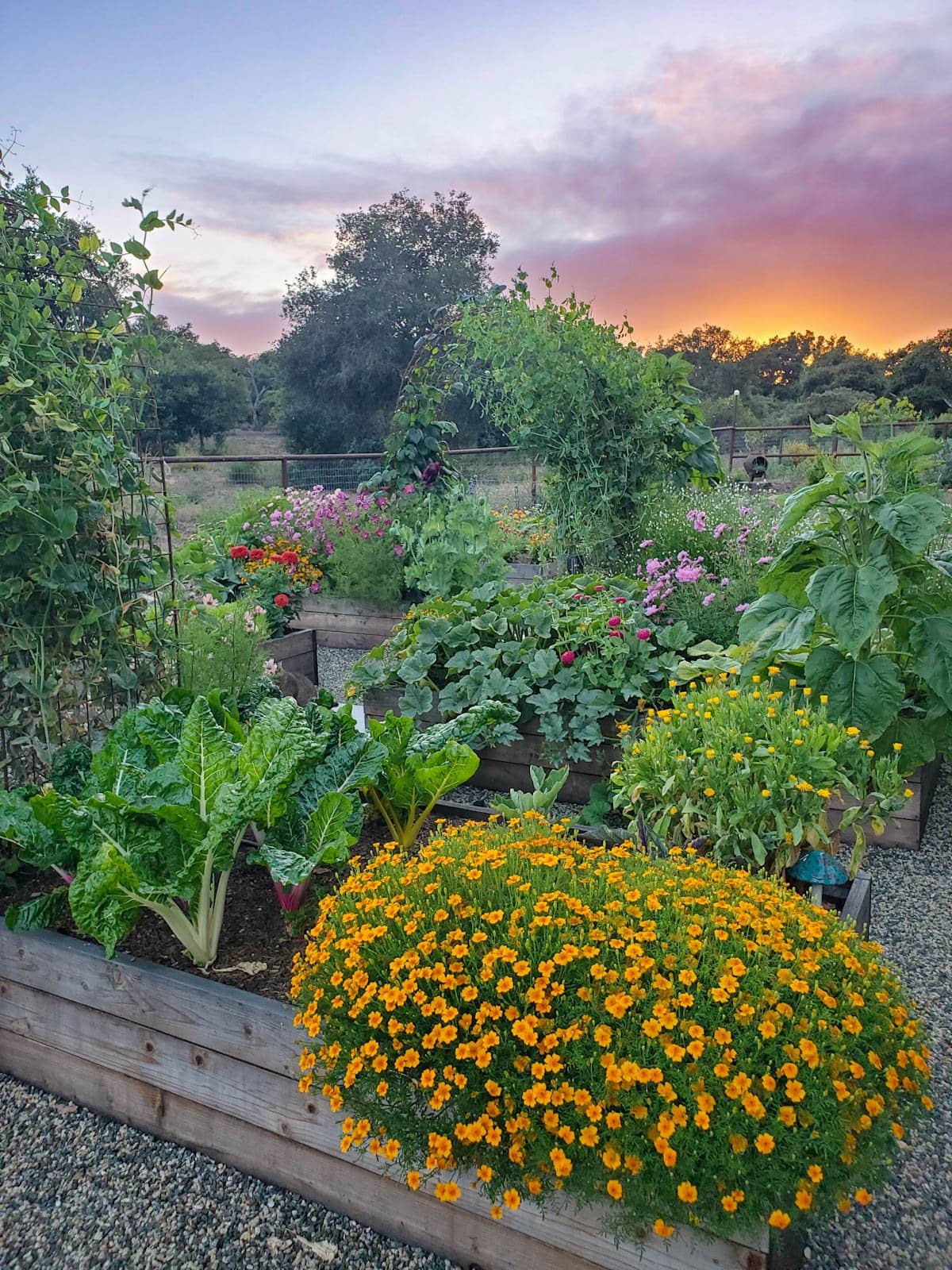
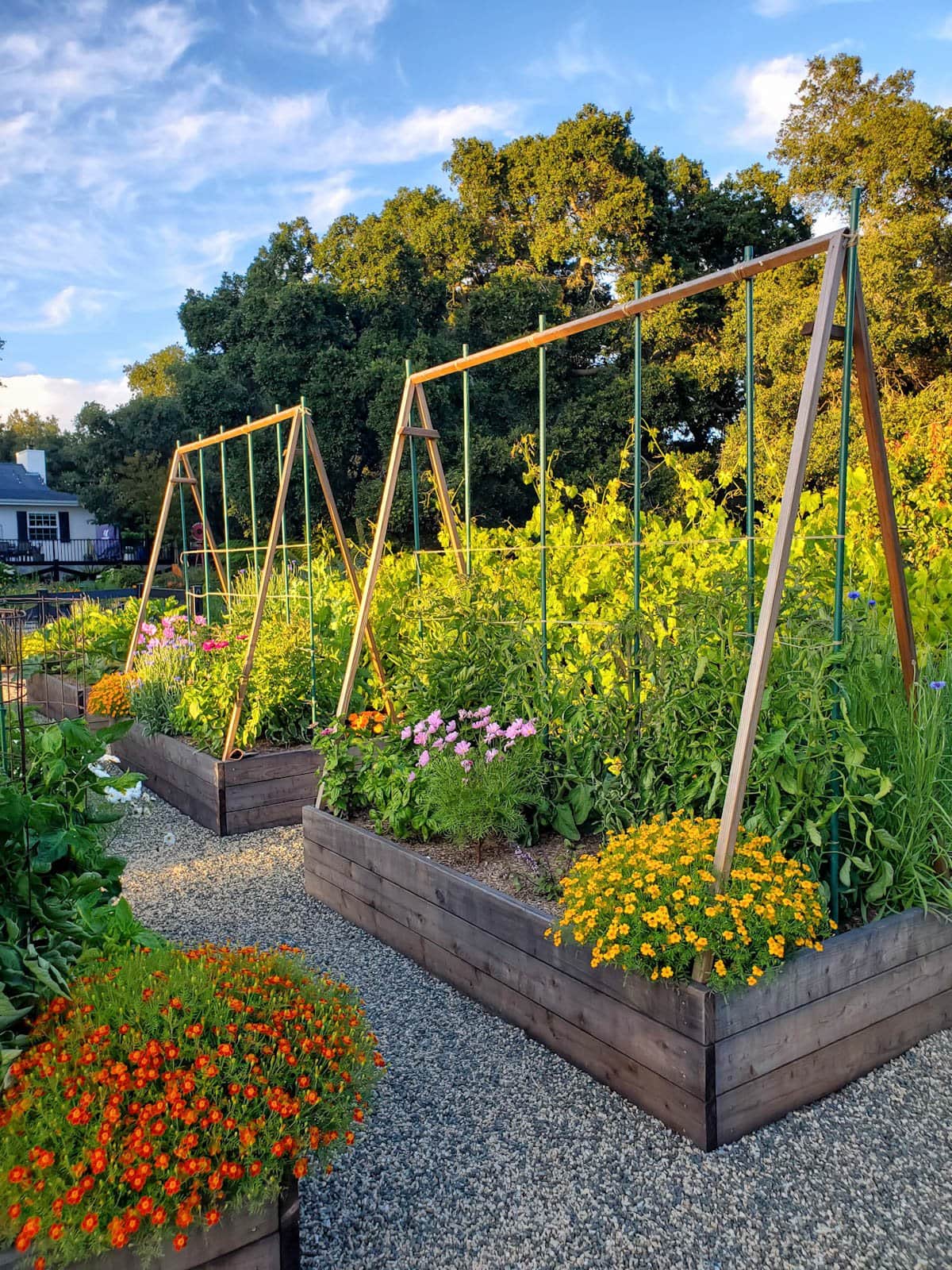
Marigolds are probably one of the easiest annual flowers to grow. And while they may not be total show-stoppers like some sunflowers or zinnia, what they lack in beauty they more than make up for in utility. Don’t get me wrong! I think marigolds are very pretty, and definitely enjoy the bright pops of orange and red blooms sprinkled throughout our garden.
My all-time favorite marigold variety is Tangerine Gem followed by French Blend, Naughty Marietta French, Red French, Crackerjack & Red Gem
Benefits of Marigolds
- Marigolds are popular companion flowers, often planted among vegetables in garden beds or close nearby. They attract beneficial insects like butterflies, ladybugs, hover flies and parasitic wasps. Furthermore, their pungent aroma can deter pest insects such as aphids, mosquitoes, and Mexican bean beetles.
- Classic French marigolds in particular are known to repel root knot nematodes, a soil-dwelling parasite that feeds on the healthy root system of plants. To take advantage of that benefit, be sure to leave the marigold roots to decompose in the soil – using a “no till” method to cut the plant out (rather than yanking it out) at the end of the season.
- Chickens love to eat marigolds. Our girls love the greens, and often help us “prune” unruly marigold plants that hang over the side of the garden bed. When chickens are fed bright orange marigold flowers, it can naturally dye their egg yolks a deeper orange color!
- Rich in antioxidants, marigold flowers are also edible for humans – bringing a beautiful pop of color to salads, teas, desserts and more.

Tips on Growing Marigolds
- Like the other easy annual flowers on this list, you can either sow marigold seeds indoors 6-8 weeks before your last frost, or directly outside thereafter.
- Marigolds prefer full sun and warm temperatures to bloom most prolifically. However, we have grown them in partial-shade – no problem! Deadheading spent blooms will also encourage more.
- They’re not picky about their soil type, and are suitable for containers. Maintain the soil evenly damp but not soggy.
- If bushy marigold plants start to crowd their neighbors, don’t be afraid give them a good pruning! They don’t mind, and the greens are a great addition to compost.
- Once they’re established in your garden, marigolds will likely self-seed and return as volunteers.
RELATED: Come learn even more about companion planting – including what veggies and flowers grow best together, and a printable companion planting chart!
7) Nasturtium ~ Tropaeolum
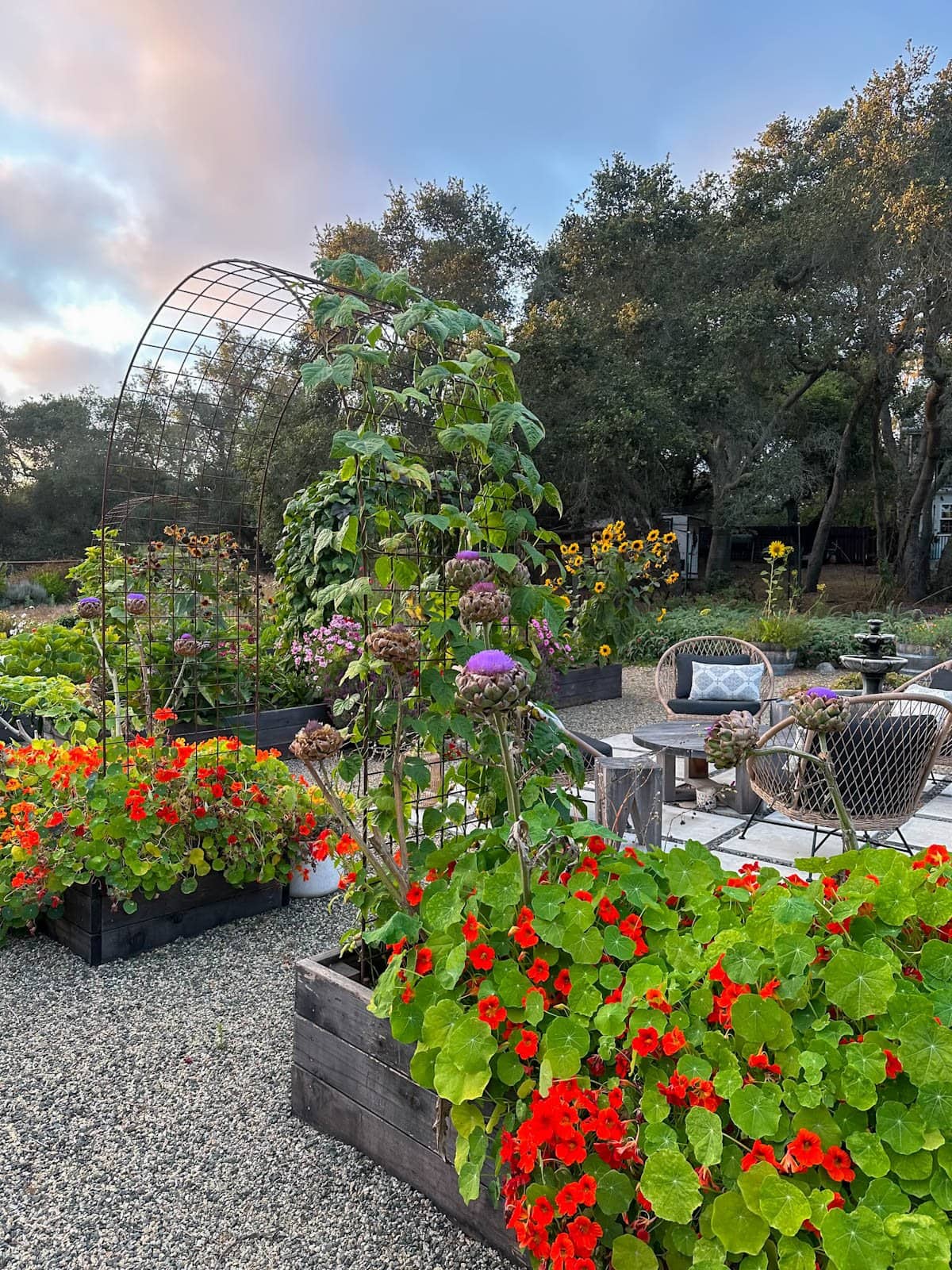
Last but not least, nasturtiums are another annual companion flower that I can’t imagine our garden without. They’re edible, attract pollinators, and oh-so-pretty! Their lush cascading greenery dotted with colorful flowers creates an incredibly beautiful and dramatic effect.
Alaska Mix, Dwarf Jewel, Tall Trailing Mix and Peach Melba are a handful of our go-to nasturtium varieties.

Benefits of Nasturtiums
- Bees and hummingbirds enjoy nasturtium flowers immensely.
- Nasturtiums double as a “trap crop”, attracting pest insects including aphids and cabbage worms to their foliage rather than your veggies. Ours usually look great despite the pest pressure – but if your plants become heavily infested, I suggest removing leaves or sections of the plant to prevent pest colonization in your garden.
- Nasturtiums are edible. Both the flowers and tender leaves have a peppery, zesty flavor – reminiscent of arugula. Try adding both to salads! Our chickens absolutely love eating nasturtium greens too.
Tips on Growing Nasturtiums
- Nasturtium generally prefers to be directly-sown, though starting indoors is possible too. Plant once, and they’ll be back! Nasturtiums are another notorious self-seeding volunteer, but one we welcome with open arms.
- Nasturtiums are the most shade-tolerant annual flower on this list. They will grow just about anywhere, but flower the most when they receive at least 6 hours of sun. On the other hand, they may look a bit haggard in full sun with extreme heat, so opt for a location with afternoon shade in the hottest climates.
- Some nasturtium varieties grow into compact bushes, while others sprawl a bit more. Vining nasturtiums can be trained up arches and trellises, or allowed to spill over the side of a raised bed for a beautiful cascade effect. We grow a little of each!
- Plant in well-draining soil and provide low to moderate water.

Other Pollinator Flowers
Now of course, there is a whole plethora of other amazing flowers you could grow too! Some of our favorites include lavender, echinacea, salvia, yarrow, scabiosa, flowering herbs like oregano, bee balm, sage, anise hyssop and more!
I love all of them just as much as the easy annual flowers included on this list. However, they may not be quite as quick and simple to start from seed, may be more particular about climate and care, or are commonly grown as perennials.
To see a full list of our favorite flowers, check out: The Top 23 Plants for Pollinators: Attract Bees, Butterflies & Hummingbirds.

I hope you thoroughly enjoyed learning about what we consider the best easy annual flowers to grow, and found some new varieties to try yourself!
Did I miss any of your favorite annual flowers? Let me know in the comments below!


32 Comments
Rachel Clayson
Do you happen to have a post on the “potassium bicarbonate treatment “? I’m in Central California and also have to deal with powdery mildew. I would love a how to!
Aaron (Mr. DeannaCat)
Hi Rachel, check out our article on How to Prevent or Treat Powdery Mildew Organically, we also try and grow powdery mildew resistant varieties for crops that are more susceptible to PM. Hope that helps and good luck!
Mariangela
Re-reading this updated post to get a refresh before planting for this season. I prescriptively used your companion planting chart last year for my 1st garden ever and the companion plants from your list (French marigold, nasturtium, sunflowers, borage, cosmos, zinnia, calendula) meant that I had zero bugs on my 20+ tomato varieties in raised beds! I used all the flowers in our tomato and fruit salds all summer long – stunning and delicious! The birds ate many of the cornflower seeds that I direct seeded (among others) so I’ll have to take a few more precautions but I direct seeded most of the flowers with no issues. The borage definitely had a life of its own and was almost too much interplanted with my corn but it is still thriving in the places I let it be with our continued weeks of frost in Sonoma! Your tips will help me refine my technique for this year – super excited – thank you!
Aaron (Mr. DeannaCat)
It’s so great to hear you had such success growing tomatoes amongst many different flower varieties! That’s exactly how we do it although we mix in some basil planted amongst the tomatoes as well. Birds definitely love cornflower, cosmos, and sunflower seeds, thankfully most of them leave the rest of our garden alone. Good luck planning your garden this summer and hopefully you have bountiful harvests of tomatoes once again, have fun growing!
Julie from Denver
How excited I was to see that all the flower varieties you recommended…I planted in my yard last year and will do the same this season!!!
Then I remembered the many hours of articles I’ve read of yours and realized…you dingbat Julie, you learned this from DeannaCat LOL Thank you for sharing your knowledge, teaching me new tricks and helping me create a beautiful garden full of veggies, herbs, flower and love!
Aaron (Mr. DeannaCat)
Hi Julie, it’s so great to hear you have been able to create a beautiful garden space to enjoy! Thank you so much for your support and we are glad to hear we have helped a little along the way, good luck to another great growing season and have fun in the garden!
Cindi Brown
I’m a beekeeper and plant for my girls. The list of flowers you have mentioned in your article are all part of my gardens. I also save seeds. The borage is truely a bee magnet. With the drought again this year, I will not have as many flowers as we have water saving mandates and not allowed to use drip. We are in Sonoma County, California and get very hot summers. Thinking of planting more flowering succulents. What are your thoughts on the varieties that will attract the bees, butterflys and hummingbirds?
Aaron (Mr. DeannaCat)
Hi Cindi, that is too bad to hear you can’t use drip irrigation as it is considered a water-saving method. We really like growing aloe vera and it produces tall flowering spikes once or twice a year, autumn joy sedum are another type of succulent that produce many flowers. We enjoy growing succulents but we haven’t found their flowers to be as profuse compared to other plant varieties. Are you growing any salvia plants and although they aren’t succulents, many of them are very drought tolerant and should be able to take the summer heat. We have found that bees, butterflies, and hummingbirds all enjoy the various salvias we have grown. Lavender is another plant that is drought tolerant, does well in the heat, and bees especially enjoy their flowers. We also have another article that may give you some more ideas on what to plant: Top 23 Plants for Pollinators: Attract Bees, Butterflies, & Hummingbirds!, although you will have to see which plants would work best for your situation and climate. Hope that helps and good luck!
Mariangela
Taking notes and copying all your amazing ideas!! Hope we can be a fraction as successful as you are with your garden!
Aaron (Mr. DeannaCat)
Thanks Mariangela, we have faith in you. A little love and attention will go a long way towards creating a great garden. Good luck and keep us posted on your progress.
Linda
Your garden is spectacular! I love everything about it and your articles. I just came across it and will definitely keep reading. Thank you so much.
Kathy Tarazoff
Your blog is amazing. All the time you must spend writing it and you don’t charge a thing! And your garden is beautiful. I live in New Mexico high desert but I hope your advice can apply here. I got my daughter to follow you as well. She is a beginning gardener in Walnut Creek CA which is probably similar to you. Thank you for all your information about gardens and what you can do with all the plants grow.
Joni
Hi Deanna!
Great article. I always love whatever you write!
One of my very favorite flowers to grow is the beautiful Tithonia, aka Mexican Sundance. I also love, love, love Cleome! Alongside Comos, these three are stunners!
DeannaCat
Joni – Thanks for the kind words and comment, and the great flower suggestions! I will have to check out those other two, since I’m not as familiar with them. Have a good day!
Linda
Loved this article. You made morning and my day. I wished I found this 4 days ago my head was confessed about the vegetables to be planted with the right one. I will enjoy you sight forever. Thank you very much. Denna Cat
Sam
Thank you for sharing your plethora of gardening knowledge. Your tips are So So helpful as it is very easy for the newbies to get overwhelmed!!
So organized and well planned – but Your spicy approach to gardening – keeps it fun.
Very much Appreciated,
Sam
Lacey Daniels
I picked up a sad looking yellow calendula from the reject shelf at Lowes last year. It is now thriving and has been giving us blooms all winter long (zone 10)! I’m excited to try the strawberry blonde variety this year, seedlings already popping up indoors!
Liz
I keep trying to grow calendula but it never grows. I’m in Hawai’i, zone 12. I’ve tried shade, partial shade, different soils … ugh. I love calendula and really want to grow it. Any suggestions? I don’t even get a sprout from them. 🙁
DeannaCat
Hi Liz! Have you tried starting the seeds in containers first, and then putting them outside? After you get some decent little seedlings, I bet they’d do best with morning sun and afternoon shade in your climate. Keeping them in a container with excellent-draining soil may help make up for your frequent rain and keep them less soggy? I hope that helps!
Dani
Reading through this post again, since it just came through the email. i already grow most of the things mentioned, but will definitely be trying my hand at bachelor buttons…again. It’s been years since I tried and I have your mix in the shopping cart at high mowing. Never grown the borage but I love it and don’t know why. Thank you for all the information you put together! Your articles are always top notch..
Aaron (Mr. DeannaCat)
Thank you so much Dani! Bachelors button is a lot of fun to grow, the bees love it for the pollen and many birds love it for the seed, we always grow multiple varieties every year. Thanks for getting a Homestead and Chill pollinator mix for the upcoming season, you should love all of the flowers, thanks again and have fun growing!