

20 Best Chicken Breeds: Friendly and Colorful Eggs (with photos)
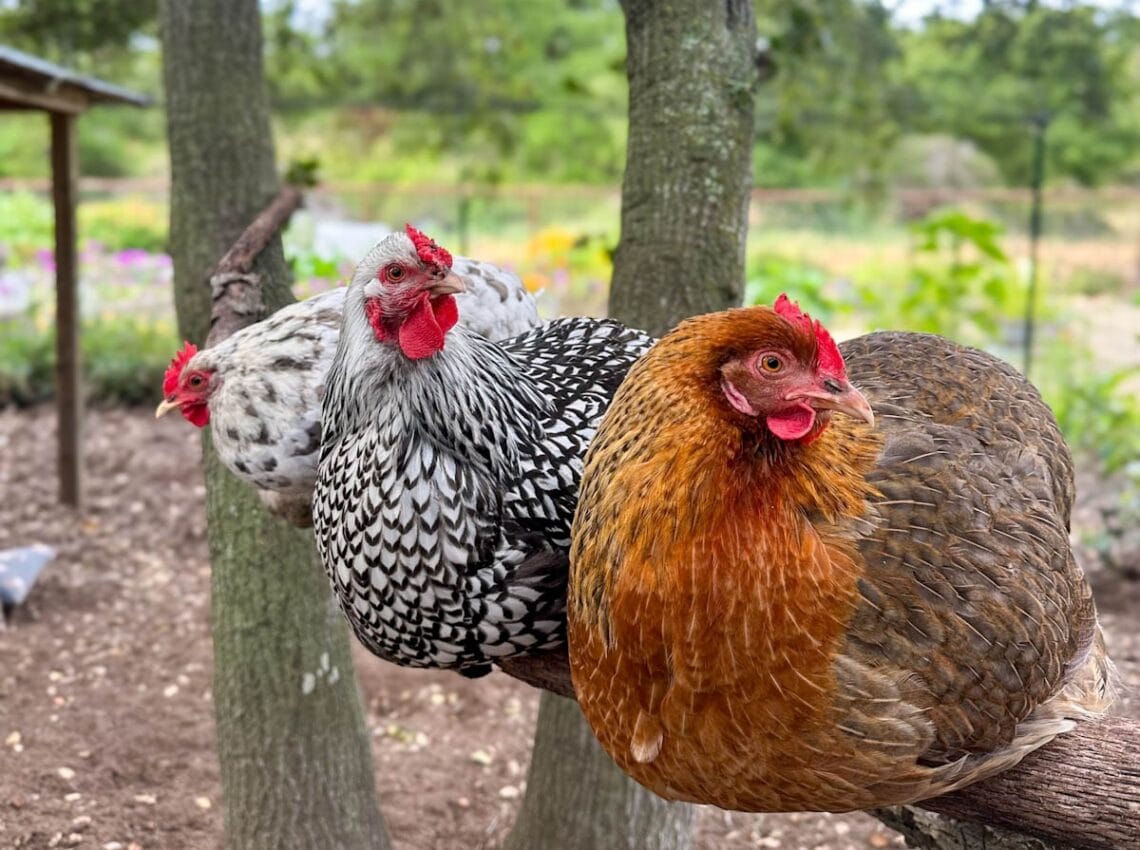
Are you looking for backyard chickens that lay colorful eggs, have a friendly personality, or simply look cool? Come get to know 20 of the most popular and best chicken breeds, including egg laying habits, temperament, appearance, cold and heat tolerance, unique quirks – with a chart and pictures of each one!
Whether you’re getting chickens for the first time or simply looking for new, different types of chickens to add to your existing flock, this article will help you find the best chicken breeds for your flock and and family!
We’ve been raising backyard chickens for over 10 years, and have personal experience with most of these awesome breeds.
NOTE: This post was originally published in March 2019 but has been significantly updated since.
Want to save this?
RELATED: Don’t miss our beginner’s guide on Raising Chickens for must-know tips, or our Raising Baby Chicks Guide for advice on how to set up a chick brooder, a temperature chart, and more.
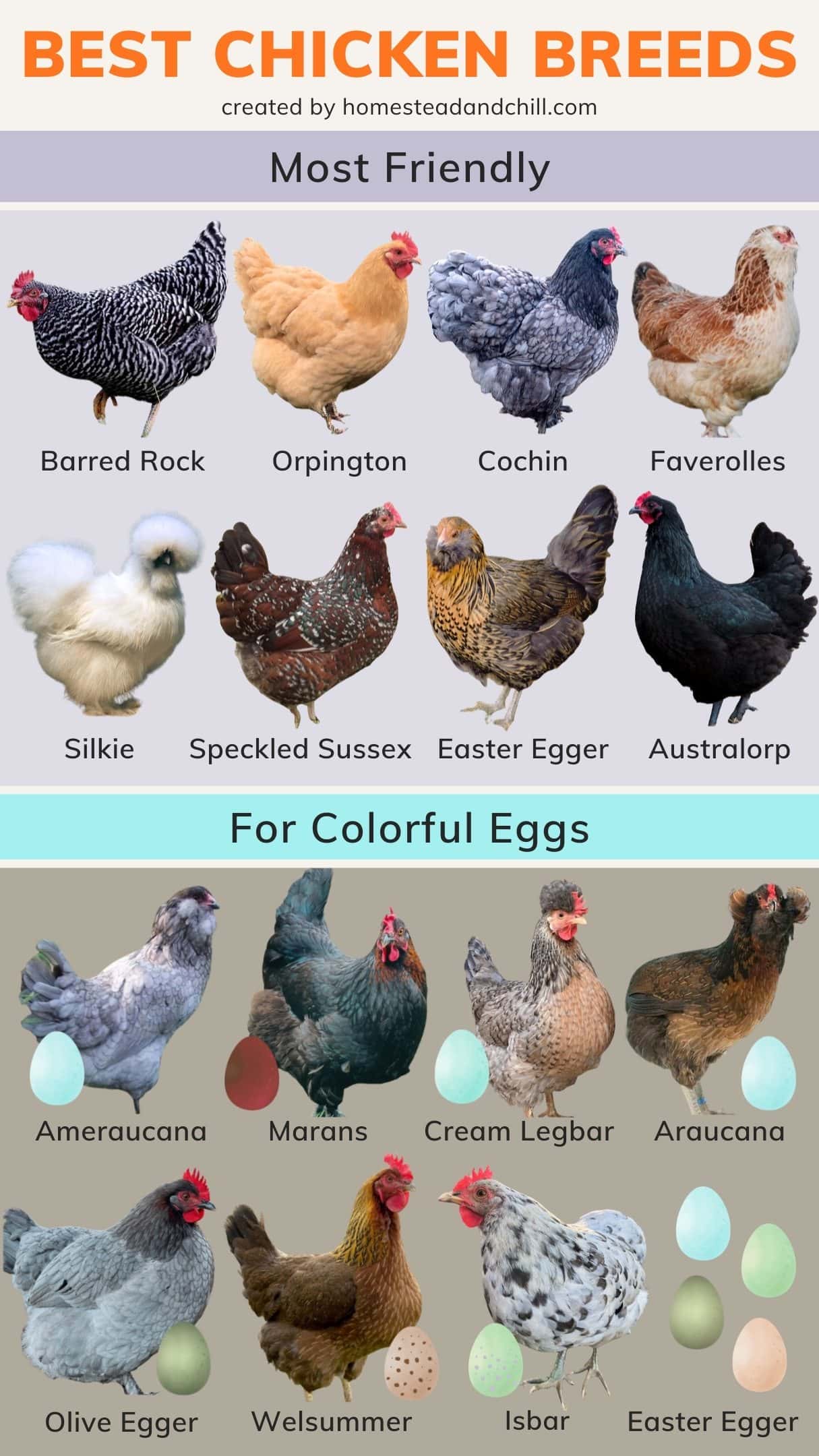
Before we dive into the details, here’s a quick summary of the most friendly chickens and the best breeds for colorful eggs. You can also find a summary of the most cold-hardy and heat tolerant breeds at the end of this post.
Most Friendly Chicken Breeds
Every bird will have a unique personality, but these chicken breeds are frequently cited as the most friendly of them all. Hand-raising baby chicks and taking time to bond early on usually leads to more friendly, easy-to-handle hens too.
- Orpingtons
- Barred Rocks
- Cochins
- Salmon Faverolles
- Silkies
- Easter Eggers
- Speckled Sussex
- Australorp
Best Chicken Breeds for Colorful Eggs
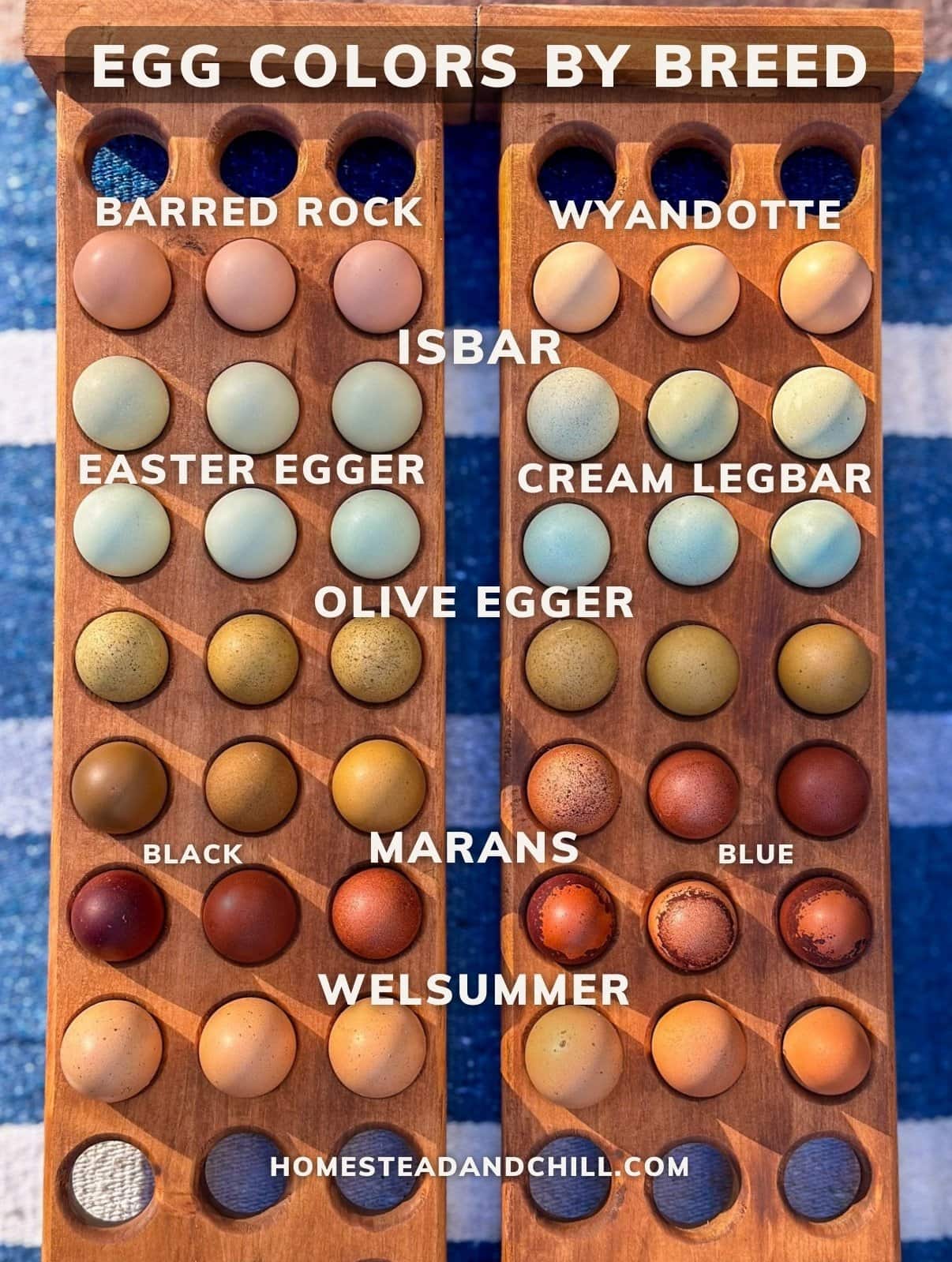
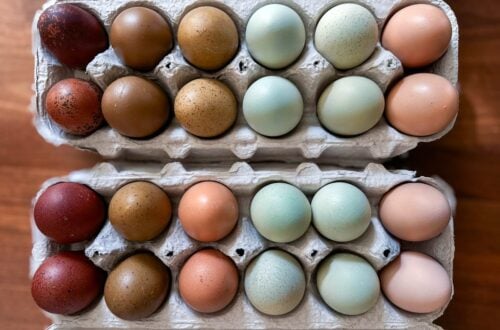
Here’s a quick list of chickens that lay blue, green, speckled, and dark brown eggs… because who doesn’t want a beautiful, colorful egg basket?!
- Ameraucana (blue)
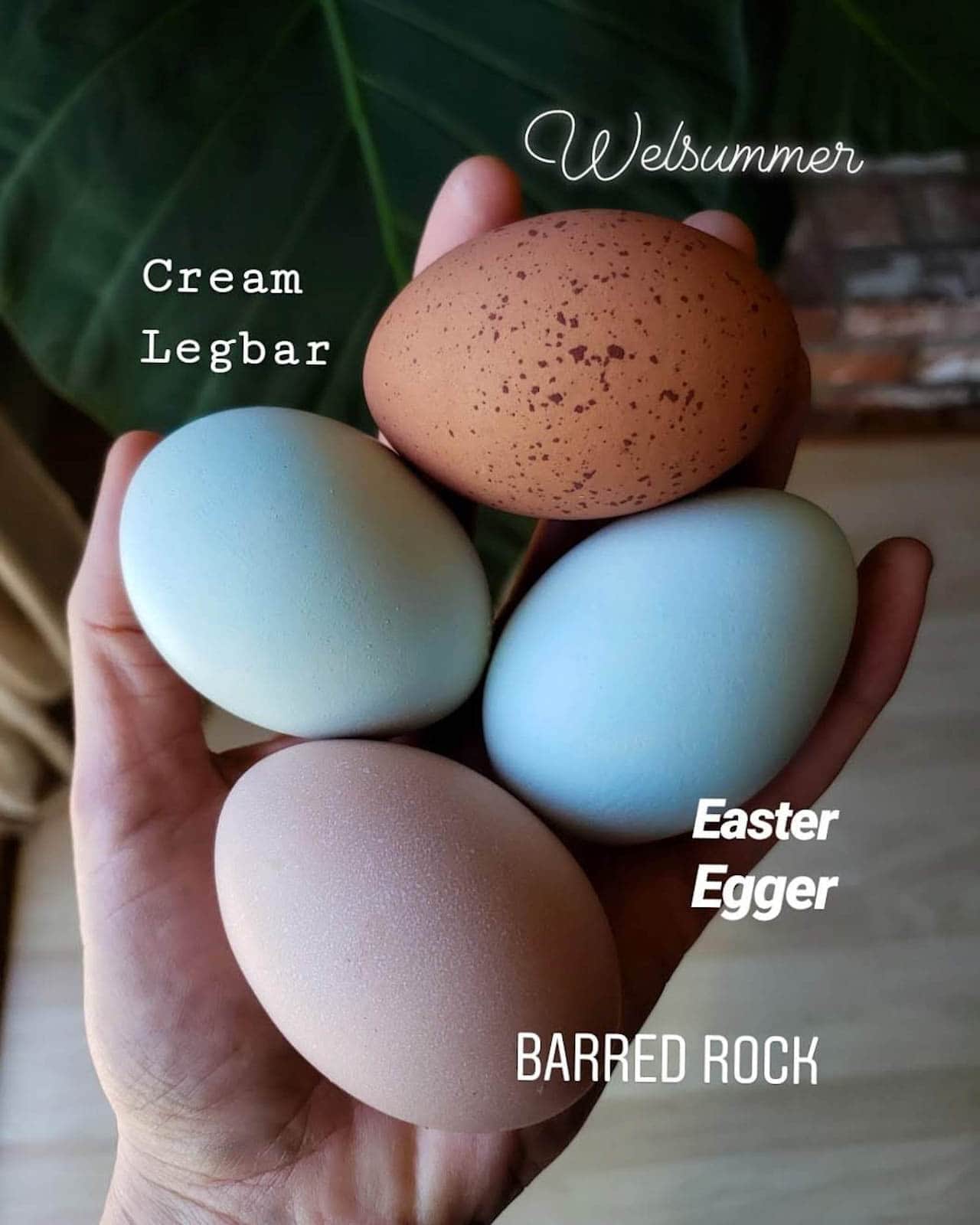
- Cream Legbar (bright blue-green)
- Marans (dark chocolate brown, sometimes speckled)
- Easter Eggers (a variety of colors including blue, green, tan, or pink – varies per bird)
- Olive Eggers (can range from light khaki to dark olive green)
- Welsummer (medium brown with dark brown speckles)
- Isbar aka Silverudd’s Blue (light mossy green, often speckled)
- Araucana (bright blue)
Top 20 Backyard Chicken Breeds
All of the descriptions provided below are in reference to the standard large fowl size (with the exception of Silkies), though many of these chicken breeds are also available in bantam (small) size. Once you have your breeds picked out, it’s time to decide on the best chicken names!
1) Barred Rock
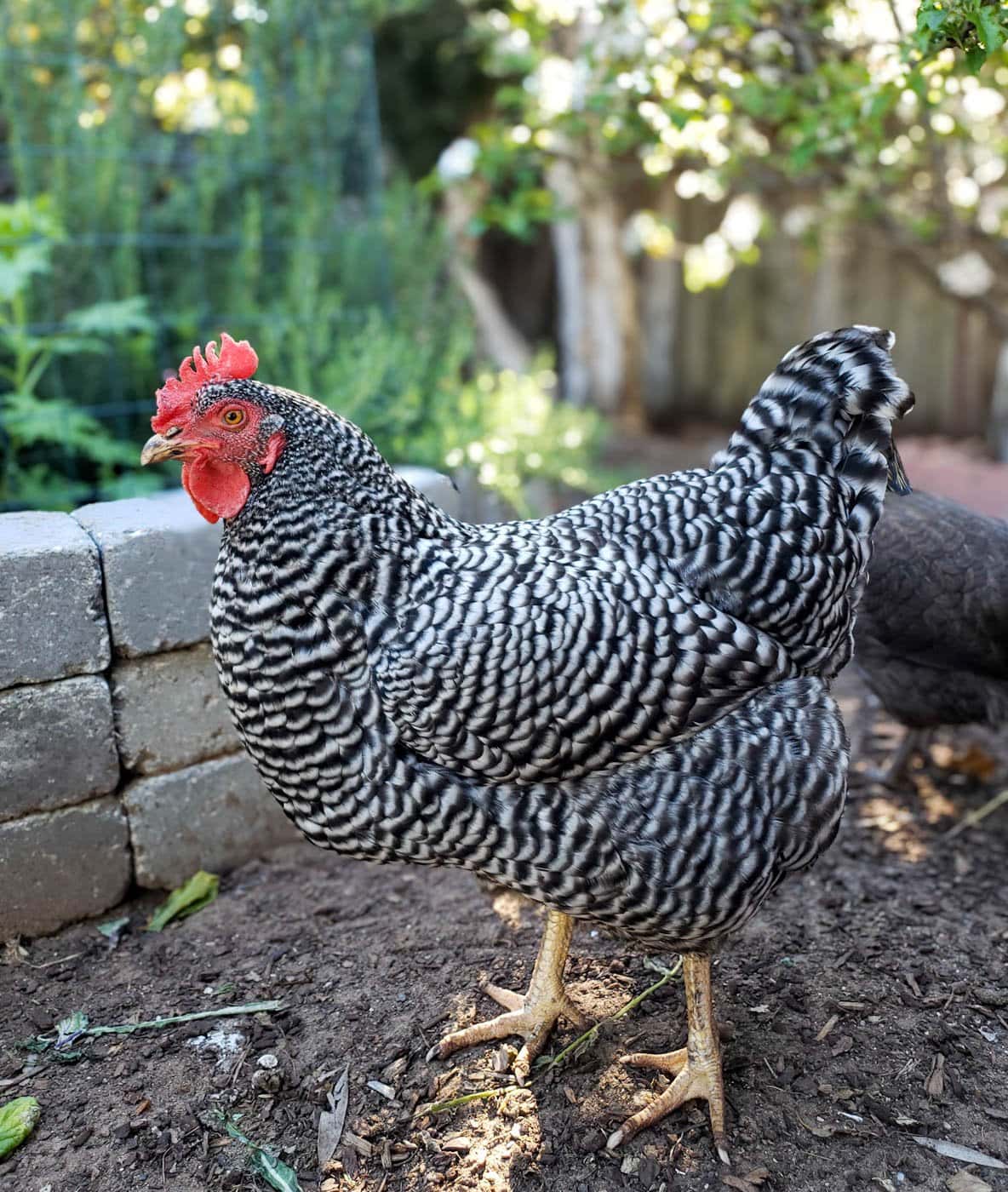
Barred Plymouth Rocks, or just “Barred Rocks”, are some of the most sweet, inquisitive, and quirky birds. I hate to play favorites, but our past barred rocks Dottie and Zoey were two of the best chickens we’ve ever had!
- Temperament: Barred Rocks are very friendly, intelligent, and great with kids. In our flock, they’re the ones who always come running first, follow closest, and are most inclined to jump up for a cuddle. Barred Rocks also have a reputation for being very talkative, but with distinct, softer, sweet vocalizations.
- Eggs: Barred Rocks are reliable and steady layers of large, light brown to pinkish eggs. You can expect an average of four to five eggs per week while they’re actively laying.
- Appearance: Barred rocks have beautiful black and white spotted feathers, yellow legs, and a distinct tall single comb. They’re large, dual-purpose birds.
- Other characteristics: Barred Rocks are both heat and cold tolerant. This versatile chicken breed can take well to confinement but are happiest when they can range freely.
2) Orpingtons
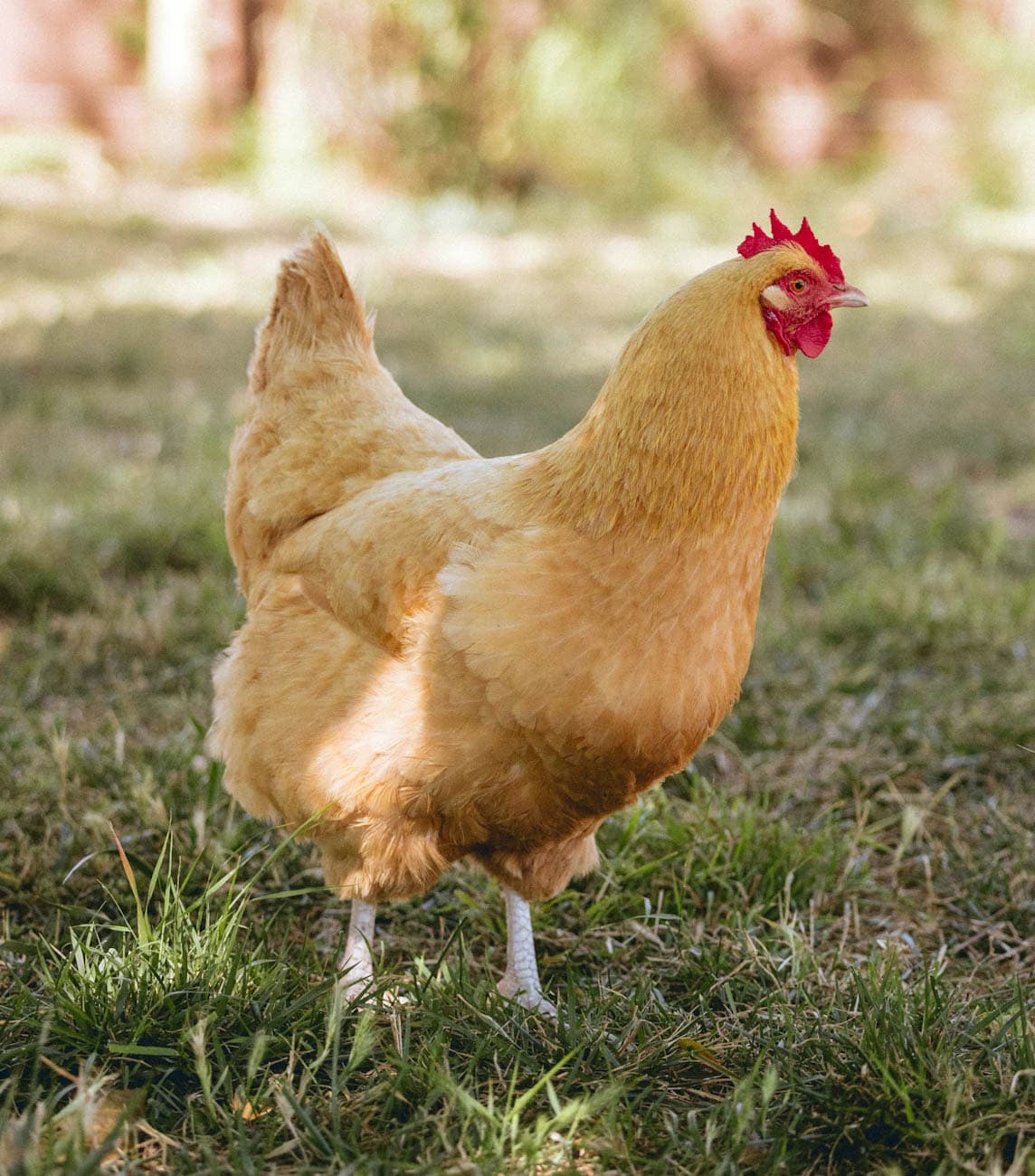
Buff Orpingtons are one of the most popular chicken breeds, and for good reason!
- Temperament: Orpington’s have a long-standing reputation of being incredibly friendly, docile, easy to handle, and patient, making this a great chicken breed for families with kids – or anyone who wants a lap chicken!
- Eggs: Orpington’s lay medium to large light brown eggs, averaging one every other day.
- Appearance: The buff color Orpington is the most common (light yellow), though they come in a variety of other plumage colors including blue, black, white, and more. A Lavender or spotted Jubilee Orpington is on our dream chicken breed wish list!
- Other characteristics: Due to their fluffy plumage, Orpington’s are especially cold-hardy. Also because of their heavy stature, this type of chicken is known to be less flighty once they’ve reached maturity. Orpington’s may go broody fairly often, and are excellent mother hens.
RELATED: Learn how to break a broody hen here – including signs and symptoms, prevention tips, and why it can be dangerous to their health.
3) Marans
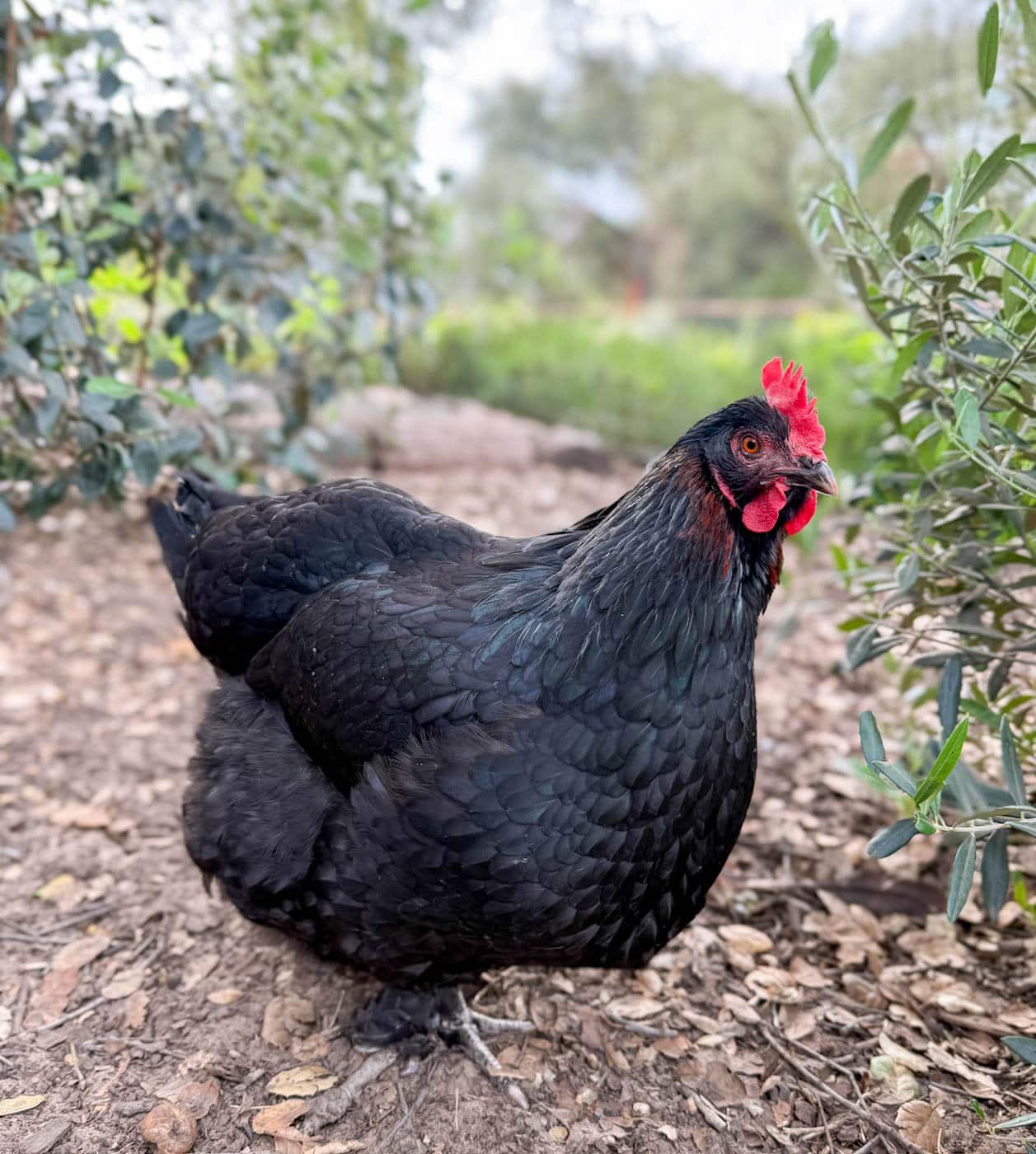
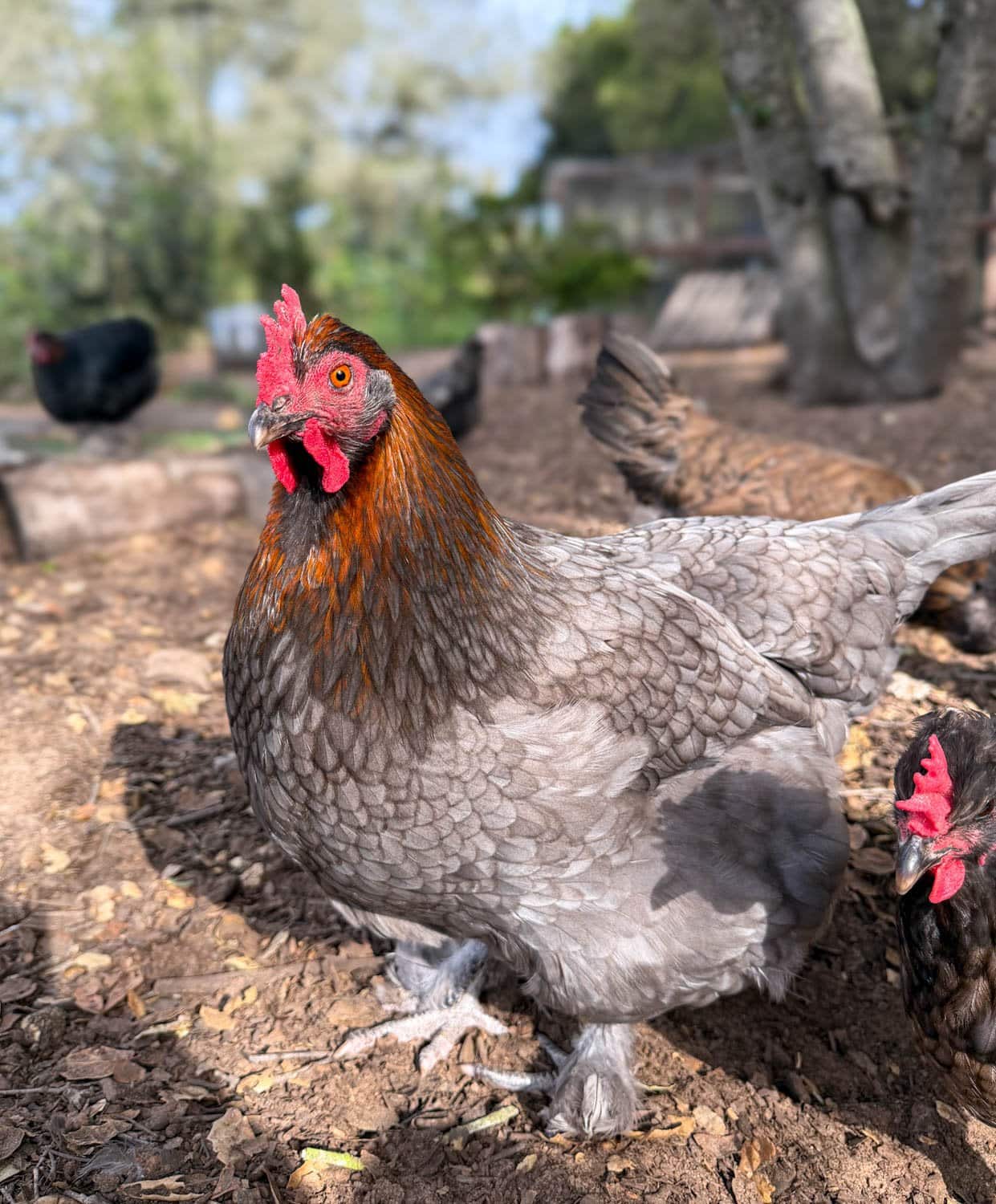
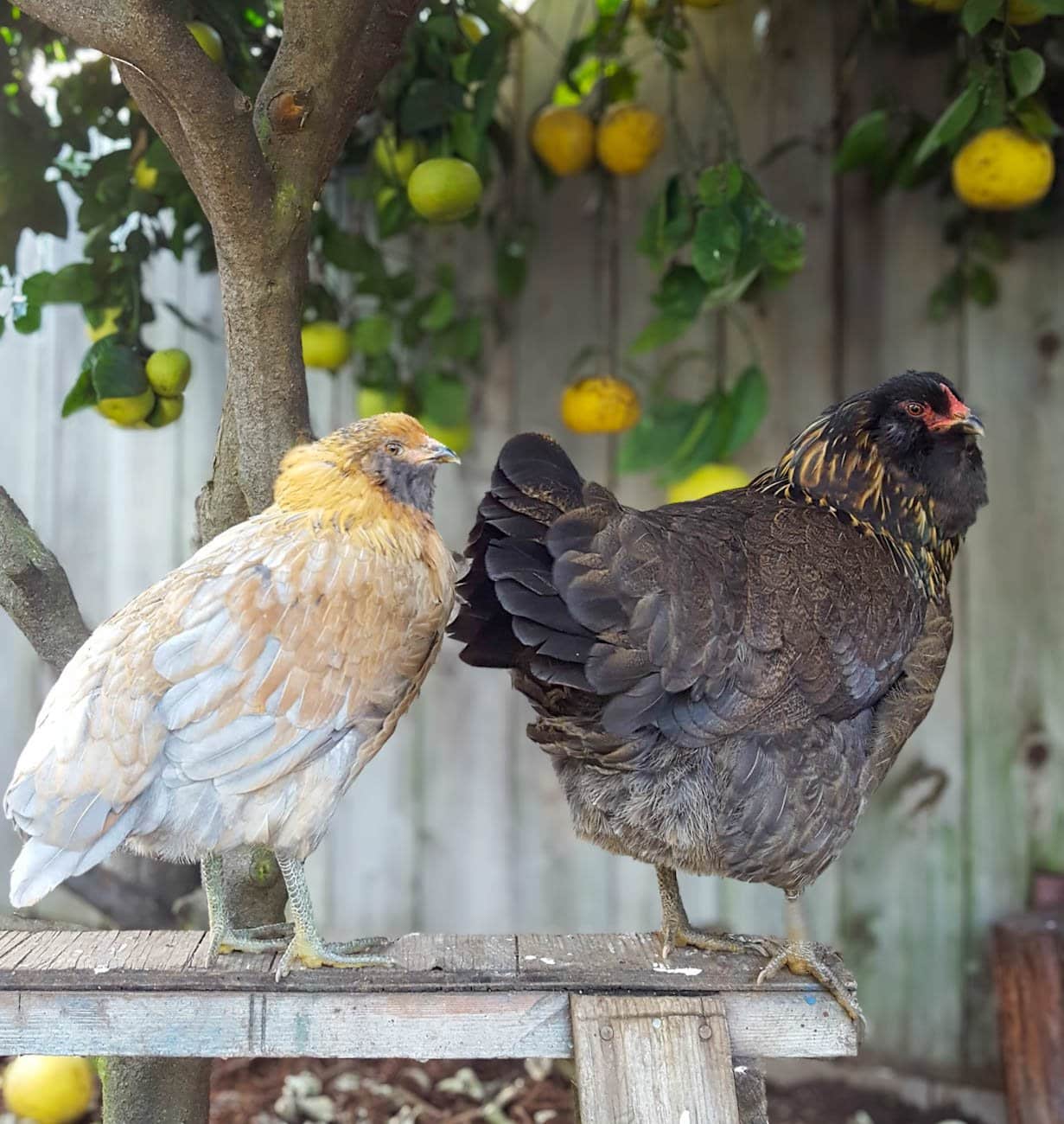
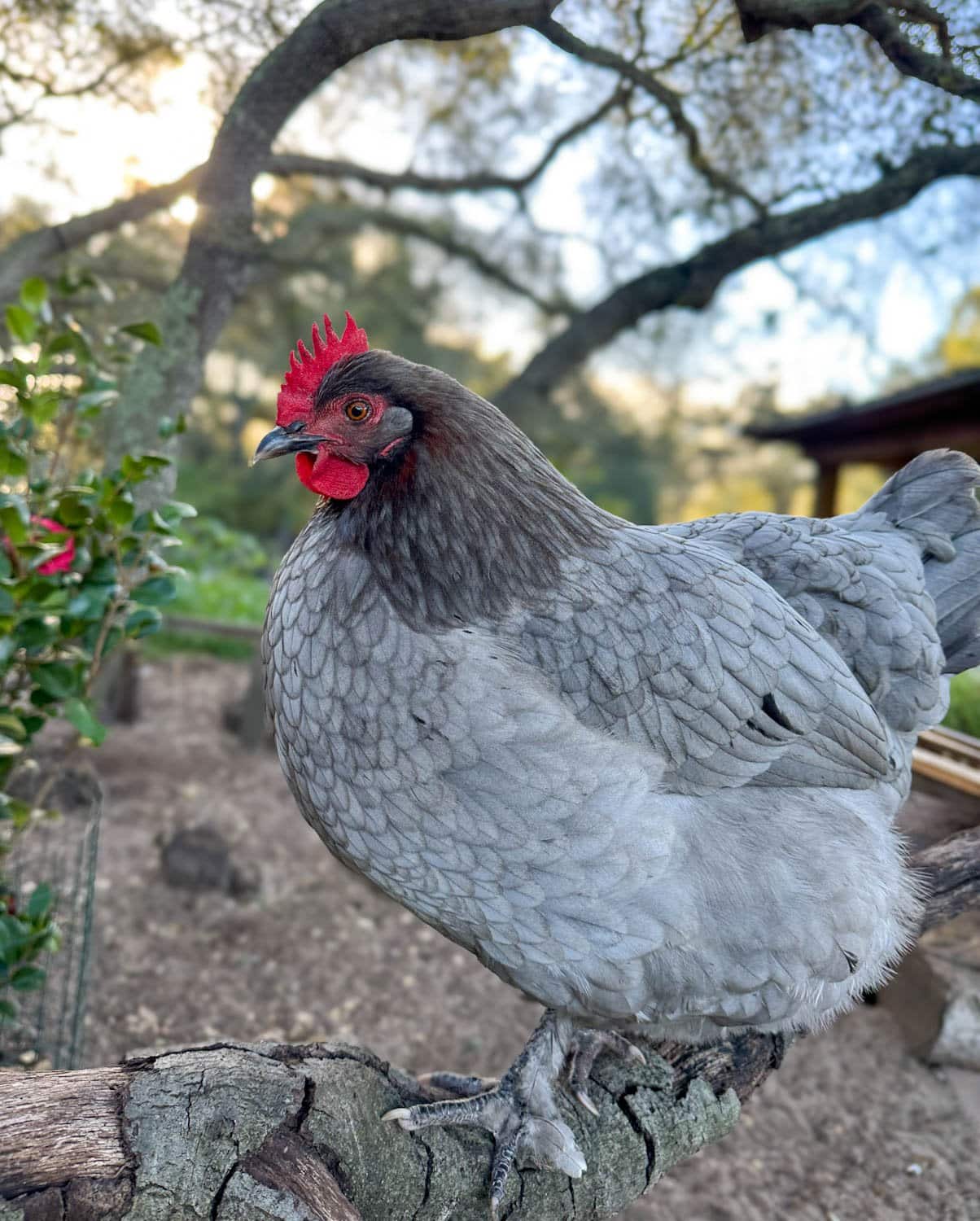
This group includes French Black Copper Marans, Blue Copper Marans, or Cuckoo Marans. We have both black and blue copper marans in our current flock; they lay absolutely stunning eggs and are all-around awesome birds!
- Temperament: All types of Marans (black, blue or cuckoo) have the same great demeanor: sweet, inquisitive, and docile. They’re friendly but not clingy, often described as independent. Our Marans hens are near the top of the pecking order, and Marans roosters are excellent protectors of their flock.
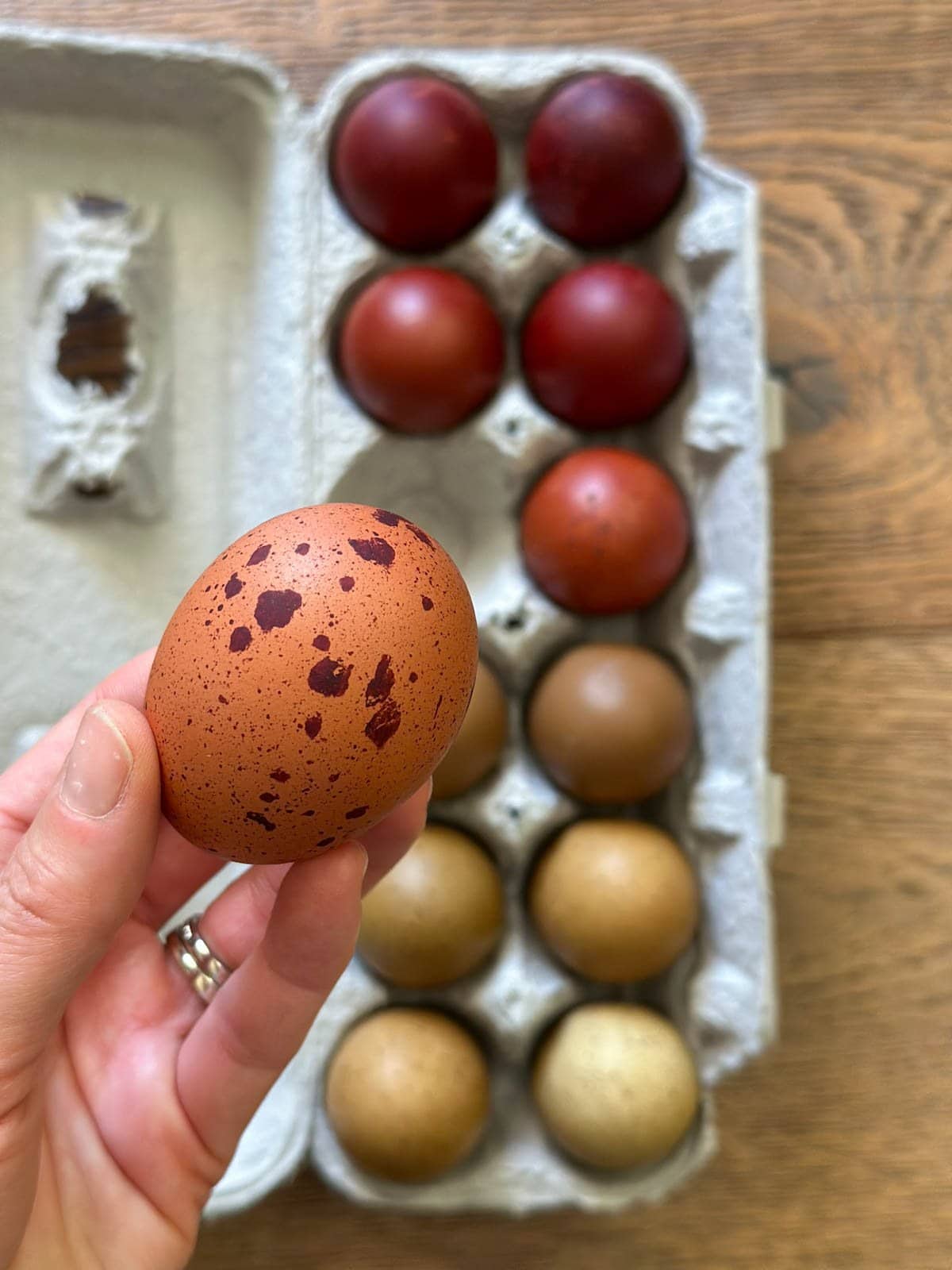
- Eggs: Marans are highly sought after for their dark chocolate brown eggs, which range from medium to extra dark brown, sometimes with speckles. Black Copper Marans lay the darkest reddish-brown eggs. Marans are good layers, averaging at least 3 to 4 large eggs per week.
- Appearance: With their dark bluish black iridescent feathers, streaks of copper gold neck feathers, and large red comb and wattles, Black Copper Marans are extremely striking, gorgeous birds! Blue Coppper Marans look similar, but with lighter blue-grey feathers instead of black. Cuckoo Marans lack copper, and have spots similar to a barred rock – but darker and more muted. French Marans have adorable feathered legs and feet, while some English or American types of Marans do not.
- Other characteristics: Though they’re quite cold hardy, Marans aren’t said to be especially tolerant to extreme heat, so be sure to have a plan for heat waves or hot weather. Our Marans are all very big girls.
4) Easter Eggers and Olive Eggers
I grouped these two together because they have many similarities. Neither Easter Eggers nor Olive Eggers are a true or recognized breed of chicken. Rather, they’re hybrids or cross breeds, dubbed with a generic name for the colorful eggs they’re bred to lay. We’ve had many Easter Eggers and Olive Eggers over the years, including our OG Hennifer who is about to turn 12!
- Temperament: Easter Eggers are usually friendly, docile, and get along easily with other members of the flock. In my experience, our Olive Eggers have been very quirky, curious, and friendly too.
- Eggs: True to their name, Easter Eggers can lay a rainbow of egg colors! Most Easter Eggers lay green or blue eggs, though their palette can range from pink to tan to purplish too. Olive Eggers are bred to lay olive green eggs, ranging from light khaki or mossy green to darker army green. Both reliably lay at least 4 eggs per week.
- Appearance: Easter Eggers often have fluffy cheeks called muffs, or fuzzy little neck beards. Easter Eggers and Olive Eggers come in a wide variety of colors, including brown, orange, black, blonde, white or blue. Most Easter Eggers have green legs, which helps make them easily distinguishable from true-bred Ameraucanas, who have slate gray to blue legs.
- Other characteristics: Easter Eggers have small peacombs, making them good cold-hardy birds. (Chickens with peacombs have a lower risk of frostbite compared to large single combs.) Easter Eggers are also known to be heat tolerant, and do not commonly become broody.
NOTE: Easter Eggers are also commonly labeled as “Americanas” but are not to be confused with a true-bred Ameraucanas. (Note the difference in spelling.) Many chicken enthusiasts get frustrated by this misleading, confusing nomenclature.
5) Crested Cream Legbar
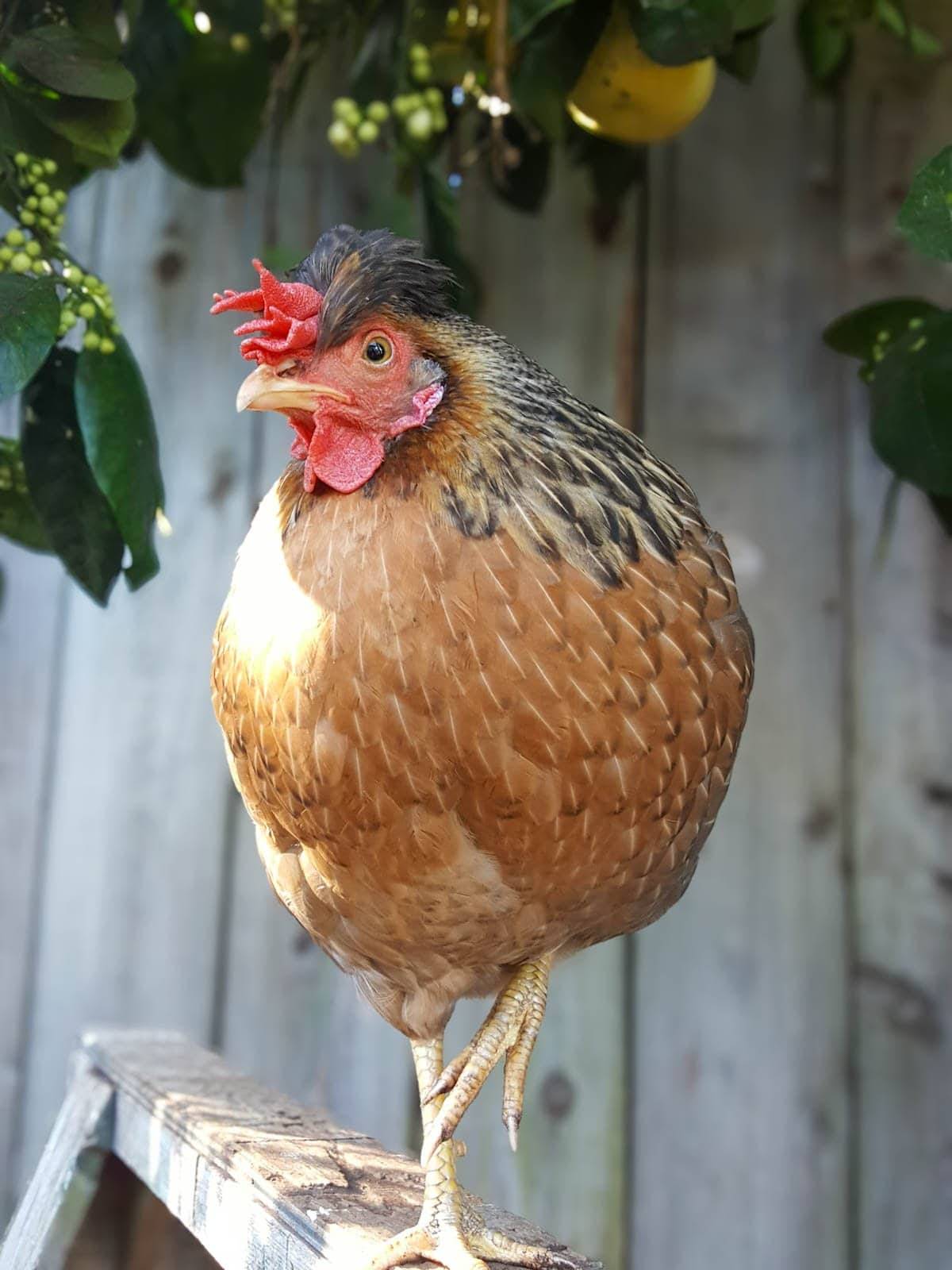
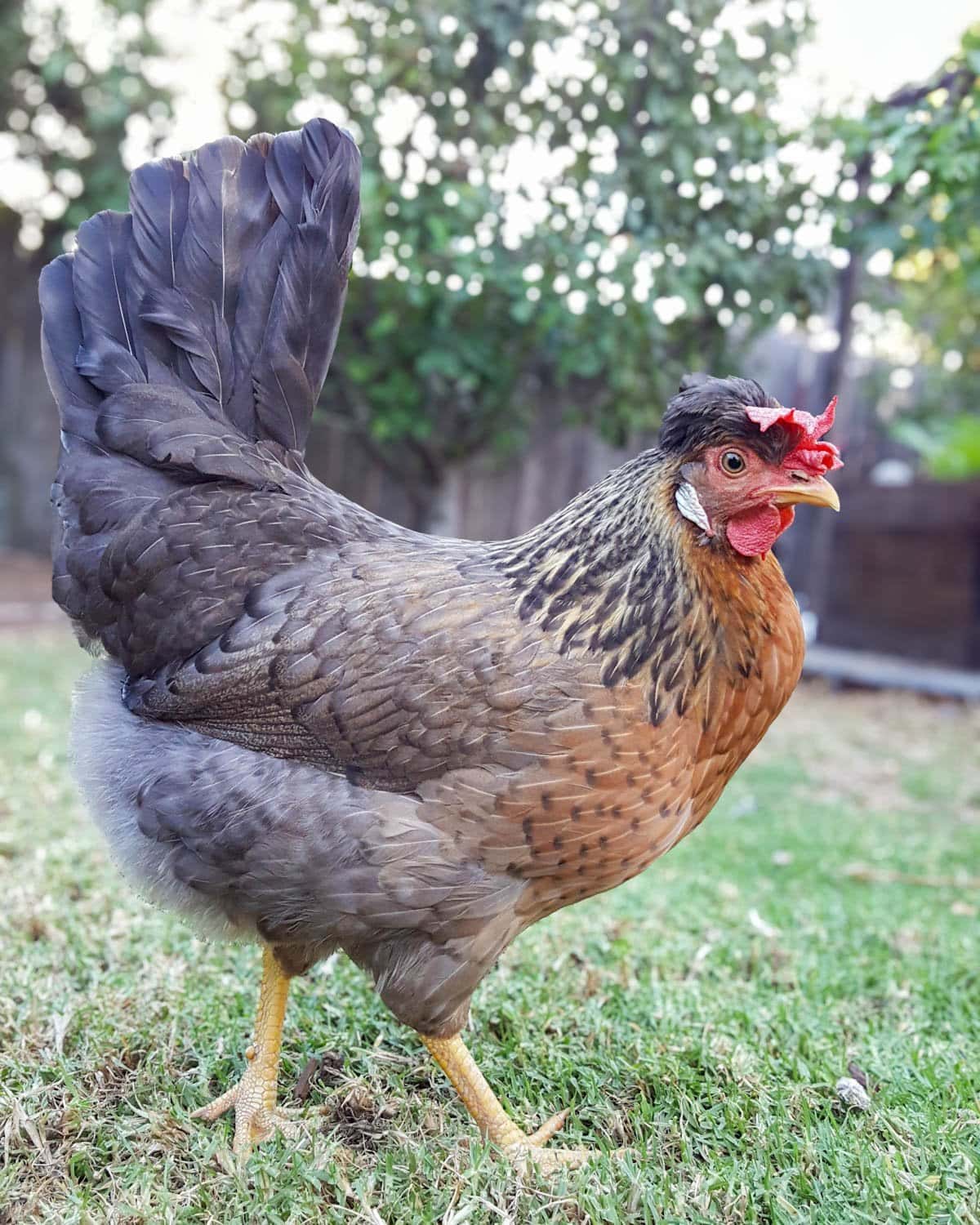
Crested Cream Legbars, or just “Cream Legbars”, are a slightly less common chicken breed. They’re becoming increasingly sought after for their adorable fluffy heads and beautiful blue eggs.
- Temperament: Cream Legbars are known to be very sweet and inquisitive. Some of my friends have super friendly, cuddly Legbars who love being pet or held. Our CCL girl Phoebe was a little more skittish, but oh-so-quirky and beautiful!
- Eggs: Cream Legbars lay about 4 to 5 medium-size pastel blue eggs per week.
- Appearance: Crested Cream Legbars are aptly named for the feathered “crest” or tufted pouf on their head. They have a large single floppy comb and pretty tan, orange, black and white speckled feathers. Cream Legbars are also an auto-sexing chicken breed, meaning the male and female chicks look different and can easily be distinguished upon hatching.
- Other characteristics: Cream Legbars are good foragers, and keen to spotting and avoiding predators when free ranging. Being on the smaller side for “large fowl”, they can move quick! They’re tolerant to heat, cold, and confinement.
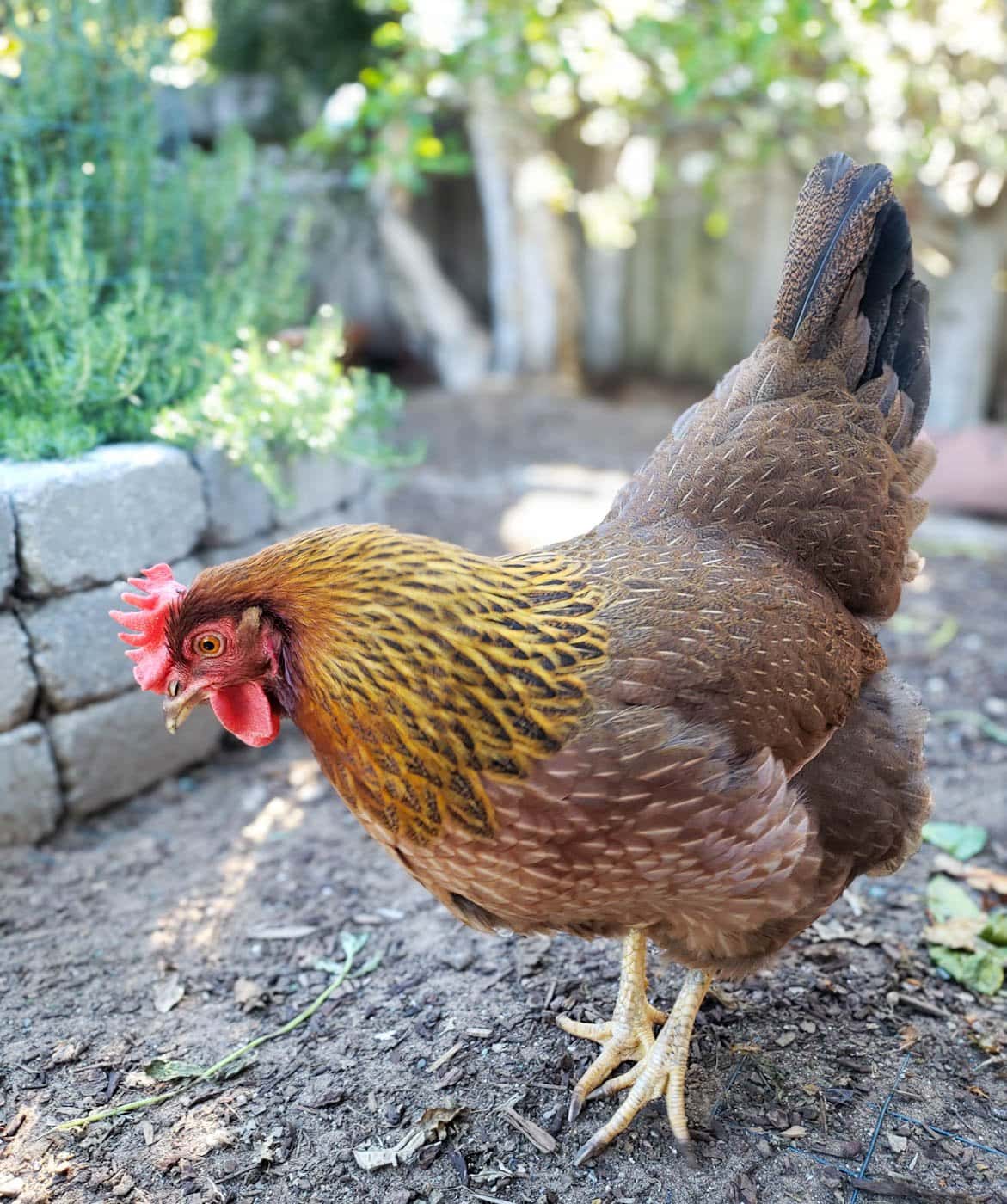
6) Welsummer
Welsummers are an all-around awesome addition to your flock! Backyard chicken keepers have nothing but good things to say about this breed. We absolutely adored our sweet Welsummer girl, Ginger (RIP).
- Temperament: Welsummers are calm, sweet, beautiful, and steady, reliable layers.
- Eggs: If you are looking for reddish brown eggs, usually with awesome dark brown speckles, look no further! Welsummers lay four gorgeous large eggs per week.
- Appearance: Welsummers are mostly reddish brown, with gold and black streaked neck feathers, and a prominent single comb and wattles.
- Other characteristics: Welsummers are good foragers, though our past girl Ginger was a very gentle digger. Ginger was also our least assertive bird of the flock (at the bottom of the pecking order) despite the stereotype that they can be more assertive with others. Welsummers are both cold and heat-hardy.
7) Ameraucana
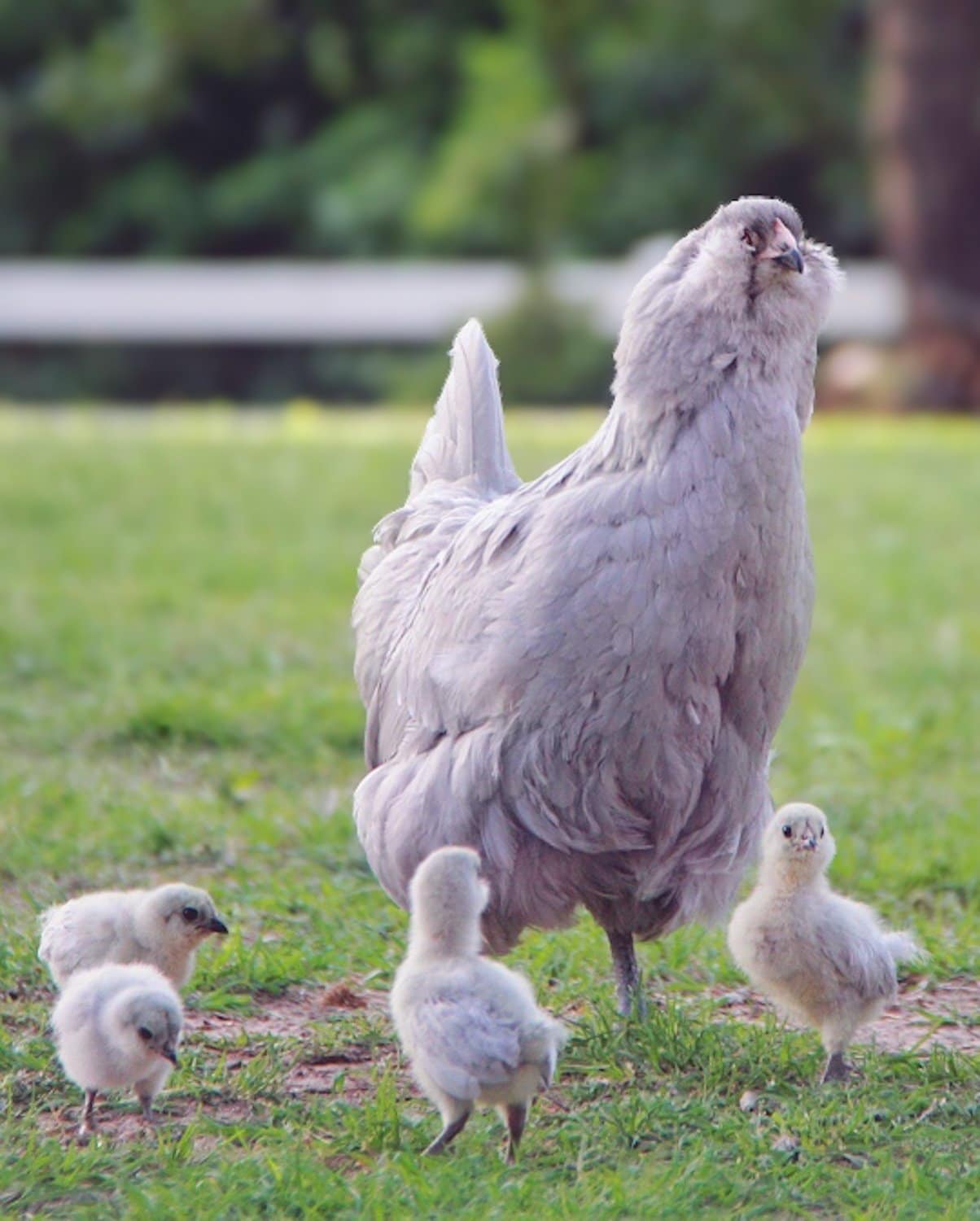
Often confused with Easter Eggers, this recognized chicken pure breed does have a lot of similar characteristics! With fluffy cheek muffs and a beard, their faces couldn’t get any cuter.
- Temperament: Most chicken keepers say their Ameraucanas are docile but very alert and predator savvy. Personality varies per bird – some may enjoy human interaction, while some may be a little more skittish or less cuddly than some other breeds.
- Eggs: Ameraucanas lay beautiful medium-size blue eggs in a wide range of shades, with an average of about 3 to 4 per week. But don’t expect eggs right away from this breed! They may “come into lay” a couple months later than other hens.
- Appearance: Ameraucana plumage color ranges from blue to buff and wheaten to lavender. I’ve always wanted a lavender or blue splash Ameraucana!
- Other characteristics: Like Easter Eggers, Ameraucana chickens are a hardy breed that’s tolerant to both cold and heat.
8) Wyandotte
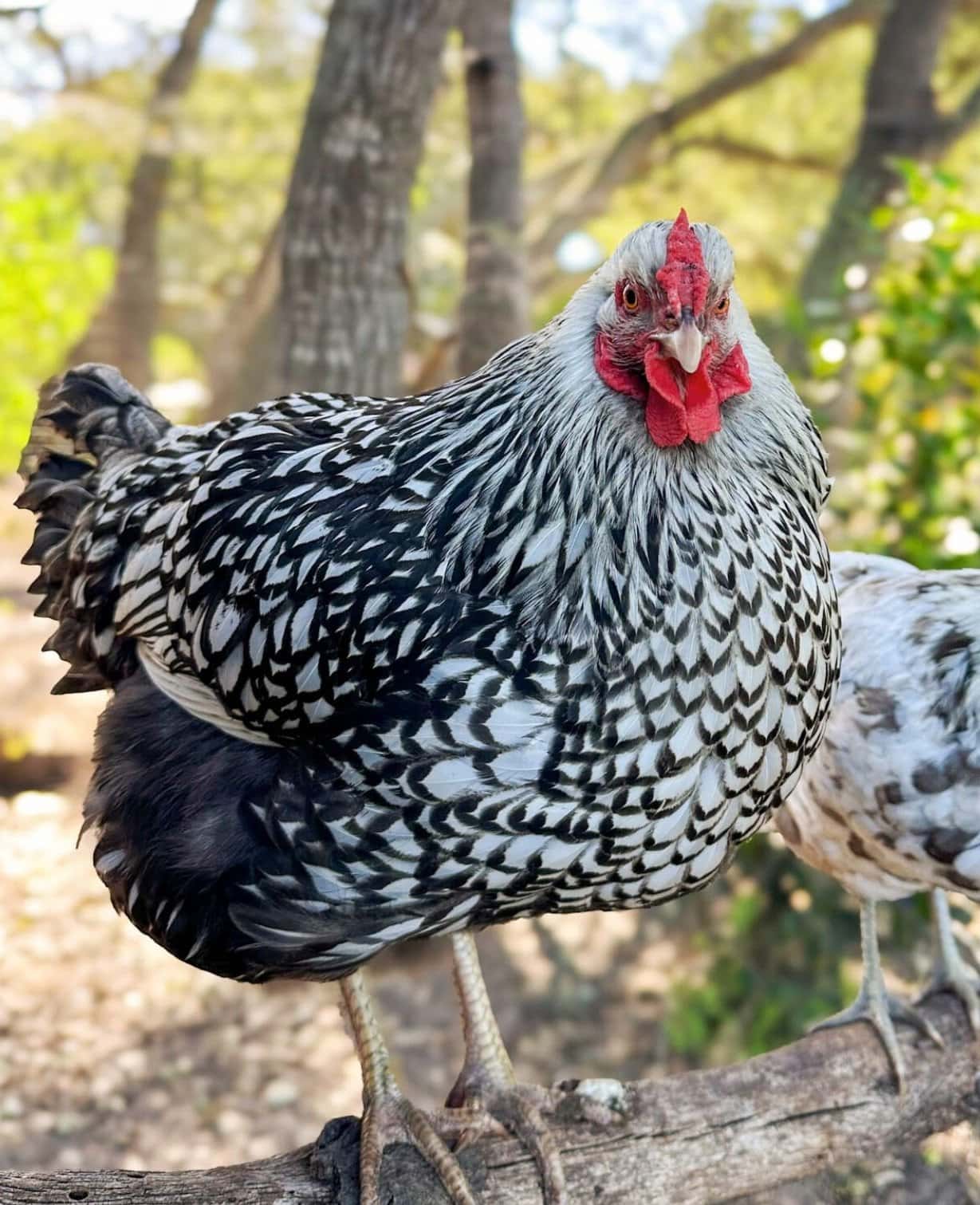
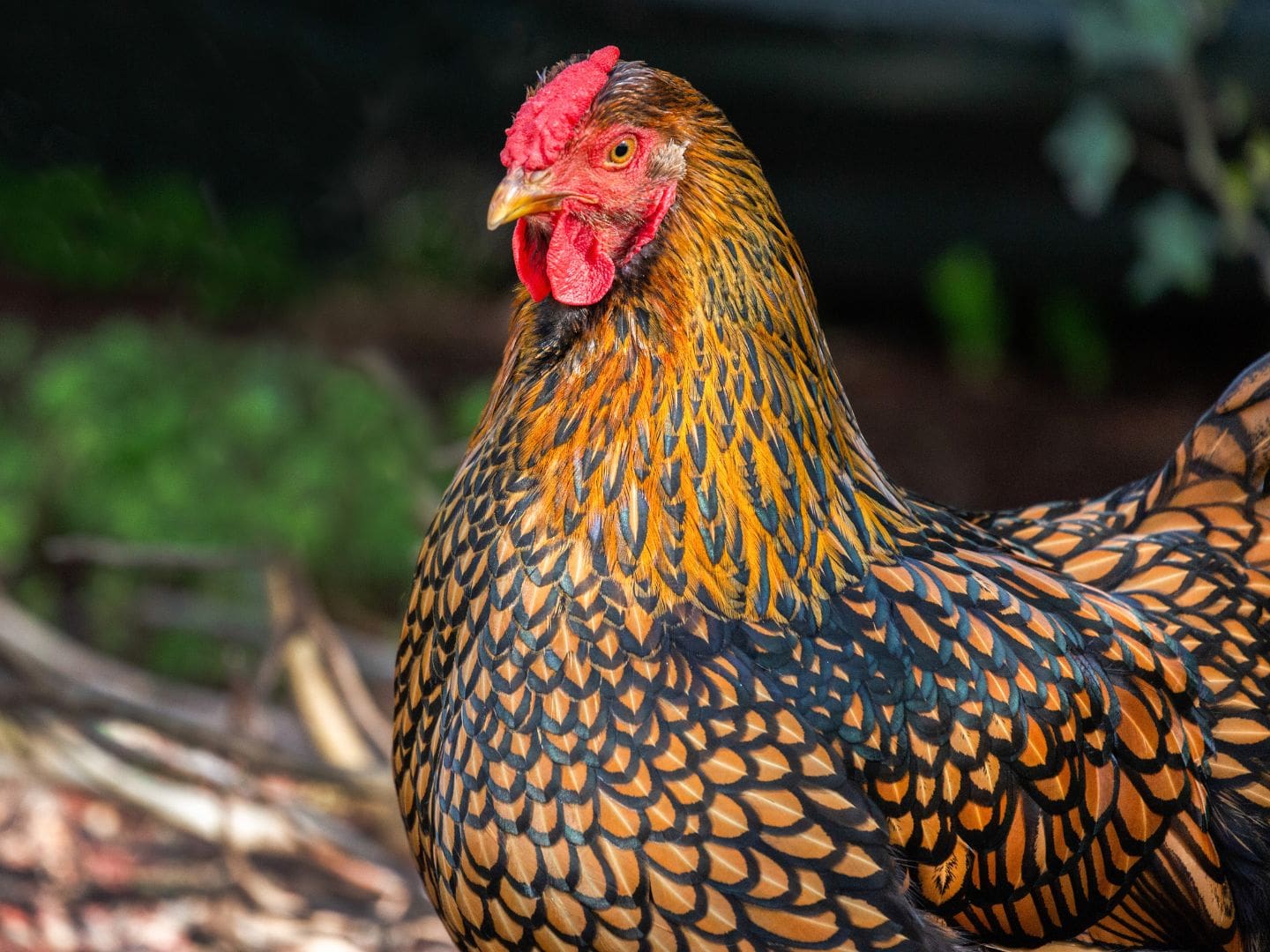
Wyandottes are among one of the most striking, beautiful chicken breeds on the list. With their showy laced patterns and extra-fluffy feathers, they’re truly stunning birds! We currently have two silver-laced Wyandottes but I want a gold laced too.
- Temperament: With humans, Wyandottes are mostly calm and friendly birds, though some can be a little aloof. They’re not necessarily known to be “lap chickens” like Barred Rocks or Orpingtons. When it comes to flock relations, Wyandottes often rank high in the pecking order and can be bossy or even a little aggressive to keep others in check.
- Eggs: Wyandottes will lay about 4 medium-to-large light brown or pinkish tan eggs per week.
- Appearance: Gold Laced (gold and black) and Silver Laced (black and white) are the most common Wyandotte plumage colors, though they also come in blue, black, partridge, and more.
- Other characteristics: They’re a heavy breed and therefore not usually as quick or flighty. With a flat rose comb and full plumage, they’re exceptionally suited for cold climates. However, they’ll need extra measures taken to keep them cool and comfortable in high-heat climates. Wyandottes are more prone to going broody than some other breeds. They are good foragers and prefer free range.
9) Cochin
Cochins are a popular, sweet, extra fluffy chicken breed! They’re not known to be the best layers, but for what they lack in egg production, they more than make up for in looks and personality.
- Temperament: Cochins have a reputation for being very friendly, docile, easy to handle, and overall good-vibes birds. Even Cochin roosters are known to be pretty chill. They aren’t aggressive foragers, preferring a more lazy, easy-going lifestyle.
- Eggs: Cochins lay about 2 medium brown eggs per week on average.
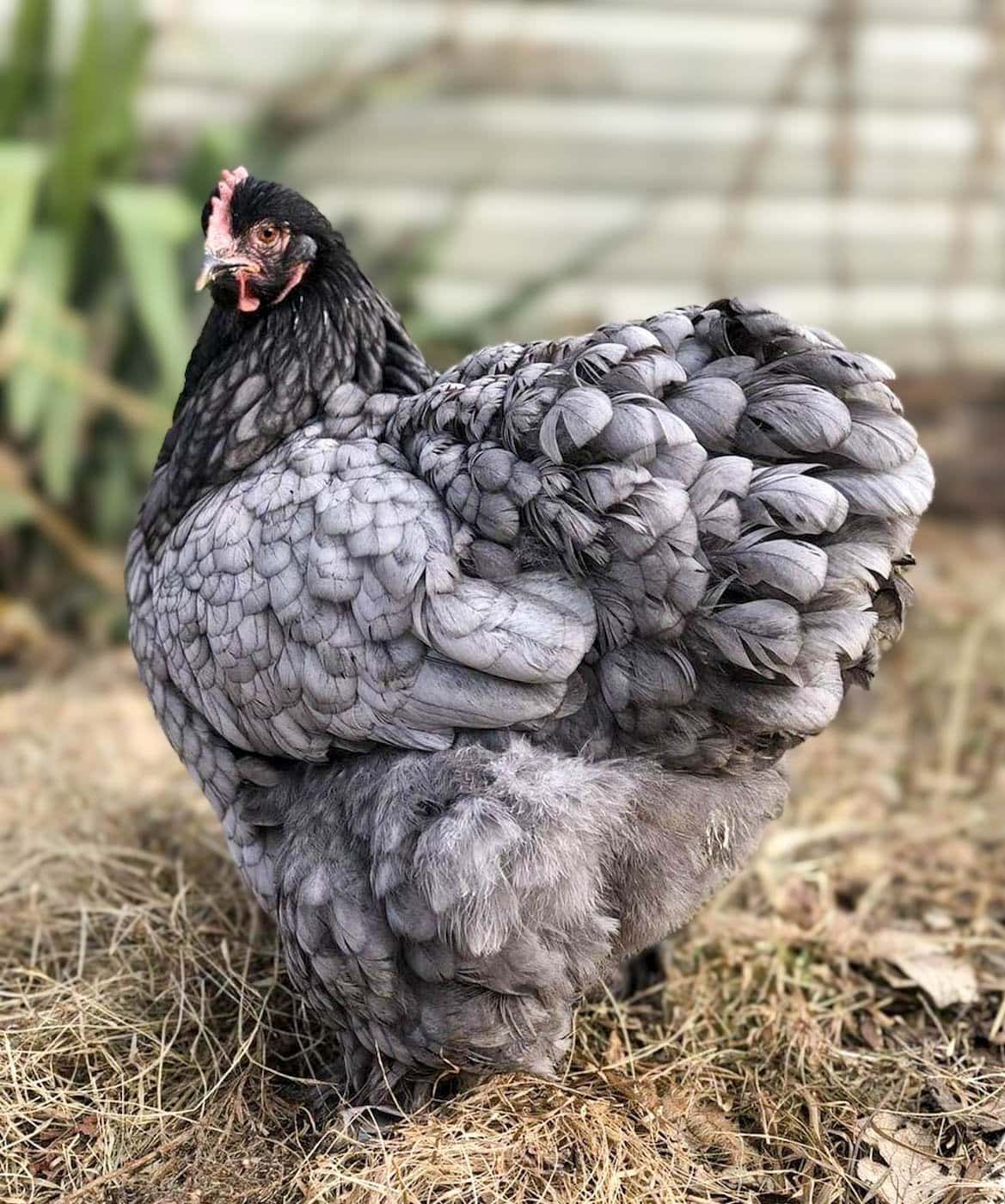
- Appearance: Fluffy feathered pantaloons, anyone? These birds are so round and fully feathered that you usually cannot see their feet. Cochins come in just about every plumage color: buff, blue, gold laced, white, black, partridge, and more.
- Other characteristics: Given their heavy stature and immense fluff, Cochins are very cold hardy and easy to contain with minimal fencing. Cochins are not impressively heat tolerant, but that can be overcome with extra precautions like plenty of shade, cold water, and frozen treats.
10) Salmon Faverolles
Meet the fluffy puppies of the chicken world! Someone once told me, “if I had to choose just one breed, I’d have a whole flock of Faverolles” – and I couldn’t agree more. Our Salmon Faverolle was a doofy, goofy, adorable little lovebug (RIP Frannie). We’ll be getting several more the next time we get chicks!
- Temperament: Salmon Favoerolle chickens are gentle, sweet, chatty, and very friendly. They usually enjoy human interaction and are easy to handle, making them ideal family pets. Faverolles can also be a bit ditzy, which makes them especially charming and comical, though often low on the pecking order and vulnerable to bullying.
- Eggs: Faverolles lay 3 to 5 medium large pinkish-tan eggs per week. They’re known to be reliable winter layers.
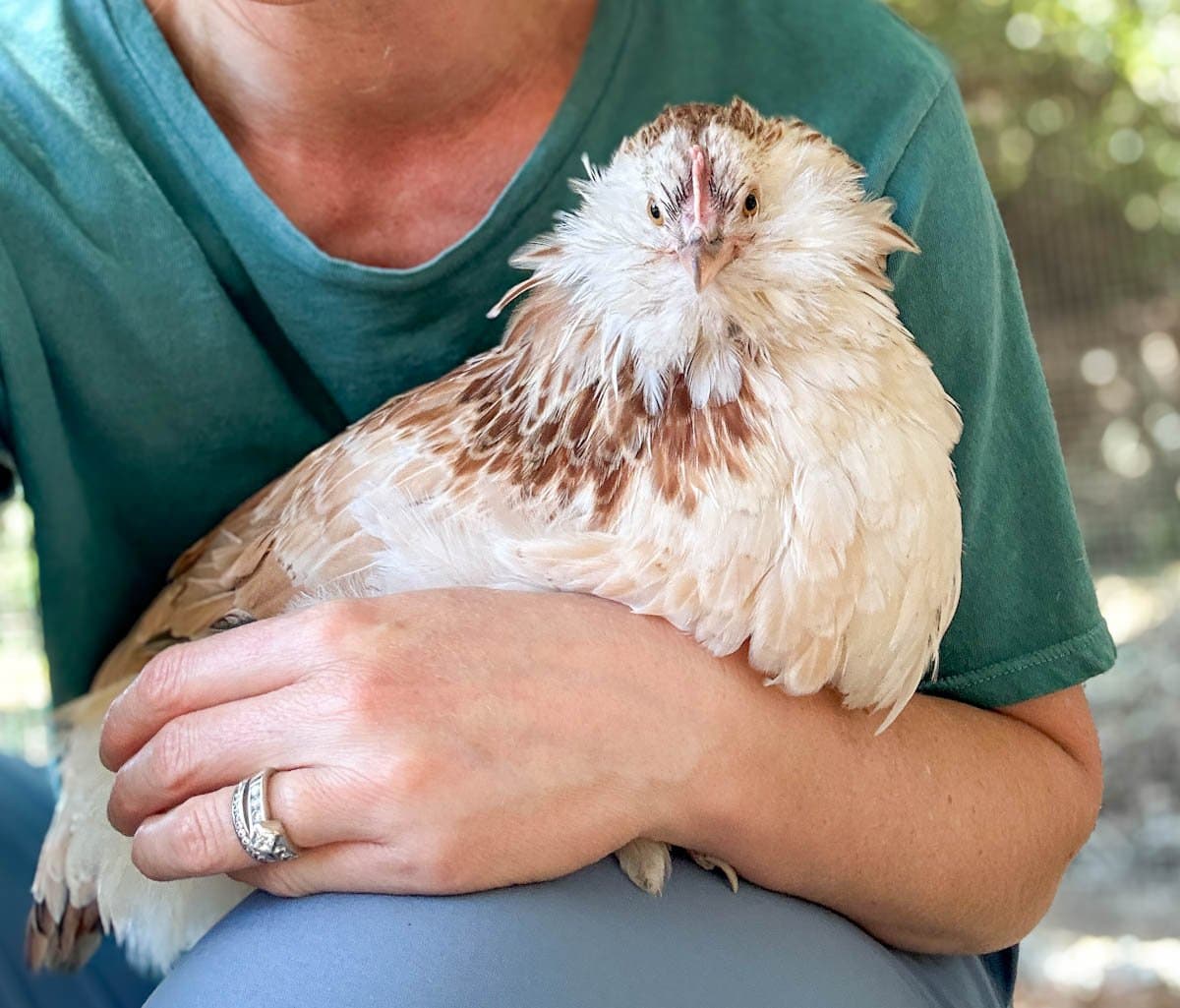
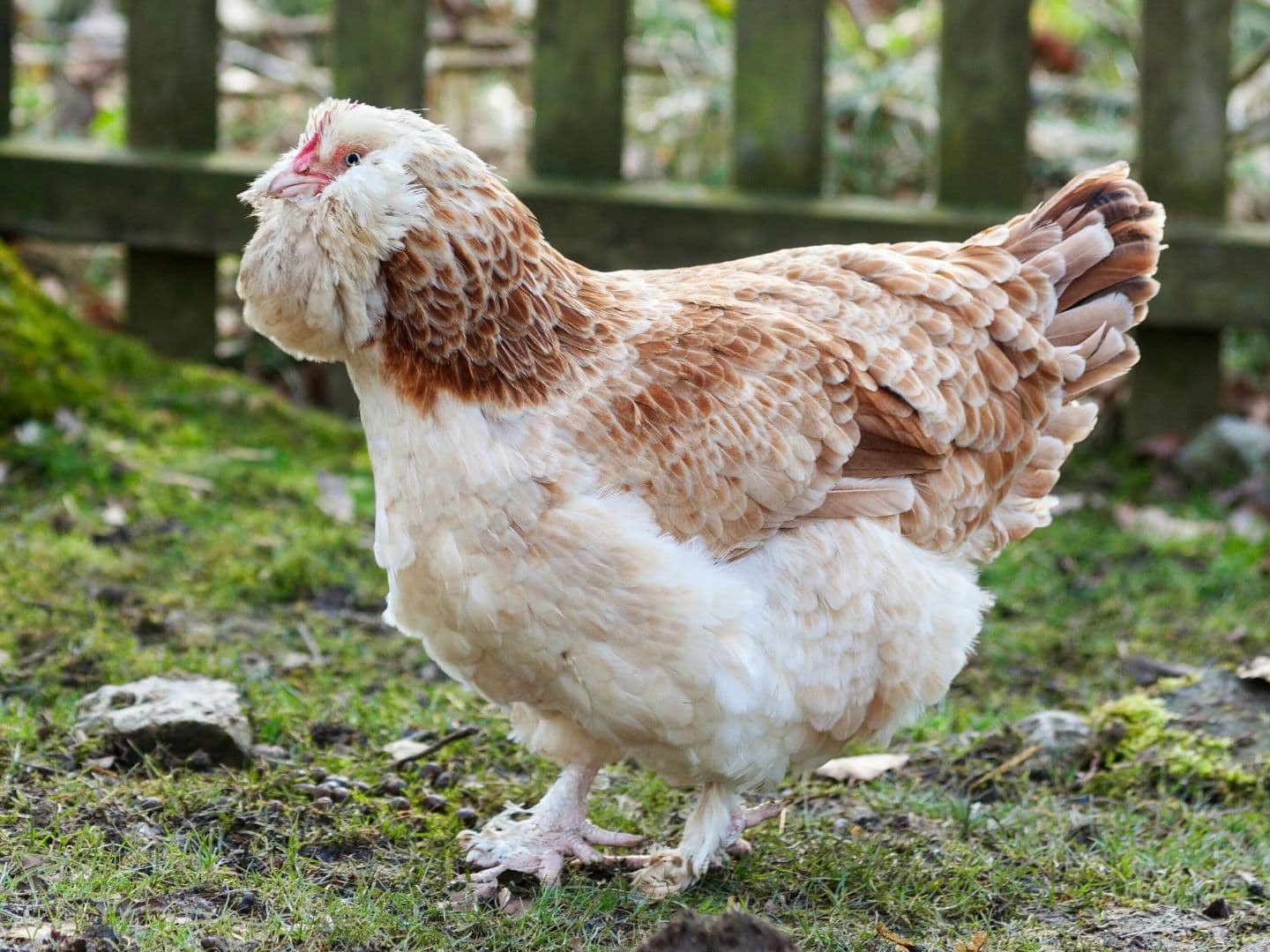
- Appearance: Salmon Faverolles don an adorable fluffy beard, muffs, and cheeks as well as feathered feet with an extra fifth toe. (As if their personalities didn’t make them cute enough!) Hens have a white chest, beautiful salmon-orange colored back feathers, and a small single comb.
- Other characteristics: Thanks to their extra fluff, Salmon Faverolles are very cold hardy but may not tolerate extreme heat well. They are large and considered good dual-purpose birds.
11) Australorp
An Australorp is the Australian version of the Orpington chicken breed, and have many of the same desirable qualities!
- Temperament: Generally speaking, Australorps tend to be very docile, sweet, and friendly. Some birds may be a tad shy.
- Eggs: This chicken breed is well-known for their high-volume egg laying abilities. Several world records for the most number of eggs per year were set by Australorp hens! They will lay an average of 5 to 6 large light brown eggs per week.
- Appearance: Australorp plumage can be blue, black, or white. I personally think the black is the most stunning, with an iridescent green, blue, and purple sheen in the right lighting. They have a single large comb.
- Other characteristics: Fluffy and large, these birds have great cold hardiness. As you can imagine, being that they originated in Australia and are very popular birds there, they are also quite heat tolerant.


12) Speckled Sussex
Here’s another sweet, beautiful chicken breed that has been on my flock wishlist for a long time!
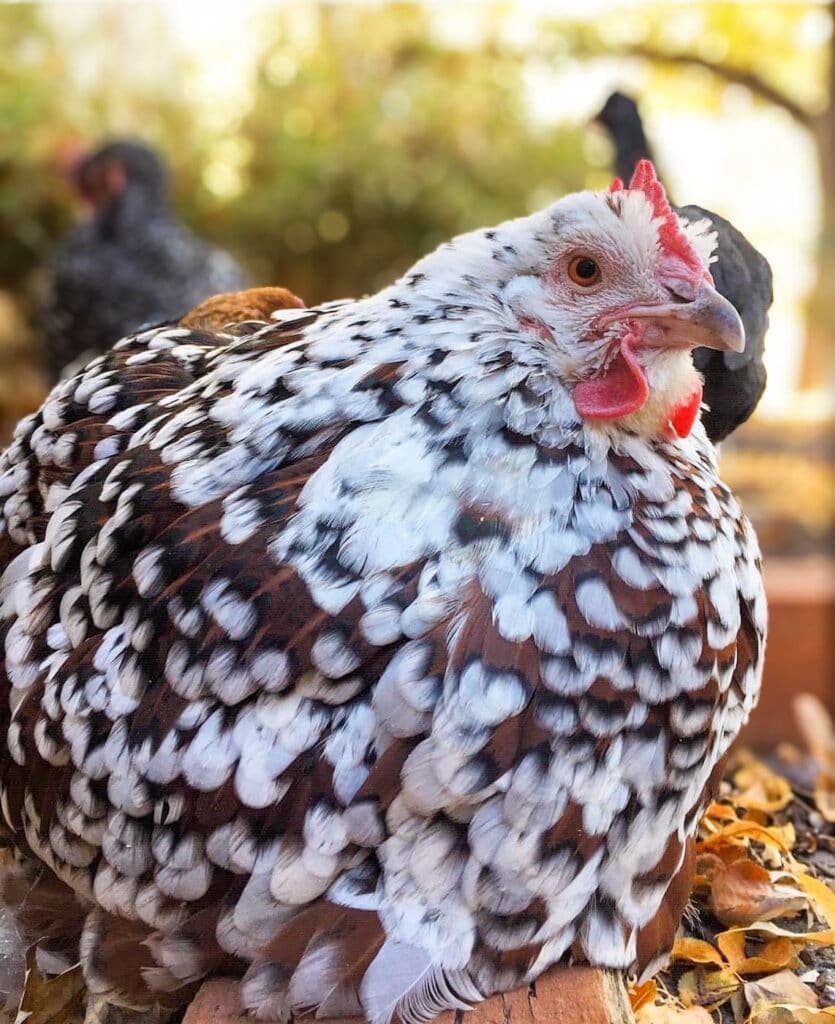
- Temperament: Speckled Sussex chickens are curious, gentle, and mild-mannered. They’re the type of chicken that will probably follow you everywhere you go.
- Eggs: Speckled Sussex lay about four light brown eggs per week. Unlike many other chicken breeds, they’re likely to lay through the coldest of winter weather.
- Appearance: Speckled Sussex chickens have absolutely gorgeous plumage, with white, black and iridescent green-blue speckles set against a dark reddish-brown background. After each molt, they can become increasingly speckled and pretty.
- Other characteristics: As heavy dual-purpose birds, Sussex chickens aren’t as prone to flying once they mature to full size, so they’re a little less likely to hop the fence into your garden! They’re a good cold-hearty breed too.
13) Silkie
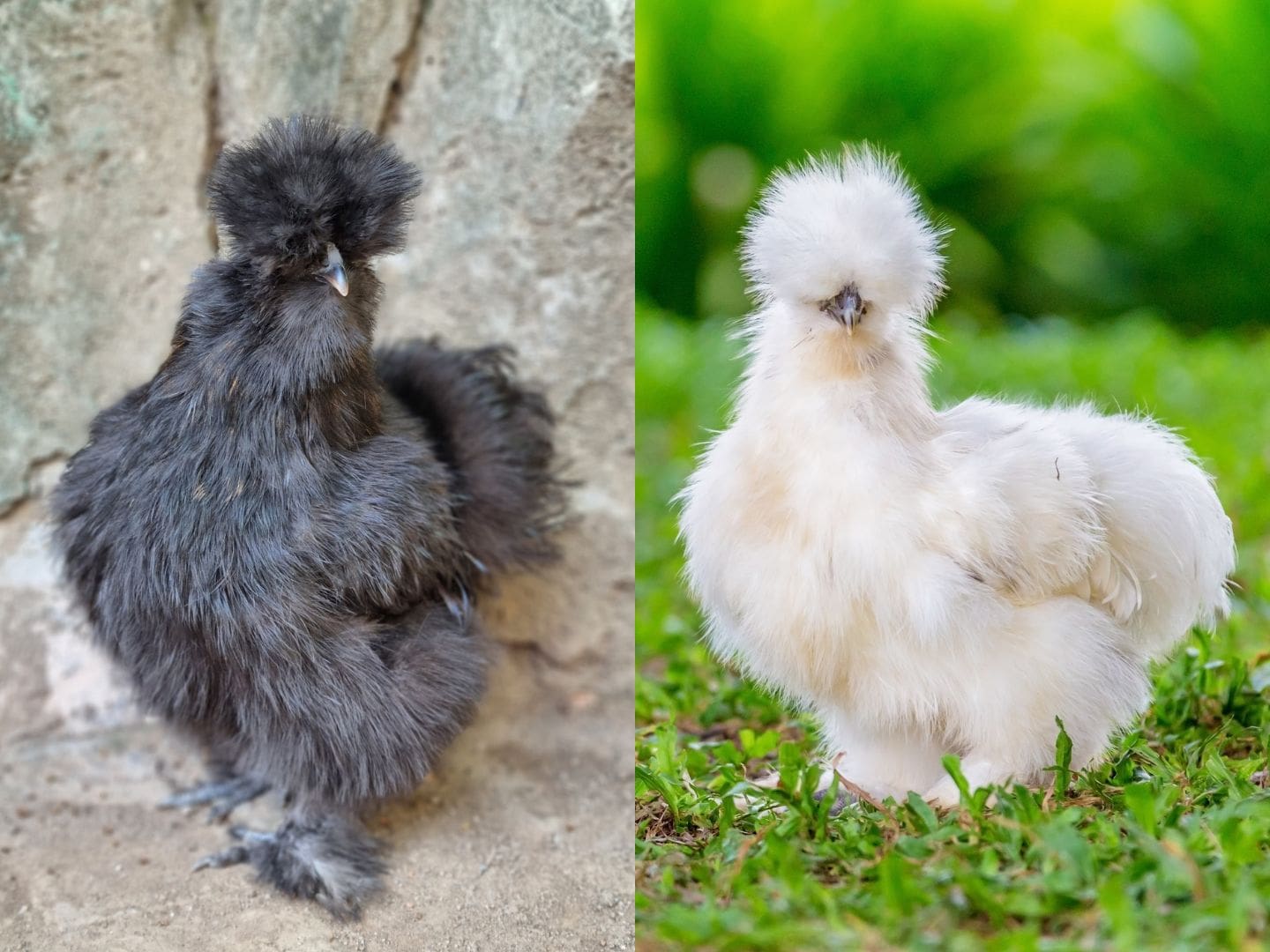
Silkies are the teddy bears of the chicken world. Mostly kept as beloved pets over egg production, these small birds (bantams) are exceedingly sweet and adorable. They’re commonly raised as show birds and tend to be higher-maintenance than other breeds.
- Temperament: Silkies are very friendly and easy to handle. Since they’re so docile, petite, and sport special feathers, Silkies can be an easy target for bullying and feather-plucking by other members of a mixed flock. Therefore, Silkies may do best in flocks of their same kind or with small breeds like bantams or Polish (though some folks have no issues).
- Eggs: Silkies lay about about 2 to 3 eggs per week. The eggs are small to medium size, usually cream in color. Silkies also go broody easily, and make for excellent mothers.
- Appearance: Silkie chickens have fine fuzzy feathers that make them look like they’re covered in fluff, including very fluffy heads. Silkie plumage variations include blue, black, white, grey, buff, partridge, and splash.
- Other characteristics: Due to their unique feathers, there are a few things you need to know to properly care for Silkie chickens. First, because their feathers do not stick together, Silkies cannot fly. This makes them easy to confine, but also an easy targets for predators. Even more, Silkies are not waterproof like other chicken breeds and cannot tolerate overly wet climates without some supplemental heat or blow drying. On the other hand, they are quite heat tolerant!
See this guide on caring for Silkie chickens for more information.
14) Polish
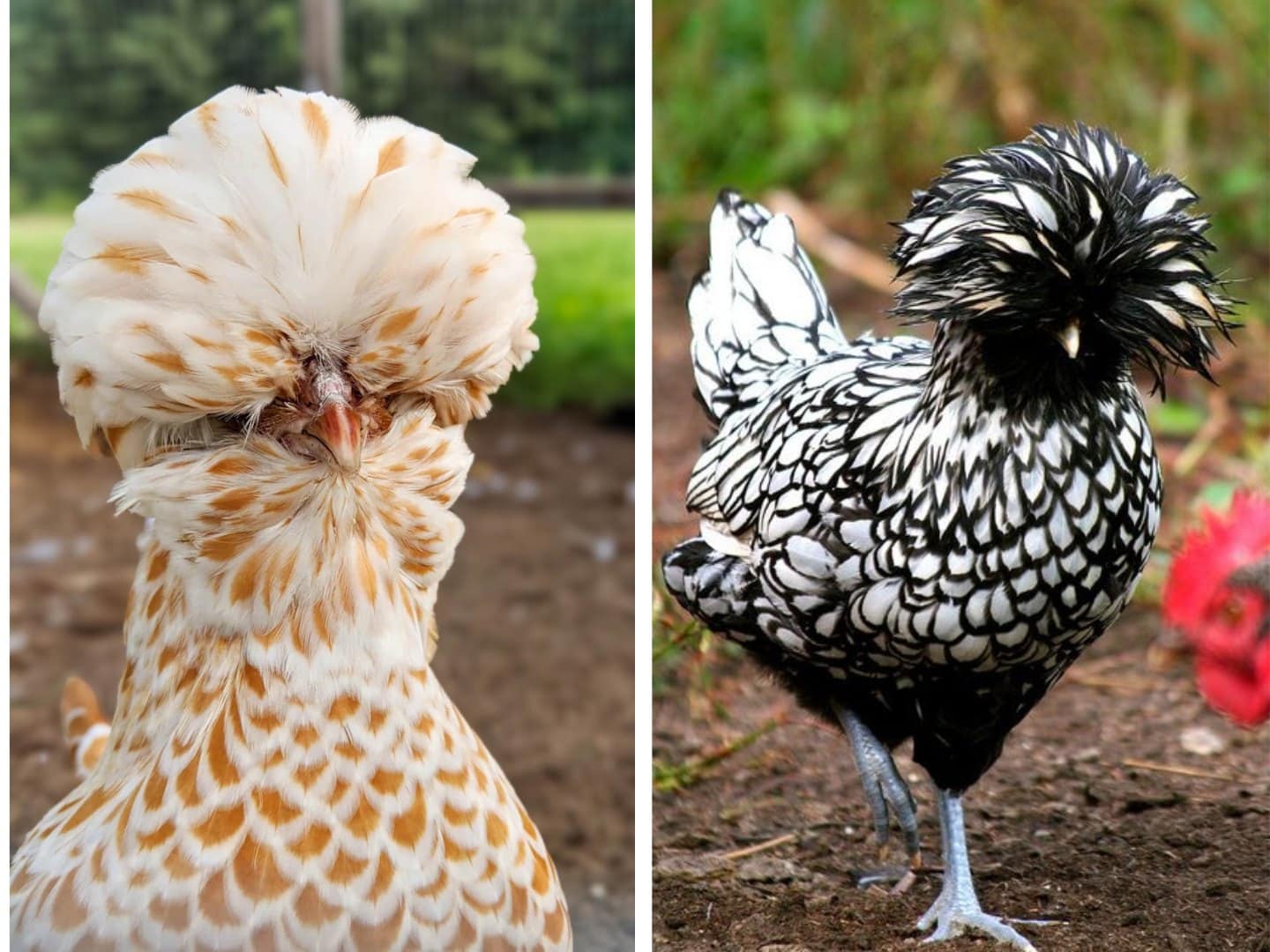
Adorned with fluffy pom-poms on their heads, Polish chickens are ridiculously cute. However, the head pouf can be so full that it might need routine trimming to help the birds otherwise impaired eyesight.
- Temperament: Polish chickens are typically very tame, sweet, and will tolerate being held, making them a very good choice for a family with children. They are inquisitive, fly well, and tend to startle easily (which may be attributed to their partially blocked eyesight) so they may get themselves into tricky situations at times.
- Eggs: Like Cochins and Silkies, Polish chickens are usually sought after for appearance over egg production. Polish can lay several medium to large white eggs per week. However, they are known to have more variation in laying frequency and are therefore less dependable layers. They’re also not known to go broody much.
- Appearance: Polish can be many different color combinations, including blue, black, buff, silver and gold laced. Their poofy head crest is sometimes a different color than the rest of their feathers.
- Other characteristics: Polish are a heat-hardy chicken breed, and also do well with cold. However, overly wet conditions are not ideal – as their head crest should be dried if it becomes sopping wet. In a flock with other more aggressive breeds, Polish chickens often fall to the bottom of the pecking order and are easily bullied. Other chickens may also pick and pluck their poofy head feathers. That said, I know of many mixed flocks that include Polish that get along just fine!
15) Araucana
Araucana is a more rare, unusual chicken breed that is docile, has a quirky appearance, AND lays bright blue eggs! Don’t confuse Aruacana with Ameracauna chickens, though both breeds lay blue eggs.
- Temperament: Aruacana chickens are calm, curious, and kid-friendly. They tend to enjoy human interaction, including the occasional lap snuggle! They’re also known to be more talkative than the average chicken breed.
- Eggs: Araucanas are prized for their beautiful bright blue eggs, ranging from sky blue to blue-green.
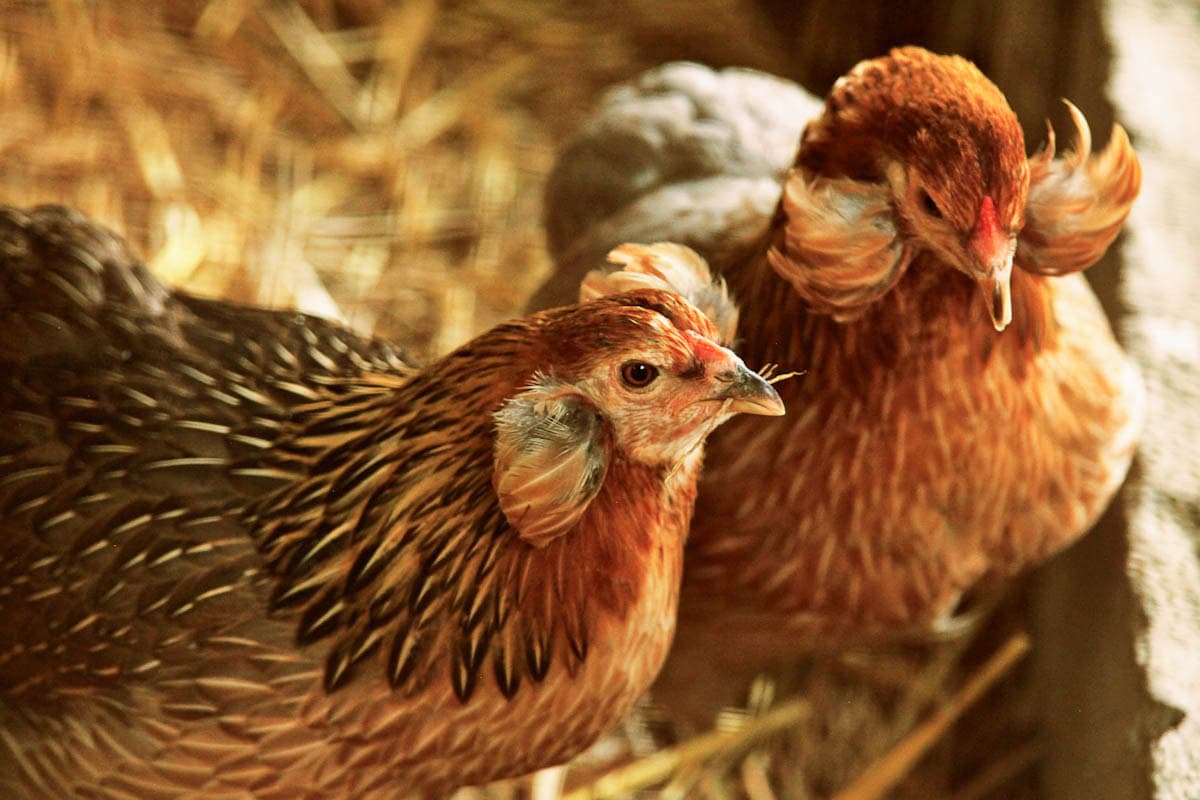
- Appearance: Araucanas are adorably goofy looking, outfitted with silly long ear tuft feathers (not cheek muffs or beards) and a rounded “rumpless” behind (lacking a tail bone or tail feathers). They are medium-sized birds with a small pea comb that come in a range of feather colors.
- Other characteristics: Breeding Auracanas can be tricky due to a lethal gene, contributing to their rarity.
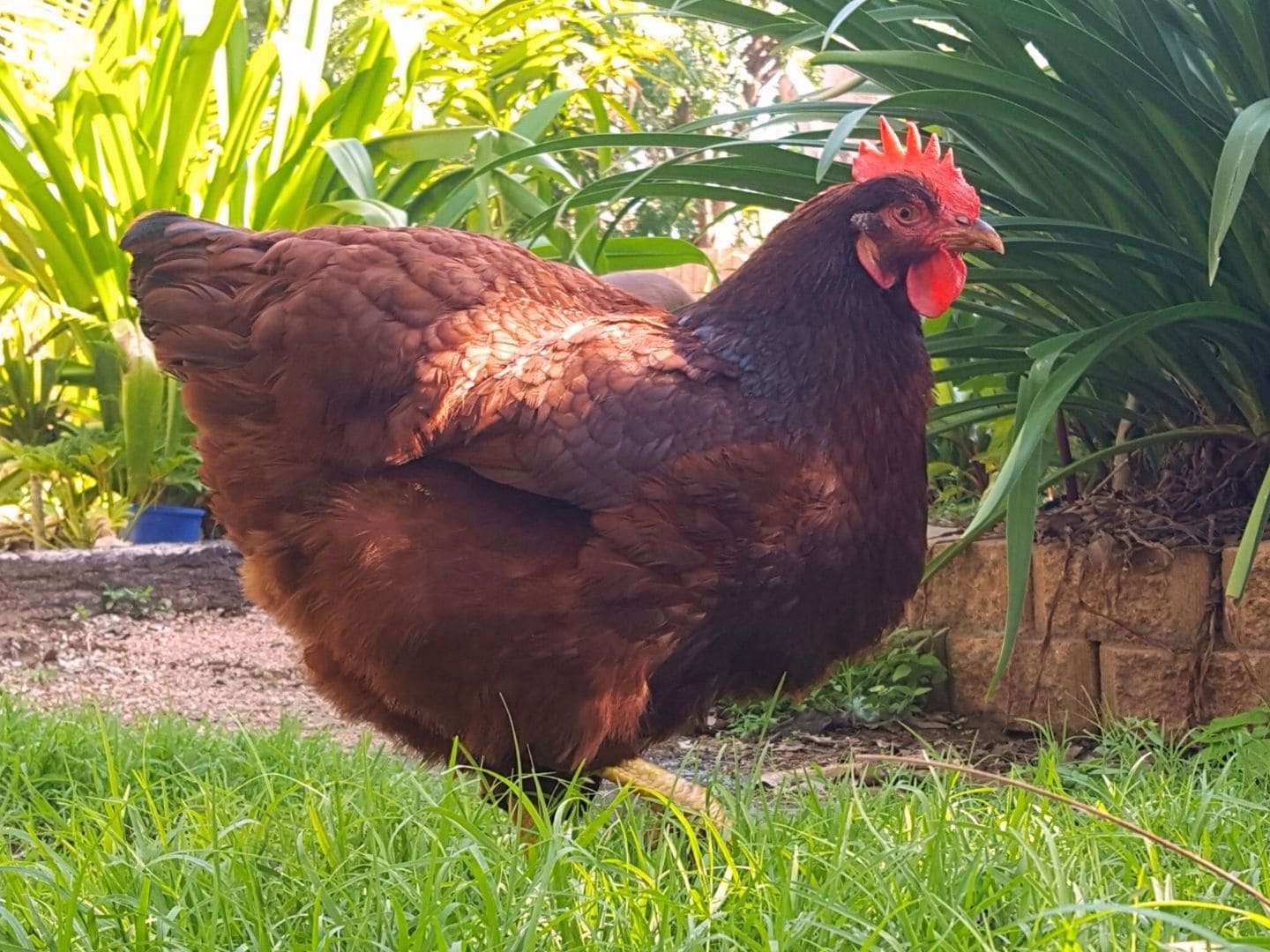
16) Rhode Island Red
Rhode Island Reds sometimes get a bad rap, but give them a chance! They’ll reward you by being one of your best layers… and perhaps a good friend.
- Temperament: There is a persistent rumor that paints Rhode Island Red chickens as a bit more rowdy and sometimes even aggressive. However, every bird is different. Many folks on backyard chicken forums have very positive things to say about their RIRs! They have dominant personalities and often emerge as the “top hen” in the flock, but can be friendly or even cuddly with their favorite human companions.
- Eggs: Rhode Island Reds are a classic production breed. They’re valued for high egg laying frequency, providing about 5 to 6 eggs per week, as well as their heavy bodies for meat. Eggs are extra-large in size and brown in color.
- Appearance: Rhode Island Reds are… you guessed it: red! This large dual-purpose breed has reddish brown feathers and a tall single comb.
- Other characteristics: Rhode Island Reds are said to be on the loud side. They do well in most climates, and are especially cold hardy. The chicken breed is recognized as a good forager, but also takes well to confinement. The Rhode Island Red is the official state bird of Rhode Island.
17) Dominique
Dominiques are another all-around great chicken breed for your backyard flock!
- Temperament: Dominique chickens are docile, sweet, and are likely to follow their favorite humans closely everywhere they go. As a gentle, less aggressive breed, they make great companions for the similarly-sweet Cochins, Polish, or Silkies, and could be picked on by other more dominant types.
- Eggs: Dominique are also good steady layers, averaging 3 to 4 medium-large light brown eggs per week. They also make excellent, caring mothers.
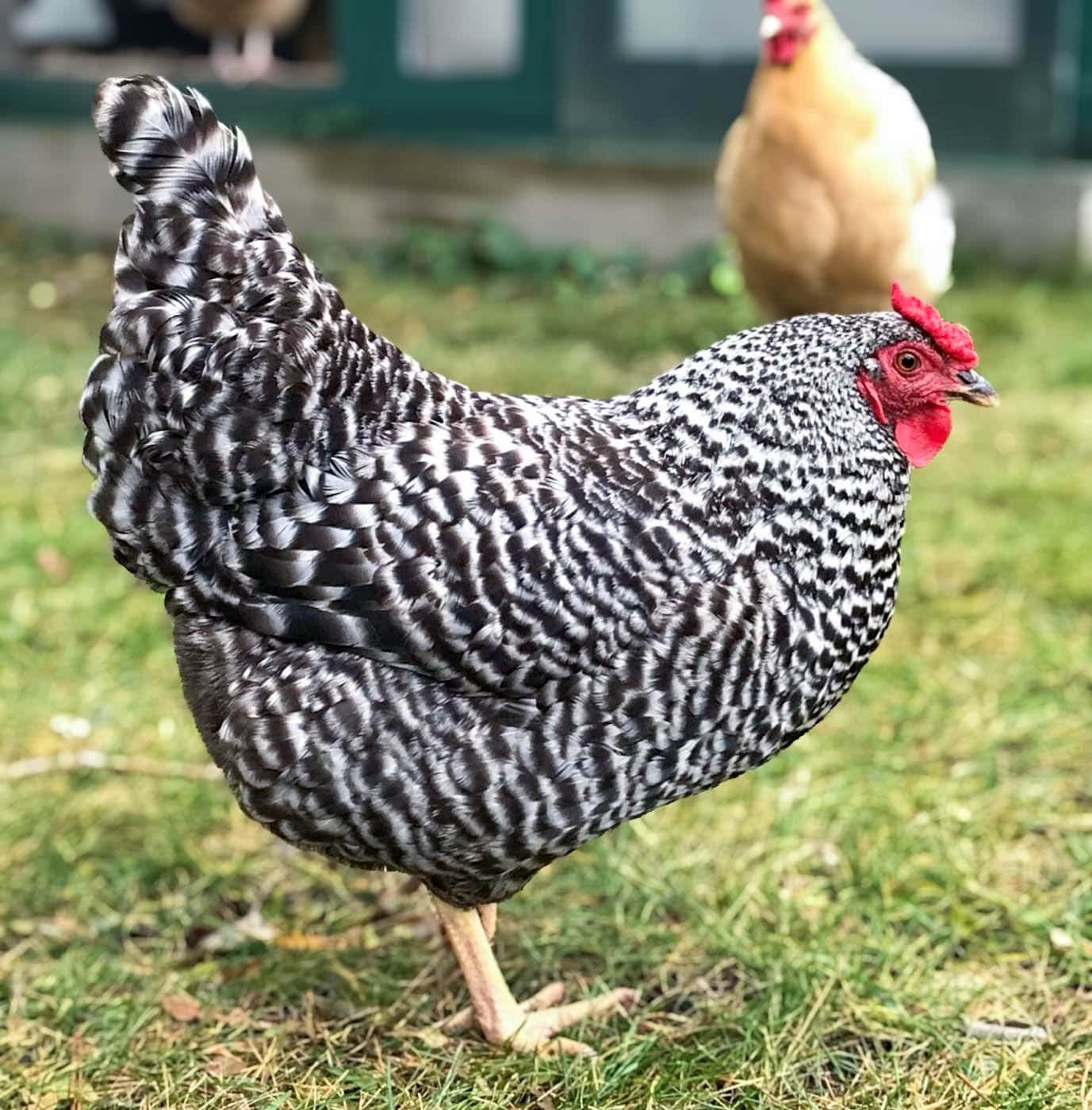
- Appearance: Though they look similar at first glance, don’t confuse this breed with a Barred Rock! Dominique chickens have the same black and white speckled feather pattern, but a bit more muddled or less crisp than a Barred Rock. The most obvious tell-tale difference between the two breeds is the Dominque’s flattened rose comb. Instead, barred rocks have a single tall large comb.
- Other characteristics: Their rose comb gives Dominiques little risk of frostbite and excellent cold tolerance, though they aren’t particularly heat tolerant. Like Cream Legbars, this chicken breed is auto-sexing, making it easy to more accurately determine their sex as baby chicks just by looking at them. Head spots on male chicks are more wide and scattered, while the white spot on a female will be small and uniform.
18) Barnevelder
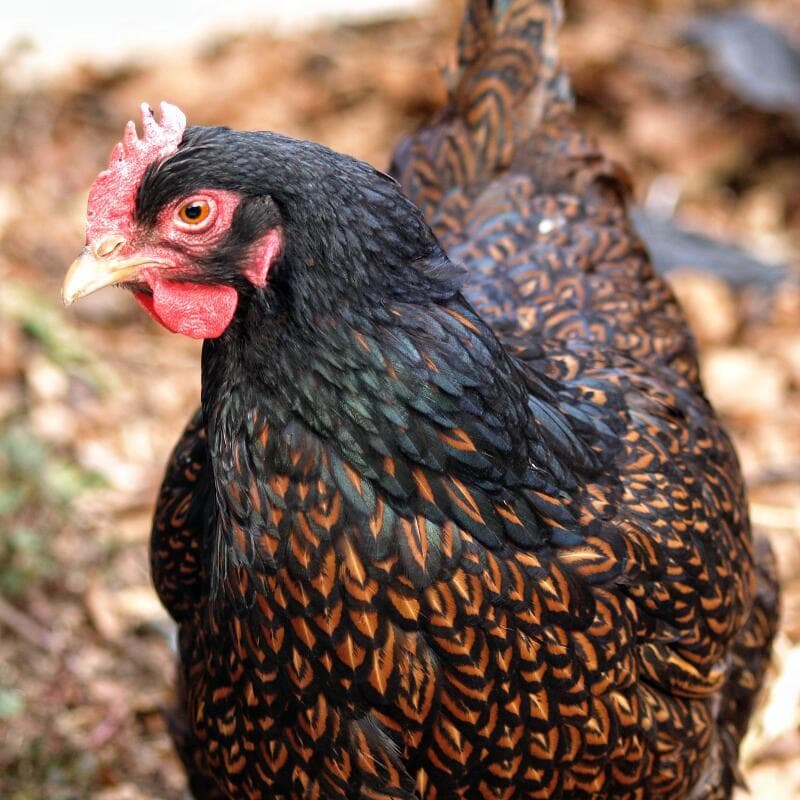
With unique double-laced plumage reminiscent of a Wyandotte, and various shades of brown eggs, Barnevelders are gorgeous all the way around. Since they’re fairly rare, you probably won’t see this breed during chick days at your local Farm Supply store, but are becoming increasingly available through large and small breeders alike.
- Temperament: The Barnevelder chicken breed is rumored to be active, good at foraging, and friendly, but also very easy-going, quiet, and a bit standoffish.
- Eggs: Barnevelders lay about three medium-size eggs per week, which can range from light pinkish tan to dark chocolate brown (most often medium to dark brown).
- Appearance: Barnvelders are beautiful birds and come in a variety of colors and patterns, including black, white, blue splash, silver-laced, blue double-laced, golden-laced, brown-laced, and silver-black double-laced.
- Other characteristics: Barnevelder mature or “come into lay” a few months later than most other types of chickens. This breed is also cold-hardy. Much like other mellow breeds, these gals can often fall to the bottom of the pecking order.
19) Swedish Isbar (aka Silverudd’s Blue)
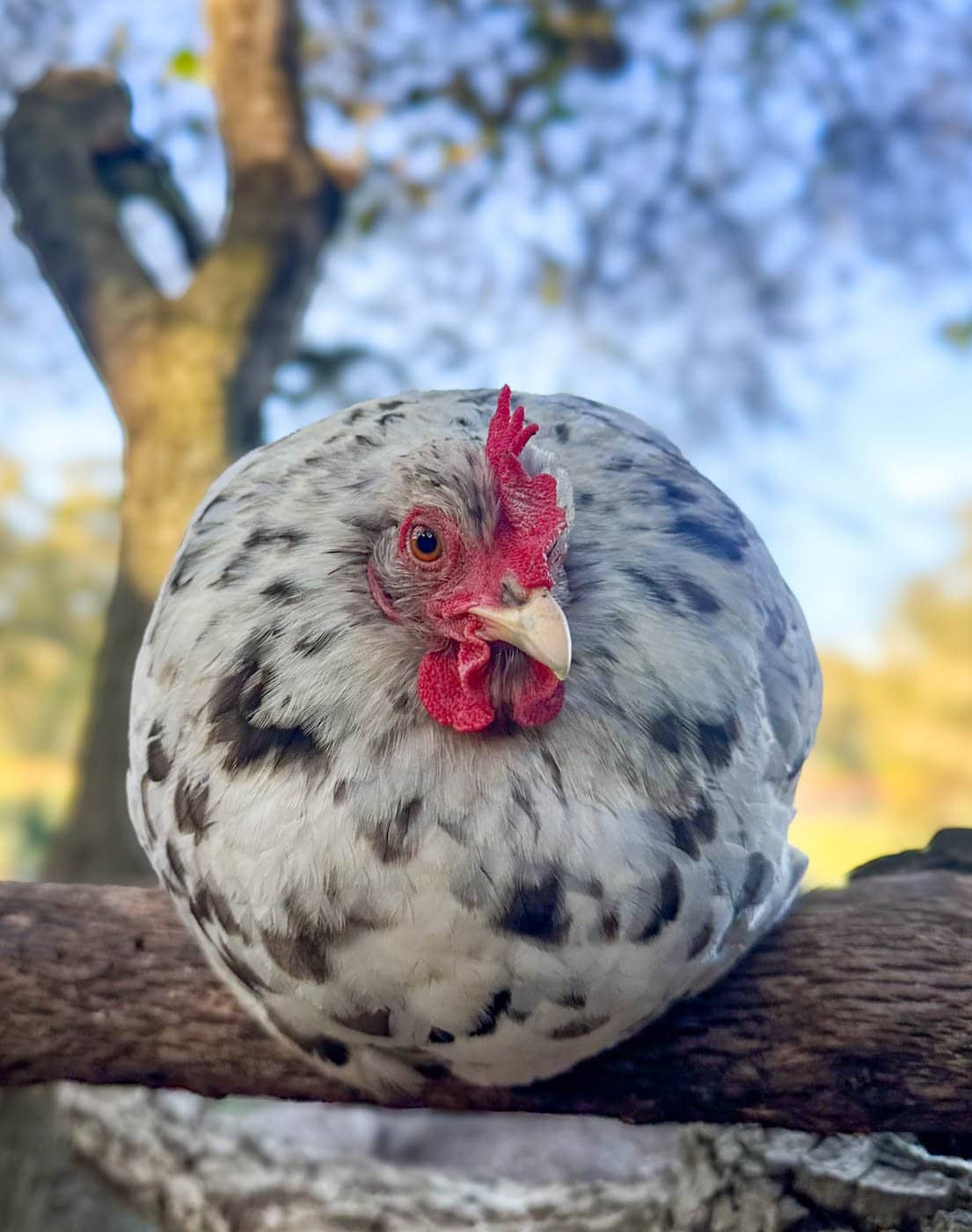
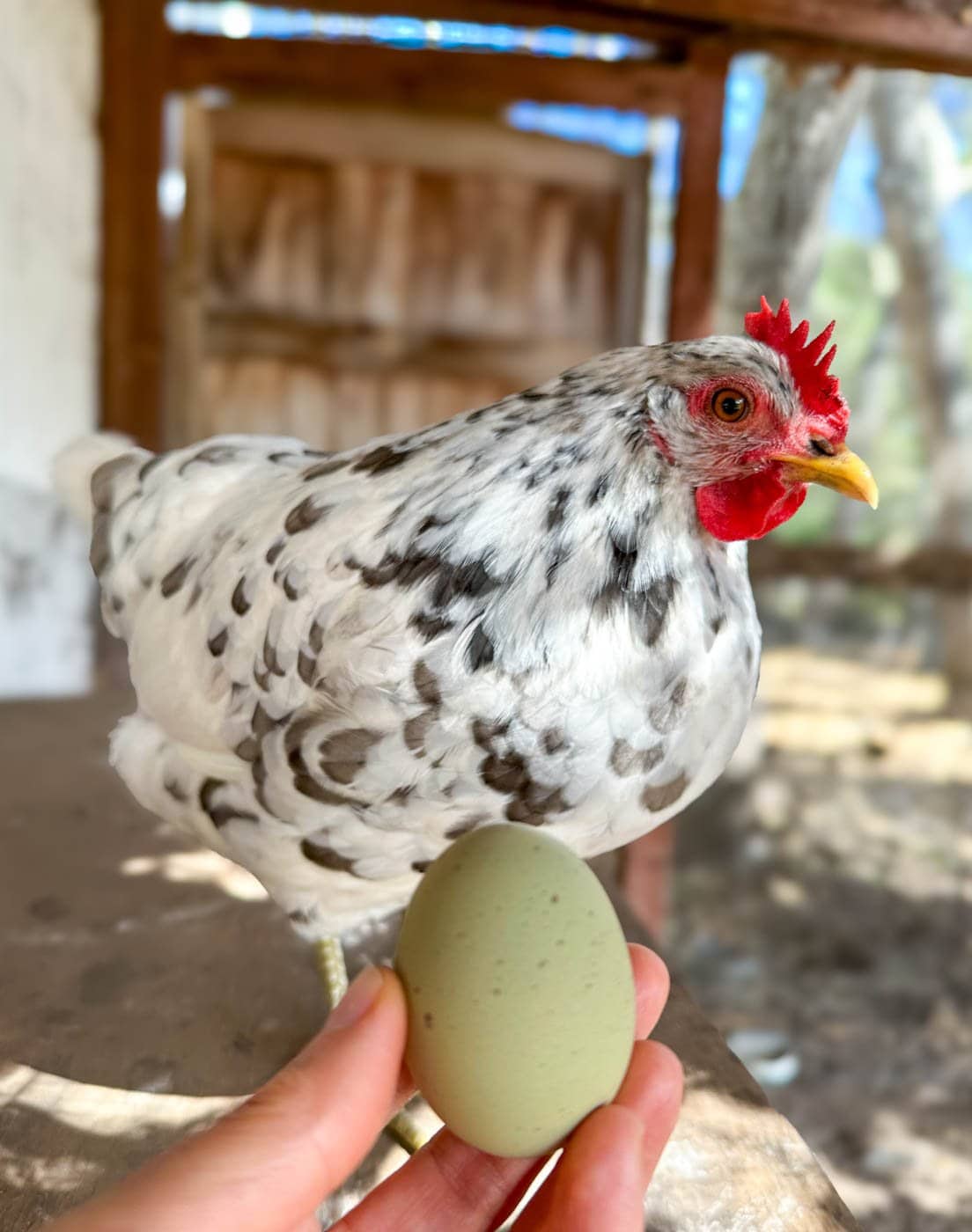
Isbars, also known as Silverudd’s Blue, is a lesser-known type of chicken that was originally developed in southern Sweden in the 1950’s. Fun Fact: Isbars are the only chicken breed that naturally lays green-tinted eggs, while all other green layers were bred as hybrids. We’ve had two in our flock!
- Temperament: Isbars are curious, active, and excellent foragers. They’re often described as “friendly but independent“. In my experience, one of our Isbars was an absolute love bug (my number one lap chicken, RIP Tater Tot) while the other is more flighty and hardly lets me touch her. Isbars are also very predator-savvy.
- Eggs: Isbar chickens lay beautiful green eggs – with a range of seafoam, mint, mossy, or olive green – often with tan or lavender speckles. Despite their small body size, Isbars lay impressively large eggs! Expect 4 to 5 medium-large green eggs per week.
- Appearance: Isbars come in a blue, black, or “splash” feather pattern (white with black or blue spots). Our two are very petite birds, bordering on bantam size. Due to their size, they may end up near the bottom of the pecking order in mixed flocks with larger breeds.
- Other characteristics: Isbars can be extra talkative and loud, with a passion for drama. In my experience, one of our Isbar hens was relatively quiet during the day while the other squawks louder than any of the others before and after laying an egg. If I need to handle them after dark, they BOTH do this unusual noise that can only be described as screaming. My friend Becca says hers do the same. Those survival instincts kick in hard! Lol.
20) Brahma
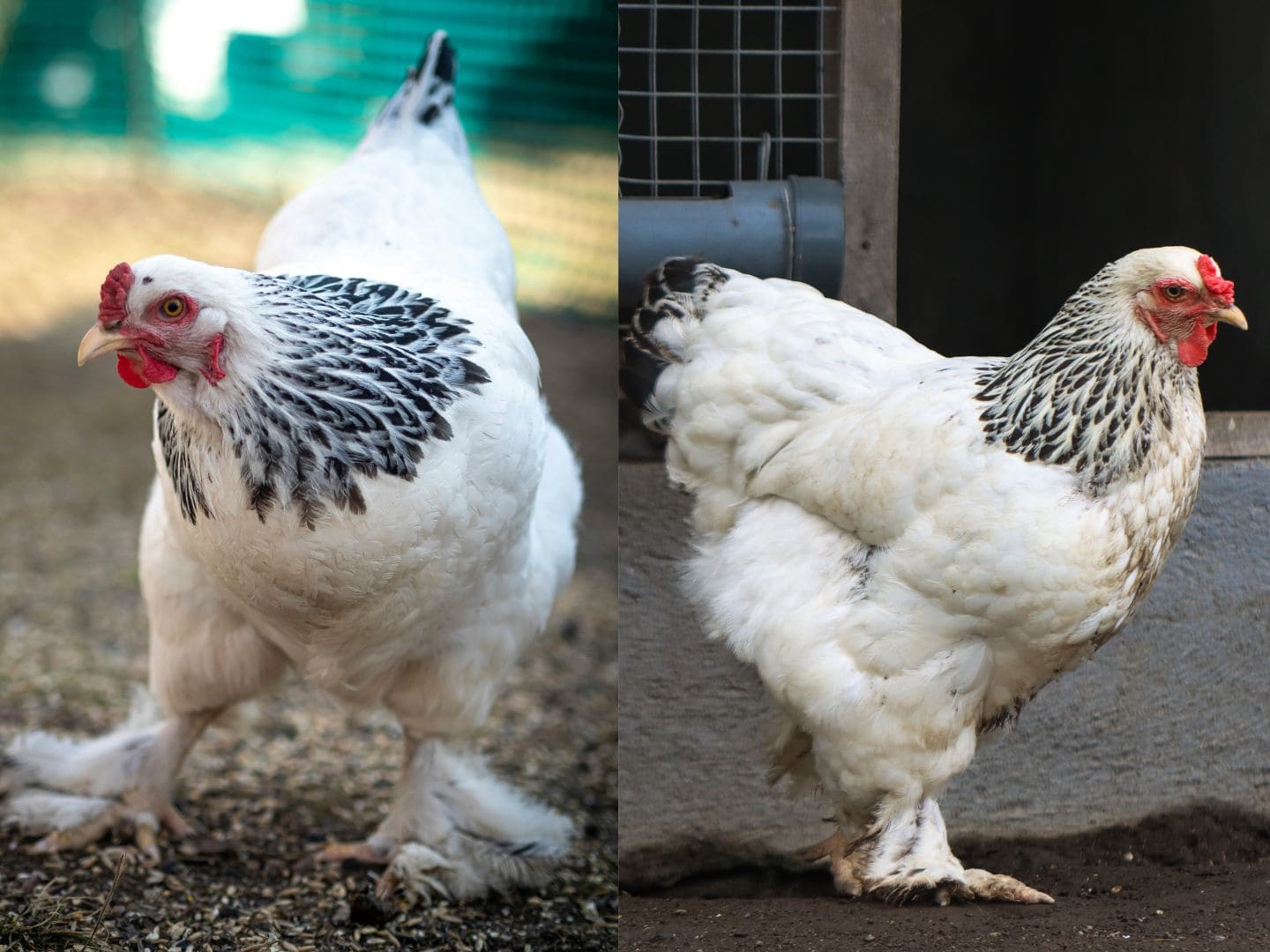
Last but not least, the Brahma. These are big, dual-purpose birds! So much so, they’ve been dubbed “The King of Chickens”.
- Temperament: Brahma chickens are gentle giants, known just as much for their calm disposition as they are for their size and productivity. As a fluffy, friendly, quiet, easily-handled breed, this is another great choice for families with children.
- Eggs: Brahma chickens lay three to four medium-large light brown eggs per week on average. A quirky trait is that they seem to prefer to lay over winter (October through May) – so they can help provide eggs while your other chickens are taking their winter break!
- Appearance: Brahmas have three recognized feather colors: buff, light, and dark. They are densely feathered, including feathery legs and feet.
- Other characteristics: Due to their heavy body stature, Brahmans don’t fly well. Therefore, this chicken breed is generally easy to contain. Their great size also often keeps them near the top of the pecking order. Cold temperatures aren’t an issue for these birds. However, being in overly wet conditions often could lead to issues with their feathery feet. As long as they have shade and cold water in the summer, they will handle the heat okay too.
Frequently Asked Questions
If you’re looking for chickens that consistently lay the most eggs, consider production breeds like Rhode Island Reds, White Leghorns, ISA Brown, Golden Comets, and Australorps.
Polish, Silkie, Crested Cream Legbar, and some hybrid breeds have head feathers, tufts or poufs.
Most Cochins, French Black Copper Marans, Blue Copper Marans, Salmon Faverolles, Brahmas, and Silkies have feathered feet and legs. While this is an adorable trait, these breeds may require special care at times to keep their feet in good healthy condition.
The most heat-tolerant chicken breeds include Rhode Island Reds, Barred Rocks, Easter Eggers, Australorps, Silkies, and Welsummers. However, with extra measures taken by a diligent chicken parent, most breeds can live happily in hot climates. See “10 Ways to Keep Chickens Cool in Hot Summer Weather” to learn more!
Given their dense feathers, most chickens are well-equipped to deal with cold weather. Large, extra-fluffy breeds like Cochins, Buff Orpington, Brahmas, and Faverolles are especially cold-hardy, as are those with small or flattened combs like Easter Eggers, Ameraucanas and Wyandottes. Roosters and chickens with large single-combs and wattles are more susceptible to frostbite..
That’s a wrap!
Did this help you narrow down your choices, or just make you want ALL of them? Lol. Thankfully, there are so many awesome chicken breeds out there, you’re bound to end up with a special, wonderful flock – no matter who you choose!
Did I miss any great breeds that deserve a shout out? Feel free to leave a comment, and include a little description to share your experience with others. If you enjoyed this post, please share it with anyone who might find it useful.
Don’t miss these related articles:
- Raising Backyard Chickens 101: Beginner’s Guide How to Care for Chickens
- 11 Easy DIY Chick Brooder Box Ideas with Photos
- How to Set Up a Chick Brooder: Temperature Chart and Supplies
- 500+ Best Chicken Names: Funny, Cute, Unique, Puns and More
- Introducing New Chickens (or Chicks) to a Flock: Best Practices




63 Comments
Lorimaribu
I came here for the sourdough starter, but I’m starting to branch out into your other topics. This pretty much matches what we have found with our chickens, but includes some breeds I didn’t know about that look quite intriguing. Thanks for sharing your knowledge with us in such an entertaining way!
Mallory Myers
Thank you for this helpful info! I’ve been reading through all your chicken posts as I’m trying to prepare for getting chickens for the first time! I was wondering if you could share specific websites for where you got your chickens? I checked our tractor supply store and they said they had a minimum requirement of 10 chicks. I’ve also noticed several hatcheries having a minimum requirement. I was hoping to just start out with around 4 for now. I have tried searching for local farms too but haven’t had much luck. I plan to keep searching but have started to get a little discouraged. Thank you in advance for any advice!
DeannaCat
Hi Mallory! We got our girls from Meyer Hatchery. A lot of places will have bigger chick minimums at this time of year because of safety (warmth in numbers) during shipping. However, they usually reduce to 3-4 chick minimum order closer to spring. Unless you live in a really mild to warm climate, you’re going to want to wait to get them until the weather warms up anyways. Does you Tractor Supply do “chick days” in the spring – where they actually have a bunch on site to choose from? Ours do usually April-June or so. Good luck, and thanks for reading!
Mallory
Oh, that makes sense and is good to know😊 Thank you for your help! I’m not sure if they do or not, but I’ll check them out in the spring to see!
Kels
My RIR is by far my friendliest hen, but she’s definitely top chicken in my flock. Thanks for the info- looking for some more breeds to get 🙂
Megan
Hello!
I have six girls right now and most of them follow with what you said above. My Buff Orpington is one of the sweetest and loves everyone, including my aunt and uncle who watched them last summer while we were on vacation. She is the reason they now want chickens. My RIR has slowly been growing spurs and is the “rooster” of the group, she’s sweet to people (not as much as my Orp) and good to the other chickens, but she’s the watcher of the group. She’s also loud. I have an EE who is the bitchiest one of the group, never squatting (but lays eggs) and runs from people. She’s into everything, in a good way, but doesn’t like people. I also have Black Wyandotte who is sweet, would probably be a good mother, and is an overall good bird. Not a lot of personality compared to the other three though, but just a calm, average chicken. My other two are bantams – one a light grayish color, I call her my pigeon because she’s tiny, and a black fluffy butt. All came as chicks from our local farm store that I’ve raised. I had one more, a beautiful but shy Mille Fluer bantam but I believe a local raccoon took her (or maybe him, it was still really young). It disappeared on a night I had some pots broken off my deck near a fence, so we think something escaped that way.
Love the other breeds – if I had more space, I’d totally get some of every kind!
Paulo
Your dedication and work is truly inspiring! I am fully tuned in from NJ. Any tips on where I can purchase healthy chicks?
DeannaCat
Have you checked around online to see if you have any local farms who sell chicks?
Callie
Loved the post! So I already have 4 hens but I would like to add one or two to my little flock. Have you successfully introduced new chickens to your older chickens? Looking for tips so I don’t stess my girls out!
DeannaCat
Hey Callie! We did add younger chicks in with two older gals. Once the little ones were big enough (over a month old) we started taking them outside near the big girls, but keeping them separated by fencing in the yard. Even once the littles moved outside, we kept their “baby coop” separate from the others by a fence, so they could see eachother but not get in contact. It went on like that for weeks, as we gradually let them be near each other without fencing between. Are you getting adult birds, or young ones? There are sort of different precautions to take with each scenario. There is an outbreak of Newcastles right now (I am not sure of all the locations it is effecting) so adding anything but day old chicks or hatching chickens is risky if its in your area. Quarantine between new and old birds is always suggested, for at least a couple of weeks. When introducing baby chicks or smaller pullets, you need to be cautious of the size difference so they don’t get injured if there is a scuffle. No matter how gradual you try to take it, except scuffles. It happens, as they try to rebalance their pecking order. As long as no one is being OVERLY aggressive and relentless, it is okay and normal. It should mellow out within a couple of weeks. I hope that helps!
Callie
Okay sweet! Thanks for the tips and all your helpful chicken information! 🙂
Jackie
Rhode Islands are so loud! We love ours, but oh my goodness is she obnoxious. She is actually very sweet, but her singing leaves something to be desired.
DeannaCat
Haha! So funny. Our Ginger (Welsummer) is pretty noisy too but I love to hear them out there 🙂
KC
In AZ I have had the best luck with Easter Eggers and Red Sex Links for heat tolerance. The Easter Eggers especially seem to be able to tough it out like champs. We’ve had one Welsummer before and she struggled with the heat. Could have just been her. I feel like you don’t read a lot about Red Sex Links (maybe because they aren’t that exciting) but they are quickly becoming my favorite. They are our most friendly and reliable layers.
DeannaCat
You know, our Welsummer Ginger also seems the weakest in the heat here too! And our heat is pretty weak itself! They are listed as a heat-tolerant breed so I included them in that group, thinking it was just Ginger, but I would be curious to hear what other Welsummer parents say! Thanks for that input. And you’re right – Easter Eggers are tough old mutts! Ha!
Kristina
Thank you for this! We bought our first house with a sizable backyard last year and are finally ready to start a small backyard flock. We are looking for 3 hens and this helps me narrow down the list . With three kids and crazy hot Chico summers, they’ll have to be heat tolerant birds. Egg production is second to personality for us, so I’m thinking Australorp, Buff Orpington and a silkie. My only concern is that the silkie is so much smaller and harder to sex….. decisions… decisions…..
I look forward to using this site as a reference for the months to come! Thank you!!
Lacey Daniels
Definitely gave me things to think about! My husband and I are in the process of buying a house. We’re moving from a small apartment, so we haven’t started our first backyard flock yet and probably won’t until the fall or winter. We’ll need heat tolerant breeds since we get a few months’ worth of over 100-degree days in the summer over here in Central Cali. My family always had chickens growing up, so it’s really dumb that I never really considered the fact that certain breeds tolerate heat better than others. Duh! Thanks for the info, definitely a great place to get started!
DeannaCat
Hi Lacey! Yikes, I remember those kind of summers when we lived in Chico! And yes it’s a sad thing, many people don’t realize just how heat sensitive chickens can be and do lose them to it. However, don’t feel you MUST stick to just the most heat-tolerant breeds. As I mentioned, most breeds will do okay as long as some extra precautions are taken. Lots of shade, cold water, some people set up misters, do frozen treats, etc. There are more tips about chickens and heat in the “What to Expect When You’re Expecting: Backyard Chickens” post. It all depends on what type of effort you want (or will be able) to make I guess! I am excited for you and your new venture with a new home and property!