

How to Deadhead Flowers for More Blooms and Healthier Plants (Photos)
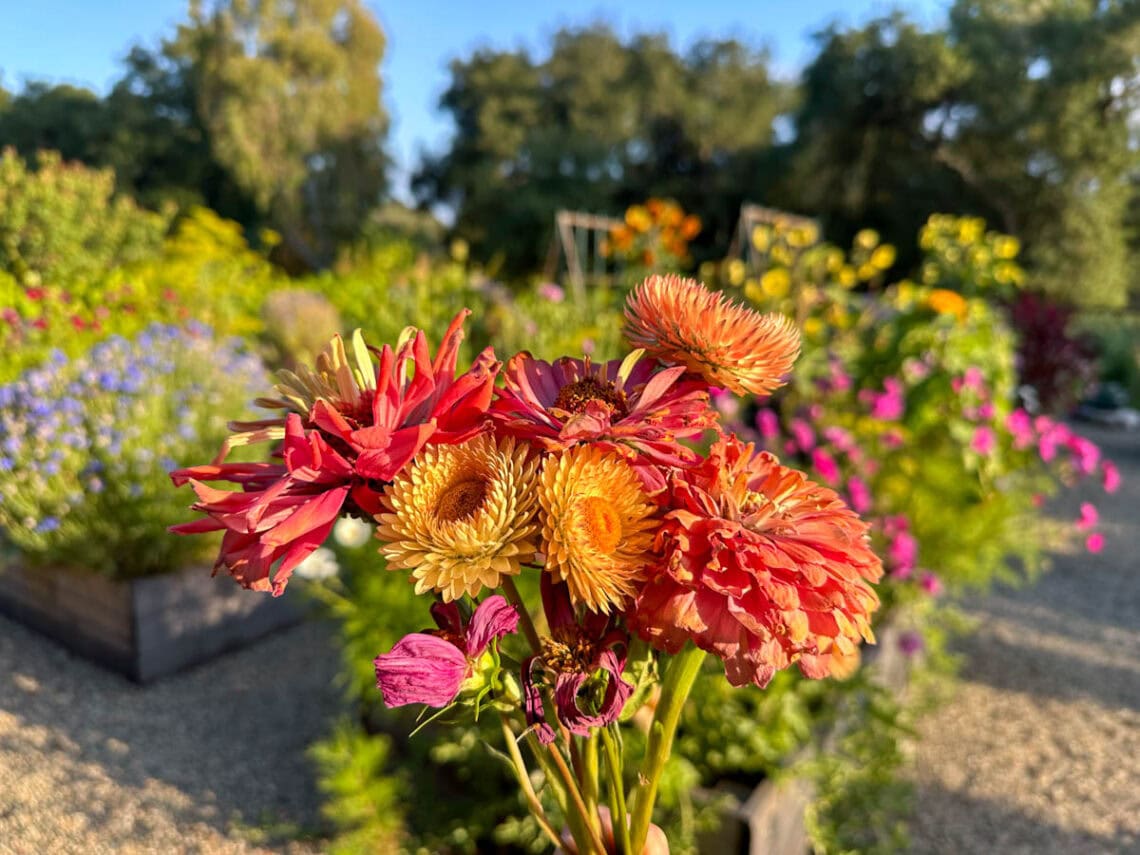
Have you ever planted flowers only to have them quickly stop growing and fade away? Come learn how to deadhead flowers to extend the blooming season and grow larger, healthier plants!
This guide will explore the benefits of deadheading, the best types of flowers to deadhead, and exactly when and how to do so. These tips apply to annual flowers like zinnia, cosmos and dahlias as well as perennials like roses and peonies.
This simple garden task is easy to do and the reward is huge! Plus, many gardeners find deadheading to be relaxing or therapeutic – myself included. I love to put on some light music, tune into the garden, and try to clear my mind. Enjoy!

Want to save this?
RELATED: Don’t miss our favorite 7 easy annual companion flowers to grow, the 18 best fall flowers for a colorful fall garden, or this fun beginner’s guide on pressing flowers!
What is Deadheading?
Deadheading is the simple act of removing old, spent flowers from a plant. Pruning away the “dead heads” frees up nutrients that allows the plants to grow and bloom even more!
On the other hand, when you don’t deadhead, plant growth typically slows down as it focuses all it’s energy on producing seed instead. (Though there are some benefits of allowing flowers to go to seed later in the season, such as for seed-saving or as a valuable food source for birds or other wildlife.)
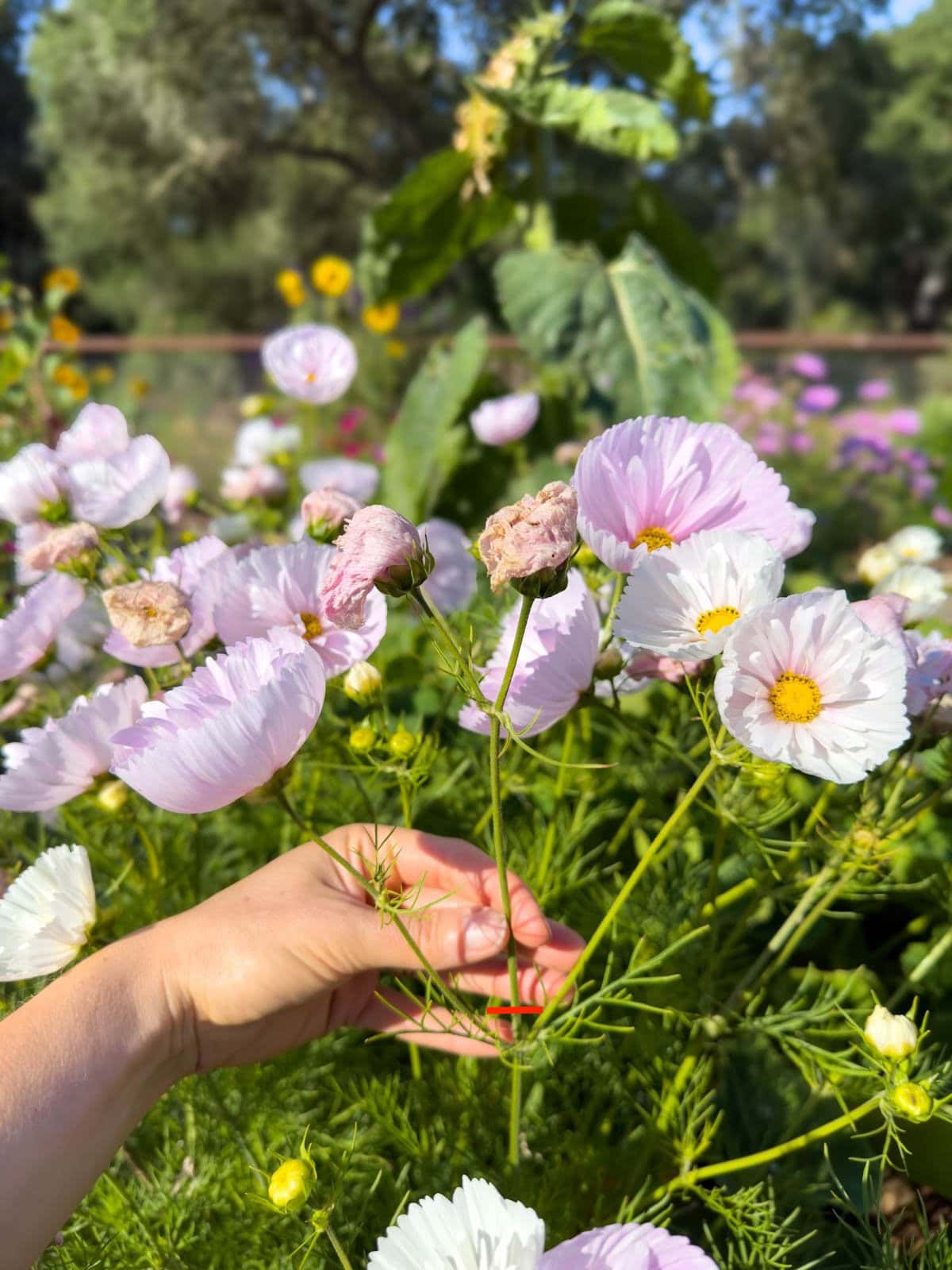
For the best results, you should remove a portion of stem along with the adjacent fading flower. See more detailed directions and photos in the “how to deadhead” section to follow.
Benefits of Deadheading
- Promotes more new blooms. Don’t worry – the more you pick, the more will grow! That means more flowers for you to enjoy, as well as the bees, butterflies, and other pollinators.
- Leads to larger plants. When fading flowers and stems are removed, most plants respond by growing fresh side shoots and an overall fuller, bushy structure. (That’s the same reason we top or pinch most flower seedlings when they’re still small.)
- Extends the blooming season. Routinely deadheading will keep your plants alive, healthy, and blooming far longer than if you let them all go to seed after the first flush of flowers – often into fall for some varieties. For example, we harvest calendula flowers weekly from the same set of plants for nearly a year before they slow down!
- Healthier plants. Deadheading can improve air circulation around the plant, reducing the risk of fungal diseases that can develop on spent flowers or foliage.
- Reduces seed spread. As much as a I love having a few volunteer flowers pop up in our garden, it would be an absolute mess if we let every single flower head drop all of its seed! Especially flowers that rapidly self-seed like poppies, bachelor’s buttons, marigolds, calendula, and cosmos. However, we do like to leave some seed heads for the wild birds to enjoy, and to save flower seeds to replant next year. We also like to leave the late summer roses so we can harvest rose hips come winter!
- Improved appearance. Rather than looking at crusty old brown flowers and seed heads, I love how fresh, healthy, and tidy our garden looks after a good deadheading session!
The Best Flowers to Deadhead
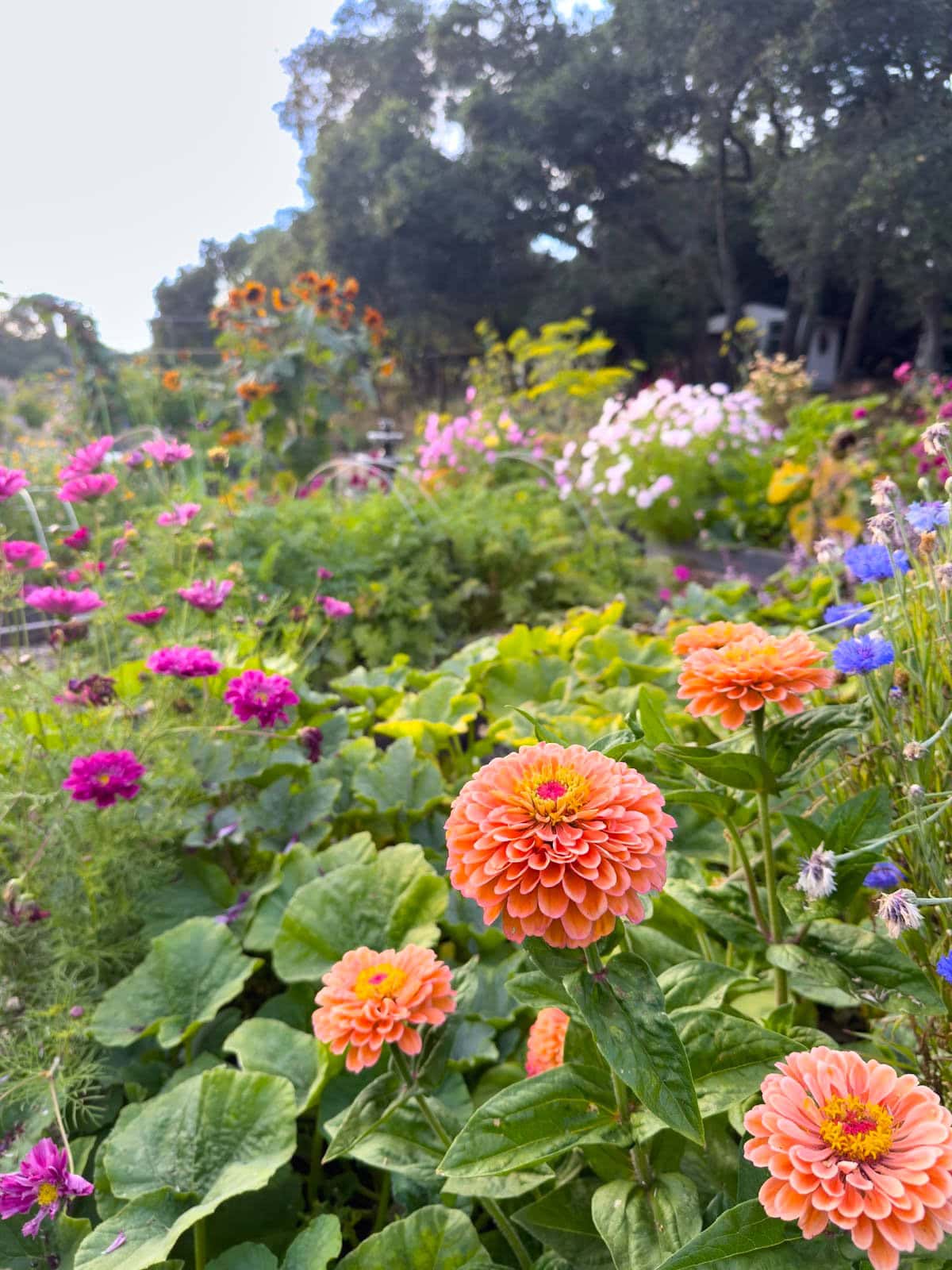
The following flowers benefit from regular deadheading:
- Bee Balm
- Calendula
- Coneflower
- Cosmos
- Dahlias
- Daisies
- Delphinium
- Geraniums
- Hydrangea
- Larkspur
- Lavender
- Marigold
- Mums
- Peonies
- Petunias
- Roses
- Rudbeckia
- Snapdragons
- Strawflower
- Yarrow
- Zinnia
How to Deadhead Flowers
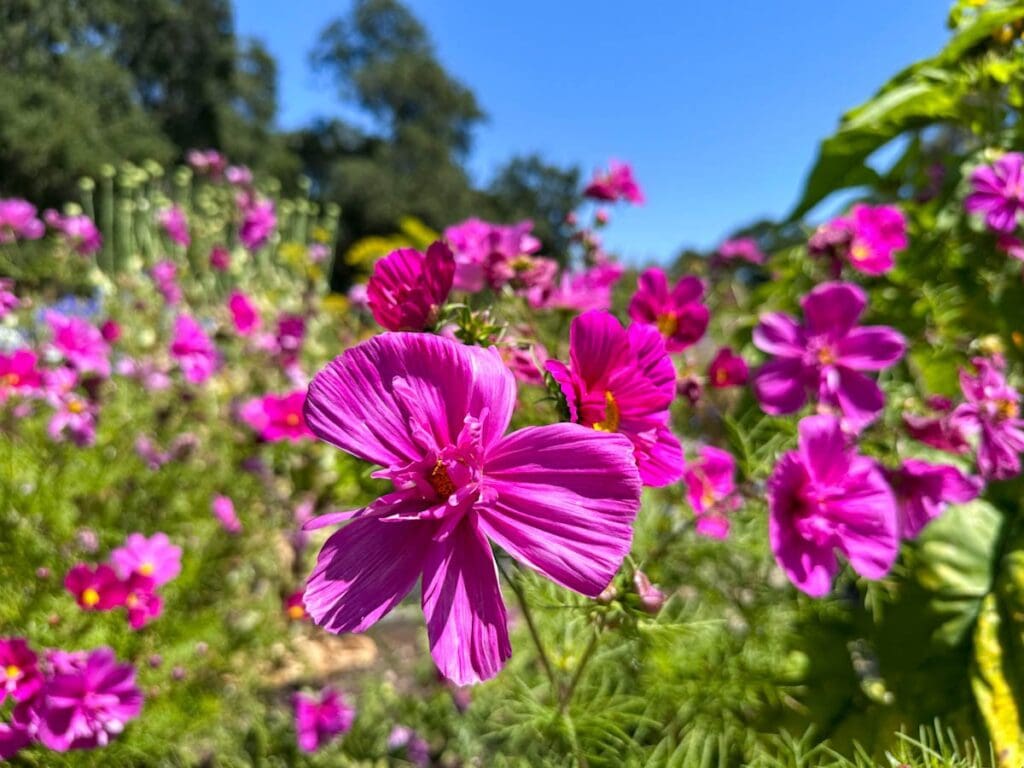
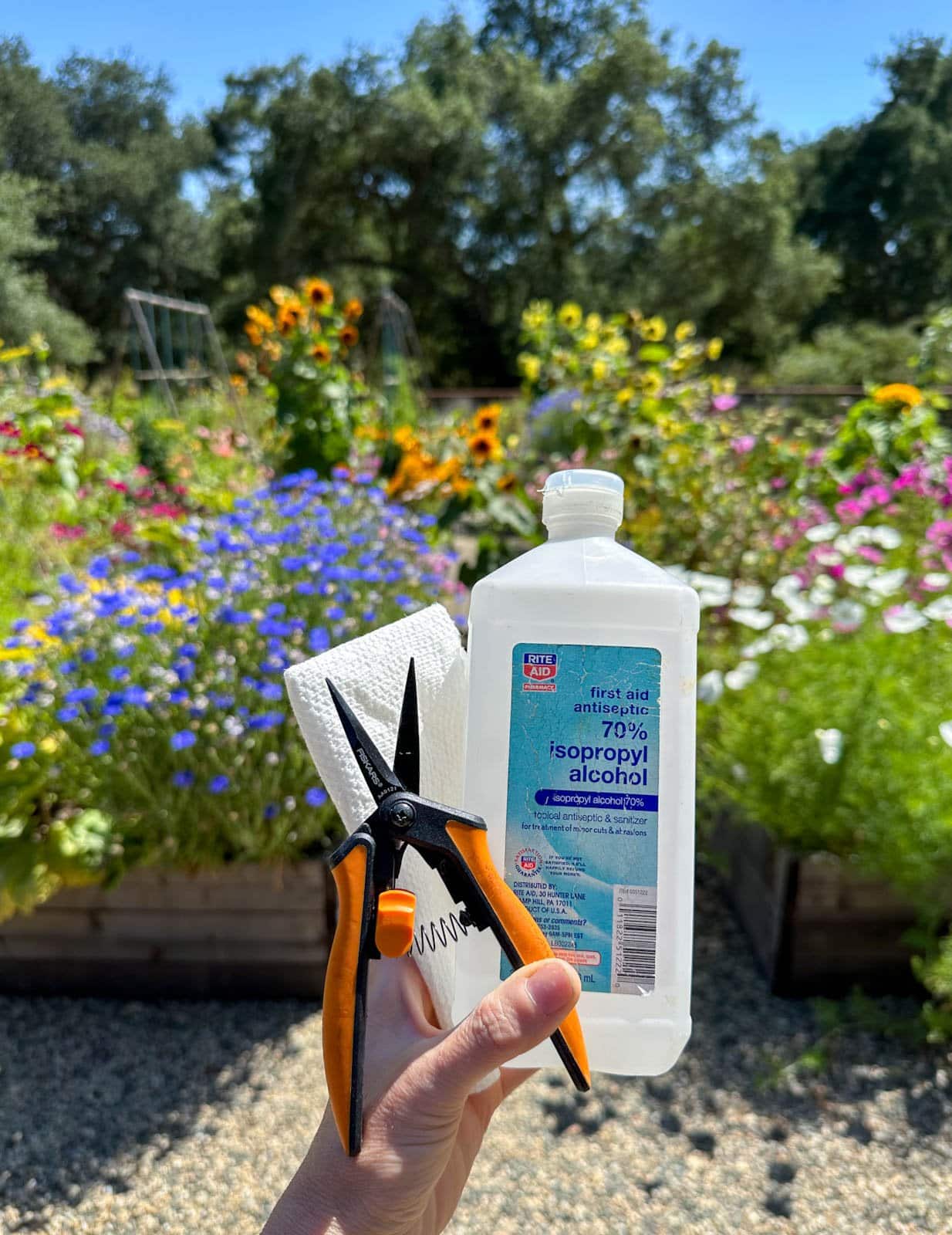
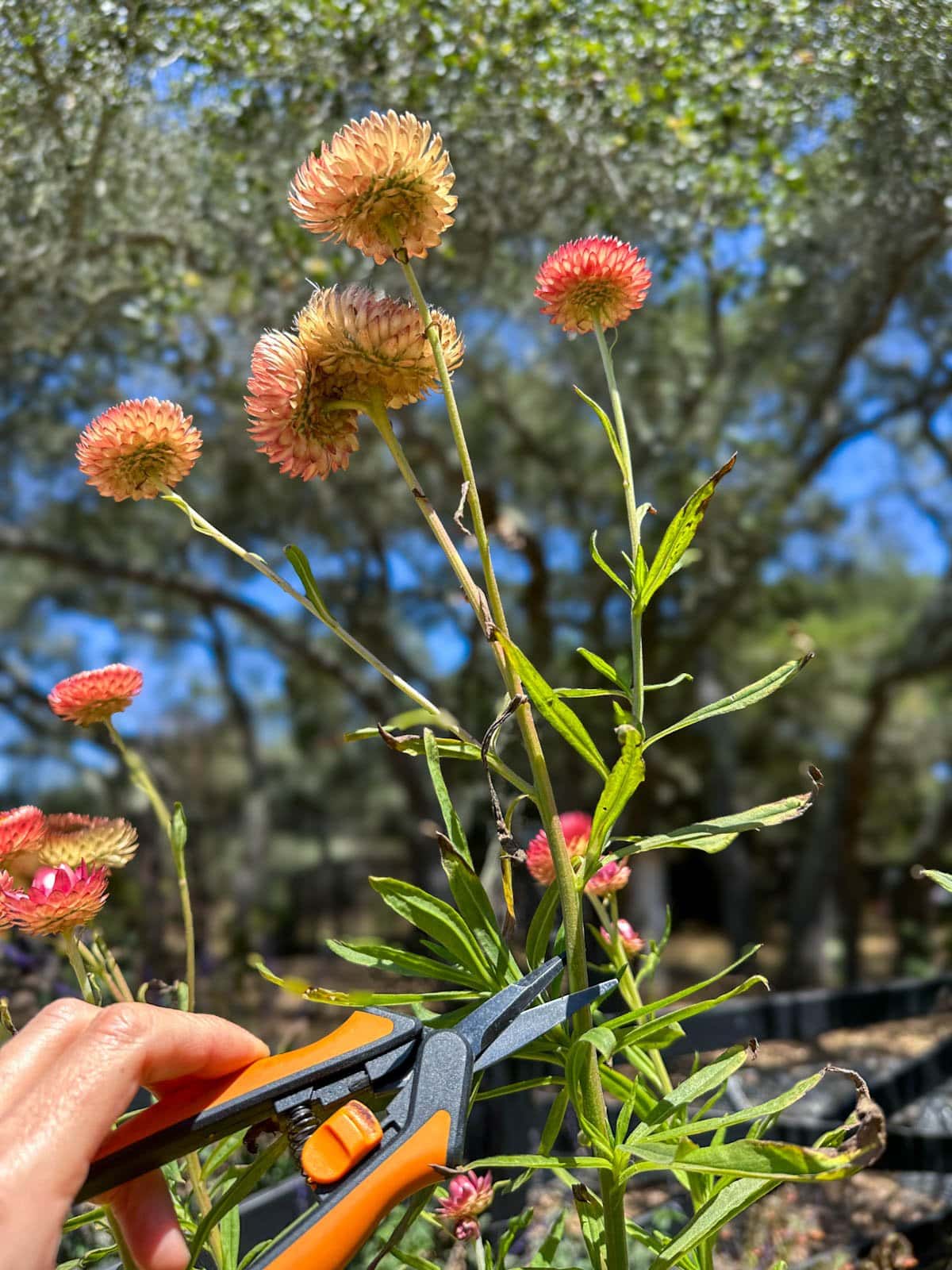
- It’s usually best to deadhead flowers using small garden shears or pruning snips, though you may be able to carefully pinch off flower heads or stems by hand as well.
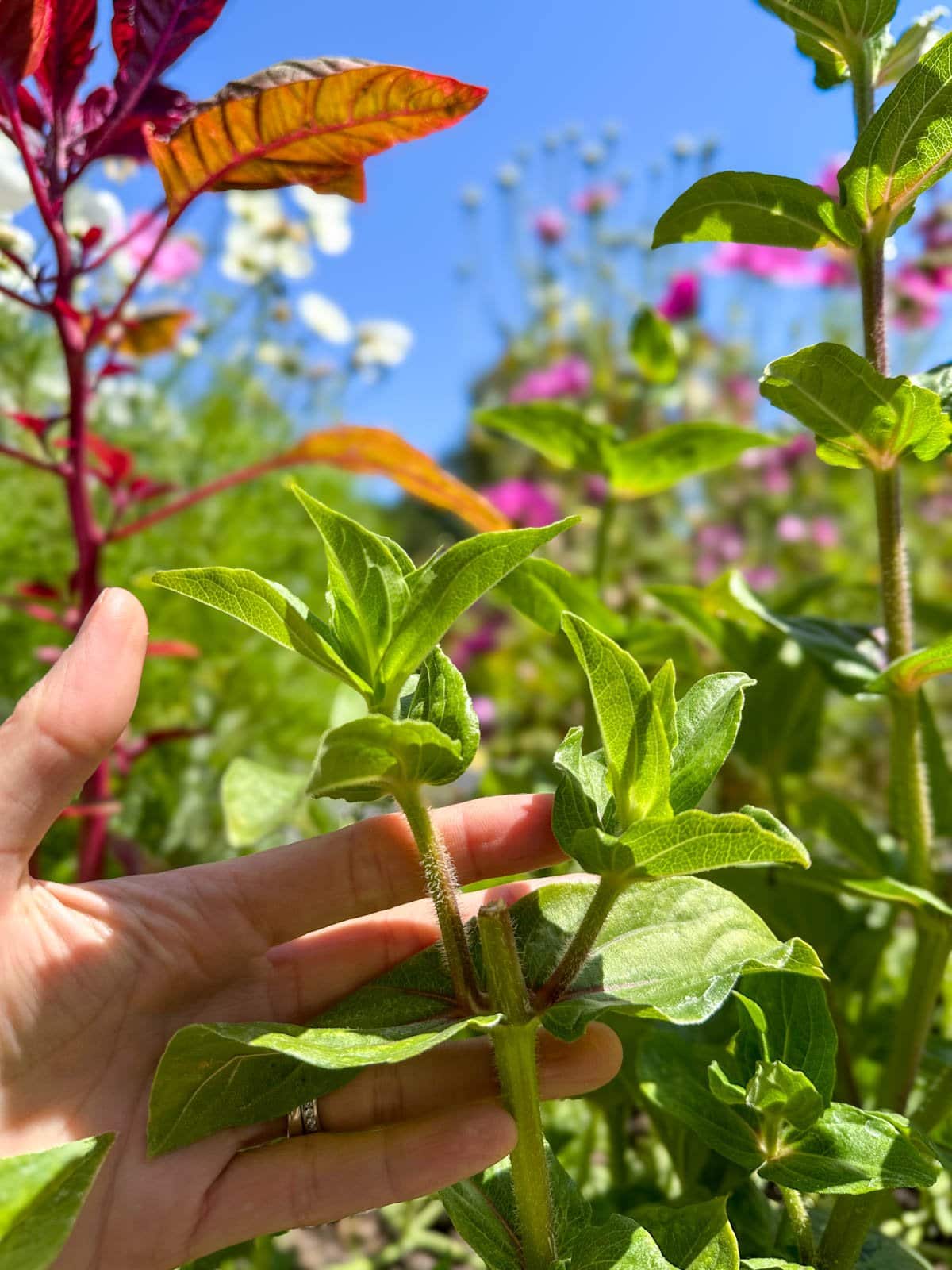
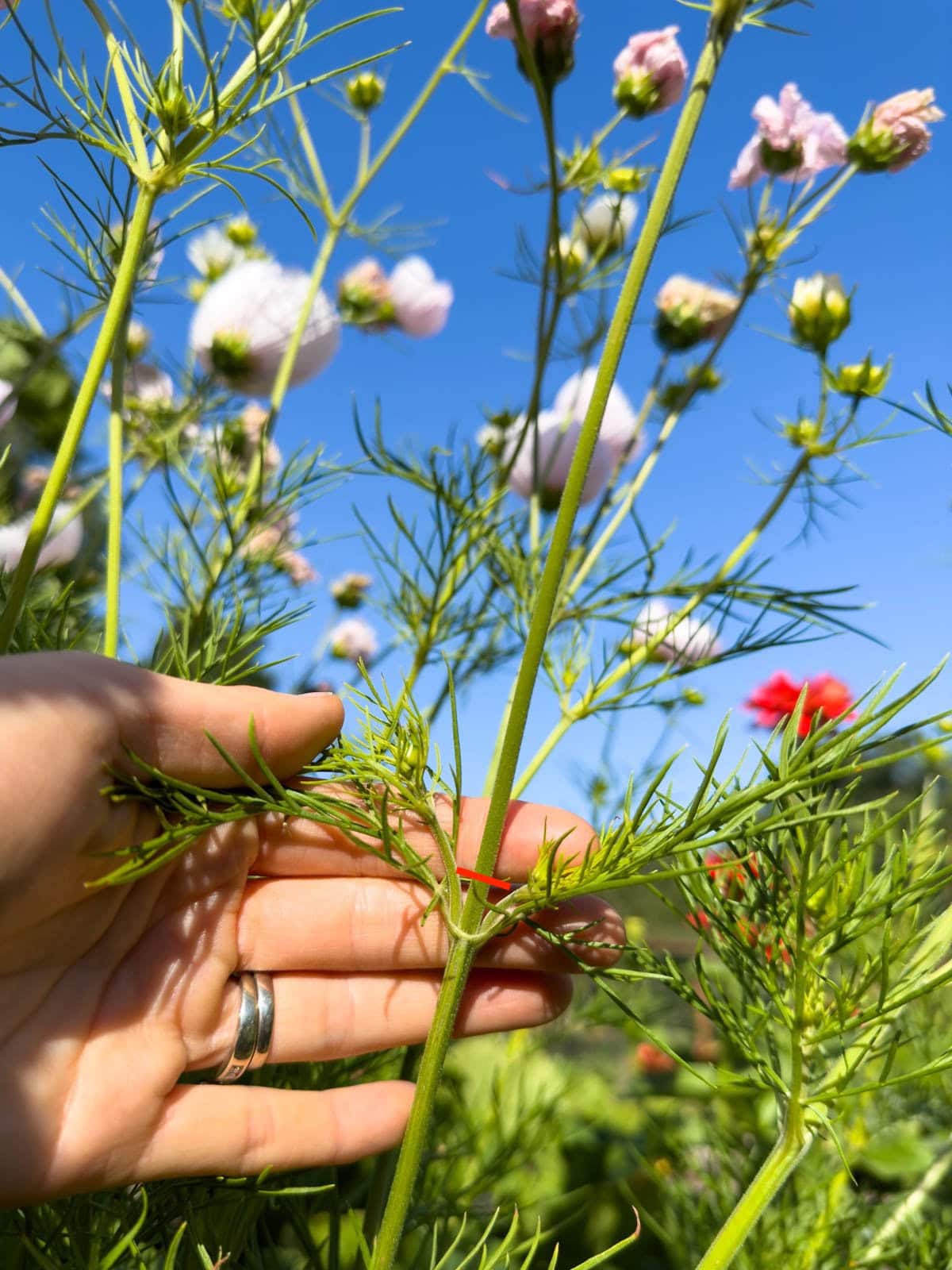
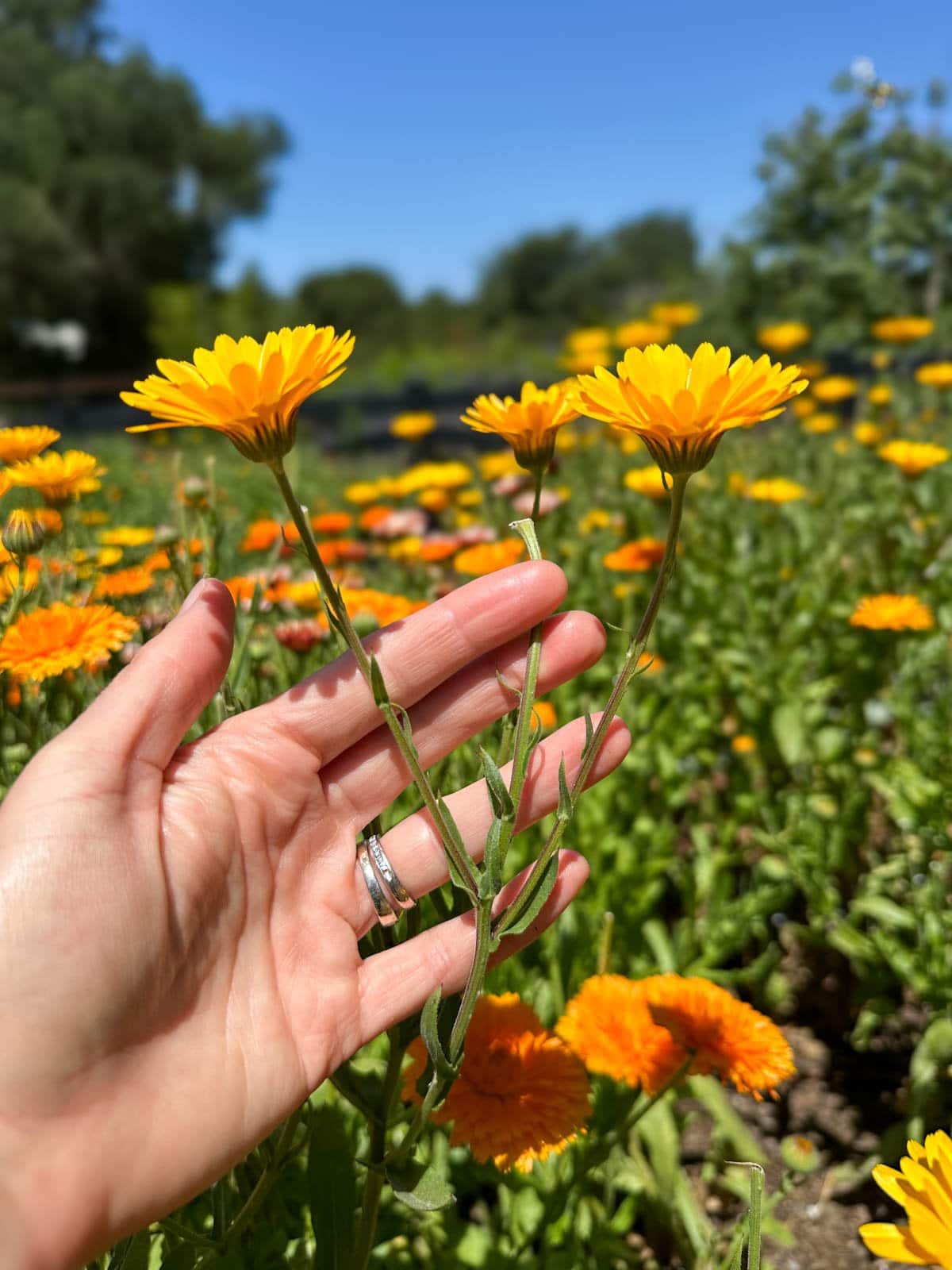
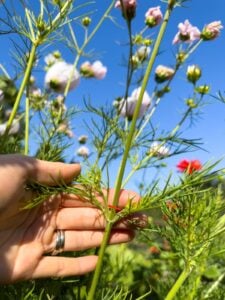
- Starting at the old flower head that you want to remove, work down the stem until you locate the next healthy set of leaves, side branches, or leaf nodes (where future side shoots will grow from).
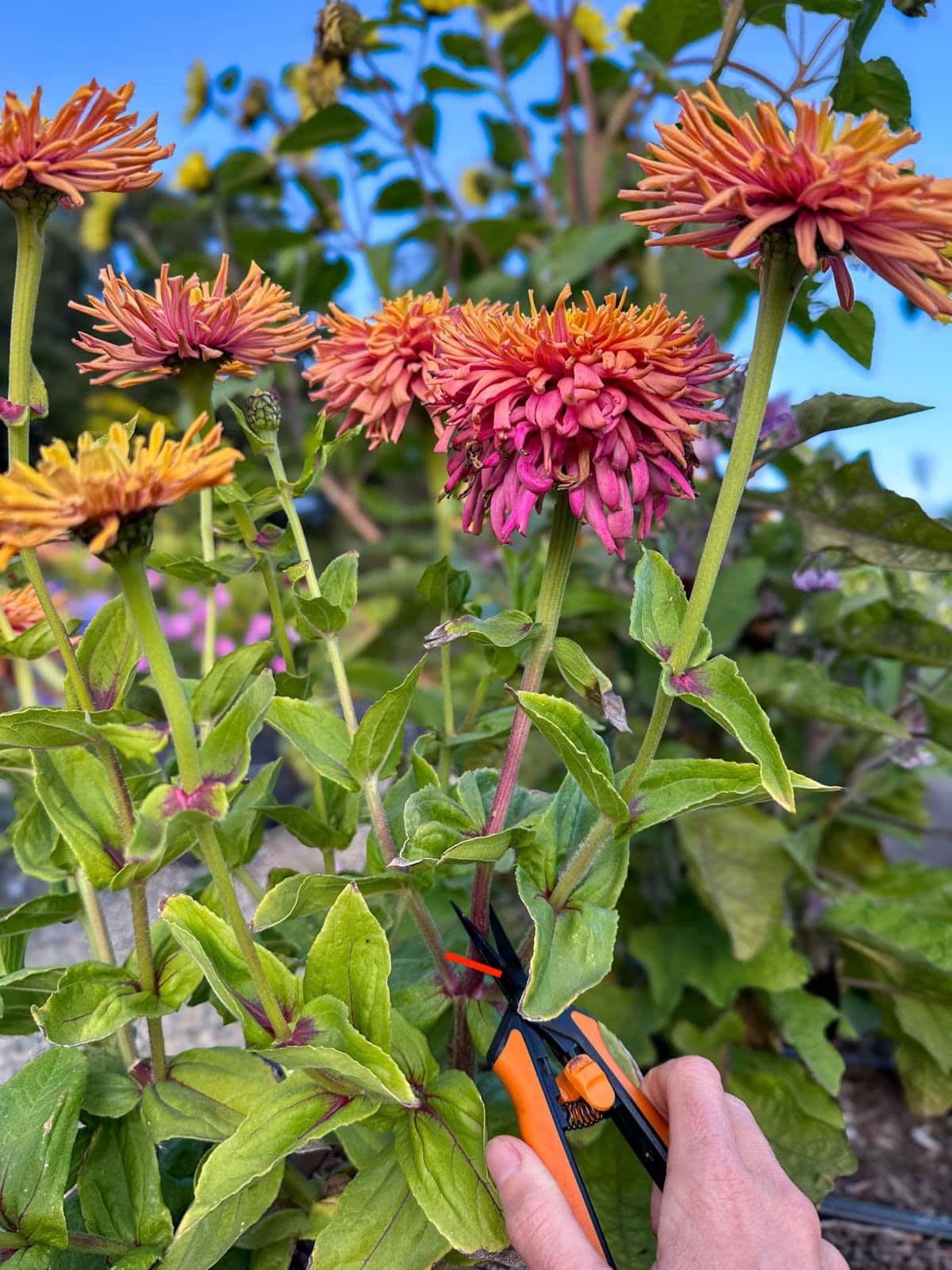
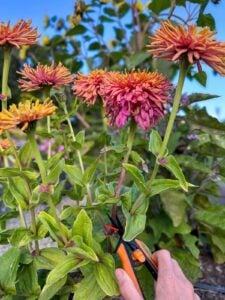
- Trim off the faded blooms about 1/4 inch above the next set of leaves or side shoots down the stem. Depending on the type and age of the flowers, you may end up trimming only a couple inches of stem, or other times much deeper into the plant.
- To promote lower branches and prevent the plant from getting too top-heaving, I often cut stems at varying heights – some just below the flower head and others a few leaf nodes down the stem.
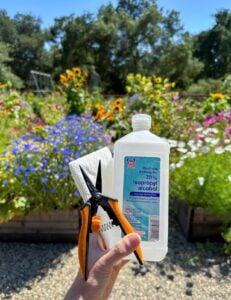
- Sanitize pruning snips with rubbing alcohol between plants to prevent the spread of disease.
- You can also simply pluck off old flower heads, though that leaves plants looking a bit funky – with a bunch of headless stems left sticking up.
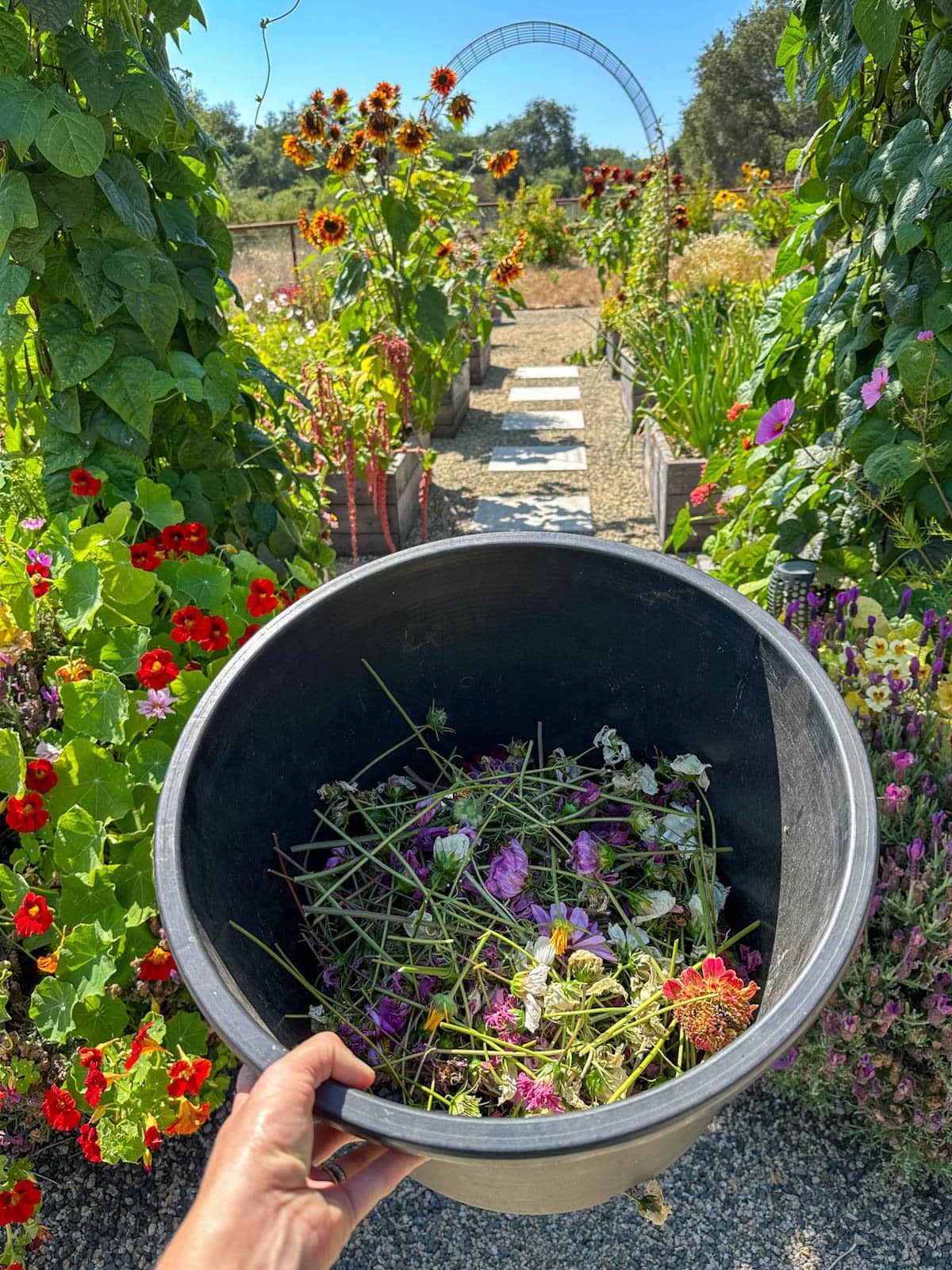
- Since I don’t want our compost full of volunteer flowers, I usually just toss the clippings into our municipal green waste bin.
When (How Often) to Deadhead
It’s best to start deadheading when plants are still young, quickly removing the first fading flowers to encourage more growth.
Then, follow the same process to routinely deadhead as needed to remove old flowers throughout the growing season. The frequency depends on the type of flower, and how quickly they fade and regrow.
We grow a wide variety of flowers in our large garden, so I typically try to deadhead once a week (or at least 2 to 3 times times per month) spring through fall. Doing a little at a time make the chore more quick and manageable than waiting too long!
Some serious gardeners may deadhead even more often. For instance, garden expert Monty Don suggests deadheading roses daily during peak bloom in midsummer, and weekly as the bare minimum.
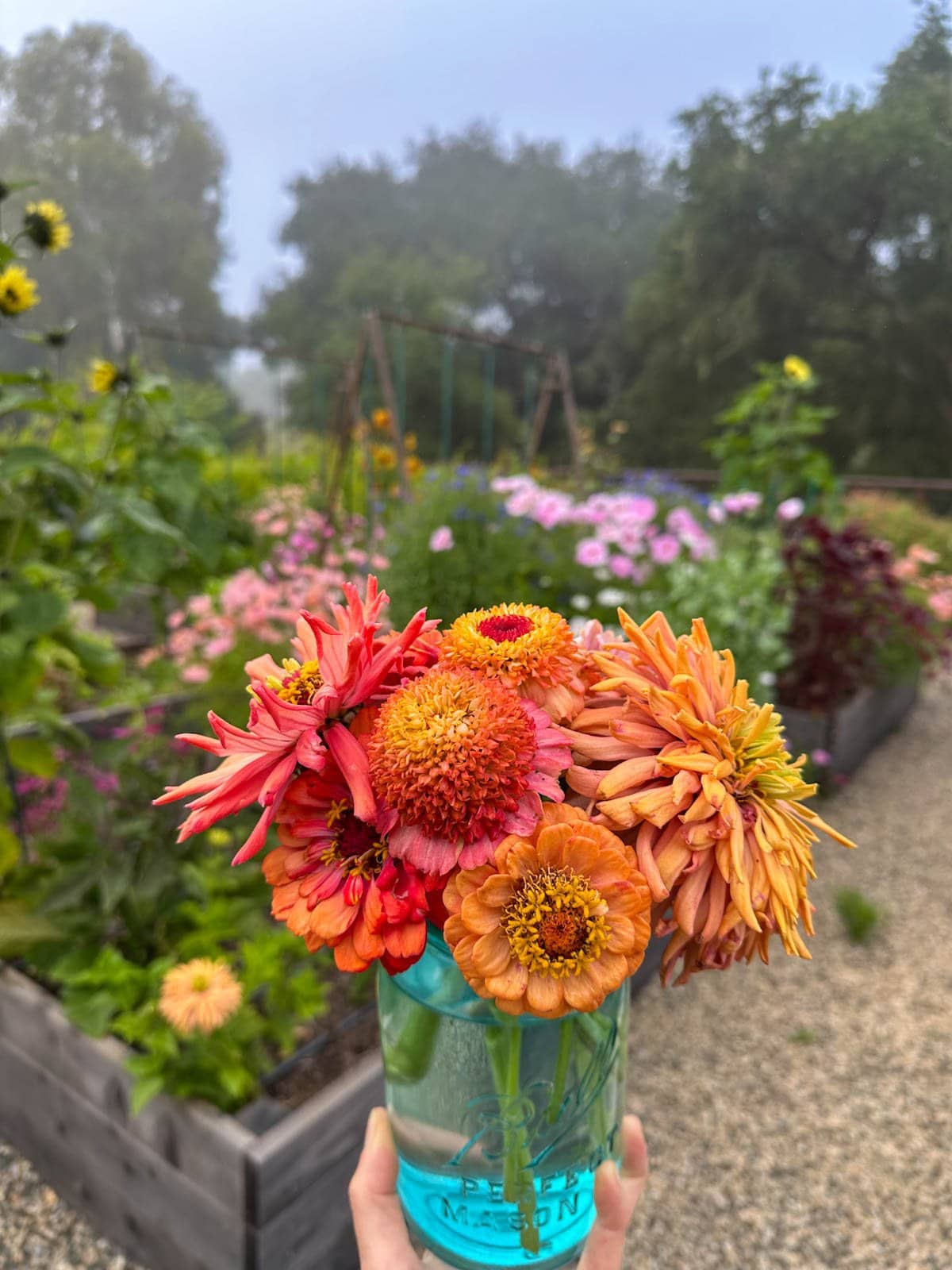
The benefits of deadheading extends beyond pruning old, dying blooms. Routinely cutting newer flowers to enjoy in a bouquet or vase also encourages healthier plant growth – so don’t feel like you have to wait until they’re on their way out!
So simple!
Well friends, I hope you learned something new today and now feel motivated to get out there and deadhead some flowers! It always amazes me how this one simple task can have such a profound impact on your garden’s health and appearance. Please feel free to ask any questions in the comments below, and leave a review if you found this article to be helpful!
You may also enjoy:
- Seed-Saving 101: How to Save Seeds from Annual Flowers
- Bird-Friendly Gardens: How to Attract Birds to Your Yard
- Harvesting Fresh Lavender: How to Harvest, Prune & Dry Lavender Flowers
- How to Turn Your Yard or Garden into a Certified Wildlife Habitat
- 15 Best Flowers to Attract Hummingbirds (with photos)
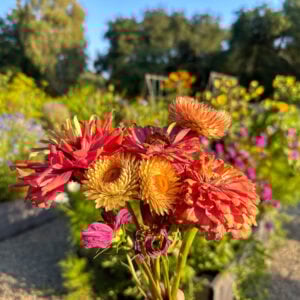
How to Deadhead Flowers for More Blooms and Healthier Plants
Equipment
- small garden pruners or snips
- rubbing alcohol or other sanitizer
Instructions
- Start deadheading flowers when plants are still young, and continue to remove spent flowers routinely (e.g. weekly) as needed throughout the growing season.
- It’s best to deadhead flowers using small garden pruners or snips, though you may be able to carefully pinch off flower heads or stems by hand.
- Starting at the spent flower head that you want to remove, work down the stem to until you locate the next healthy set of leaves, side branches, or leaf nodes (where future side shoots will grow from).

- Trim off the faded blooms about 1/4 inch above the next set of leaves or side shoots down the stem.
- To promote lower branches and prevent the plant from getting too top-heaving, I often cut stems at varying heights – some just below the flower head and others a few leaf nodes down the stem.
- Sanitize pruning snips with rubbing alcohol between plants to prevent the spread of disease.

Notes




22 Comments
Suzanne
Thank you so much for your wonderful suggestions. They are constantly helping us with our raised vegetable beds, flowers and pretty much everything in our Oxfordshire countryside garden in the UK. Wishing you a lovely Sunday 🤗☀️
Aaron (Mr. DeannaCat)
Thank you so much Suzanne, a Sunday afternoon in the English countryside sounds amazing!