
How to Reactivate a Dry (Dehydrated) Sourdough Starter
Here's an easy step-by-step guide on how to reactivate a dry sourdough starter. The easy process takes 5 days, but only a few minutes per day! By the end, a small amount of dry sourdough will transform into a voluminous, bubbly, active sourdough starter - ready for a lifetime of baking.
Equipment
- Pint-size glass mason jar and lid or similar (for initial activation)
- Larger glass container, such as a 1 to 2 liter glass flip-top container (for ongoing starter storage)
Ingredients
- 1/2 Tbsp dried sourdough starter culture
- white bread flour or all-purpose flour (amount varies with each step)
- filtered lukewarm water (non-chlorinated, avoid using cold water)
Instructions
Day 1
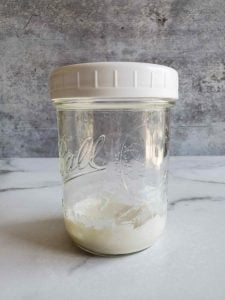
- In a clean pint-size mason jar (or similar) combine 1/2 Tbsp of dried sourdough starter powder or flakes (one H&C package) with 1.5 Tbsp of filtered lukewarm water. Allow the dry sourdough starter and water to sit for several minutes to soften and combine. Use a fork or spoon to stir it on occasion.
- Add 1 Tbsp of flour. Mix thoroughly. (See consistency notes below)
- Cover the jar with a lid, beeswax wrap, plate, or other cover to prevent it from drying out. Set the container in a moderately warm location (70 to 75F is ideal). Come back in about 24 hours.
Day 2
- Into the same jar as yesterday, add 1 Tbsp of flour and 2 teaspoons of water to the starter. Mix well.
- Cover the jar or container again, and allow it to sit for another 24 hours.
Day 3
- Repeat the same feeding process as Day 2 (1 Tbsp flour and 2 teaspoons water).
Day 4
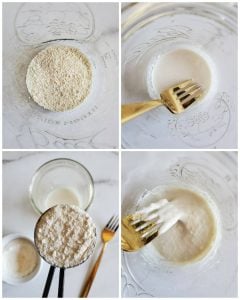
- This time, add 1/3 cup flour and 1/4 cup water to the starter. Mix well.
- Cover the container and set aside once again. Consider marking the level of the starter after feeding. It should rise quite a bit by this time!
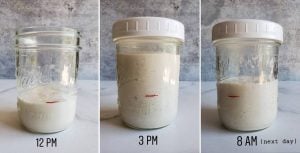
Day 5
- Transfer your starter from the mason jar into a clean mixing bowl.
- Add 1 scant cup of fresh flour (just a hair shy of a cup!) and 1/2 cup of water. Mix thoroughly.
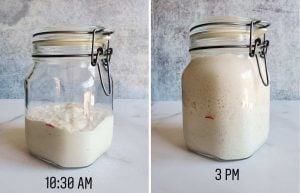
- Transfer the starter into a new larger container of choice (such as a 1 to 2 liter glass flip-top jar). This will be the starters "forever home". Set it aside at room temperature once again.
- If your starter is now actively bubbling, rising and falling - congratulations! You have successfully reactivated the dry sourdough starter. When a starter rises to double its size and then stays elevated, that is considered “peak activity” and is ready to bake with. It will deflate after a few hours and need to be fed or refrigerated.
Notes
.
Ongoing Sourdough Starter Care: For ongoing starter maintenance (feeding instructions and storage options), see this article.
Starter Texture: This recipe was developed using the Homestead and Chill dry sourdough starter culture. Using different brand starters may result in varying consistencies. Every individual home environment (e.g. different elevations and humidity) could also lead to some variations. The ideal consistency for your sourdough starter is thick and gooey, kind of like marshmallow fluff. It should settle smoothly into the bottom of the container (not clump together like cookie dough) but also shouldn’t be too runny or pourable like pancake batter or it won’t rise well. So if at any time your starter seems too thick or too thin, feel free to add a sprinkle more flour or splash of water until the desired consistency is reached. Do so in small quantities, such as a teaspoon at a time (especially in the first few days).
Troubleshooting: A couple of issues may cause a sourdough starter to not rise well. For one, it could be too cold in your home - though there should be at least some activity, even in the coolest conditions. Try moving your starter to a warmer location or using a starter warming plate. A more common issue is the starter consistency. When a starter is too wet or runny, the fermentation bubbles may rise right through and out of the mixture, rather than being trapped inside and causing the starter to grow and rise. If at any time your starter doesn’t rise and also seems easy to pour (like thin pancake batter), is it probably too wet. Stir in more flour to stiffen it up, adding just a tablespoons or two at a time until it becomes more thick and gooey.
Tried this recipe?Let us know how it was!