

How to Make a DIY Gopher Basket for Fruit Trees
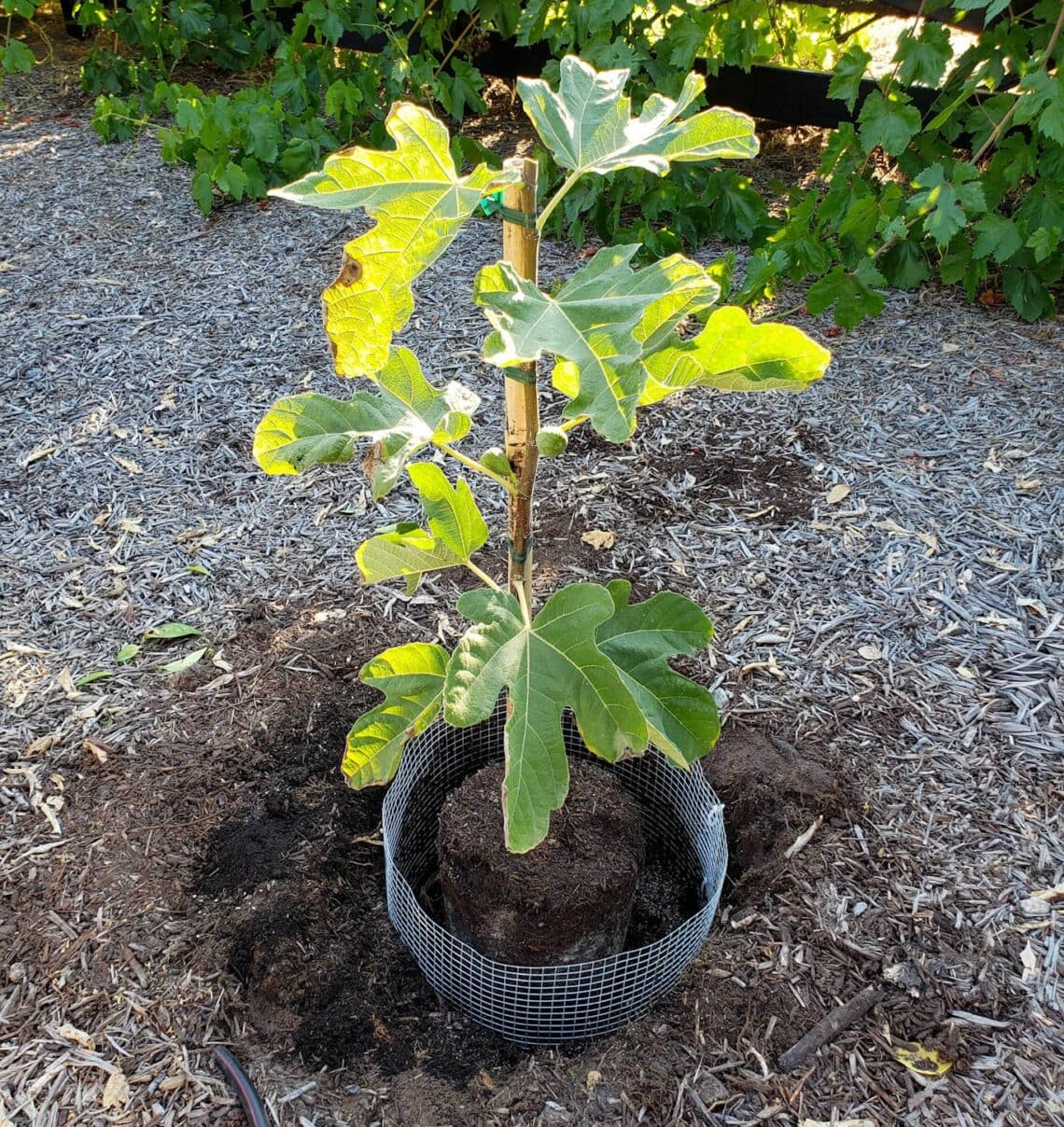
Let me show you how to make a large, durable, inexpensive DIY gopher basket to protect your plants – including fruit trees, shrubs, or ornamental trees!
This step-by-step guide will explore the pros and cons between chicken wire vs hardware cloth, the types of trees that are most prone to gopher damage, planting tips, and more. I’ve also included a video at the end of this article.
I live in an area where gophers are rampant, so I rely on these baskets to keep my trees alive. Gophers have killed many of my fruit trees over the years – but never one that was planted in a DIY gopher basket we made ourselves!
NOTE: This post was originally published in April 2021 but significantly updated since.

Would you like to save this?
Disclosure: Homestead and Chill is reader-supported. When you purchase through links on our site, we may earn an affiliate commission.
What is a Gopher Basket?
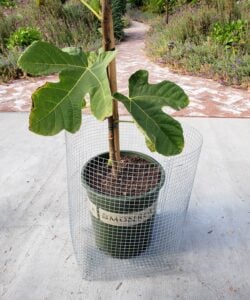
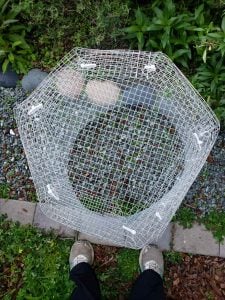
A gopher basket (also known as a gopher cage) is a protective wire mesh enclosure designed to protect plant roots from underground pests like gophers, voles and moles. The basket is put in the planting hole first and then the tree or shrub is planted inside. Some roots can grow beyond the basket too.
Gardeners can either make homemade gopher baskets, or purchase pre-made gopher baskets that come in a variety of sizes. Most pre-made gopher baskets are made from chicken wire, while I always recommend making DIY baskets from hardware cloth. (See the pros and cons of both options below.)

What kind of fruit trees do gophers like to eat most?
Gophers are particularly fond of young fruit trees with tender roots. Over the years, we’ve found that fig trees are their absolute favorite, followed by apples and avocados. They’ll also eat stone fruit (e.g. apricots, plums, nectarines, peaches, and cherries) along with pears, persimmons, loquats or other fruit trees when given the chance.
Some gardeners occasionally report gopher damage to young citrus trees, though I’ve personally never had issues with ours. Citrus roots are bitter (especially as they mature) making them more naturally gopher-resistant than other fruit trees – though not guaranteed, especially if food resources are scarce. Pineapple guava (my favorite cold-hardy fruiting shrub) is another good gopher-resistant option.
Signs of Gopher Damage on Trees
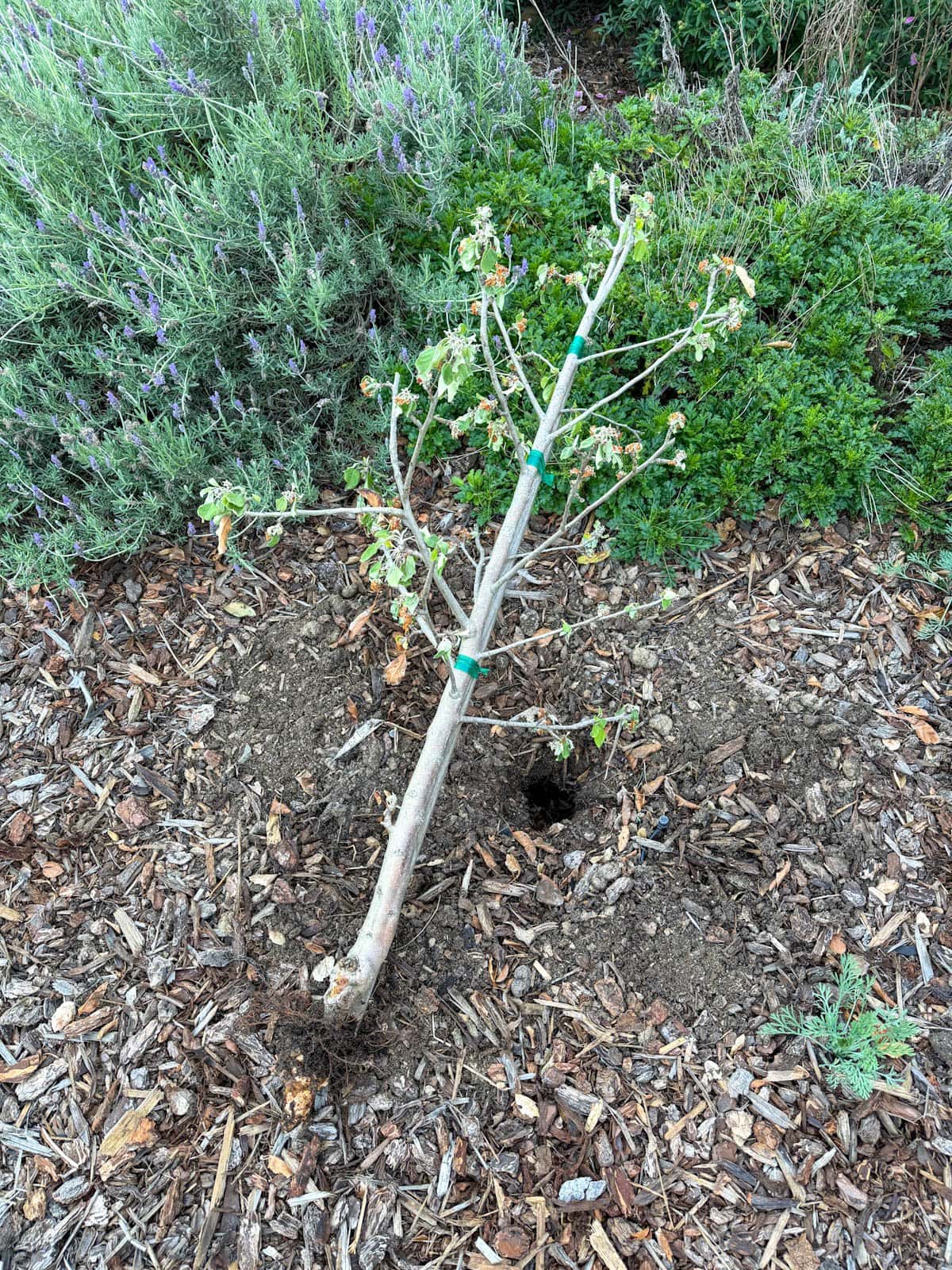
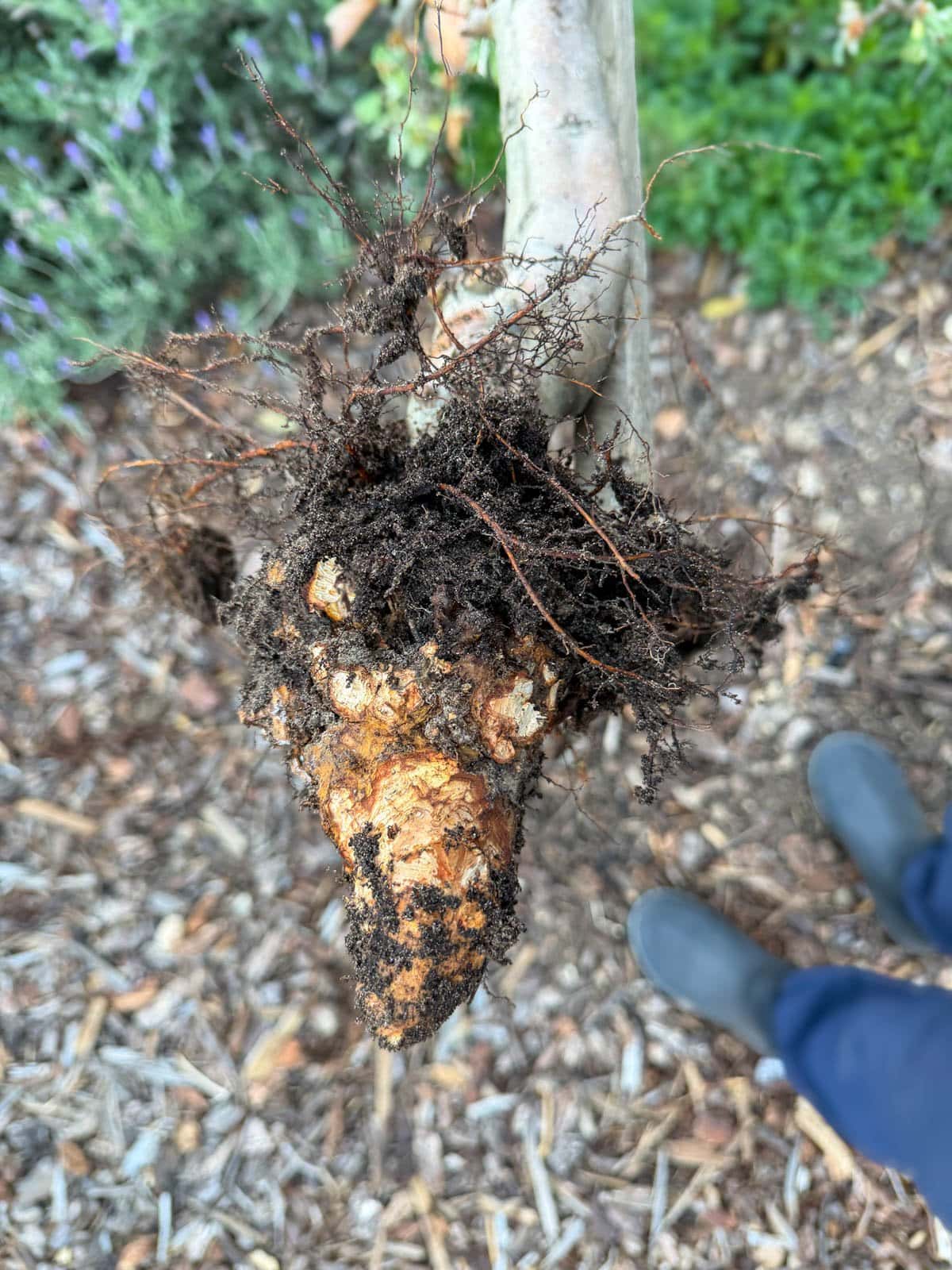
Gophers use their long, sharp front teeth to chew through roots, vegetation, bark, and the base of tree trunks (aka the crown). They leave tell-tale dirt mounds and holes around their shallow burrows and tunnel systems.
Depending on the age of the plant and the extent of chewing done, gopher damage can range from minor stress to deadly. Young plants and trees with small, tender root systems are the most vulnerable.
Trees under attack by gophers may exhibit yellowing leaves, unseasonal leaf drop, or wilting. Less obvious symptoms include reduced vigor, especially for mature trees and plants. I’ve also seen chew marks around the base of the tree trunk, above or just below the soil level.
Gophers have killed several of our young fruit trees, chewing them down to nothing but a stump with no roots left at all.
RELATED: Cages are just one way we battle gophers on our homestead – but never use poison! Come see 7 non-toxic ways to control gophers, including how to protect raised beds, the best traps, or other deterrents. We also try to choose plenty of gopher resistant plants in our landscape.
DIY vs Pre-Made Baskets (Hardware Cloth vs Chicken Wire)
I always plant our most susceptible fruit trees (like figs) in DIY hardware cloth gopher baskets. They’re basically foolproof! Yet sometimes we use quality pre-made chicken wire baskets like these 5-gallon baskets or the 15-gallon size too. However I do NOT recommend the thinner mesh “speed baskets”, especially for trees.
Here are some factors (pros and cons) to consider between the two:
- Effectiveness: Dense and strong, hardware cloth offers the best protection against gophers. They also can’t fit through its tiny holes. In contrast, determined gophers can chew through chicken wire or other more flimsy mesh wire, and small gophers or voles may be able to fit through the holes in chicken wire too.
- Cost: If you need several gopher baskets, it’s typically more cost-effective to buy a roll of hardware cloth and make your own compared to the cost of quality pre-made baskets.
- Time and Effort: It takes more time and effort to make DIY gopher baskets, so I’ll often use pre-made cages when we’re planting many plants at one time (particularly if they’re not gopher-favorites.)
- Durability: Galvanized hardware cloth will not rust or degrade over time, while chicken wire or other types of pre-made baskets will (sometimes within just a couple of years).
- Root Restriction: Hardware cloth gopher baskets may restrict root growth more than than chicken wire – explored more below.
Do Gopher Baskets Restrict Plant Roots?
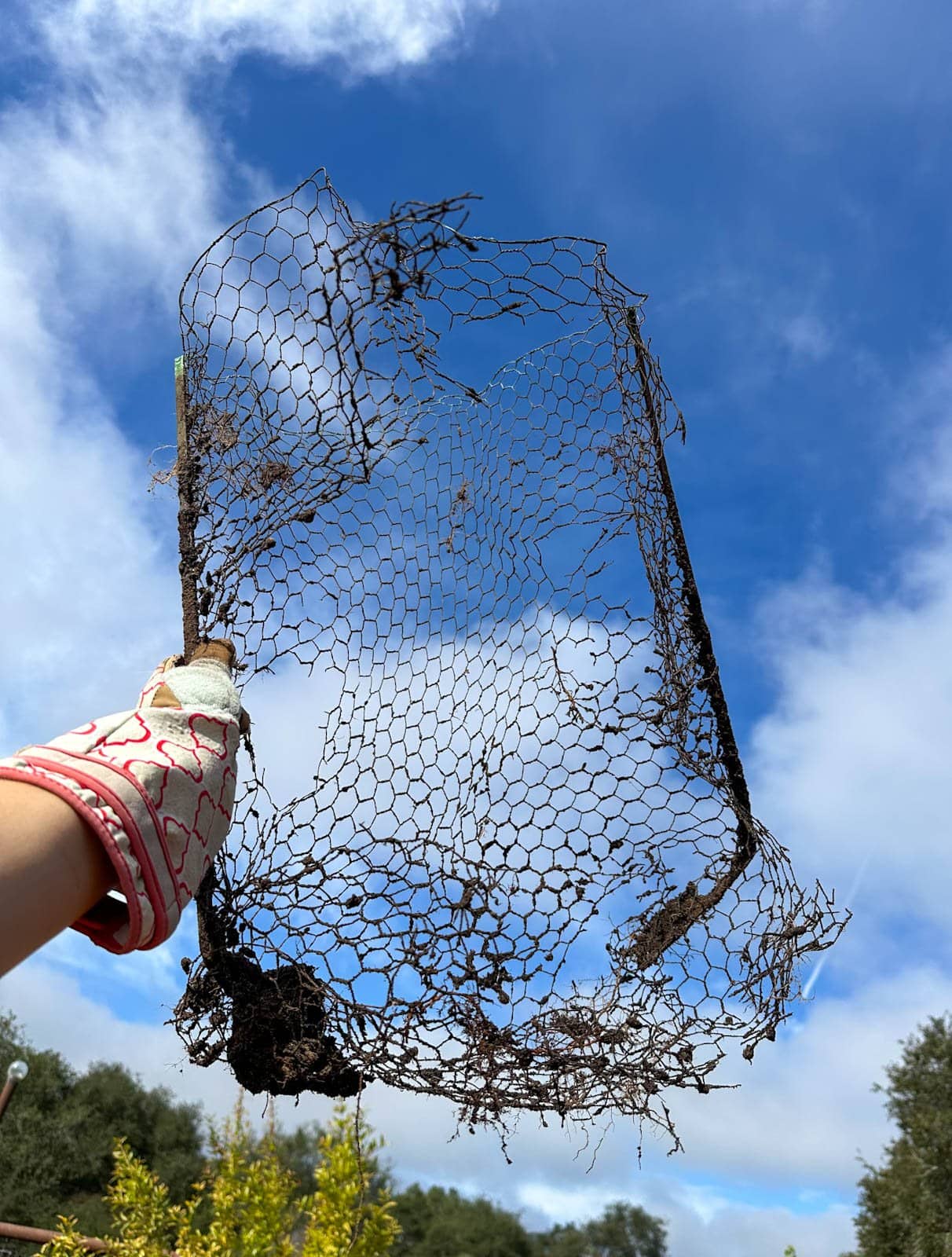
Gopher baskets may slightly restrict root growth or lead to root binding, depending on the type of tree, basket size, and wire material they’re made of.
Because it doesn’t degrade and has smaller holes, hardware cloth gopher baskets will restrict roots to a greater degree than chicken wire baskets, which will eventually break down and let the roots “break free” after a few years (but also leaves them more vulnerable to gophers).
Note that it isn’t necessarily a bad thing! Personally, I’d rather have slightly smaller trees than have them destroyed by gophers. Plus I make generously-sized baskets, and grow many dwarf or semi-dwarf fruit tree varieties that more readily adapt to small spaces.
A tree planted in the ground within a gopher basket will still be happier than those confined to a pot or container.
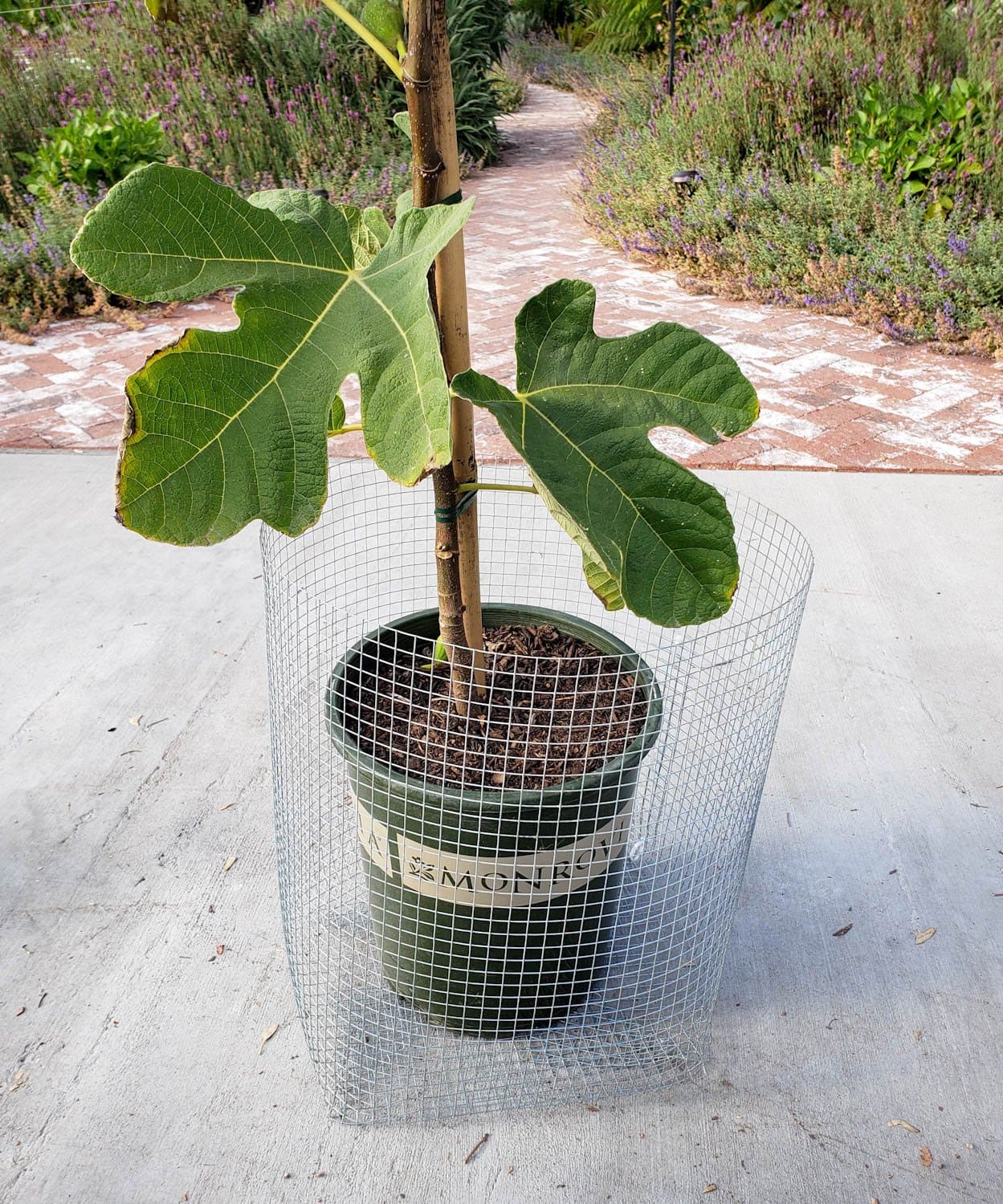
How to Make a Homemade Gopher Basket
Materials and Supplies
- Wire mesh material of choice. Use galvanized hardware cloth with ¼” or ½” openings for durable, long-lasting protection. Gophers can fit through holes as small as one inch, potentially even ¾”. A two or three-foot tall roll of wire works perfectly. Stainless steel is another great option, though not as affordable. If you want the cage to break down as the tree matures (as discussed above) you can use chicken wire, though it isn’t recommended for areas with persistent and abundant gophers.
- Galvanized wire (16 to 20 gauge) and/or heavy-duty zip ties for securing the basket together
- Wire snips or aviation snips to cut the hardware cloth
- Work gloves – hardware cloth can be sharp and pokey to work with!
DIY Gopher Basket Size
Before getting started, take note of the tree and pot size. The finished gopher basket should be several inches larger than the tree root ball in all directions, or about twice the size of the pot or rootball (if possible).
In my experience, our DIY gopher baskets for 15-gallon potted trees end up being about 24 to 30” wide and just under 2 feet deep. Scale down as needed for smaller plants.
The height of the finished gopher basket should also extend a few inches above the soil line for maximum protection!

Instructions
1) Make a Wire Cylinder
- Use metal snips to cut the hardware cloth into a cylinder of the desired size. I wrap the wire wide around the tree pot to get a good visual before I cut. Cut it a little larger than the final cage will be, allowing for a few inches of overlap where the two ends will meet.
- Curl the wire into a cylinder shape (it won’t have a bottom at this point) and secure it together using cut pieces of galvanized wire, twisting the wire to secure it in place. You could also use strong zip ties but they could eventually break, so I recommend adding at least a few pieces of wire too.
PRO TIP: Because it can be difficult to dig a planting hole with totally straight sides, I recommend overlapping the sides of the wire in a way that makes the basket slightly wider at the top and a few inches more narrow at the bottom. That way, the basket will fit nicely in your planting hole.


2) Form or Add a Bottom
- If you started with 3-foot tall hardware cloth, bend and fold the bottom 12” to 16” towards the center of the basket. This will leave you with a basket just under 2 feet tall. I find it easiest to fold a 4-6” wide section over at a time, moving around the rim of the basket to repeat the process until it has several folds that overlap and completely cover the bottom.
- If you started with 2-foot tall hardware cloth, follow the same process but only fold over about 3 or 4 inches of the bottom towards the center. Then, cut another piece of hardware cloth to cover the bottom hole (large enough to offer a few inches of overlap all around). I like to add the bottom to the inside of the basket, pressing it down (or even standing on it) to make the hardware cloth catch and lock in place.
- Now pinch the bottom folds together, and make sure everything is nice and tight with no large gaps. To do so, I’ve found it’s easiest to stand inside the basket and use my weight and feet to push and squish everything into place. Then add several wire ties or zip ties to hold the bottom together. Focus on areas that seem prone to gapping.


How to Plant a Tree in a Gopher Basket
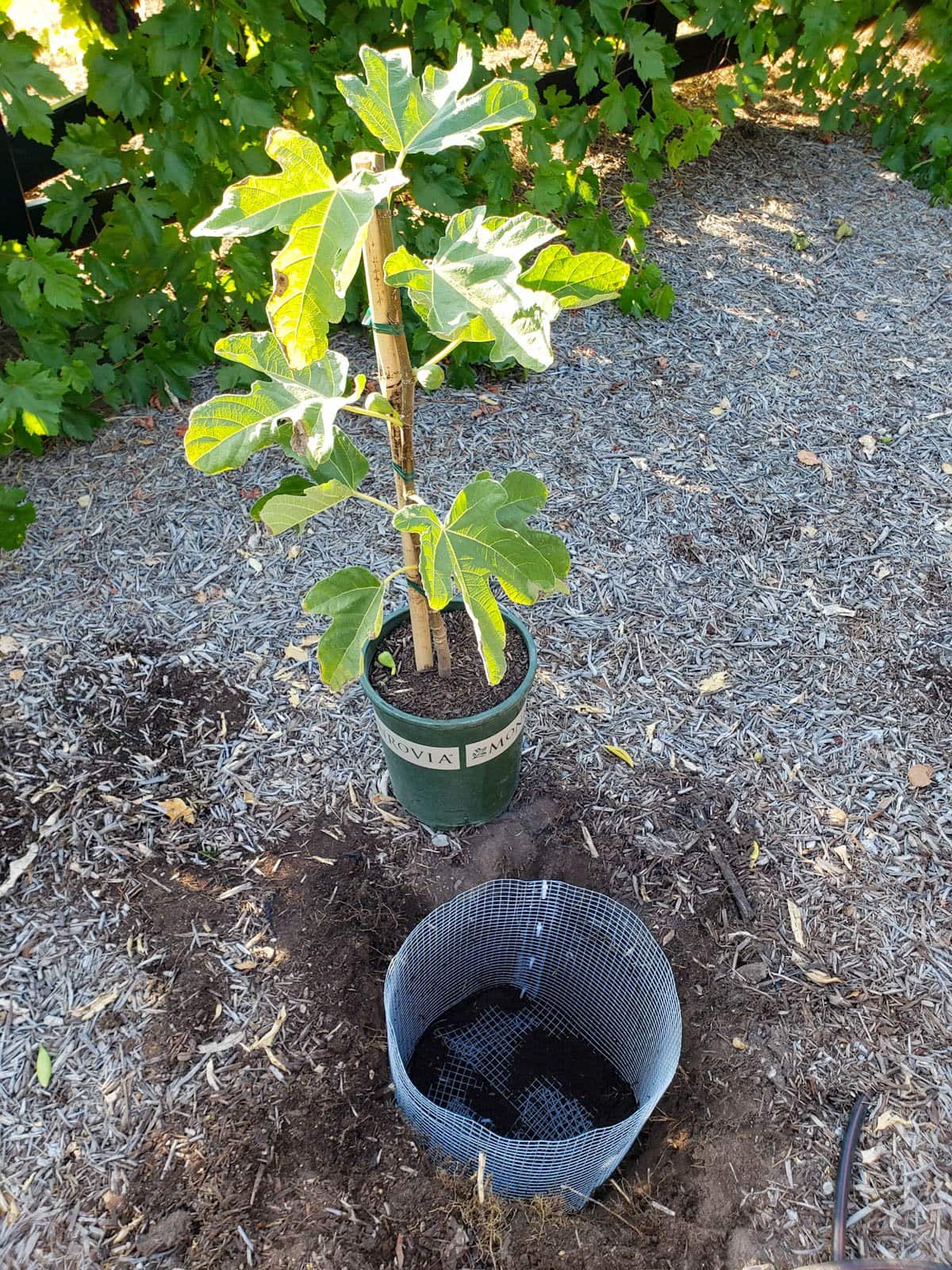
- Dig a hole two to three times wider than the tree pot and root ball, and deep enough to fit the gopher basket
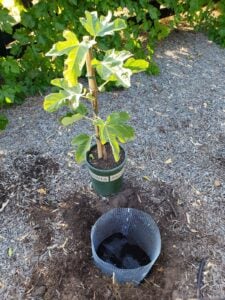
- Place the gopher basket to the planting hole, and check the height. The basket should extend a few inches above grade (also accounting for settling or mulch). Adjust the planting hole if needed, and try to keep the basket fairly level.
- Set the tree (still in the pot) inside the basket to evaluate the depth compared to the surrounding soil level. Then, take the tree back out and add enough soil to the bottom of the basket so that once the tree is inside, the crown (base of the trunk) will be just slightly above ground level. (Do not bury the trunk of the tree).
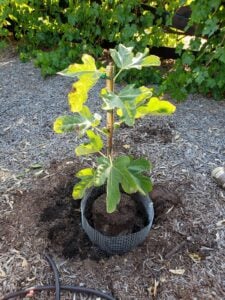
- Carefully remove the tree from its pot and place the root ball centered in the gopher basket. Backfill soil around the tree, taking care to keep it standing straight.
- If your DIY gopher basket is extra-tall, you can bend it inward slightly to create a dome over the top of the rootball.
- Thoroughly water the tree.
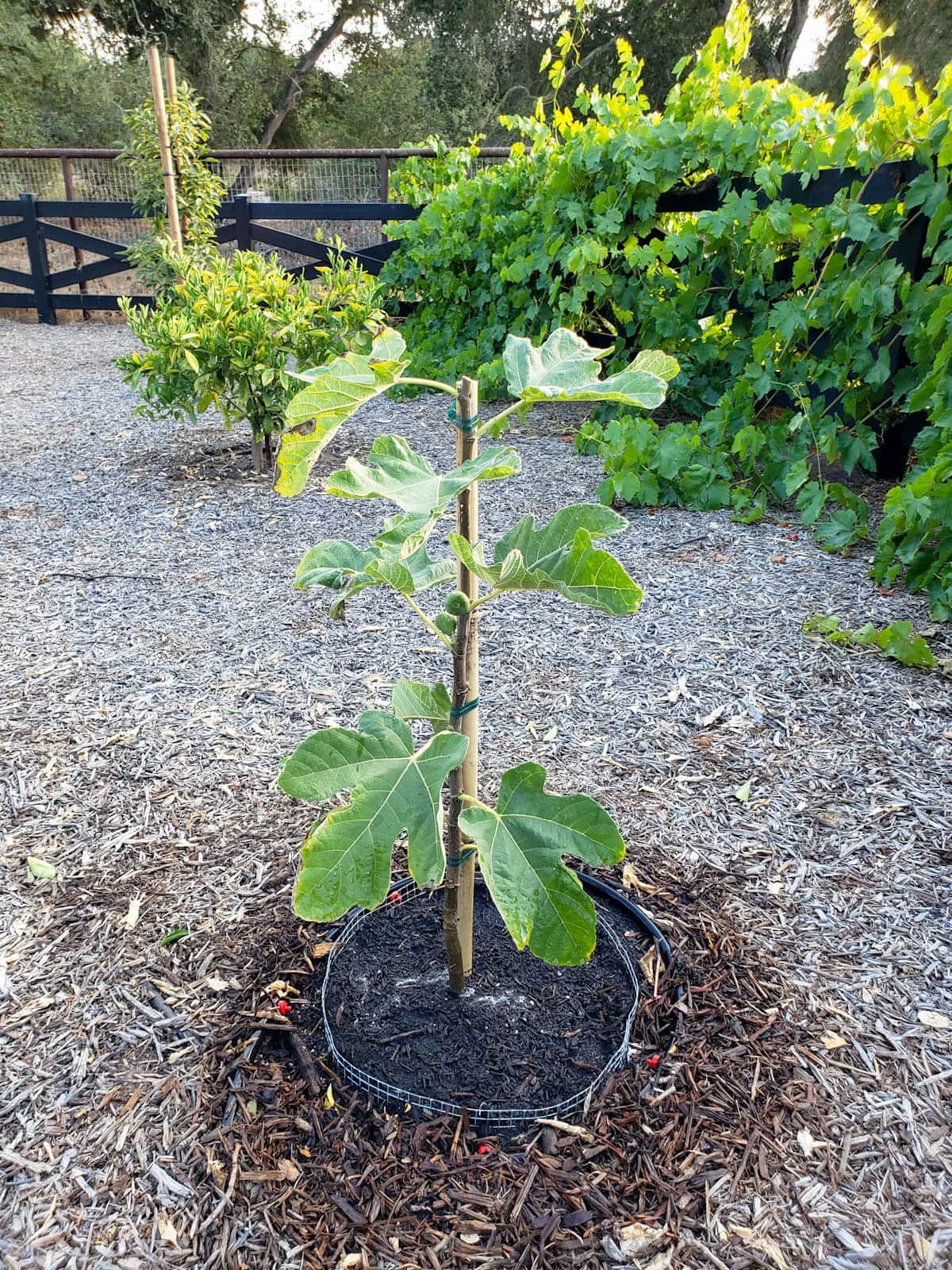
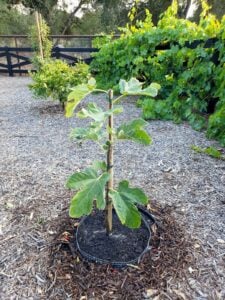
- Add 2 to 4 inches of organic mulch around the base of the tree, but not directly against the tree trunk.
- Stand back and admire your hard work!
RELATED: For more details, come read our best practices for planting trees – or learn about the importance of thinning fruit trees to grow larger, more flavorful fruit!
Video
Here’s an old video from our old urban homestead – making a gopher cage and planting a loquat tree. Check out minutes 2-13 to watch me sizing and making the homemade gopher basket, then installing it in the planting hole. The second half of the video is more focused on planting trees, how we amend the soil, etc. At the very end, you can see it all planted, mulched, and the cage just above the soil.
And that is how to make a homemade gopher basket.
These things have been a lifesaver in our garden, literally! If you also live in an area where pesky gophers rule the subterranean land, I highly recommend planting trees in gopher baskets too.
Please let me know if you have any questions, and leave a review below if you found this post helpful. May your trees be happy, healthy, and safe from gophers!
Don’t miss these related articles:
- How to Plant a Tree: Best Practices for Success
- Choosing the Best Fruit Trees for Your Garden
- How to Build a Raised Garden Bed
- How to Kill or Remove Grass, and Grow Food Not Lawns!
- Turn Your Yard into a Certified Wildlife Habitat
How to Make a DIY Gopher Basket
Equipment
- Wire snips or aviation snips
- Work gloves (hardware cloth can be sharp and pokey)
Ingredients
- 1 roll wire mesh fencing. I recommend 2 or 3 foot tall galvanized hardware cloth with ½” openings for durable, long-lasting protection. Chicken wire will degrade with time, and voles or small gophers may be able to fit through the holes. (We've also had gophers chew through chicken wire).
- Galvanized wire (16 to 20 gauge) and/or heavy-duty zip ties for securing the basket together
Instructions
DIY Gopher Basket Size
- Before getting started, take note of the tree pot size. The finished gopher basket should be several inches larger than the tree root ball in all directions, or about twice the size of the pot or rootball.

- The height of the finished gopher basket should also extend a few inches above the soil line for maximum protection!
Making the Basket
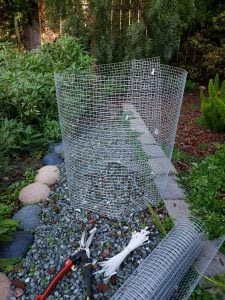
- Cut the hardware cloth or wire mesh to the desired basket size, allowing for several inches of overlap where the ends will meet. (I wrap the wire wide around the tree pot to get a good visual before I cut.)
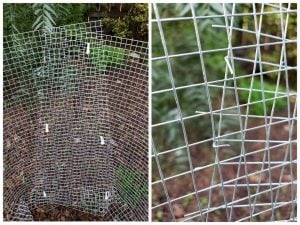
- Curl the wire into a cylinder shape (it won’t have a bottom yet) and secure it together using cut pieces of galvanized wire, twisting the wire to secure it in place. You could also use strong zip ties but they could eventually break, so I recommend adding at least a few pieces of wire too.

- Because it can be difficult to dig a planting hole with totally straight sides, I recommend overlapping the sides of the wire in a way that makes the basket slightly wider at the top and a few inches more narrow at the bottom.

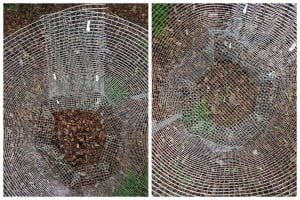
- Depending on the height of wire you're using (2 vs 3 ft) and the desired height of your finished basket, either bend lower portion of the fencing inward to create a bottom, or cut out a separate piece of hardware cloth to cover the bottom.
- When using 2 foot tall hardware cloth, I usually bend a few inches of the bottom, and then press another peice of hardware cloth inside the basket to cover the bottom.

- Pinch the bottom folds together to ensure everything is tight with no large gaps. I’ve found it's best to stand inside the basket and use my weight and feet to push and squish everything into place. Then add several wire ties or zip ties to hold the bottom together. Focus on areas that seem prone to gapping.
Planting in a Gopher Basket
- Dig a hole two to three times wider than the tree pot and root ball, large and deep enough to fit the gopher basket inside.
- Place the gopher basket to the planting hole and check the height. The basket should extend a few inches above grade (also accounting for settling or mulch).
- Set the tree (still in the pot) inside the basket to evaluate the depth compared to the surrounding soil level. Then, take the tree back out and add enough soil to the bottom of the basket so that once the tree is inside, the crown (base of the trunk) will be just slightly above ground level. (Do not bury the trunk of the tree).
- Carefully remove the tree from its pot and place the root ball centered in the gopher basket. Backfill soil around the tree, taking care to keep it standing straight.
- If your homemade gopher basket is extra-tall, you can bend it inward slightly to create a dome over the top of the rootball.
- Thoroughly water the tree. Add 2-4″ of organic mulch around the base of the tree, but not directly against the tree trunk.


24 Comments
Connie
Hi,
We have a large Cistus – Cistus x purpureus or Purple Rock Rose in our backyard in Rancho Bernardo. It’s quite large and we really enjoy the beautiful flowers in the spring and it also gives cover to our feathered and furry friends. Unfortunately it looks like it’s dying. In the past, parts of it died because rats or squirrels ate the bark all around a some of the branches. But now it looks like the entire bush — actually maybe three bushes — are dying. I thought maybe it was gophers because I can see a couple of mounds of dirt, but those could also be from rats or ground squirrels. I probed around the dirt piles to see if I found a void, indicating a tunnel, but I didn’t detect any. Also, I read that Cistus live about 10 years. We’ve been here 7 years, and the bushes were full size when we moved in, so they may just be dying of old age.
Yesterday I bought the materials to try to make a gopher basket, but I don’t think I’ll be capable of doing that. I have a lot of arthritis in my hands and trying to work with the roll of hardware cloth is hard. It acts like a giant spring. So I was thinking of buying some pre-made baskets. What size do you think I should get if I buy some new Cistus in 5-gallon containers? I see some on Amazon for 5 and 10 gallons. I want to make sure the Cistus roots have enough room. Also, do you think the devices that emit ultra-sonic sounds help deter gophers?
Thank you,
Connie
Aaron (Mr. DeannaCat)
Hi Connie, that’s too bad your rock rose seem to be nearing their end but as you said, it seems like it could be their natural life cycle as well. Rock rose is generally considered gopher resistant, we have many different types on our property that don’t seem to be affected by them. In regards to the gopher baskets, buying the premade wire baskets will work just fine and since rock rose is gopher resistant, you could probably get by with the “speed cages” which are a lot easier to work with. We have had gophers chew through them as they aren’t as sturdy as the thicker cages, however, we don’t find them to be a problem on plants that gopher’s don’t go out of their way to eat. Also, we always use the same size gopher cage as the plant or tree container so we would go with the 5 gallon size if your plants are in 5 gallon containers, hope that helps and good luck!
anne
Hi Deanna: I live in Northern Ca and gophers are such a nuisance here. I hate the idea of killing them off, but what beneficial purpose do they serve to an environment, other than being one link in the big chain of life? They have annihilated friends’ gardens, and they took drastic measures after many, many attempts at keeping them at bay, and failing for years. At some point you would like to simply have a garden and see your hard-earned dollars amount to something, so I get it. I realize it is not the popular choice nowadays, but have you found a truly foolproof way to eliminate the little devils? Other than cages and lining my raised beds with 1/2-inch mesh (which I didn’t want to do, but felt lining raised beds was the only hope of having anything left!), I’m not sure how to simply get rid of them as they appear. Thanks.
Aaron (Mr. DeannaCat)
Hi Anne, gophers can be a real nuisance for a gardener and we have yet to find a way to truly rid them of our property. They reproduce in numbers and even if you were able to get rid of them on your property, it would only be a matter of time before more moved back over from neighboring properties. We have found that lining the bottom of our raised beds with 1/2 inch hardware cloth has proven to be gopher proof as we have no issues whatsoever with gophers going after our vegetables/flowers/herbs that we grow in our raised beds. For fruit trees, shrubs, and flowering perennials, we have to use gopher cages. For flowering perennials that we have planted along borders and specified spaces such as salvia, lavender, yarrow, etc. we will typically use the premade speed cages that can be rolled around the rootball, gophers can still chew through them if they want to, but we aren’t as heavily invested in a 1 gallon plant from the nursery plant, plus we don’t find them to be especially attracted to these. When it comes to fruit trees, you definitely need to make your own DIY gopher cage with hardware cloth or purchase the premade gopher cages that use the hex mesh wire (these will break down within 5 years or so but your fruit tree should be more established by that point and can withstand gophers better). Hope that helps and good luck!
Cat
Hello! I’m going to plant a California Lilac (Ceanothus impressus ‘Victoria’), and we have a tremedous Gopher colony in our yard. I’m told that California Lilac is “gopher resistant”, do you still feel a cage is a good idea? This variety is supposed to reach about 9 feet high and 7 feet wide. Thanks!
Aaron (Mr. DeannaCat)
Hi Cat, we have a few ceanothus on our property and I see quite a few of them throughout our area and I am sure they were never protected from gophers. However, we have had gophers eat roots and kill plants that are also supposed to be gopher resistant so spending a few bucks on a gopher cage is likely well spent for insurance purposes in regards to your ceanothus. Hope that helps and good luck!
Bonnie Harms
(Continued from earlier.) We now occupy our second home in California and have found that the gophers here in Oceanside are more aggressive than our prior home. I have taken to protecting our tree roots with double wire cages. One covers an area of about 4 to 6 square feet and the other basket is more snug around the roots at planting. New root growth is protected (hopefully ) by the larger basket.
Bonnie Harms
I am a fan of Alaska fish fertilizer (“AKFF”). One thing we have done nearly every couple months is dose all our fruit trees with healthy amounts of AKFF. It smells pretty bad for a few days but always dissipates eventually. For that reason we try to take advantage of especially rainy days so the rain helps it soak in faster. Gophers hate it. We always cage our roots as well and plant plant lots of lavender and rosemary among our fruit trees. If we have a particularly persistent gopher hanging around we drop a few dog poo nuggets in his tunnel. By the looks of the disorderly mound where he finds it, it seems THAT makes him furious.
Aaron (Mr. DeannaCat)
Hi Bonnie, thanks for sharing some of your tips!
Cathy Hayes
Hi! I’m down at the southern end of California Coastal, in San Diego. My most prized fig tree, a black mission with a white kadota graft, quite large, was hit by a gopher. First it ate the roots outside of the basket. Then it hopped over the top of the not-enclosed anti-gopher basket to eat the remainder of the roots. I came out to a trunk with wilted leaves and no roots. I will always tighten the top of the basket to prevent that from reocurring!
Aaron (Mr. DeannaCat)
That’s a good idea Cathy, gophers can be a real pain. We try and keep the gopher basket elevated a couple inches above the soil line but one could still hop into it, as the trees mature they can better handle gopher damage. Best of luck to you and your figs.
Renee
This is the best DIY gopher basket tutorial that I’ve seen. We live in SE AZ and have many gophers. Luckily we are ahead of the varmints as we are just beginning with planting trees and garden so we are planning to prevent gophers before the fact! Thanks so much!
Aaron (Mr. DeannaCat)
That’s great to hear Renee! It’s much better doing it from the start than learning the hard way. Good luck with getting your trees planted and garden going!
Nathan Kinsey
Thanks, Aaron. I ended up putting both trees in baskets to be safe and they’re thriving thus far. Lots of new growth. Keep working that land…
colleen
Oops, I was just posting a question but my computer crashed while posting, so apologies if this is a duplicate. My question was, do you have an opinion on castor oil as a non-lethal gopher deterrent? Like, does it actually work even a little, and is it actually safe for all the little beasties in the garden, and okay to use around vegetable plants? Root cages work, but making them gets to be time consuming, and I’m going broke from buying hardware cloth! LOL.
Aaron (Mr. DeannaCat)
Hello Colleen, those pesky gophers can really make you work can’t they? We have not yet used castor oil as a gopher deterrent and its efficacy seems to have mixed reviews but it should be safe to use in and around the garden. There are solar powered ultrasonic spikes that are used to keep gophers away with some brands getting pretty good reviews. It may allow you to set up a perimeter to keep the gophers away from your garden space. Let us know if you have any other questions, hope that helps and good luck!
colleen
Thanks so much for your reply! I’m going to try the castor oil, maybe along with the sonic spikes (granted this will make it harder to know which thing is working, assuming there is an improvement). I have a wild patch of johnny jump-ups and other self-sowing plants that I’m fine with the gophers continually mowing down…my hope is to make the veg/pollinator garden less appetizing and give them more appealing options. 🙂
Aaron (Mr. DeannaCat)
Good luck and keep us updated on how it works out!
Oriana
Our yard is a war zone of gopher invasions. We have a young Everbearing Mulberry tree, still in the nursery container, that is less than two feet tall and very scrawny. I understand these can grow 8-10 feet wide and 15 feet high. Given how vulnerable it’s root system is now, and potentially how massive it can become, would you suggest putting this in a gopher basket? Or should we keep it in the container and pot up until it’s mature enough to handle a gopher onslaught? If you think the latter option is wise, how big should the tree be before we put it in the ground? Or would you suggest a totally different option? (So many questions! lol) Thanks in advance for any guidance.
Aaron (Mr. DeannaCat)
Hello Oriana, we have a few trees (fig and avocado) that we have planted in gopher baskets that have become quite large even with being planted in baskets. The Mulberry tree will do much better and should take off quicker if planted in the ground versus being kept in its pot. If you want the tree to have unlimited growth, look into the pre made gopher baskets that will usually last for at least 3 to 5 years before they eventually break down and allow the larger roots to expand beyond the cage after that. They have various sizes depending on how large of a rootball you have to work with, though I would size up with the idea that the tree will grow and need more room for its roots. Hope that helps and good luck! Let us know how it works out for you!
Oriana
Great advice. I will look into the pre-made baskets. Thank you so much!
Nathan Kinsey
Hi Deanna,
What an amazing wealth of information you have on your site and an utterly beautiful gardening history. I came across your website while researching tree planting practices for my new home in Santa Rosa, Ca. To my surprise, we know eachother and went to college together while sharing a circle of friends in the environmental/sustainability fields at Chico State some time ago.
Small and amazing world. I hope you and your husband are doing well in these crazy times.
I’m planting two trees in my yard, a Valley Oak and an October Glory Maple. They are both in 24 inch boxes and about 12-15 feet tall from their base. Their trunks are about 2 inches in diameter near the base. I’m trying to determine if I should gopher cage them or not. Those little jerks are around my property, but I’m not sure if they care about these type of trees or not. I have the 1/2 inch square galvanized hardware coth (wire) to make baskets, but wonder if they would inhibit their growth too much, if gophers would even care for these tree types, or if they’re established enough at this size/age to widthstand some gopher nibbles.
I need shade bad in my yard and the sweat equity I’ve put in thus far would be painful to see go to waste if these beauties are wrecked from down below.
Any thoughts you have would be welcome and I appreciate your insight. I hope your new digs are treating you both well.
Cheers,
Nathan
Aaron (Mr. DeannaCat)
Hi Nathan, I don’t know how we missed this comment but it is definitely a small world! It’s also great to hear from people from our past Chico days. Now, in regards to your questions, your trees should be just fine without the gopher cages due to their age and size of their root ball. Gophers typically like younger tree roots and as trees get bigger, their roots become more tough or the root ball is big enough to handle small gopher attacks. Hope that helps and sorry we didn’t see this sooner, good luck!
anne
I am also in Santa Rosa. How is the rest of your garden holding up to the little pests. They are persistant little devils. A freind of mine lost his entire garden in San Rafael to them in spite of many remedies and attempts to thwart their munching. I am meshing everything to within an inch of its life in my yard! Not how I wanted to go about running my garden, I’d have had a lot more space had I been able to plant directly in the ground as I wanted, and saved a bundle in time and money, but the gophers gave me no choice!
Hope your trees are doing well.